November 10, 2020

Nantou Travel: Autumn at ShanLinXi National Forest Recreation Area

Travel Date: 2020/10/18-19

The path near Songlong Waterfall leads to Tian-ti Yen. Along the way, you will pass through the ancestor tunnel, which was originally constructed for transporting wood. The tunnel measures 170cm in height, 100cm in width, and is 20m long. It took over a year to dig the cave by hand. The road through the forest only takes a few minutes. On the way, you will also come across a trunk of a giant tree, with a small resting stop next to it.
If you're lucky, you may spot some wild monkeys in ShanLinXi. We saw over 10 monkeys drinking water from a nearby river.
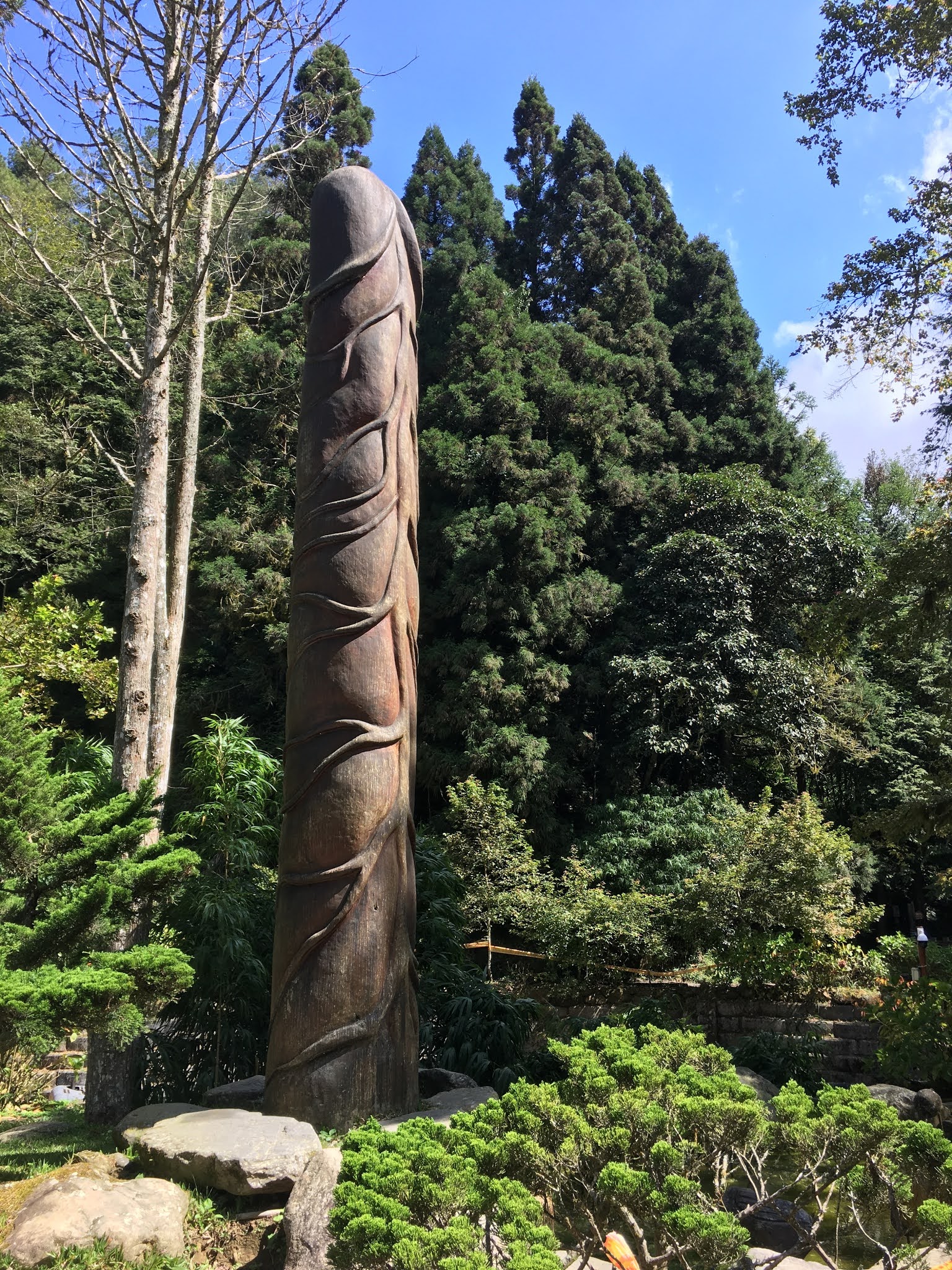
If you plan to visit this place, it's best to go early to enjoy the best views. The afternoon quickly becomes foggy and cloudy. Due to aboriginal culture, you will notice a tall penis statue near the waterfall. 

Ancient Taiwan Red Cypress (千古紅檜)

Taiwan Cypress trees are tall, with a strong and delicate structure. They have beautiful grain and color, high decay resistance, and a fragrant and soft texture. The mid-elevation area of Taiwan has the highest level of moisture on the island, making it a cloud forest zone.
Taiwan Cypress and Taiwan Red Cypress are the most commonly found trees in the cloud forest. Cypress is widely used in architecture, furniture, and sculpture. However, due to extensive logging in the past, only a few of these trees remain.
This 4,000-year-old red cypress tree is so huge that it takes 12 men holding hands to encircle it. The tree survived the logging period because the empty trunk was considered valueless. Despite enduring frost, snow, sun, and rain for long periods of time, it still stands today, deserving great respect.

Tian-ti Yen (天地眼)

Embedded in the mountain cliff are two round holes, one measuring 8 meters and the other 6 meters in width. These holes have been gradually formed by the erosion of wind and rain. The two holes resemble a pair of eyes, with a ridge resembling a nose lying in between. Legend has it that the eye of heaven (Tian Yen) can see through a person's heart, while the eye of land (Di Yen) reflects everything in the world. It is said that kind and loyal people will feel encouraged and consoled as they reach Tian Ti Yan.

99 Suspension Bridge

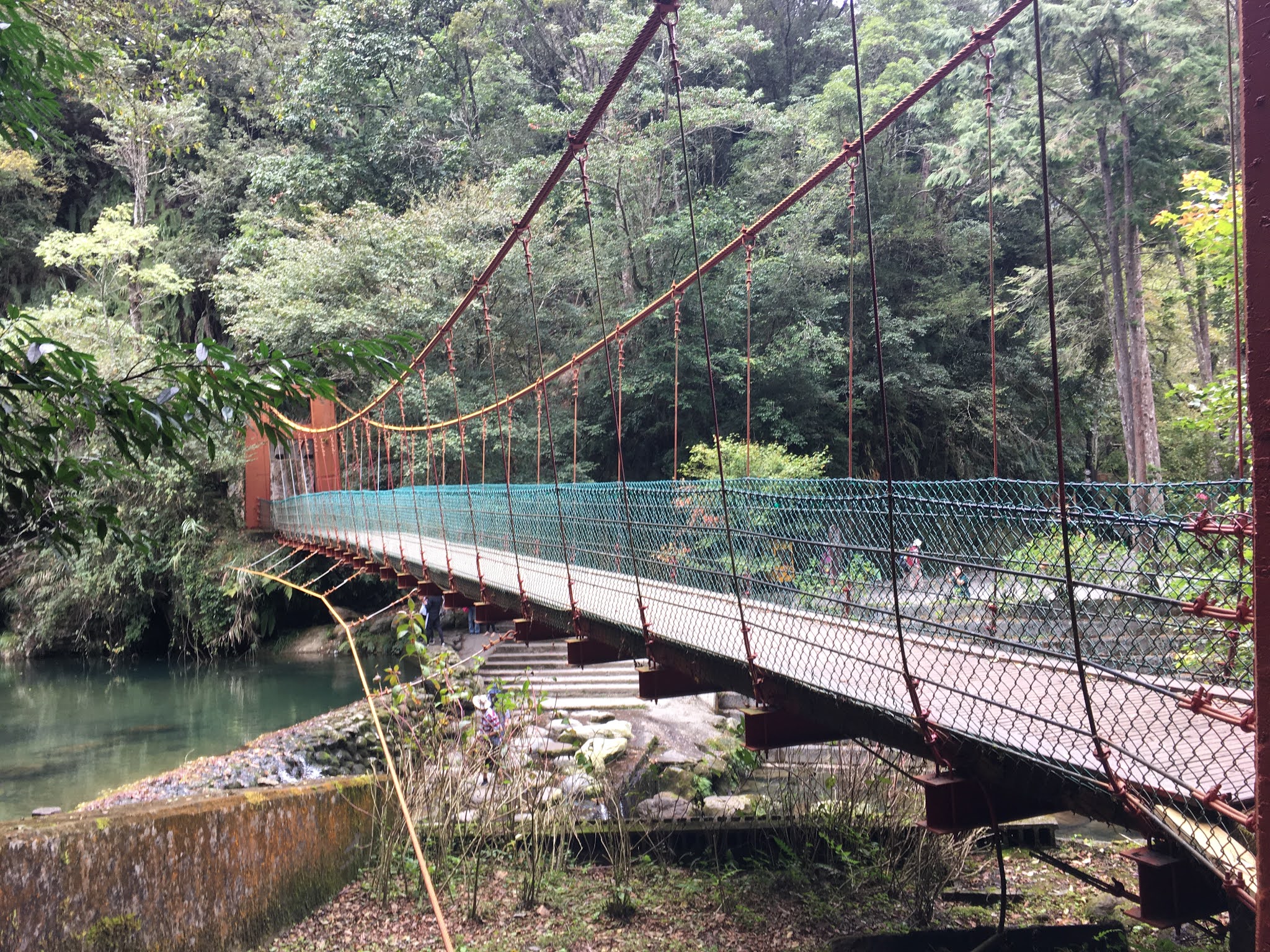
The 99 Suspension Bridge crosses the Jiazouliao Xi to Tian-ti Yen, serving as an important junction and a great place to observe Songlong Rock Waterfall. The water below the bridge is clean and cold.


ShanLinXi National Forest Recreation Area, Nantou, Taiwan

ShanLinXi National Forest Recreation Area, Nantou, Taiwan

ShanLinXi National Forest Recreation Area, Nantou, Taiwan

ShanLinXi National Forest Recreation Area, Nantou, Taiwan

ShanLinXi National Forest Recreation Area, Nantou, Taiwan

ShanLinXi National Forest Recreation Area, Nantou, Taiwan

ShanLinXi National Forest Recreation Area, Nantou, Taiwan

ShanLinXi National Forest Recreation Area, Nantou, Taiwan

ShanLinXi National Forest Recreation Area, Nantou, Taiwan

Flower Center (花卉中心)

In 1991, members of the Chinese Medicine Council of the Ministry of Health and Welfare and Executive Yuan visited ShanLinXi. They discovered many medicinal plants growing in the resort, which benefits from abundant rain and sunlight and is suitable for growing medicinal plants requiring frigid and temperate climates. In 1992, the Ministry of Health and Welfare commissioned the China Medical University to establish a contract of academy-industry cooperation. This led to the establishment of a medicinal botanical garden for public acquaintance with medicinal plants and for academic studies.
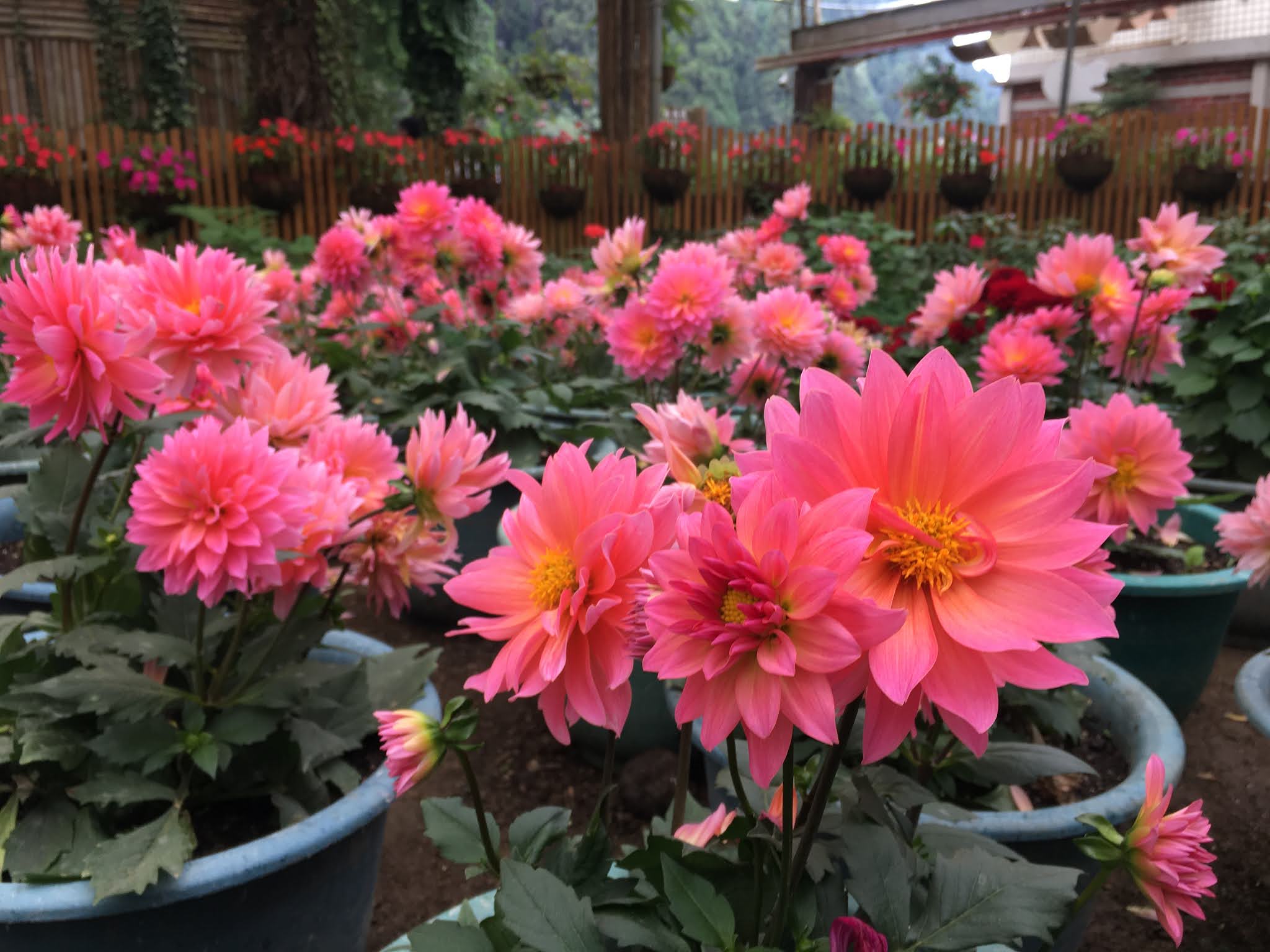
The garden cultivates both herbs and flowers. The herb garden mainly focuses on teaching, while the flower garden exhibits around 30 flower species.

Golden Metasequoia Forest (黃金水杉林)

Metasequoia has the title of "Living Fossil" and "The World's First Fir." It was reported as a widely distributed extinct genus based on fossils by paleobotanist Shigeru Miki in 1941. However, a few years later, small populations were found alive in central China, which attracted considerable attention. Although the species faces the risk of extinction in its wild range due to deforestation, it has been extensively planted worldwide as a popular and fast-growing ornamental plant. If the species had been discovered a bit later, it might have become extinct before being investigated. Metasequoia is quite rare in Taiwan, making it unfamiliar to most people.
During autumn and winter, the leaves of Metasequoia gradually change from dark green to light yellow, and then turn golden and orange. These trees resemble cypress, although the leaves of Metasequoia are oppositely arranged, while the leaves of bald cypress are spirally arranged around the stem.

Peony Garden

ShanLinXi's temperate climate and high altitude conditions make it suitable for cultivating peonies. Peonies were introduced in 1974, and the current total number of plants is approximately 20,000. They bloom from February to May each year.

metasequoia forest in ShanLinXi National Forest Recreation Area, Nantou, Taiwan

metasequoia forest in ShanLinXi National Forest Recreation Area, Nantou, Taiwan

metasequoia forest in ShanLinXi National Forest Recreation Area, Nantou, Taiwan

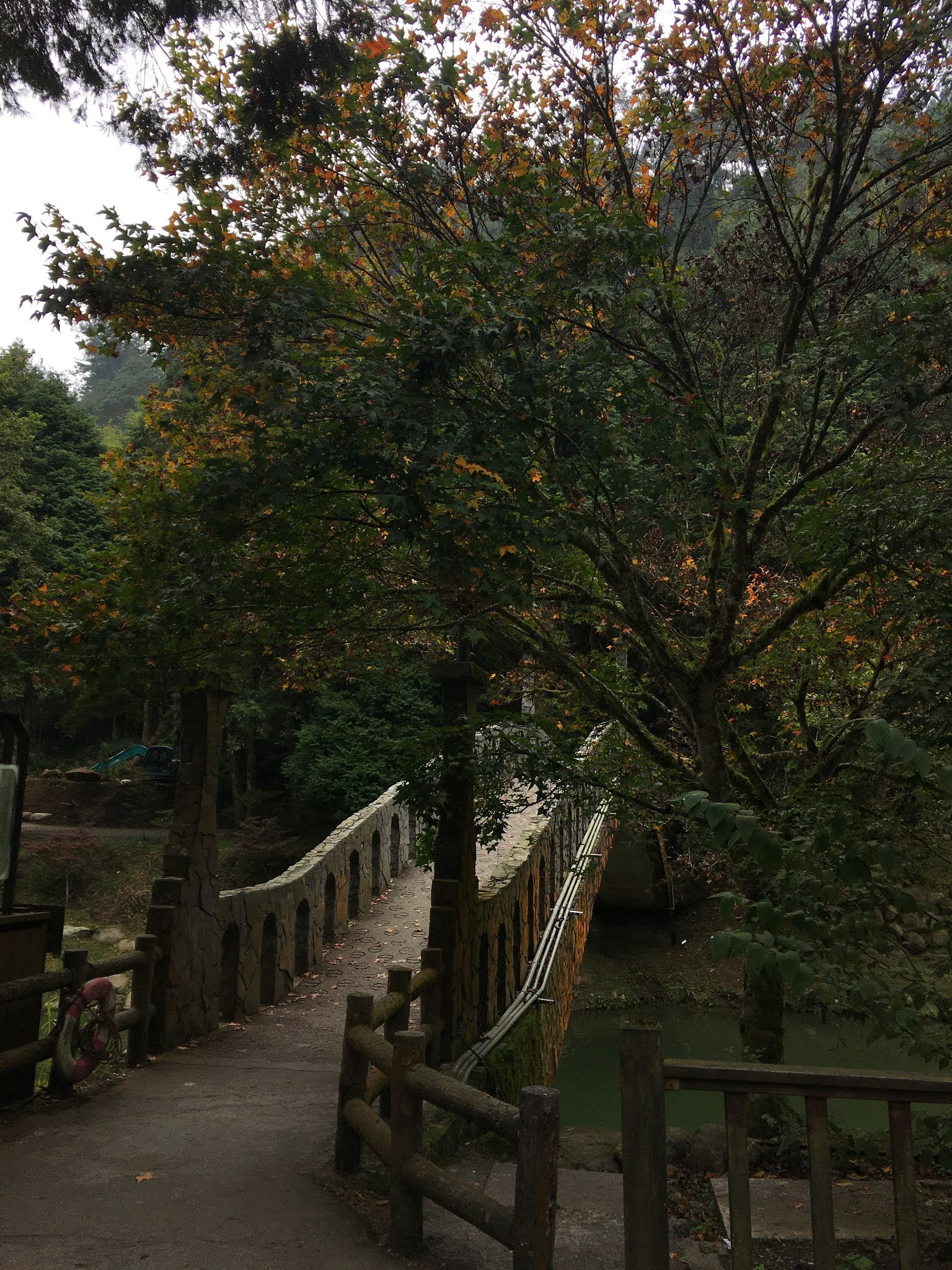
maple trees in ShanLinXi National Forest Recreation Area, Nantou, Taiwan

maple trees in ShanLinXi National Forest Recreation Area, Nantou, Taiwan

maple trees in ShanLinXi National Forest Recreation Area, Nantou, Taiwan

maple trees in ShanLinXi National Forest Recreation Area, Nantou, Taiwan

flowers blooming in ShanLinXi National Forest Recreation Area, Nantou, Taiwan

flowers blooming in ShanLinXi National Forest Recreation Area, Nantou, Taiwan

flowers blooming in ShanLinXi National Forest Recreation Area, Nantou, Taiwan

flowers blooming in ShanLinXi National Forest Recreation Area, Nantou, Taiwan

flowers blooming in ShanLinXi National Forest Recreation Area, Nantou, Taiwan

flowers blooming in ShanLinXi National Forest Recreation Area, Nantou, Taiwan

flowers blooming in ShanLinXi National Forest Recreation Area, Nantou, Taiwan

flowers blooming in ShanLinXi National Forest Recreation Area, Nantou, Taiwan

flowers blooming in ShanLinXi National Forest Recreation Area, Nantou, Taiwan

Address:

557南投縣竹山鎮溪山路6號杉林溪森林生態渡假園區

November 6, 2020

Nantou Travel: ShanLinXi National Forest Recreation Area - Songlong Waterfall

Travel Date: 2020/10/18-19

Yesterday, we found accommodation, and this morning around 9 am, we started driving to Shanlinxi. It was still about an hour away. The entrance ticket for adults is 250NT, while kids under 6 years old can enter for free. Additionally, the parking fee is 100NT. Initially, we planned to walk all the way to Songlong Waterfall, but in the end, we decided to take a bus there. The bus ticket costs 40NT for a one-way trip. The weather was still good and warm before noon, but many people were already wearing jackets. The waterfall is truly amazing and, in my opinion, the most beautiful waterfall I have seen so far. There is also a trail to Tian-ti Yen nearby, where you can see remnants of ancient red cypress trees.

On the way back, we walked from the waterfall to the flower center, which was about 1 km away. Even though it was only 1 PM, the sunshine was nowhere to be seen. There is a golden metasequoia forest, but the trees were still green at that time. Hydrangeas barely bloomed during this season as well. There are also plenty of red maple trees, but due to the lack of sunlight, the view wasn't very good. Initially, we planned to walk back to the car park, but since we still planned to visit another place and it was quite foggy, we decided to take the bus instead. The ticket from that place only cost 20NT. When taking the bus, don't forget to wear a mask!

There are a few places where you can buy food, and there is also accommodation, although the prices are quite high compared to staying outside the Forest Recreation Area. We were surprised that our 2.5-year-old kid walked a few kilometers with us. I was worried that we would have to carry him the whole way.


Songlong Waterfall 松瀧岩瀑布, Shanlinxi National Forest Recreation Area, Nantou, Taiwan

Shanlinxi National Forest Recreation Area (杉林溪森林生態渡假園區)

Shanlinxi National Forest Recreation Area is a well-known scenic spot in central Taiwan. It is located at the southeast end of Daanli (Zhushan, Nantou), 1600 meters above sea level, on the small river valley plain of the upper reaches of Jiazuoliao River. It is close to Xitou. The area is famous for its "Ten Scenic Spots of Shanlin Creek," "Ten Forest Trails," "Six Famous Flowers," and its rich animal and plant ecological landscapes. It serves as a multifaceted forest recreation area with multiple functions such as leisure, accommodation, catering, conferences, and eco-tourism.
The Shanlinxi Highway (95 Township Road) is the only road leading to Shanlinxi. Due to its mountainous location, fog is common in the area during the afternoon. In the past, the Shanlinxi area served as a work area in the logging section of the northern part of the Alishan Forest Farm and was a popular road at the time. Due to its beautiful scenery and moderate location, climbers often chose to camp overnight here.
In 1973, Liu Anding organized the "Shanlinxi Amusement Enterprise Co., Ltd." to lease about 34 hectares of state-owned land from the government for the development of a forest recreation area. He also invested in expanding the original forest road from Xitou to Shanlinxi into a two-lane road. After the construction was completed in 1979, it was officially opened to the public as a mountaineering tourism and leisure resort.

In 1982, Shanlinxi introduced 150 peony flowers from Japan and overcame the cultivation techniques, allowing visitors to enjoy their beauty. Since then, the variety and number of peonies have increased each year, earning the title of "Taiwan Peony Kingdom."
In 1999, the 921 earthquake caused significant damage to the area's roads. Anding Bend, in particular, was blocked by huge rocks and remained closed for nearly four years. With government assistance, the large boulder was blasted, and the collapsed section was replaced with a 643-meter stable tunnel. On August 30, 2003, the park was reopened.

Songlong Waterfall (松瀧岩瀑布)

Songlong Waterfall is accompanied by a natural cave called "Songlong Rock." The rock is primarily composed of sandstone and has been formed through thermal expansion and weathering. The flat top of the rock creates inverted columnar stalactites. The effects of erosion, cutting, and infiltration over the years have shaped the waterfalls, caves, river ditches, and rugged boulders, creating a majestic and beautiful scenery. This has earned Songlong Falls the title of "The First Scenery of Cedar Creek." The uneven ceiling of the cave is a result of "differential erosion" and serves as a nesting place for swallows. The cave occasionally attracts numerous swallows that fly in and around the area, creating a spectacular scene.
Songlong Rock Waterfall is renowned as the "Best Scenery of Shan Lin Xi" due to its majestic and beautiful landscape. During the rainy season, the waterfall tumbles, splashes, and thunders, creating countless breathtaking scenes and atmospheres.

Songlong Waterfall 松瀧岩瀑布, Shanlinxi National Forest Recreation Area, Nantou, Taiwan

Songlong Waterfall 松瀧岩瀑布, Shanlinxi National Forest Recreation Area, Nantou, Taiwan

Songlong Waterfall 松瀧岩瀑布, Shanlinxi National Forest Recreation Area, Nantou, Taiwan

Songlong Waterfall 松瀧岩瀑布, Shanlinxi National Forest Recreation Area, Nantou, Taiwan

Songlong Waterfall 松瀧岩瀑布, Shanlinxi National Forest Recreation Area, Nantou, Taiwan

Songlong Waterfall 松瀧岩瀑布, Shanlinxi National Forest Recreation Area, Nantou, Taiwan

Songlong Waterfall 松瀧岩瀑布, Shanlinxi National Forest Recreation Area, Nantou, Taiwan

Songlong Waterfall 松瀧岩瀑布, Shanlinxi National Forest Recreation Area, Nantou, Taiwan

Songlong Waterfall 松瀧岩瀑布, Shanlinxi National Forest Recreation Area, Nantou, Taiwan

Although we haven't seen everything, there are two more waterfalls to explore. Nearby, there is also another attraction called Wangyou Forest (忘憂森林). After the September 21 earthquake in Nantou, the accumulated water in this area turned into a swamp wetland. Many Chinese fir trees were soaked in the water and died, resulting in the formation of the Wangyou Forest. The towering cedar trees in the forest have no leaves, creating reflections in the water. On sunny days or in foggy conditions, the reflections and scenery are quite remarkable. There are also numerous aquatic plants in the puddles, making it a rich ecological resource. The uphill walk to Wangyou Forest takes about an hour and is not an easy path, so we decided not to go there with our child.

Shanlinxi National Forest Recreation Area, Nantou, Taiwan

Shanlinxi National Forest Recreation Area, Nantou, Taiwan

Shanlinxi National Forest Recreation Area, Nantou, Taiwan

Shanlinxi National Forest Recreation Area, Nantou, Taiwan

Shanlinxi National Forest Recreation Area, Nantou, Taiwan

Shanlinxi National Forest Recreation Area, Nantou, Taiwan

Shanlinxi National Forest Recreation Area, Nantou, Taiwan

Address:

557南投縣竹山鎮溪山路6號杉林溪森林生態渡假園區

November 2, 2020

Nantou Travel: Jiji Wuchang Temple - the remains of 921 earthquake

Travel Date: 2020/10/18-19

Jiji Wuchang Temple (集集武昌宮)

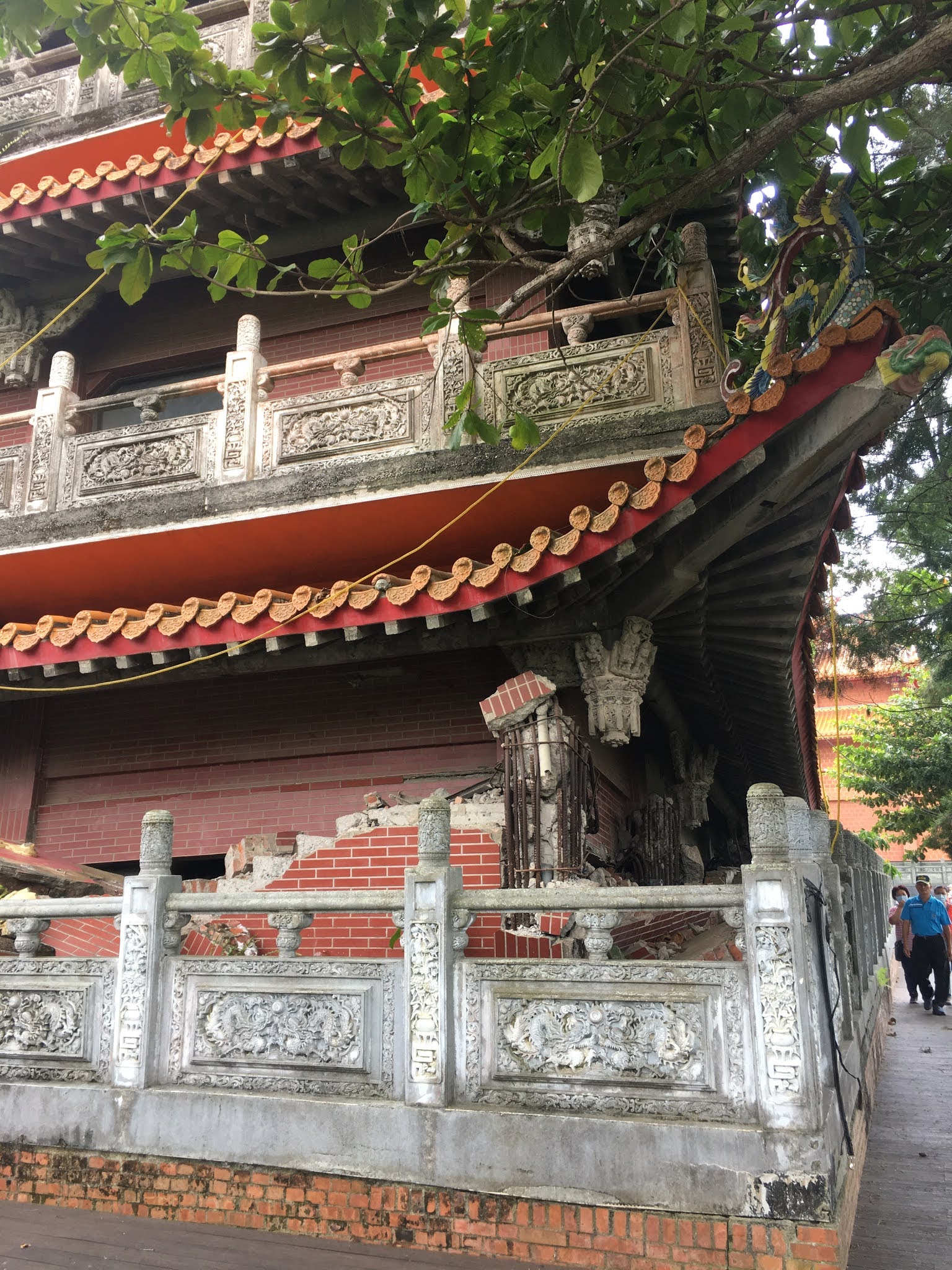
Jiji Wuchang Temple (集集武昌宮) is a temple located in Jiji Town, Nantou County, Taiwan. It worships Xuantian God and serves as the center of faith for the local townspeople. The temple has undergone several reconstructions throughout its history.
The original temple site collapsed in the 921 earthquake shortly after an expansion in 1999. It is now preserved as a tourist site. A new temple was subsequently built adjacent to the old site and was opened in 2013.

The history of Wuchang Palace can be traced back to 1903 when local gentry Yang Tianshou, Chen Yusheng, and Chen Yaxing raised funds to sculpt the God of Xuantian. In 1990, Huang Chaozuo, who served as the chairman of the Jiji Town Agricultural Association, the director general, and the chairman of the town residents' representative association, donated land for the temple expansion. The project began in 1991. Unfortunately, the temple collapsed due to the 921 earthquake shortly after its completion in 1999. However, the statue of the god remained undamaged thanks to the efforts of believers.

Yesterday, we experienced three earthquakes in Tainan. Although they were not significant, the shaking still made me feel a little stressed. Visiting the temple today evoked a sense of sadness in me. I hope I never have to experience such a strong earthquake. We also walked to Jiji Train Station, which is the busiest place in town. We made a stop at a location where I saw pictures of pink grass, but the grass was actually golden and not appealing. Despite that, many people still went there. The original price was 150NT, but since the grass wasn't beautiful anymore, the price had dropped to 50NT. Personally, I don't think it's worth visiting.

Jiji Wuchang Temple 集集武昌宮, 921 earthquake memorial, Jiji, Nantou, Taiwan


Jiji Wuchang Temple 集集武昌宮, 921 earthquake memorial, Jiji, Nantou, Taiwan

Jiji Wuchang Temple 集集武昌宮, 921 earthquake memorial, Jiji, Nantou, Taiwan

Jiji Wuchang Temple 集集武昌宮, 921 earthquake memorial, Jiji, Nantou, Taiwan

Jiji Wuchang Temple 集集武昌宮, 921 earthquake memorial, Jiji, Nantou, Taiwan

Nantou, Taiwan

Jiji train station, Nantou, Taiwan

Jiji train station, Nantou, Taiwan

Jiji train station, Nantou, Taiwan

Jiji train station, Nantou, Taiwan

Nantou, Taiwan

Nantou, Taiwan

We originally intended to go to Checheng, but it was quite crowded. We managed to find a car parking spot (parking fee is 100NT), but the elderly woman in charge was quite annoying. She kept yelling and hitting our car just because my husband didn't park the way she wanted. We weren't sure what her problem was, but her behavior made us leave the area. We had been to Checheng three years ago, although I hardly took any pictures at that time. Instead, we drove to a nearby water reservoir, but there wasn't much to see there either. My husband wanted to go to our accommodation, but I thought 3 PM was still quite early to settle in. We decided to visit the Shuili Snake Kiln. The parking fee was 50NT, and it was located outside the premises. The ticket price for the kiln was 150NT, but there were no pictures or information available about what was inside. Like many other people, we approached the ticket booth, pondered for a while, and then turned back to the car park.

Due to the timing in the afternoon, we went to our accommodation, the 溪頭桃花源渡假村民宿. I don't usually post about the places we stay, but I really liked this one. It was a nice house with a garden and chickens, providing a peaceful environment. The morning view was beautiful, although I was woken up by a rooster at 6 AM. There is a small town nearby, so finding food was not difficult. Additionally, there is a park with cherry blossoms (石馬公園), but it's not the right season yet.

溪頭桃花源渡假村民宿, Nantou, Taiwan

溪頭桃花源渡假村民宿, Nantou, Taiwan

溪頭桃花源渡假村民宿, Nantou, Taiwan

溪頭桃花源渡假村民宿, Nantou, Taiwan

溪頭桃花源渡假村民宿, Nantou, Taiwan

溪頭桃花源渡假村民宿, Nantou, Taiwan

溪頭桃花源渡假村民宿, Nantou, Taiwan

溪頭桃花源渡假村民宿, Nantou, Taiwan

溪頭桃花源渡假村民宿, Nantou, Taiwan

溪頭桃花源渡假村民宿, Nantou, Taiwan

cherry park, Nantou, Taiwan

cherry park, Nantou, Taiwan

cherry park, Nantou, Taiwan

Address:

1. Jiji Wuchang Temple: 552南投縣集集鎮八張街181號集集武昌宮
2. Accommodation: 558南投縣鹿谷鄉愛鄉路99-5號桃花源渡假村
3. Shima Park: 558南投縣鹿谷鄉光復路174-6號石馬公園