Showing posts with label abandoned places (處被遺棄景點). Show all posts

January 28, 2019

New Taipei Travel: Forgotten Futurism ~ Exploring the Abandoned UFO Village in Taiwan

Wanli UFO houses (萬里飛碟屋) 

A short drive from Yehliu Geopark, Wanli UFO houses are the strangest architectural structures in Taiwan. A few years ago, there were two villages with similar-style houses: Sanzhi and Wanli. The former was demolished in 2010, but the Wanli UFO houses are still standing in the same place.
The area appears to be quite large, with a few hotels nearby that look quite run-down. The beach near the "UFO Village" is quite nice, although we did notice a lot of rubbish there. The place is very windy and cold, and it is mostly empty. Only five people were present when we visited to see this place.

Now almost entirely abandoned, the area was full of life 40 years ago. Walking around, we could see very few houses that are still in use. The place was intended to be a summer beach resort with many houses and hotels. Due to an economic crisis, the development was never finished, and now it remains as a kind of ghost town.
In Wanli, you can see two different types of houses: futuro and venturo. The futuro houses, designed by Finnish architect Matti Suuronen, are round, prefabricated houses. They stand 4 meters high and have a diameter of 8 meters. Futuro houses were designed to be transportable homes that could be situated in almost any environment.

Another type of house, also designed by Matti Suuronen, is the Venturo Houses. These houses are similarly made to the futuro houses but have a rectangular shape with more windows. They were also designed to be easy to transport and are modular, consisting of two parts. The houses also had specially designed furniture.
During the 1960s and 1970s, only a few hundred of these houses were built, and Taiwan has the most significant number of them. However, by the mid-1970s, both types of houses were taken off the market due to the increased cost of manufacturing plastic caused by the oil crisis in 1973.
Walking around the UFO village in Wanli, you can now only see a few houses that are still in use. Most of the houses are in very bad shape or almost destroyed. Inside, you can still see the old furniture and imagine life from years ago. The place has been abandoned for 40 years, and the ground remains untouched since then.

See also: Yehliu Geopark

wanli ufo village, futuro venturo houses, new taipei, taiwan

wanli ufo village, futuro venturo houses, new taipei, taiwan

wanli ufo village, futuro venturo houses, new taipei, taiwan
 
wanli ufo village, futuro venturo houses, new taipei, taiwan

wanli ufo village, futuro venturo houses, new taipei, taiwan
 
wanli ufo village, futuro venturo houses, new taipei, taiwan
 
wanli ufo village, futuro venturo houses, new taipei, taiwan

wanli ufo village, futuro venturo houses, new taipei, taiwan

wanli ufo village, futuro venturo houses, new taipei, taiwan

wanli ufo village, futuro venturo houses, new taipei, taiwan

wanli ufo village, futuro venturo houses, new taipei, taiwan 

wanli ufo village, futuro venturo houses, new taipei, taiwan

wanli ufo village, futuro venturo houses, new taipei, taiwan

wanli ufo village, futuro venturo houses, new taipei, taiwan

Address:

Futuro House, Tingtao Road, Wanli District, New Taipei City, Taiwan 207

November 10, 2018

New Taipei Travel: Golden Waterfall of Jinguashi Mining Area

Travel Date: 2018/11/10

Today's weather isn't good, it has been rainy since the morning. I hope this doesn't ruin our trip. I have chosen six places to visit: Golden Waterfall, Remains of 13 Levels, Yin Yang Sea, Elephant Trunk Rock, Helping Island Park, and the Fairy Cave and Buddha's Hand Cave.
It's our second time visiting Golden Waterfall and Remains of 13 Levels. This time, we are not traveling alone; a nice guy from Slovakia has joined us. I don't often have the chance to meet other foreigners, so it's pretty nice. I hope this trip is really interesting for him.

Golden Waterfall (黃金瀑布)

The special golden color of the water can be seen at Golden Waterfall. Due to the rich rainfall, minerals are washed out of the stones, causing the water to appear yellow as it falls into the river and eventually into the sea. The color of the waterfall is not the result of mining, but rather it has existed long before the mining period. The color is natural and caused by heavy metals in the ground. The water has a beautiful golden color when illuminated by sunlight, but it is toxic and touching it is not recommended. Golden Waterfall is not very big, but it is a truly beautiful place to visit. Going near the water or taking soil from the area is not allowed.

golden waterfall, ruifang, new taipei, taiwan

golden waterfall, ruifang, new taipei, taiwan

golden waterfall, ruifang, new taipei, taiwan

amwf couple, polish-taiwanese couple, golden waterfall, ruifang, new taipei, taiwan

Yin Yang Sea (陰陽海)

From this place, you can also take a look at Yin Yang Sea. Located on the Northern Coast, Yin Yang Sea is definitely a unique landscape. The name comes from the contrast between the yellowish-brown water and the natural blue color of the sea. Initially, people thought the yellow color of the water was due to pollution from the Taijin Company. However, this copper company stopped operations a few years ago, yet the sea still maintains its distinct colors. The mysterious color of the sea has been explained through geological studies.

Yin Yang Sea is formed naturally due to the high concentration of minerals. The Jinguashi area, rich in iron, copper, and pyrite deposits, results in underground water taking on the color of these minerals. When a large amount of water is discharged into the sea, the yellowish-brown color becomes visible on the surface, although it does not persist at great depths.

ying yang sea, ruifang, new taipei, taiwan

ying yang sea, ruifang, new taipei, taiwan

Remains of the Thirteen Levels (十三層遺址

Near this area, you can also see the Remains of the Thirteen Levels, also known as the Shuinandong Smelter (水湳洞精煉廠). It is a Japanese-era copper smelting refinery that is now one of the abandoned places in Taiwan.
The Shuinandong Smelter was built in 1933 and operated by war prisoners during the Japanese occupation. It was the largest smelter in Asia at that time.
The area was rich in gold and copper, but the output began to decline in the 1970s, leading to the abandonment of the site.
The smelter's construction is built on a hillside and actually has 18 levels. Additionally, it has one of the world's longest concrete pipeline ventilation systems, measuring over 1000 meters in length.
You can read more about this place in my another blog post.


remains of 13 levels, ruifang, new taipei, taiwan

remains of 13 levels, ruifang, new taipei, taiwan

Address:

1. Golden Waterfall: 224新北市瑞芳區金水公路黃金瀑布
2. Yin and Yang Sea: 224新北市瑞芳區濓新里陰陽海
3. Remains of Thirteen Levels: 224新北市瑞芳區水湳洞選煉廠遺址

July 22, 2018

Yilan Travel: Dolphin's watching near Guishan Island

Gueishan island, turtle island, yilan, taiwan

Travel Date: 2018/07/14

It's our second day in Yilan, unfortunately, it was time for us to head back home. However, before leaving, we took a ferry ride to explore the sea and have a chance to see dolphins, whales, and the beautiful Guishan Island. The ferry departed from Wushi Fishing Harbor, providing a view of the island from the sea. Guishan Island is located just 10 km away from this harbor.

During weekends, visitors have the opportunity to travel to the island and explore the old village. However, the number of tourists allowed is limited in order to preserve the natural environment. Although we didn't have the chance to visit the island itself, we did take a trip around it.
After observing Guishan Island, the ferry ventured further into the sea in search of whales and dolphins. The surrounding waters support a rich ecosystem that attracts these marine creatures. Fortunately, we were lucky enough to witness a significant number of them. The offshore islands of Taiwan and the Pacific Ocean are volcanic islands, which contributes to the stunning colors of the water in this area.

Although the ferry ride took nearly two hours, the waves were quite strong. I wanted to take pictures, but I was too afraid to walk around when everything was shaking. However, staying on board allowed me to experience the sea water splashing everywhere. It was a truly remarkable time in Yilan, and I will definitely miss the eastern part of Taiwan.

Guishan Island (龜山島)

Guishan Island is an abandoned island located 10 km east of Yilan. It is the only active volcano in Taiwan, with its last eruption occurring in 1785. The island was initially known as Wushiyu (五獅嶼), which means "Five Lion Islands" in Chinese, due to its resemblance to a floating turtle. It measures 3.1 km wide from east to west, 1.6 km long from north to south, with an area of 2.841 square kilometers and a coastline of 9 km. The highest point on the island reaches 401 meters above sea level. Guishan Island is situated 9.1 km away from the Wushi Fishing Port on Taiwan's main island and falls under the jurisdiction of Guishanli, the head town of Yilan County.

Before 1977, Guishan Island was inhabited. Historical records indicate that fishermen from Fujian, China settled on the island in 1853. Although Guishan Island was privately owned, dating back to the Qing Dynasty, it remained uninhabited. Over time, fishermen would visit the island for rest, gradually establishing villages and making fishing their primary occupation. They also cultivated peanuts. However, due to challenges in daily living and inconvenient sea transportation, the fishermen eventually moved back to Taiwan Island.

In 1977, the Taiwanese government forced the residents of Guishan Island to relocate to the main island for military purposes. The Renze New Village was established in Daxi to resettle the islanders. The island was then designated as a shooting area for artillery testing. The arch of the Mazu Temple on the island was also relocated to Daxi. The soldiers stationed on the island transformed the temple into the "Guanyin Temple" and worshipped Guanyin Bodhisattva as their spiritual support. Since 1977, the island has remained uninhabited.

Gueishan island, turtle island, yilan, taiwan

Gueishan island, turtle island, yilan, taiwan

Gueishan island, turtle island, yilan, taiwan

Gueishan island, turtle island, yilan, taiwan

After the lifting of martial law in 1987, the Yilan County Government and the Head Town Office made several attempts to develop the tourist potential of Guishan Island. On December 22, 1999, the Executive Yuan reopened the island to the public. On August 1, 2000, Guishan Island was officially designated as part of the Northeast Corner and the Yilan Coast National Scenic Area, positioning it as a marine ecological park. In order to manage visitor numbers and prevent damage to the island's ecology, prior application is necessary to limit the number of people allowed to visit the island. General tourist groups wishing to enter Guishan Island must submit an application to the Northeast Corner of the Tourism Bureau of the Ministry of Communications and the Yilan Coast National Scenic Area Administration Office online, between 3 and 20 days prior to the scheduled landing date.

The island boasts various unique features, including saltwater hot springs, steaming fumaroles, and tunnels created during military activities in the 1950s. It is also an excellent area for whale and dolphin watching. There are ongoing volcanic activities such as hot springs and sulfur vents, making it an active volcanic island. The rock formations mainly consist of lava flows and volcanic clastic rocks of Andesite. Based on thermoluminescence dating and stratigraphic analysis, Guishan Island has experienced at least four eruptions in the past 7,000 years. The highest point on the island is Kameido Peak, reaching 398 meters above sea level. There are two lakes on the island, the smaller Guishou Lake (Guitan) and the larger Gumi Lake (Guizhou), as well as hot springs, cold springs, sea caves, and sulfur vents. The island's unique animal, plant ecology, and marine resources are abundant.

In 2019, volcanic activity was detected beneath the island, suggesting that volcanic eruptions are still possible in the area. On April 20, 2015, a series of earthquakes occurred in the waters off Yilan, causing slight collapses on the island's turtle-shaped head.

Gueishan island, turtle island, yilan, taiwan

amwf couple, polish-taiwanese cpuple, Gueishan island, turtle island, yilan, taiwan

Gueishan island, turtle island, yilan, taiwan

Gueishan island, turtle island, yilan, taiwan

June 27, 2018

Taoyuan & Hsinchu Travel: Buddha's World - Exploring the Abandoned Theme Park in Taiwan

Buddha's World (佛陀世界)

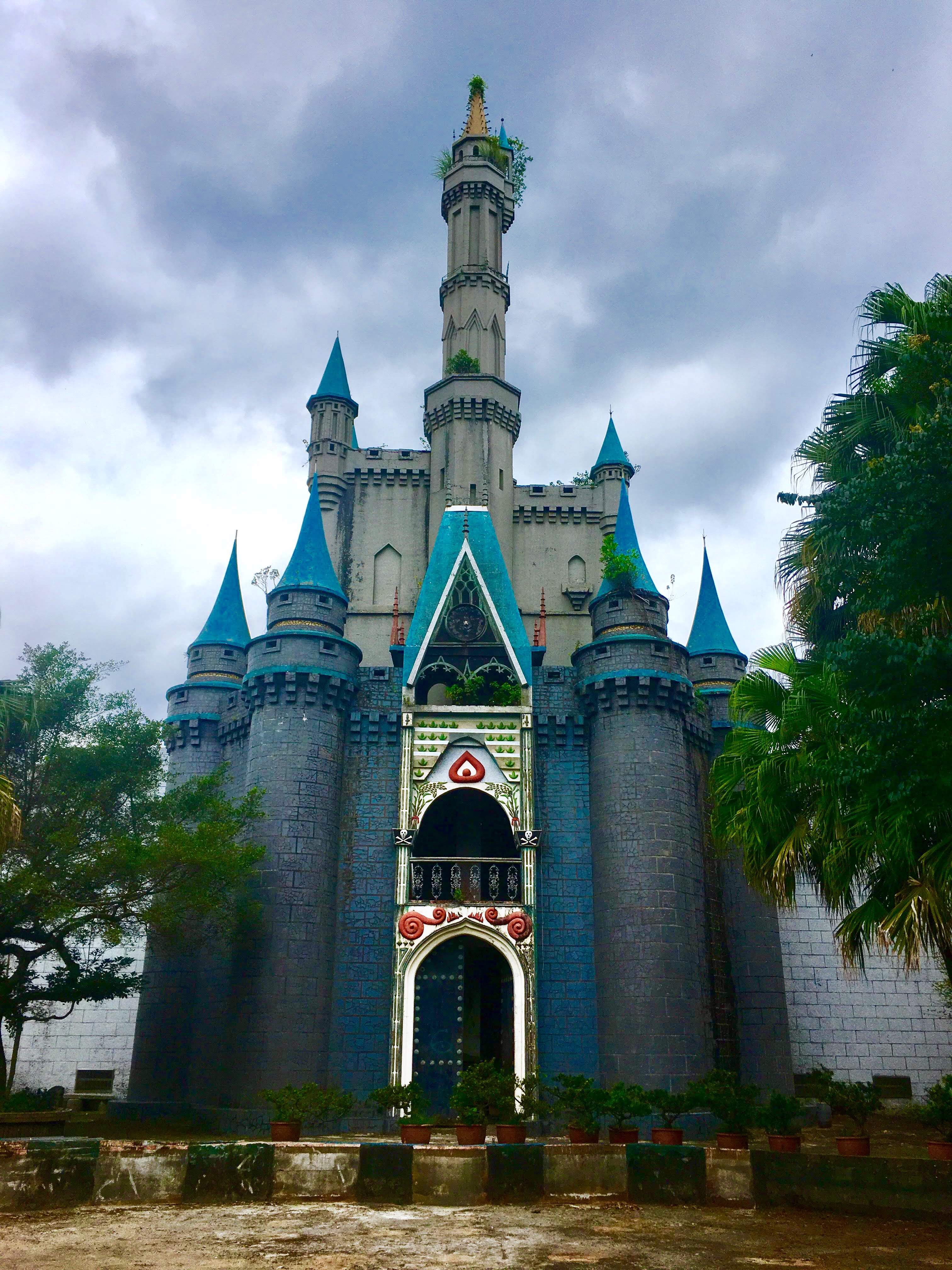
A fairy tale castle in the mountains? Buddha's World (佛陀世界) is an abandoned theme park laying in Taoyuan & Hsinchu counties. The place is now used for Buddhist practices and is open to visitors only on weekends from 9 am to 3 pm. The entrance is completely free.
The theme park, originally named Fairy Tale Land (童話世界), opened over forty years ago. It was eventually forced out of business by the local government a few decades ago due to environmental issues concerning water conservation in the Shihmen Reservoir.
Later, the place was purchased by a Buddhist sect with plans to develop it into a Buddhist theme park for tourists. However, the same environmental concerns prevented any construction from taking place.
The ruins of the Fairy Tale Castle are the main attraction here. The building appears destroyed and overgrown with trees but still provides a good backdrop for pictures.

Unfortunately, it has started to rain. We have only been here for half an hour and now we have to head back home. It's a pity because our place is an hour's drive from here, but we can't stay in the mountains for too long.

Buddhas world, abandoned theme park, taoyuan, hsinchu, Taiwan

Buddhas world, abandoned theme park, taoyuan, hsinchu, Taiwan

Buddhas world, abandoned theme park, taoyuan, hsinchu, Taiwan

Buddhas world, abandoned theme park, taoyuan, hsinchu, Taiwan

amwf couple, polish-taiwanese cpuple, Buddhas world, abandoned theme park, taoyuan, hsinchu, Taiwan

Address:

306新竹縣關西鎮23號佛陀世界-金剛

October 26, 2017

Tainan Travel: The history of Anping District

On the way to Kaohsiung, we decided to make a stop in Tainan and visit the Anping District, which has some interesting historical sites. We purchased tickets to visit multiple places at once to save on costs. The entrance fee for each place is around 50 NTD.

Anping was originally called Tayouan by the Dutch and Portuguese, and there were various versions of the name, including different Chinese transliterations. The Dutch occupied Anping in 1624 and built a defensive fortress, which was completed in 1634. The fortress, initially constructed with sand and wood due to a lack of masonry materials, was named Zeelandia. In 1662, Zheng Chenggong captured the Dutch-controlled city and renamed it Anping Town. He transformed the inner city into the inner government. In 1683, the name Formosa was changed to Taiwan, and Fort Zeelandia served as an international business center during the 17th century when Europeans sailed to Asia for trade. In the same year, the entire island was officially named Taiwan, replacing its previous name of Formosa.

Unfortunately, I encountered a problem with my phone and lost some of the pictures. However, we also visited the museum of Fort Zeelandia, which had a nice exhibition showcasing old vases and other artifacts found on the grounds. Unfortunately, we didn't have a chance to visit Anping Old Street on this occasion as it was very crowded, and we couldn't find any available parking spaces.

anping old fort, fort zeelandia, tainan, Taiwan

anping old fort, fort zeelandia, tainan, Taiwan

Anping Old Fort (安平古堡)

One of the places to visit is Anping Old Fort (安平古堡), also known as Fort Zeelandia. The fort was built in 1634 and took 10 years to complete. It was constructed by the Dutch East India Company during their 38-year rule over the western part of the island. Anping Old Fort became an international business center during the 17th century, attracting European traders. Today, the remaining Dutch-era structures consist of the brick walls in front of the old castle in the south of the city.

 Eternal Gold Castle (億載金城)

Another place to explore is the Eternal Golden Castle (億載金城). Built in 1876, the castle took only 2 years to complete. It was established by Qing officials to defend the island against Japanese invasion. However, during the Japanese occupation, the fortress was not properly maintained. During the Japanese-Russian War, some of the cannons from the Golden Castle were sold to compensate for the economic losses caused by the war. Furthermore, due to advancements in weaponry and changes in military strategies, the fortress lost its military value. Nevertheless, the Japanese government later listed it as a tourist attraction in Fucheng and renovated it, including changing the wooden bridge leading to the fort into a reinforced concrete bridge adorned with stone.

eternal golden castle, fort zeelandia, tainan, Taiwan

eternal golden castle, fort zeelandia, tainan, Taiwan

eternal golden castle, fort zeelandia, tainan, Taiwan

eternal golden castle, fort zeelandia, tainan, Taiwan

Anping Tree House and Tait & Co. Merchant House

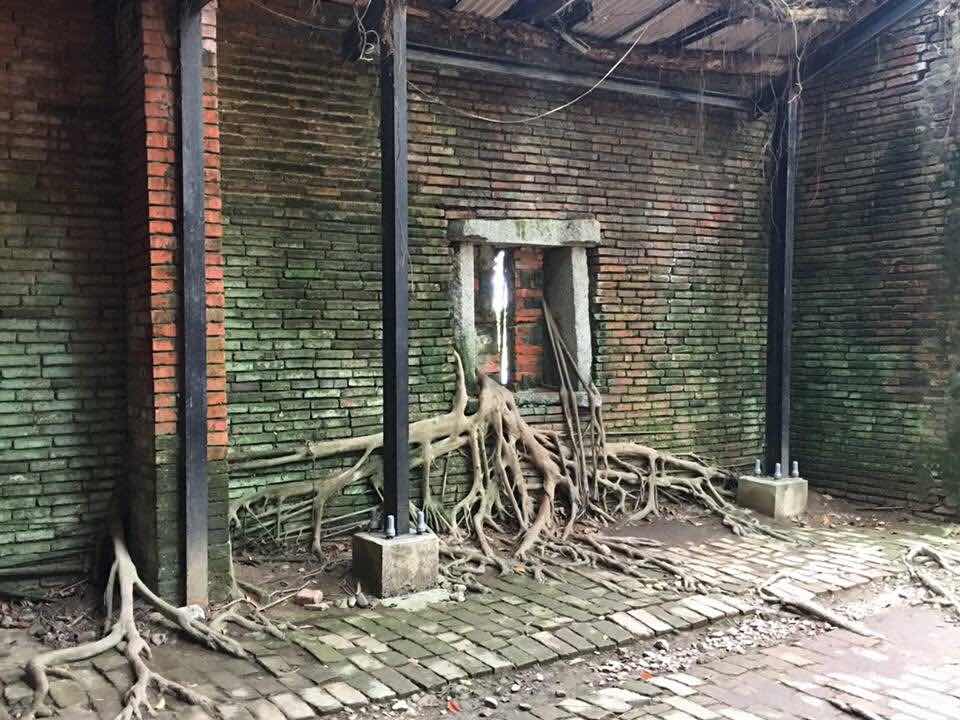
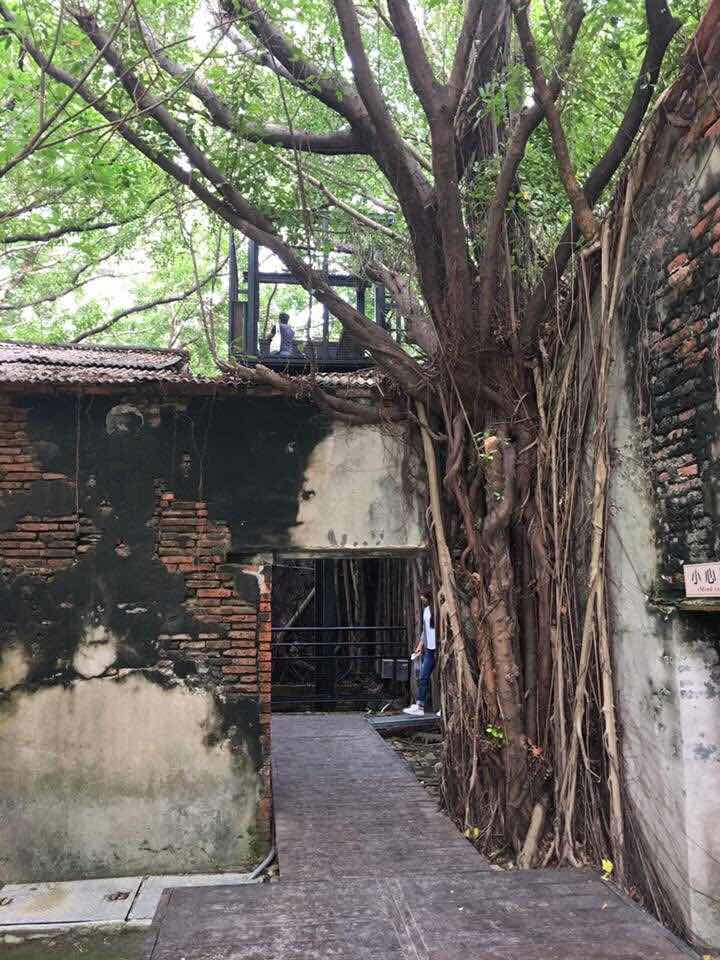
We also visited the Anping Tree House and Tait & Co. Merchant House. Originally a trading company's warehouse in 1867, it later served as the office and warehouse for the Japanese Salt Company in 1911. After World War II, it became the office for the Tainan Salt Field. In 1979, the Tainan Municipal Government took over the building, and with sponsorship from Chi Mei, it was transformed into a museum. Today, the abandoned building is overgrown with banyan trees, giving it an eerie atmosphere reminiscent of a horror movie set. The Anping Tree House has been open to the public since 2004.


anping tree house, fort zeelandia, tainan, Taiwan

anping tree house, fort zeelandia, tainan, Taiwan

Deyang Battleship

Another interesting attraction in Anping is the Deyang Battleship. After its retirement in 1978, the ship was transported and converted into an exhibition. Visitors can explore the ship's interior, view old maps and machinery, and even sit behind the steering wheel to imagine how it operated during its active service.

daeyang battleship, fort zeelandia, tainan, Taiwan

daeyang battleship, fort zeelandia, tainan, Taiwan

daeyang battleship, fort zeelandia, tainan, Taiwan
   

Address: 

1. Anping Old Fort: 708台南市安平區國勝路82號安平古堡
2. Eternal Golden Castle: 708台南市安平區光州路3號億載金城
3. Former Tait & Co. Merchant House: 708台南市安平區古堡街108號英商德記洋行
4. Anping Old Street: 708台南市安平區延平街安平老街

July 15, 2017

Taipei Travel: The Remains of 13 Levels ~ Exploring Jinguashi Mining Area's Rich History

The Northern Coast of Taiwan is full of interesting places. Today, we are visiting the Remains of the Thirteen Levels (十三層遺址), also known as the Shuinandong Smelter (水湳洞精煉廠). It is located in the Jinguashi mining area in the Ruifang District of New Taipei. This Japanese-era copper smelting refinery is now one of the abandoned places in Taiwan. It's just a short walk from the Golden Waterfall, which is another interesting place to see.

Remains of the Thirteen Levels (水湳洞選煉廠遺址)

In 1905, the mining directory of the Jinguashi mine discovered gold, sulfur, arsenic, and copper ore in the area. That same year, a factory was established here to process gold and copper ore. By 1907, the Jinguashi mine produced 47 metric tons of copper and gained worldwide fame. The development of the Shuiyudong settlement is closely related to gold and copper ores. The employee buildings were built on the hillside opposite the Jiufen River, with the buildings divided into four and six households.

After actively mining the Jinguashi gold mine, the Japanese discovered sulfur-arsenic copper in 1920 and converted the mine into a copper mining and refinery operation. The Shuinandong Smelter was completed in 1933 and operated by war prisoners during the Japanese occupation. The smelter was built on a hillside and actually has 18 levels. It was the largest smelter in Asia at that time. In 1945, it was taken over by the Taiwan Gold and Copper Mining Bureau and converted into Taiwan Metal Mining in 1955.

This area was rich in gold and copper, but production began to decline in the 1970s. After 1987, the business ended, and soon this place became abandoned. In 2007, the site was registered as a historic building. The Remains of the Thirteen Levels is the largest site in the former Jinguashi area, which used to produce 50,000 tons of copper per year.

This place also boasts one of the world's longest concrete pipeline ventilation systems. These pipes are built along the hillside, with each pipe measuring about 1 km long. These large pipes can be easily seen from afar. In the past, it was necessary for copper smelting to discharge a large amount of copper smoke, which is highly toxic. This concrete pipeline ventilation system is a witness to the development of Taiwan's mining industry. In 2008, it was recognized as a cultural landscape.

See also: Golden Waterfall

shuinandong smelter, remains of 13 levels, ruifang, new Taipei, taiwan

shuinandong smelter, remains of 13 levels, ruifang, new Taipei, taiwan

shuinandong smelter, remains of 13 levels, ruifang, new Taipei, taiwan

shuinandong smelter, remains of 13 levels, ruifang, new Taipei, taiwan

shuinandong smelter, remains of 13 levels, ruifang, new Taipei, taiwan

shuinandong smelter, remains of 13 levels, ruifang, new Taipei, taiwan

shuinandong smelter, remains of 13 levels, ruifang, new Taipei, taiwan


shuinandong smelter, remains of 13 levels, ruifang, new Taipei, taiwan

shuinandong smelter, remains of 13 levels, ruifang, new Taipei, taiwan

Golden Waterfall (黃金瀑布)

Near this place, you can also see the Golden Waterfall (黃金瀑布). Due to abundant rainfall, minerals are washed out of the stones, causing the water to turn yellow and flow into the river and then into the sea. The color of the waterfall existed long before the mining period and is a natural occurrence caused by heavy metals in the ground. The water has a beautiful golden color when the sunlight hits it, but touching it isn't advisable due to its toxicity.

golden waterfall, ruifang, new Taipei, taiwan

golden waterfall, ruifang, new Taipei, taiwan

Yin Yang Sea (陰陽海)

The water from this area also flows into the sea, creating a unique landscape called Yin Yang Sea (陰陽海). Located on the Northern Coast, the Yin Yang Sea is truly a special sight. The name was given due to the contrast between the yellowish-brown water and the natural blue color of the sea. Initially, people used to think that the yellow color was a result of pollution from the Taijin Company. However, even after the copper company stopped operating a few years ago, the sea's colors remained the same. Geological studies have helped explain this mysterious color of the sea.

yin yang seal, ruifang, new Taipei, taiwan

Address:

1. Remains of Thirteen Levels: 224新北市瑞芳區水湳洞選煉廠遺址
2. Golden Waterfall: 224新北市瑞芳區金水公路黃金瀑布