Showing posts with label Hsinchu (新竹). Show all posts

October 15, 2025

Long Weekend #3: A Trip to Miaoli’s Lion Head Mountain


Travel Date: 2025/10/10

The last of the long weekends couldn’t go without a little trip. This time we stayed in Miaoli and drove around the mountains — I’ve honestly had enough of beaches this year with all the rain and typhoons passing by, so mountain scenery felt like the perfect change.

We revisited Lingxia Cave (靈霞洞), a truly unique site with its Baroque-style archway built right into the rock face. Our second stop was Shuilian Cave (水簾洞), another place we had visited before, but only at night. This was actually our first time seeing it clearly in daylight — and it didn’t disappoint! Still, I’d also recommend coming here during firefly season (around April and May), as the area is known for having plenty of them lighting up the surroundings.

Since it wasn’t far from Nanzhuang, we decided to drive there in search of some persimmons — and it was absolutely worth it. We bought 13 large, perfectly ripe ones for just 200 NT, which felt like such a deal considering that in city shops, a single one can cost 50–60 NT!

Lion’s Head Mountain (獅頭山) – A Sacred Mountain Between Miaoli and Hsinchu

Designated a Provincial Scenic Area in 1993, Lion’s Head Mountain now forms part of the Sanshan National Scenic Area, which also includes Emei Lake and Beipu Old Street. The entire zone spans over 24,000 hectares and offers a blend of Buddhist heritage, Hakka culture, and natural beauty.
There are four main hiking trails, most beginning near the Shitoushan Visitor Center on the Hsinchu side. The best known is the Shishan Historic Trail (獅山古道), which crosses from Hsinchu to Miaoli, connecting a chain of temples such as Yuanguang Temple and Quanhua Temple.

The trails are well-marked and moderate in difficulty, making them ideal for casual hikers. On weekends, you’ll often see local hikers — especially the elderly — walking peacefully between temples, incense drifting through the forest air.
Many of these temples are uniquely built into the landscape — partly within caves, beneath cliffs, or along rock walls — creating a mystical and peaceful atmosphere.
If you visit around mealtime, don’t miss the vegetarian kitchen at Quanhua Temple, where monks serve simple Buddhist meals by donation at 6:30 a.m., noon, and 5:30 p.m.

Nestled on the border of Miaoli and Hsinchu counties, Lion’s Head Mountain (獅頭山) may rise only 492 meters high, but it’s one of Taiwan’s most culturally and spiritually significant peaks. Covered in dense forests, rocky cliffs, caves, and ancient temples, the mountain offers a serene retreat where nature and religion intertwine.

In 1892, a Buddhist monk named Pujie from Taoyuan discovered human bones inside a cave while exploring the area. To honor the deceased, he requested the construction of a temple — what became Shiyan Dong (獅巖洞) or Lion Cave Temple, near the mountain’s peak, whose shape resembles a lion’s head. Later renamed Yuanguang Temple (元光寺), it became the spiritual core that inspired the building of many more temples on the mountain, including Quanhua Temple (勸化堂) on the Miaoli side.


Lingxia Cave (靈霞洞)

One of the most fascinating spots is Lingxia Cave (靈霞洞), a natural stone cave temple built in 1917. Its distinctive Baroque-style archway hides a small sanctuary enshrining Sakyamuni Buddha, Kāla Bodhisattva, Skanda Bodhisattva, Ananda, and Avalokitesvara Bodhisattva. The inscriptions “山空” (mountain emptiness) and “水深” (water depth) carved beside the entrance were added by the monk Dexin in 1932.

In spring, the temple is often surrounded by a sea of clouds, and sunlight filtering through the mist paints the rock faces in glowing, shifting colors — an otherworldly sight that perfectly matches the temple’s name and spirit.


Shuilian Cave (水簾洞) 

For an easy and scenic walk, try the Shuilian Cave Trail, located near the Lion Mountain Visitor Center. The short, paved path leads to Fanyin Temple, a small sanctuary built in 1902 within the largest natural cave on the mountain. A thin waterfall flows down the rock face like a curtain of water — giving the cave its name, Shuilian, meaning “water curtain.”

The trail feels like entering another world — filled with the sounds of trickling water, birdsong, and rustling leaves. Pebble Creek nearby is home to fish, dragonflies, and birds, making it a peaceful stop for reflection.
It’s also a popular spot for firefly watching during the season around April and May.


Nanzhuang Old Street (南庄老街)

Nanzhuang Old Street has a strong Hakka nostalgic flavor, it attracts many tourists during holidays. The main attractions include Yongchang Temple, Old Post Office, Nogizaki, Osmanthus Lane, and Washing Pit. The traditional old street is centered around Zhongzheng Road, with numerous businesses on both sides. 
The laundry pit, located at the end of Guihua Lane, was a place where local residents used to wash clothes, vegetables, and fruits in the early years. The stone washboard above it preserves relics of the Hakka people's diligent and thrifty life in the past.

Nanzhuang's development dates back to the Qing Dynasty, and during the Japanese era, it was a mining area for camphor and coal. Following the severe damage caused by the 1935 earthquake, the Japanese were commissioned to plan the reconstruction project, resulting in the landscape of two-story Japanese-style wooden buildings on both sides of Zhongzheng Road. 

Apart from admiring the characteristic buildings from the Japanese colonial era, you must try the old street's specialty, osmanthus brew, and special Hakka delicacies. The suspension bridge and Nanzhuang Waterfront Park are also excellent places to enjoy the beautiful scenery of Nanzhuang.
Osmanthus Alley of Nanzhuang Old Street is renowned far and wide and is a must-visit for tourists. Various snacks, delicacies, and osmanthus meals are sold in the simple and elegant alleys, allowing tourists to experience the guest house style. 


March 4, 2025

When Hsinchu Turns Pink: Taiwan’s Stunning Cherry Blossom Season


Travel Date: 2025/03/02

Because of my husband's work, we haven’t had time to go out on weekends. Even though it’s been nearly a month since we came back from Poland, this was our first time going out sightseeing. Finally, we decided to take a trip on March 1st, but when we arrived in the mountains of Miaoli, the cherry trees had already lost their blossoms.
A year without cherry blossoms feels like a year wasted, so the next day, we hopped on our scooter and rode up the mountains again—this time to Hsinchu. We passed by Beipu, and the road leading to the cherry farm was beautiful, with mountain views and even some cherry trees along the way.

I would recommend taking a scooter, as the mountain roads are quite narrow, and encountering oncoming cars can be challenging. There was a traffic jam well before the entrance to the farm because the road only allows one-way traffic for cars. If you don’t arrive early, you may struggle to find parking and end up waiting in the car for a long time.
The road is steep, so parking at a distance and climbing up would still be quite far. Once you arrive, you still have to climb several levels to reach the best viewpoints, so unless you’re in great shape, it can be quite tough.
If you're reading this soon after publication, the cherry blossoms were in full bloom just two days ago (March 2), so you still have a chance to see them before the season ends!


The entrance fee to Shan Shang Ren Jia is 200 NT per person and cannot be exchanged for anything. However, we later noticed that the ticket allows you to participate in a lottery. With the number of visitors, though, you’d have to be very lucky to win. And what’s the prize? A stay at their accommodation—only 20 winners in total.
Inside, we enjoyed plenty of beautifully pink cherry trees. The trees are planted on different levels and surrounded by tea bushes. There’s a restaurant and a few resting areas, though the prices seemed quite high—220 NT for tea felt a bit extreme to me.

The area is quite large, so you can easily spend two hours walking around. It’s located high in the mountains, and in one of the gift shop photos, we even saw a picture of the area covered in snow!
Shan Shang Ren Jia sits at an altitude of 1,200 meters and covers 5 hectares. It’s close to the Sanshan National Scenic Area and is surrounded by towering Yoshino cedars. Nearby, farmers grow peaches, plums, persimmons, and cold-resistant organic vegetables. Sometimes, you can even see a rolling sea of clouds in the distance, making the scenery truly breathtaking.

The weather was absolutely beautiful when we arrived, with plenty of sunshine. We got there quite early, around 11 AM, but by noon, the sun started hiding behind the clouds. After a long period of cool weather in Taiwan, it suddenly felt super hot—and when we checked the temperature, it was 28°C!
Most of the trees had bright pink flowers, but there was also a large white cherry tree and some dark pink ones. The darker cherry blossoms seemed to be the first to bloom and the first to finish their season. There were a lot of people, so taking photos with just the trees in the background was quite difficult.
We also saw several birds. Besides ducks and chickens, there were peacocks and parrots as well!

Since there are many stairs and slopes, walking around can be tiring for older visitors. Overall, it was an amazing place to visit. When we left around 1 PM, there were still many cars waiting to enter. I definitely recommend arriving before noon when the sunshine is at its best.
On the way back, we stopped in Beipu to find lunch—crystal dumplings, noodles, and luwei. Beipu was quite packed with people, but it was also filled with Hakka foods, many of which don’t look like the typical street food you’d find outside of Hakka towns. That being said, Hakka food is usually really tasty!

That’s all for this trip! I hope you enjoyed reading about our adventure. See you in the next post!


Address: 311-41新竹縣五峰鄉大隘村23鄰468-5號

March 21, 2024

Exploring Nature's Beauty: A Day Trip to Fengxiang Waterfall and Beipu Cold Springs


Travel Date: 2024/02/12

During the Lunar New Year holidays, our family had initially planned to visit Taipei Zoo. However, as often happens, traffic intervened and rerouted our plans. Spontaneously, we opted to head towards the mountains instead, seeking the tranquility of nature.

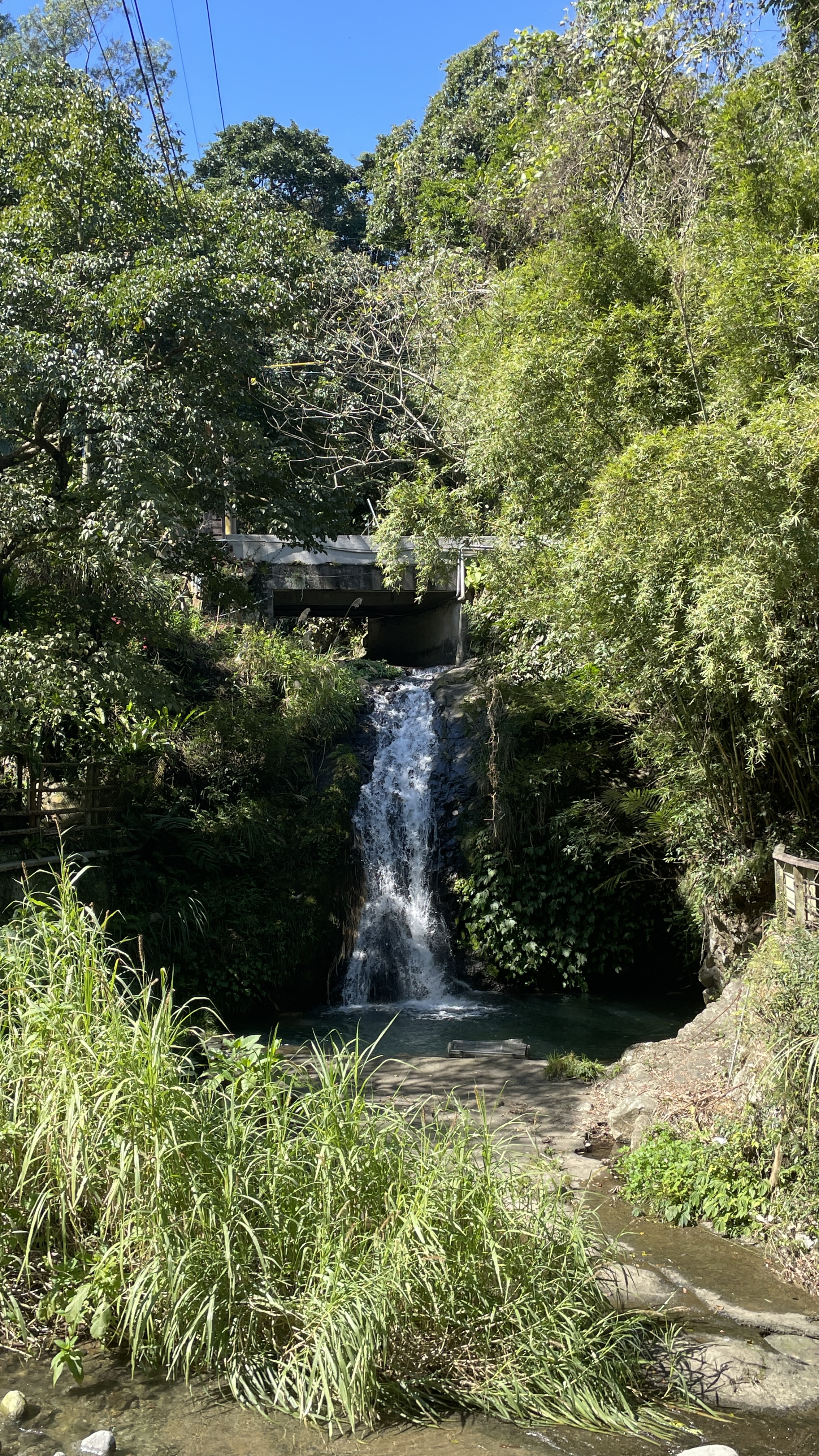
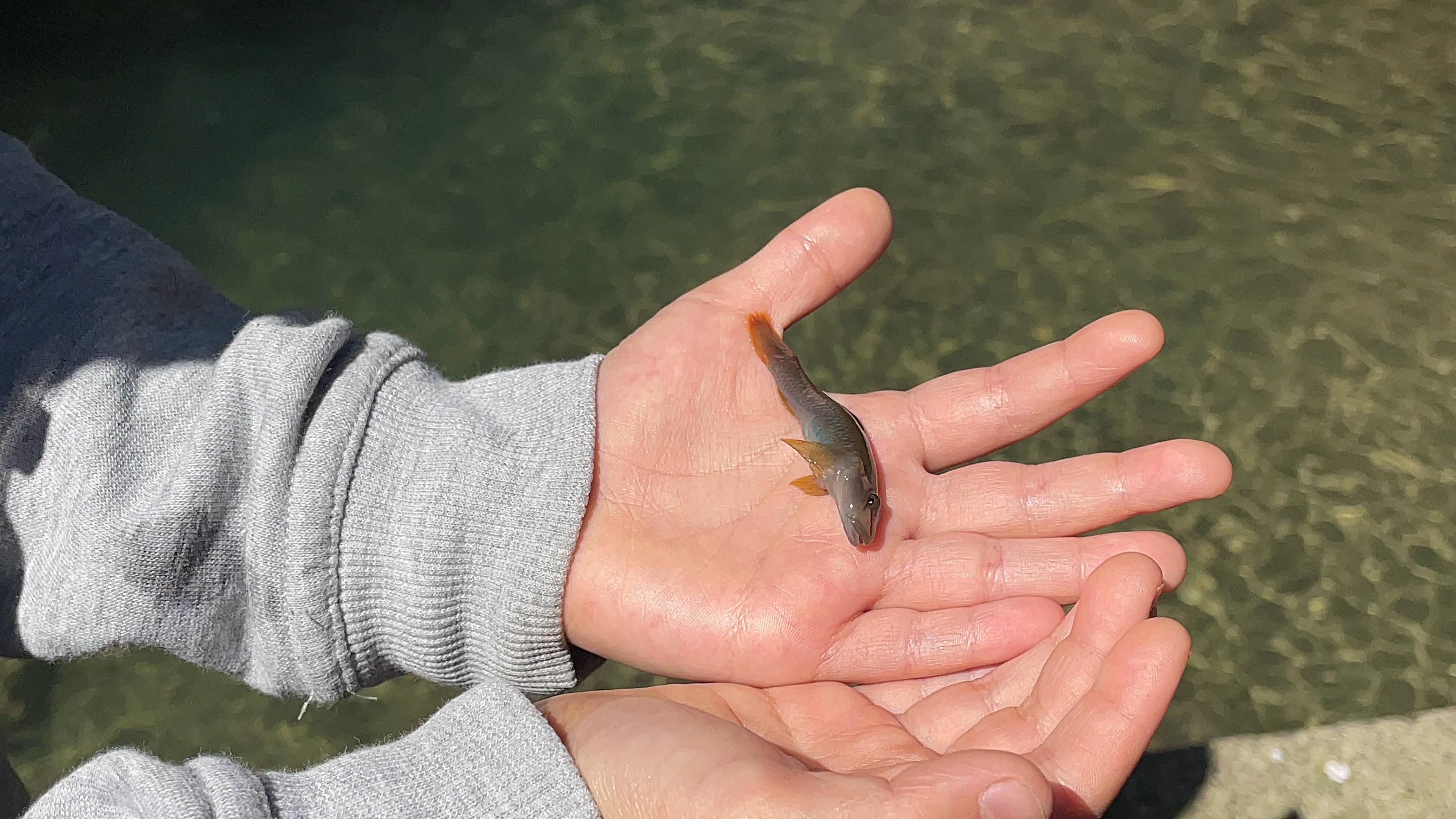
Exiting the highway near Hsinchu, we embarked on a familiar path towards Fengxiang Waterfall (豐鄉瀑布), a destination we had explored the previous summer. As we approached, the awe-inspiring sight of the cascading water greeted us once more. Surprisingly, we found ourselves among the few visitors, aside from a couple enjoying a serene fishing session. Engaging with the local ecosystem, we discovered fascinating insights into the fish and frogs that call this area home.

Originating from higher elevations in the mountains, the water is cool even in the summer. Unlike our previous visit, when the site bustled with activity, today we savored the solitude of our surroundings. It's no wonder families frequent this spot, considering its safety and natural playground for children. Reflecting on our past experience, I recalled capturing the essence of this place in a video during our previous visit, which you can also explore.

On our journey homeward, we made an impromptu stop at Beipu Cold Springs (北埔冷泉). Despite the chilly waters, a handful of adventurous souls braved the cold for a refreshing dip. Personally, I've never been fond of cold water, even during the warmer months. Yet, observing others revel in the river's embrace during summer made me question my resilience. Growing up in Poland, where cold waters were the norm, I never shied away. However, living in Taiwan has shifted my perspective, fostering a newfound appreciation for warmth.

With the off-season upon us, the usual bustle was absent, and the amenities typically available during summer were nowhere to be found. Nonetheless, basking in the sunlight, we relished the tranquility before bidding farewell to our serene sanctuary and journeying homeward.


Address:
1. Waterfall: 312新竹縣橫山鄉竹35鄉道旁號豐鄉瀑布
2. Cold Springs: 314新竹縣北埔鄉北埔冷泉