Travel Date: 2025/10/04
Three long weekends in a row - it can be both a blessing and a curse. On the bright side, having an extra day off gives you a chance to go somewhere new or simply relax. But let’s be honest - no matter where you go, it’s bound to be crowded, and being stuck in traffic is definitely not the fun part.
During the Mid-Autumn Festival weekend, we decided to drive to Nantou, more specifically to Dalun Mountain Ginkgo Forest, a place we last visited five years ago. I was hoping to see the trees turning golden once again.
Dalun Mountain Ginkgo Forest (大崙山銀杏森林)
The mountain road wasn’t particularly wide in many sections, but surprisingly, there were no cars. The highway was clear, the mountains were peaceful, and when we finally arrived, there were only a handful of people - and most came after us!
We wandered through the empty tea farms shaded by ginkgo trees… well, not so shaded, since most of the trees had already lost their leaves. The view I expected and the one I got weren’t quite the same - only a few trees had yellow leaves, and many were still green. Even coming later in the season might not make much difference this year. I’m not sure why the leaves fell so early, but when we visited in mid-November five years ago, the forest was much more vibrant.
Since there are no shops or restaurants nearby, it’s best to bring your own snacks and water. We arrived quite early, around 11 a.m., and still caught some sunshine before the fog rolled in - earlier than I expected. Luckily, we still enjoyed a blue sky and stunning mountain views before the mist covered everything. Once it got foggy, we drove down to Lugu town for lunch.
About the Dalun Mountain Ginkgo Forest
The Dalun Mountain Ginkgo Forest sits at an altitude of 1,300–1,600 meters, with a cool, foggy climate year-round. The surrounding area is also famous for its Shanlinxi mountain tea. If you enjoy tea or want to experience walking among the clouds while admiring lush mountains and savoring local food, this is a great spot.
The forest belongs to tea farmers Zhong Yiquan and Zhong Xiangji, who manage the Tianjiaxiang Tea Garden. Besides producing tea, they offer light meals such as small hot pots and honeyed chicken drumsticks, made with organic vegetables grown at home - all pesticide-free.
Ginkgo is a species that dates back to the Mesozoic era, earning it the nickname “living fossil.” It’s the only broad-leaved deciduous tree among gymnosperms and can grow up to 20–35 meters tall. Its seeds, called ginkgo nuts, are edible and often used in Asian cuisine.
In Taiwan, Dalun Mountain has the largest cultivated Ginkgo biloba forest, covering about 60–80 hectares. The tree’s fan-shaped leaves turn from green to brilliant gold in autumn - a truly magical sight when the timing is right.


Shima Park (石馬公園) - October Cherry Blossoms
After eating, we stopped by Shima Park, where cherry trees were in bloom - yes, cherry blossoms in October! We actually saw them here five years ago too, which is why I wanted to check again. The park is not very large but beautiful, with walking paths and a few benches surrounded by seasonal flowers. It’s a lovely stop if you’re already in the area.


A Quiet Afternoon in Jiji Town
Since it was still early, we decided to drive to Jiji Town. To my surprise, the town felt almost deserted - very different from how I remembered it before.
Our first stop was Mingxin Academy (明新書院), a traditional three-sided courtyard building with red brick walls and a serene atmosphere. Built during the Guangxu reign, it was established when the local camphor trade was booming. The academy honors Confucius, the Emperor Wenchang, and other deities related to learning and literature.
Over the years, it has hosted cultural and folk events, helping preserve local traditions. The main hall’s rooftop features detailed carvings of dragons, flowers, and a boy riding a kirin — all beautifully symbolic. The site was designated a Class III historical monument in 1985 and later restored using traditional materials.


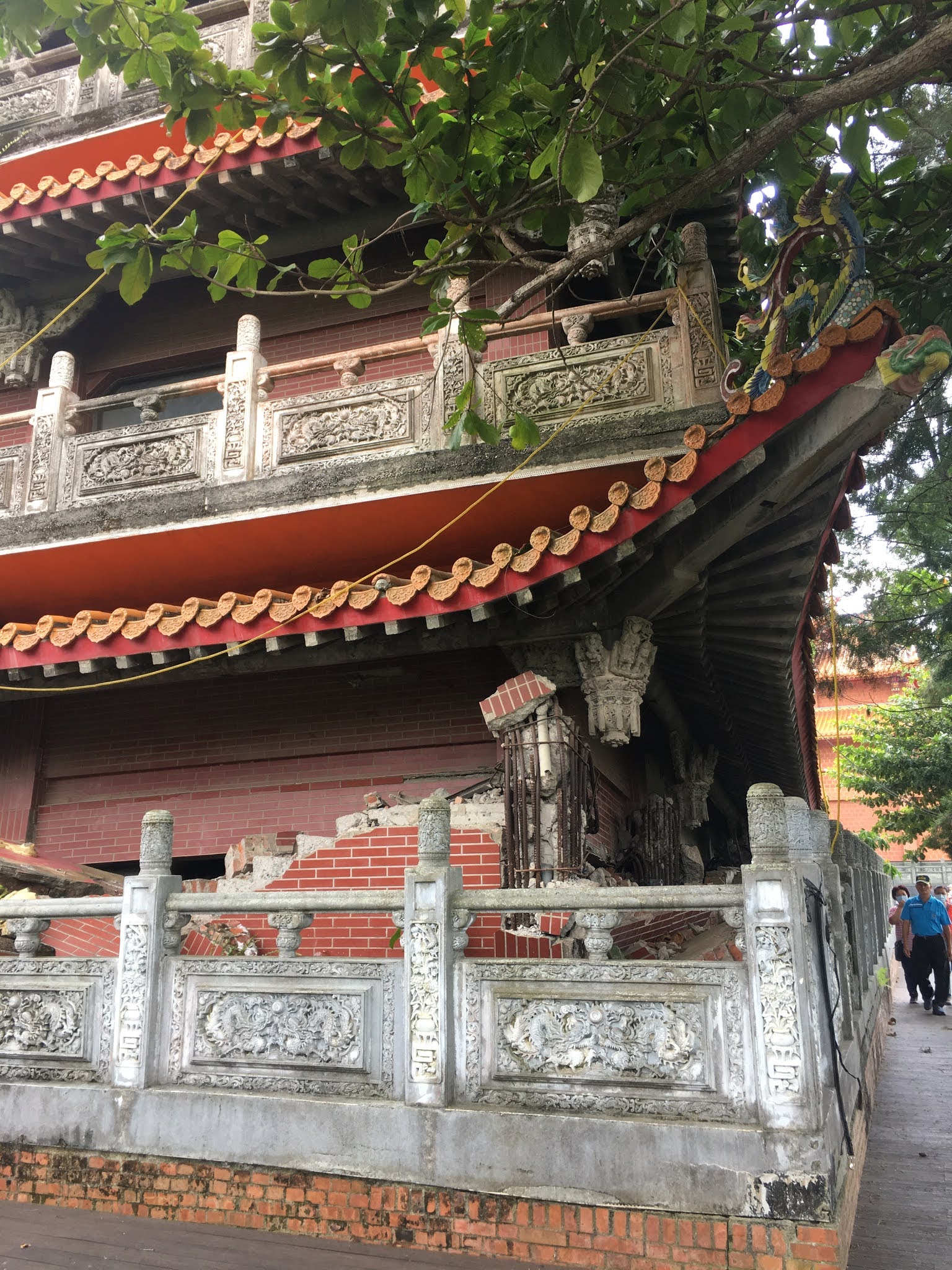
Our next stop was Jiji Wuchang Temple (集集武昌宮), dedicated to the God of Xuantian. The temple has a powerful history - the original structure collapsed during the devastating 921 earthquake in 1999, shortly after being expanded. The ruins remain preserved beside the newly rebuilt temple, which opened in 2013.
Seeing the remains of the old temple reminded me how fragile things can be, and I sincerely hope never to face a quake that strong.
Even though this trip didn’t turn out quite as I imagined - with fewer ginkgo leaves and foggy weather - it was still a lovely getaway from the city. The quiet mountains, fresh air, and peaceful scenery made it worth the drive.
Sometimes travel isn’t about finding the perfect view, but about slowing down and appreciating the moment - even when things don’t go exactly as planned.