Nanzhuang Township is located in Miaoli County, Taiwan. It belongs to the Zhonggang River Basin and is part of the Shenshan National Scenic Area. The majority of residents are Hakka, with a diverse population that includes aboriginal ethnic groups.
The township's name comes from its seat and largest settlement during the Japanese occupation, later changed to Nanzhuang Township after World War II.
Historically, the area was inhabited by Saisiyat and Atayal peoples. During the Qing Dynasty, it belonged to Zhuluo County and later became part of Hsinchu County. The Han Dynasty's reclamation efforts began in the early 19th century, with Huang Qiying playing a key role.
The Qing government's pass in Sanwan and the establishment of Nanzhuang Street Market in the 1830s marked further development. After the Peony Society incident, Nanzhuang became part of Hsinchu County. During Japanese occupation, administrative changes occurred until stability in 1901.
The "Nanzhuang Incident" took place in 1902 when Japanese were dissatisfied with the brain-making industry's conditions. In 1920, administrative divisions were restructured, and Nanzhuang became part of Zhunan County, Hsinchu Prefecture. In 1945, Taiwan was handed over to Taiwan, and in 1950, Nanzhuang Township became part of Miaoli County. Today, it remains a flatland aboriginal township.
Nanzhuang Township, the second-largest in Miaoli County, Taiwan, covers 165.49 square kilometers.
It features hills and mountains, with 1,763 hectares of agricultural land mainly in Nanfu and Yuanlin villages.
Altitude ranges from 120 meters to over 2,200 meters, divided into two mountain systems: Gari Mountain Block and Baguali Mountain Block.
Nanzhuang has a subtropical climate with an average annual temperature of about 20.7 degrees Celsius.
Mild winters with an average January temperature of 13.9 degrees Celsius.
Rainfall varies across the township, with higher averages in mountainous areas, contributing to abundant water resources.
As of 2022, Nanzhuang Township has approximately 38,000 households and a population of around 9,000 people. Nanjiang Village and Xicun have the largest and smallest populations, with 1,448 and 662 people, respectively.


Nanzhuang Old Street (南庄老街)
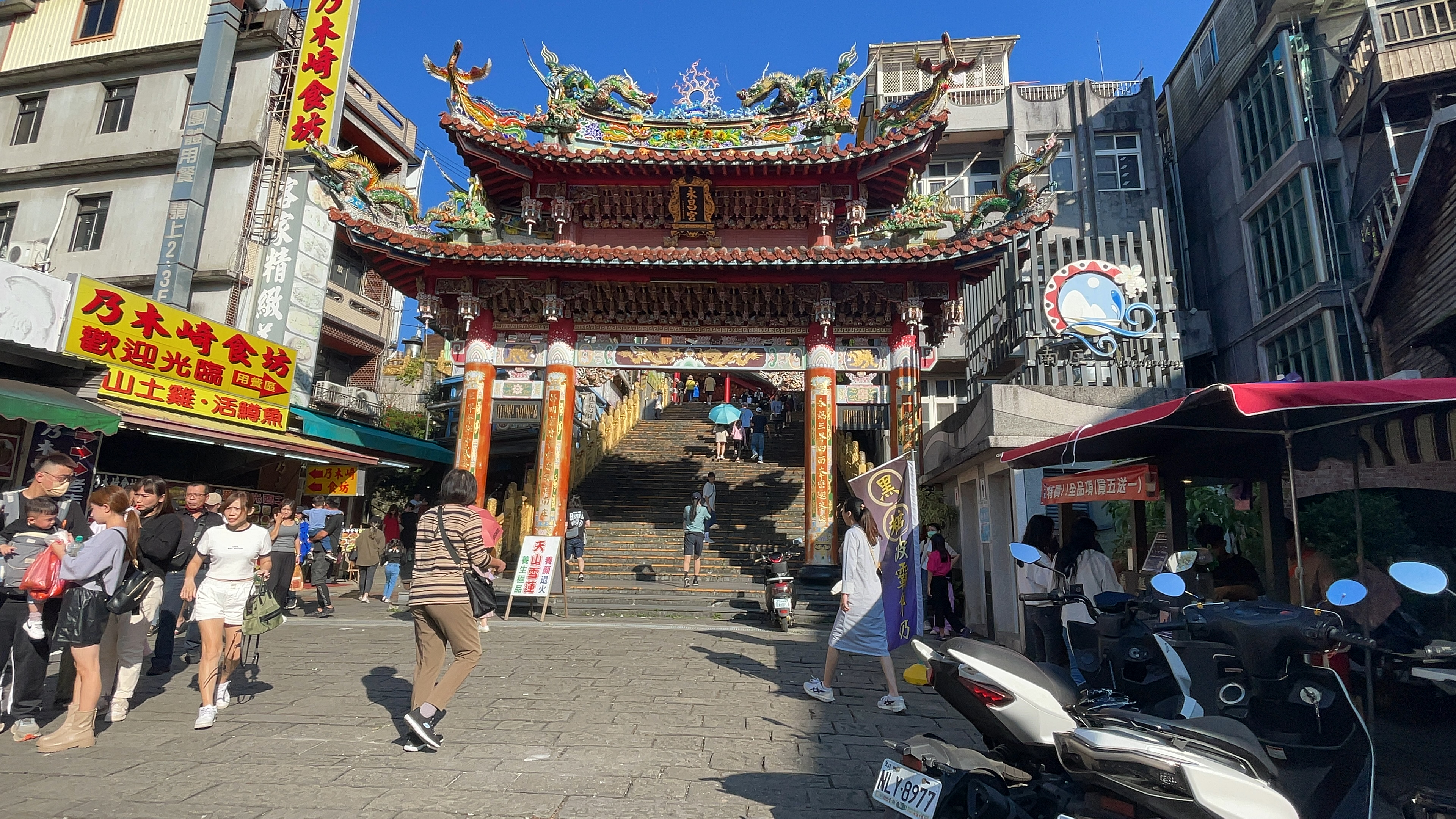
Nanzhuang Old Street has a strong Hakka nostalgic flavor, it attracts many tourists during holidays. The main attractions include Yongchang Temple, Old Post Office, Nogizaki, Osmanthus Lane, and Washing Pit. The traditional old street is centered around Zhongzheng Road, with numerous businesses on both sides.
Nanzhuang's development dates back to the Qing Dynasty, and during the Japanese era, it was a mining area for camphor and coal. Following the severe damage caused by the 1935 earthquake, the Japanese were commissioned to plan the reconstruction project, resulting in the landscape of two-story Japanese-style wooden buildings on both sides of Zhongzheng Road.
Osmanthus Lane originally referred to a noodle shop at the mouth of an alley on Zhongzheng Road. Through intentional efforts by the local government and business owners, the lane and its surroundings have become a well-known "Osmanthus Lane Community," gradually replacing Zhongzheng Road and becoming a familiar spot for tourists.
Apart from admiring the characteristic buildings from the Japanese colonial era, you must try the old street's specialty, osmanthus brew, and special Hakka delicacies. The suspension bridge and Nanzhuang Waterfront Park are also excellent places to enjoy the beautiful scenery of Nanzhuang.
Osmanthus Alley of Nanzhuang Old Street is renowned far and wide and is a must-visit for tourists. Various snacks, delicacies, and osmanthus meals are sold in the simple and elegant alleys, allowing tourists to experience the guest house style.
The laundry pit, located at the end of Guihua Lane, was a place where local residents used to wash clothes, vegetables, and fruits in the early years. The stone washboard above it preserves relics of the Hakka people's diligent and thrifty life in the past.


Nanzhuang Culture Hall / Old Post Office (南庄文化會館 / 老郵局)
Nanzhuang Old Street is situated on Zhongzheng Road and in the side alleys near Yongchang Palace. Apart from admiring the characteristic buildings from the Japanese colonial era, you must try the old street's specialty, osmanthus brew, and special Hakka delicacies. The suspension bridge and Nanzhuang Waterfront Park are also excellent places to enjoy the beautiful scenery of Nanzhuang.
The Nanzhuang Post Office was built in 1900 and still retains the architectural style of the Japanese occupation period. It holds historical significance and value. The building was reconstructed after the 1935 earthquake in central Taiwan. The telecommunications bureau had two flagpoles, and the telecommunications and post offices took turns raising and lowering the flag, which was quite interesting. In 1972, the telecommunications bureau moved out, and in 1985, the post office followed suit. After the old post office became vacant, it served as a rural nursery school, Nanzhuang Cultural Hall, and a classroom for the Air University.


Yongchang Palace (永昌宮)
Yongchang Palace was established in 1905. After the Guandaoshan earthquake destroyed the original site, eight individuals, including Mr. Zhong Lianfa, decided on relocation of the temple. The construction was completed in 1930, and three years later, the temple was officially consecrated. Thirty years after the move, in July 1975, the temple underwent reconstruction, and the golden statue of the Holy Spirit was enshrined in the niche. The three-story palace is oriented from east to west, seamlessly blending modern and traditional architectural elements. The main hall is dedicated to the worship of three emperors: the Jade Emperor, the Holy Mother of Heaven, the late Emperor of Five Grains, the Lord of Praise for Loyalty and Righteousness, and the God of Fude and Zheng. A plaque inscribed with "Emperor's Virtue Tianzun" hangs prominently, lending an air of solemnity to the palace. The temple houses significant cultural relics, including early bronze bells, wooden fish, and rice buckets dating back over a hundred years. Additionally, old photographs from the temple's past depict the details of its construction process. Yongchang Palace serves as a religious focal point for the villagers of Nanzhuang.