Showing posts with label Houlong (後龍). Show all posts

June 6, 2025

White Lilies and Ocean Wind: A Ride Along Miaoli’s Coast


Travel Date: 2025/06/01

There’s something magical about setting out on a scooter with no strict schedule - just the sun on your back, the scent of summer, and a vague destination in mind. One hot morning in early June, we left Toufen with a bottle of water, a camera, and a simple goal: to visit Houlong’s Cape of Good Hope (後龍好望角風景區) and hopefully catch the white lilies I’d heard were blooming on the hills.

We had been here long ago to enjoy the view, and it feels different nowadays. I remember hills covered in grass, but now a large part of the area has been turned into a designated car and scooter parking lot. A public toilet has also appeared here. No surprise this place is full of people these days.

The ride itself is part of the adventure. As you head toward the coast, the urban buzz of Toufen slowly fades into open fields, gentle hills, and the occasional roadside fruit or food stand.
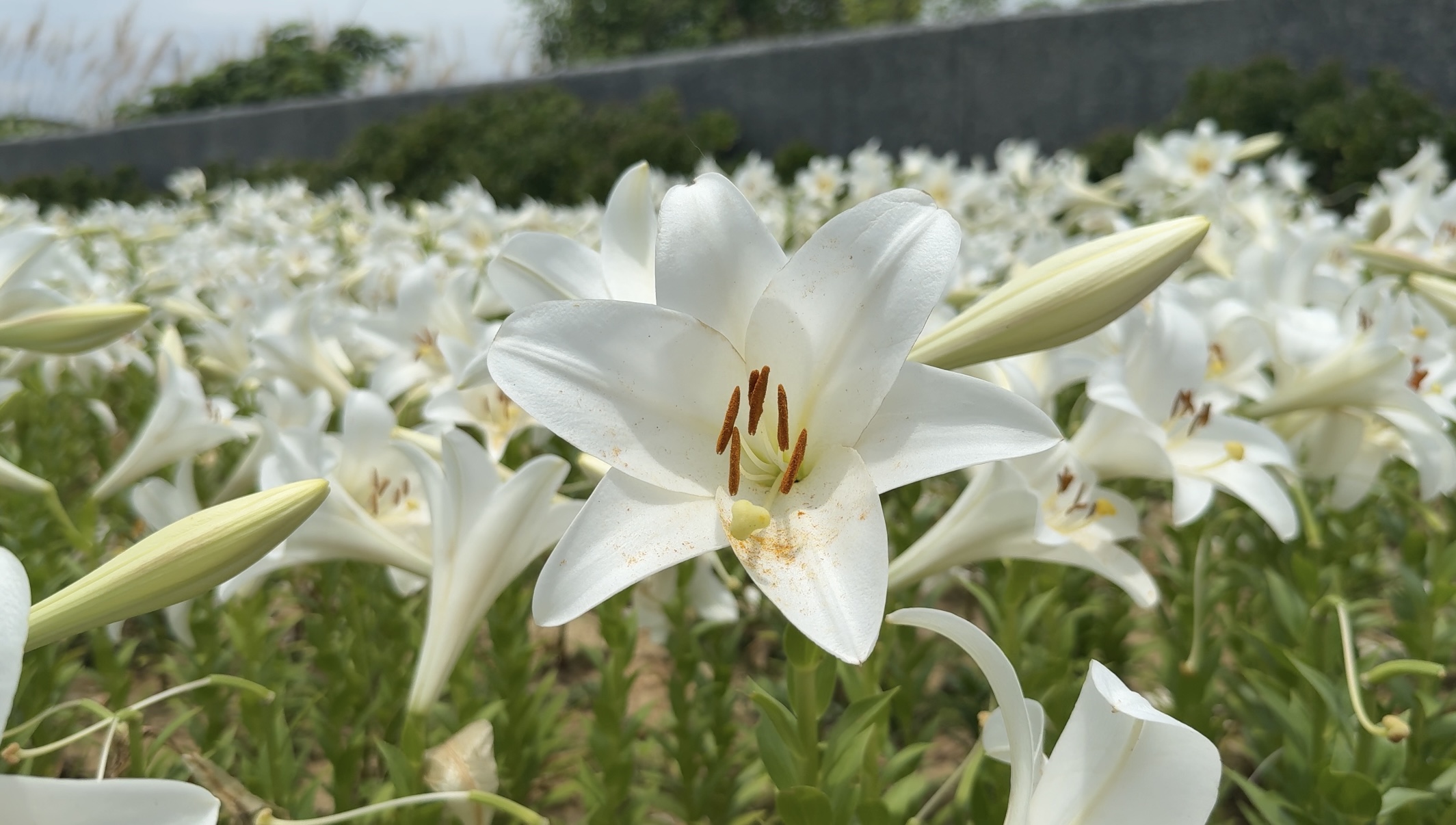
And then, as we climbed the slope, there they were: elegant white lilies, blooming in clusters across the green hillsides. These lilies bloom from May to June, with the blue sea behind them and wind turbines slowly turning in the distance.

Keep in mind that driving a car here might not be as easy as you think—the road is quite narrow, and in several spots, we saw cars stuck because no one wanted to give way or reverse. At one point, we waited for about five minutes and saw over 20 cars coming down from Houlong, but it wasn’t until one finally backed up to make space for those leaving that we were able to pass and approach the hill. Even on a scooter, we were stuck there for a while.


The Houlong Cape of Good Hope Scenic Area is a special place. It’s not a massive tourist attraction, but that’s part of its charm. From the 360-degree viewing deck, you get an open view of the estuaries where the Houlong and West Lake Rivers meet the sea. There’s a peaceful rhythm in watching the wind turbines spin slowly above the water, and the sea seems to stretch endlessly westward.
Walking along the trail - once used to carry firewood, now fixed up with white fences and photo spots, we passed a few curious kids, a couple posing for selfies, and several food stalls.

If you're in the area, you can also wander into the old railway tunnels nearby - cool, dim passages now restored with lighting. It’s easy to imagine trains passing through them in another era. Some old bunkers and fortifications along the trail hint at the area’s past military use, adding depth to the otherwise carefree landscape.

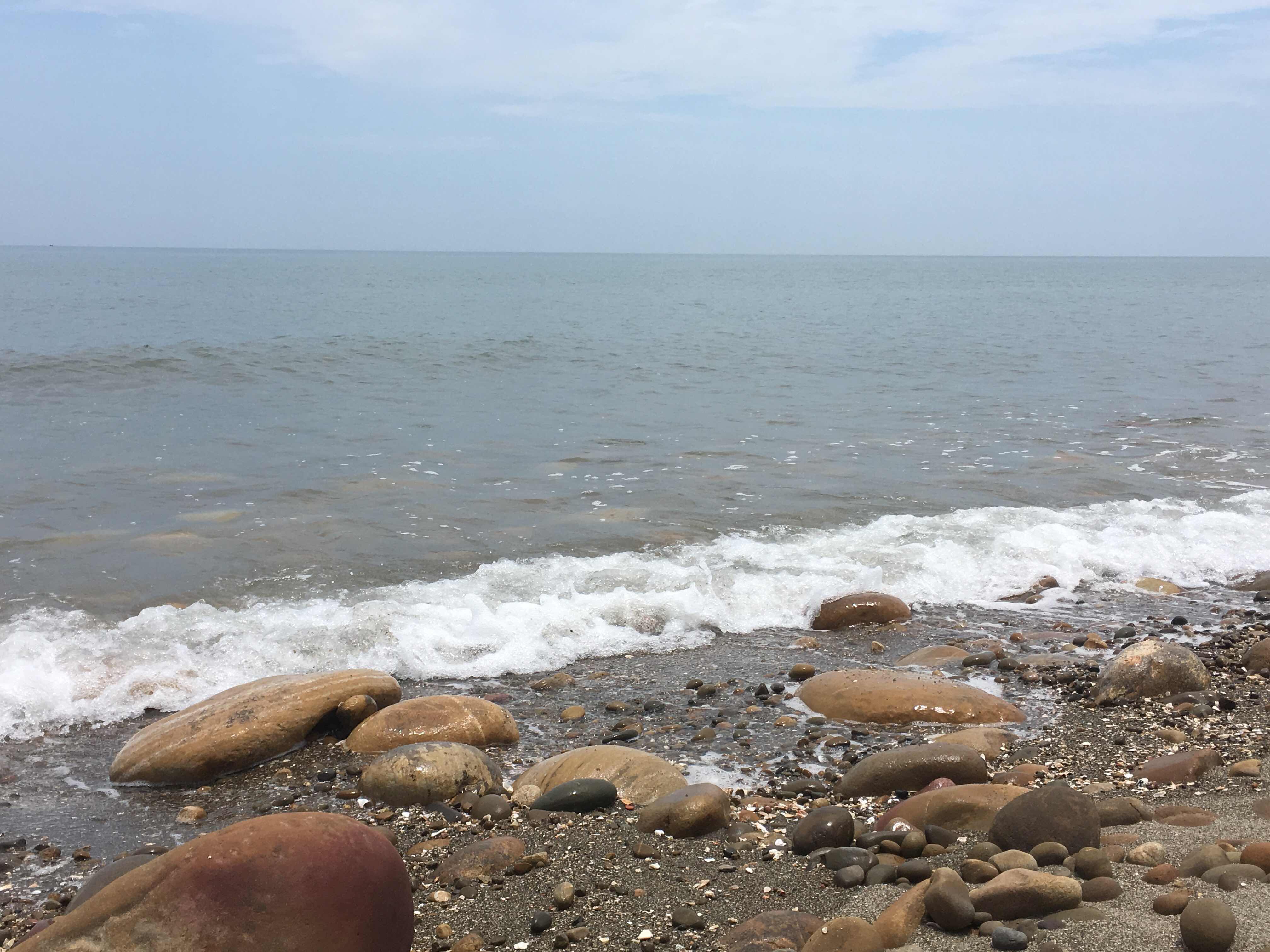
Afterward, we took a short ride from the Cape of Good Hope to a nearby beach. It wasn’t a big tourist spot, just a quiet strip of sand and stones with a few locals around. There, another explosion of color waited: blanket flowers swaying in the breeze, their warm reds and oranges blazing like little suns among the grass. These cheerful blooms always feel like they were made for the heat. 

But I’ll be honest—the heat was no joke. Despite using sunscreen, my arms and shoulders ended up bright red. Lesson learned: never underestimate the Taiwanese summer sun, even if you’re just out for a short ride. No wonder nearly everyone else was wearing long sleeves and carrying umbrellas.

Still, sunburn aside, this trip was everything we needed - simple, beautiful, and refreshing. If you’re in Miaoli in late spring or early summer and looking for a place where nature, flowers, and the sea all meet in harmony, Houlong’s Cape of Good Hope is more than worth the ride. The sting of the sun was a small price to pay for the day’s rewards - flowers in bloom, quiet moments by the sea, and the simple joy of exploring Miaoli's coastal beauty.




September 14, 2023

Tongxing Old Street & Guogang Tunnel


Travel Date: 2023/09/09

Finally, the weather improved after nearly two months of almost constant rain (with a few typhoons in between), clouds, and wind. Even though we only had half a day to go out, we still didn't want to waste the time, because who knows how long the good weather will last. It's funny, but usually, weekends are rainy, while weekdays have nice weather. Then, when the weekend comes again, the weather gets bad. It's super annoying, but it has happened 90% of the time this year.

I feel like there aren't really that many places to see in Miaoli. It's mostly mountains, and there aren't many historical sites. I found an old street nearby called Tongxing Old Street, but unlike many other old streets we've visited, this one looks very empty. So, apart from a few old houses, there's nothing else to see. The old street is actually in Houlong Township, so we also went to see a popular tunnel in the area and dined in Houlong Town. I found a Japanese shrine, but it's further south, and we didn't have more time that day. Such a pity, but maybe next time.

Tongxing Old Street (同興老街)

Tongxing Old Street stands as an important historical landmark, not only within Houlong but in all of Taiwan. It holds the distinction of being the earliest street in Houlong, serving as a gathering point where both Han and Pingpu people converged to exchange local products. Over time, as the Houlong River gradually silted up, Han settlers began reclaiming land beside the stream. This led to the gradual expansion of the population and the formation of what is now known as Houlong Street, which serves as the current city center.

A small ditch to the east of Tongguang Elementary School, known as "Fanpozaigou," was once crystal clear and used by Pingpu women for washing clothes. Today, it serves as a reminder of the area's rich cultural heritage. The old street, once bustling with commerce, has retained its ancient charm and remains the most lively street in the area. It offers a glimpse into Houlong's history as a trading hub, with early business buildings along the street testifying to its role in facilitating trade.
There are still several families residing in Tongxing Old Street.

Tongxing Old Street is distinguished as the shortest old street in Taiwan, spanning only about 100 meters. The street showcases well-preserved century-old commercial buildings, representing the quintessential architectural style of the Qing Dynasty. This attests to Tongxing Old Street's historical importance as a trading center in the Miaoli area. While the passage of time has seen its decline, remnants of its past prosperity still echo in the old buildings that stand today.

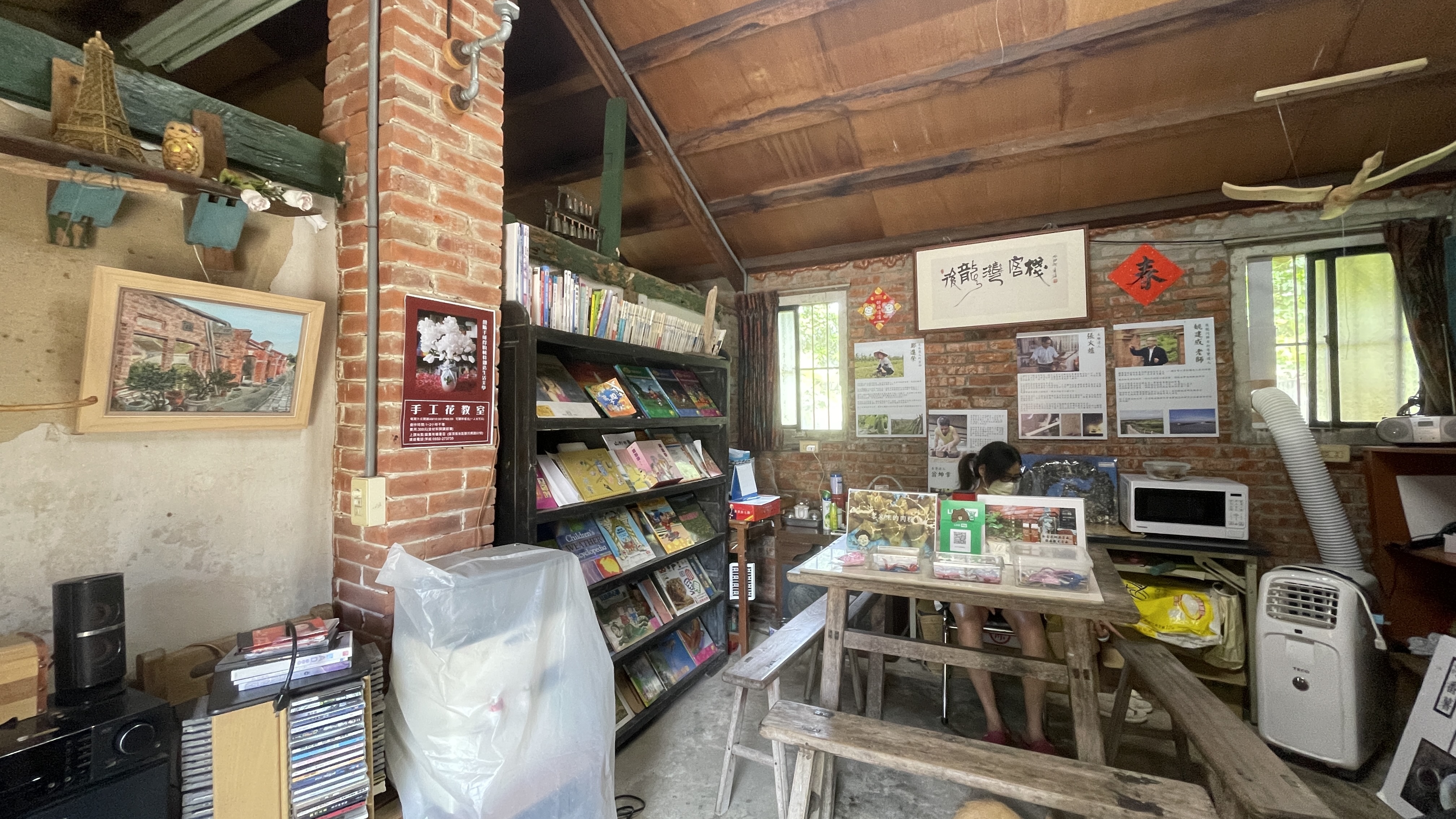
At the end of the street, a right turn (around the elementary school) will lead you to a bookstore. In a commendable effort to promote reading, the Maoli Organic Bookstore operates on an exchange-only basis and does not sell books. The bookstore is housed within an old structure, providing visitors with a sense of traveling through time while enjoying their reading. Occasionally, friendly feline companions make appearances, adding to the cozy atmosphere and enhancing the overall reading experience.


Guogang Tunnel (過港隧道)

While there is a parking lot available, there are very limited parking spaces in the area. If you find the parking lot full, there are alternative options for parking. You can park your car on the other side of the tunnel on the side of the road or at Houlong Qinghai Palace.

The tunnel was officially opened in 1922 during the Japanese colonial era. There are three tunnels in total, and their construction was a testament to the increasing prosperity of Taiwan's economy at that time and the growing need for improved north-south transportation. The older mountain railway line faced transportation bottlenecks, prompting the Governor-General to initiate the construction of a coastal railway connecting Zhunan and Changhua. During the excavation for the railway construction, an intriguing discovery was made—a layer of fossilized shellfish dating back a million years. An inscription was erected to commemorate this find.

Inside the train tunnel, the entire inner wall is constructed using red bricks. These bricks are meticulously stacked layer by layer to create a beautiful horseshoe arch shape. Interestingly, it's said that no beams or columns were used for support during the excavation, and the entire structure was engineered using the principles of round arch mechanics. The black marks on the red bricks along the curved tunnel ceiling are remnants of coal burning in the trains, forming a historical trace and a testament to the countless travelers who passed through over the years.

There are three tunnels in close proximity. Tunnel No. 1 stretches 279 meters, Tunnel No. 2 measures 162 meters, and Tunnel No. 3 is 56 meters long. While walking through Tunnel No. 1, there is a sightseeing section. The view does not extend all the way to the exit due to the curvature of the tunnel itself.
Within the tunnel, you'll find a train image and a rest platform. You can directly view the interiors of Tunnels No. 2 and No. 3, and the entire route is designed as a barrier-free trail, making it suitable for visitors of all ages.

From the other end of the parking lot, you can take a stroll to the Cape of Good Hope Cultural Park, which stands at the highest point and offers breathtaking scenery.
Additionally, nearby attractions include the Mazu Palace on the mountainside and Gongtian Temple in Baishatun. It's worth noting that when Mazu in Baishatun participates in incense ceremonies, both Mazu temples go together, creating a unique cultural experience.


Guogang Shell Fossils (過港貝化石層)

Geologically, this layer is part of the larger Toukeshan Formation (頭嵙山層), which dates back to the Pleistocene era. The fossils within this layer are estimated to be between 1,030,000 to 460,000 years old and are preserved within shale rock. It's believed that these shells were originally situated approximately 20 meters (66 feet) to 50 meters (160 feet) beneath the water's surface before becoming buried. A total of 135 different species of fossils have been identified, with the majority belonging to the Pecten genus. However, shells from various other genera, including Chlamys, Anadara, Arca, Eucrassatella, Nassarius, Niotha, Bursa, Turritella, and Murex, have also been discovered. Some researchers speculate that the high density of fossils in this area is a result of repeated storms that pushed shellfish into this location.

The discovery of this fossil bed dates back to 1921 when Japanese railway construction workers, engaged in building the Coastal line, stumbled upon it. In 1935, during the Japanese colonial period, the Government-General of Taiwan designated the area as a natural monument. The Miaoli County Government placed a plaque in 1955 to protect the fossils, forbidding any disturbance. Subsequently, between 1995 and 1999, the Forestry Bureau conducted a survey of the site and designated it as a provincial-level protected area.
Regrettably, due to its proximity to a road, many of the fossils have been removed or vandalized by tourists. A report by the Liberty Times revealed that a significant number of fossils within easy reach have been taken or damaged.


Address:
Tongxing Old Street: 356台灣苗栗縣後龍鎮舊後汶公路121號
Guogang Tunnel: 苗栗縣後龍鎮南港里過港隧道

June 16, 2018

Houlong Cape of Good Hope: Discovering the Beauty of Miaoli

Houlong Cape of Good Hope (後龍好望角風景區)

Early in the morning, we had to pick up my sister-in-law in Miaoli. It was still before noon when we could head back home, but since we were already there, we decided to visit some places.

We drove to Houlong Cape of Good Hope, which is currently a popular destination with many people walking around. The view was really nice, especially with the windmills dotting the landscape. The weather today created a beautiful blend of the sky and the sea.
I particularly enjoyed the sight of the large grass blossoms. They always make me feel closer to nature and the wild.

From there, we drove closer to the sea. Unfortunately, the beach wasn't in good condition, with lots of rubbish scattered around. That might be why I didn't see any other people there. However, I still wanted to find a nice, clean beach with a picturesque sea view for my pictures.
On the way, we also came across a massive stone wall with numerous shells embedded in it. It made me imagine how the water used to reach that point and how much smaller Taiwan must have been in the past.

Lastly, I was lucky to take a picture of a train passing by without having to wait. The train rail crossing over the mouth of the sea added an interesting element to the photo.

houlong cape of good hope, miaoli, taiwan

houlong cape of good hope, miaoli, taiwan

houlong cape of good hope, miaoli, taiwan

amwf couple, polish-taiwanese couple, houlong cape of good hope, miaoli, taiwan

beach, miaoli, taiwan

beach, miaoli, taiwan

miaoli, taiwan

miaoli, taiwan

passing train, miaoli, taiwan

Zhunan Houcuo Longfeng Temple (竹南后厝龍鳳宫)

Another time, we also visited the Zhunan Great Mazu Temple. Unfortunately, there was a celebration taking place with lots of people setting off firecrackers, so I only managed to take pictures of the temple from the outside.

Zhunan Houcuo Longfeng Temple, miaoli, taiwan

Zhunan Houcuo Longfeng Temple, miaoli, taiwan

Address:

1. Houlong Cape of Good Hope: 356苗栗縣後龍鎮後龍好望角風景區
2. Zhunan Mazu Temple: 350苗栗縣竹南鎮龍安街69號竹南后厝龍鳳宫