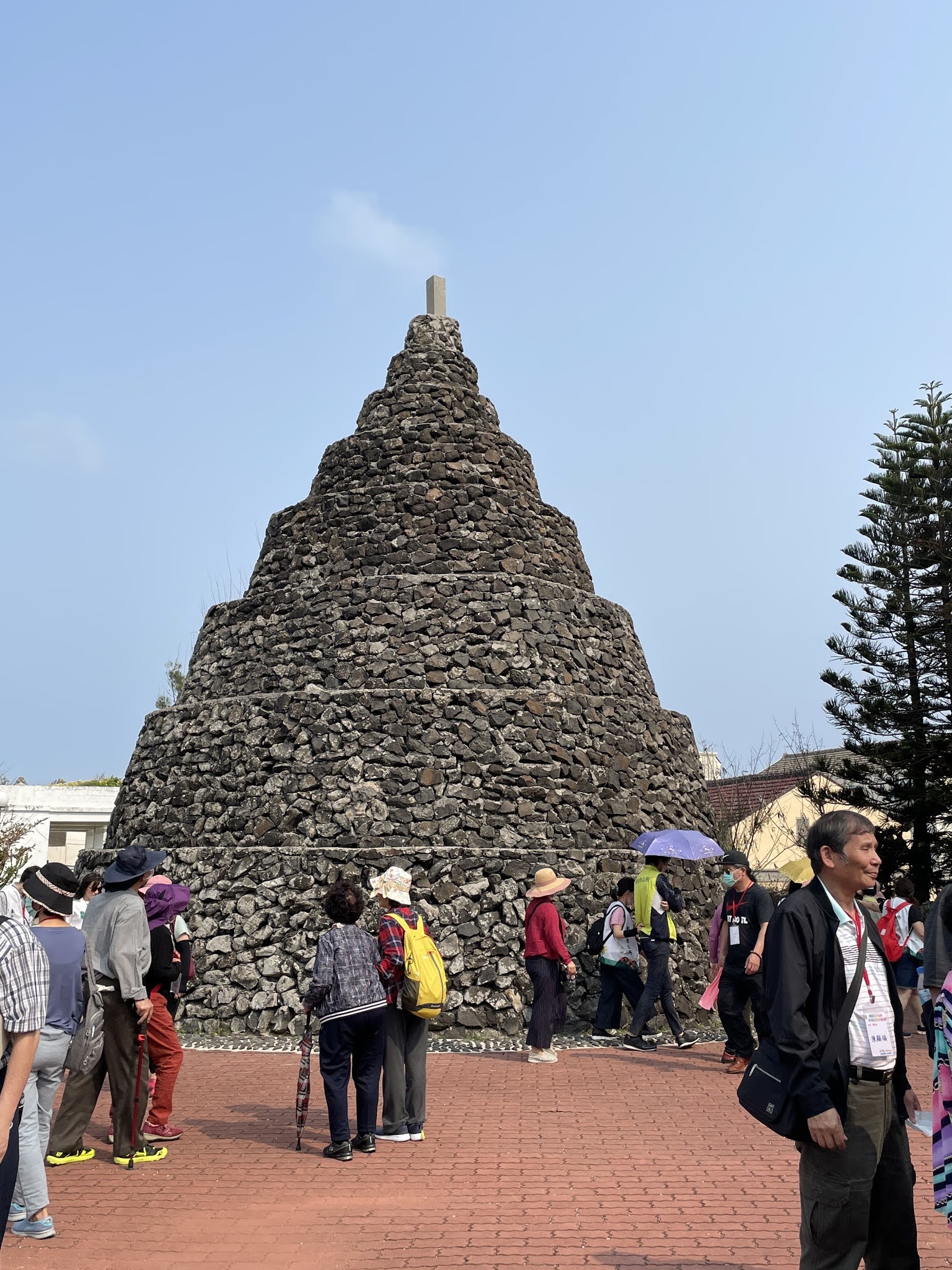
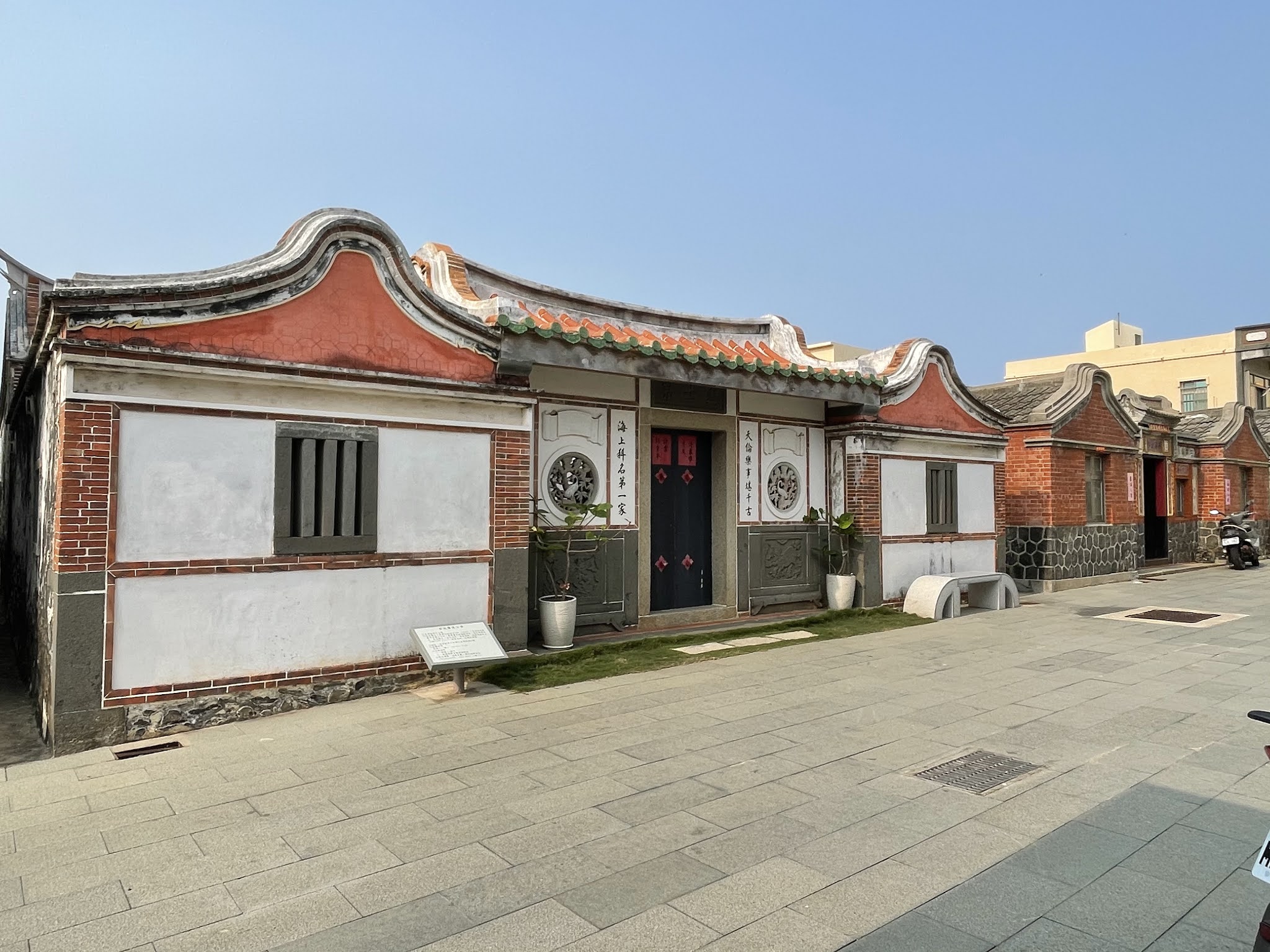
Showing posts with label Pescadores Islands. Show all posts

May 20, 2021

Penghu Travel: Starfishes and Jinguitou Fort


Travel Date: 27/03/2021 - 01/04/2021

It's our first time visiting Penghu, and I'll describe the process, prices, our accommodation, and the places we visited in separate posts as I have a lot planned. 
We started by visiting the historical Ash Kilns and the famous attraction known as "Moses Parted the Sea," where we witnessed the low tide creating a pathway to a nearby small island. We also explored Nanliao Village, renowned for its traditional fishing settlement, with many interesting buildings to see.

In addition to the main island, we ventured to the smaller islands connected by sea-crossing bridge. On Yuwengdao Island in Xiyu Township, the furthest island, we visited the Yuwengdao Lighthouse, the Sanxian Pagodas with their breathtaking views of the sea, and observed the fake cannon. We also enjoyed the natural beauty of Daguoye Columnar Basalt, Niuxin Mountain and Paradise Road. In Xiyu, there are several forts worth exploring, such as the Western Fort, Eastern Fort, and the Five-hole bunker
Zhuwan Temple left me with mixed feelings as I enjoyed seeing the turtles but felt sorry for them living in captivity underground.
Chen Erkan Historical House, along with the entire village of unique old buildings, is a famous place to visit in Penghu. 
Going south on Magong Island, we explored the remains of a Dutch castle (actually a memorial), as well as the South and North Pagodas, which have unique and intriguing designs, though their exact story remains unknown. 
Magong City is also filled with historical architecture. We explored Zhongyang Old Street, old wells, Mazu Temple, and the sole remaining city gate.

We discovered a place in Penghu where you can interact with starfish and sea urchins, which was particularly interesting for kids as they could learn more about the underwater world. 
Another fort we visited, Jinguitou Fort, was once used to defend the island of Penghu. 
For those interested in temples and religions, the Confucius Temple is worth a visit. 
In just four days, we experienced an incredible amount. Penghu is truly beautiful, and I hope to revisit someday in the future.

Our four-day trip in Penghu has come to an end. We have visited almost everything on my travel list in the main islands. With the boat departure scheduled for 4:30 PM, we had a few hours left to explore. We mainly grabbed some food and visited Jinguitou Fort and Confucius Temple. However, there are still some places I haven't mentioned in my previous posts.
Although we didn't have much time to rest, it was a wonderful trip as I wanted to see everything. We spent the whole day driving, climbing, and visiting various places. Unfortunately, we didn't have the opportunity to enjoy the beach or go swimming...

Aquatic Seedling Breeding Farm, Agriculture and Fisheries Bureau of Penghu County Government (澎湖縣政府農漁局水產種苗繁殖場)

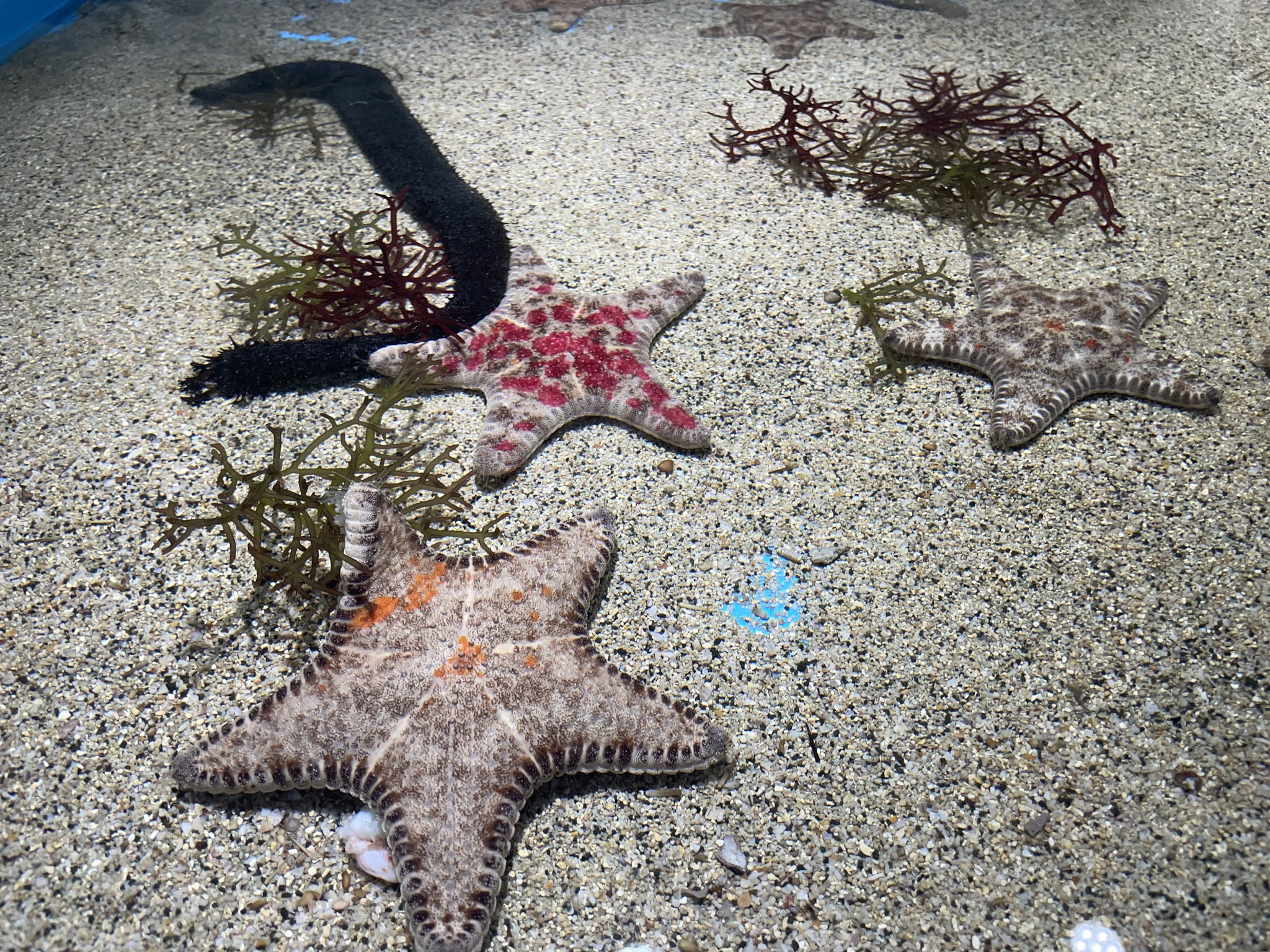
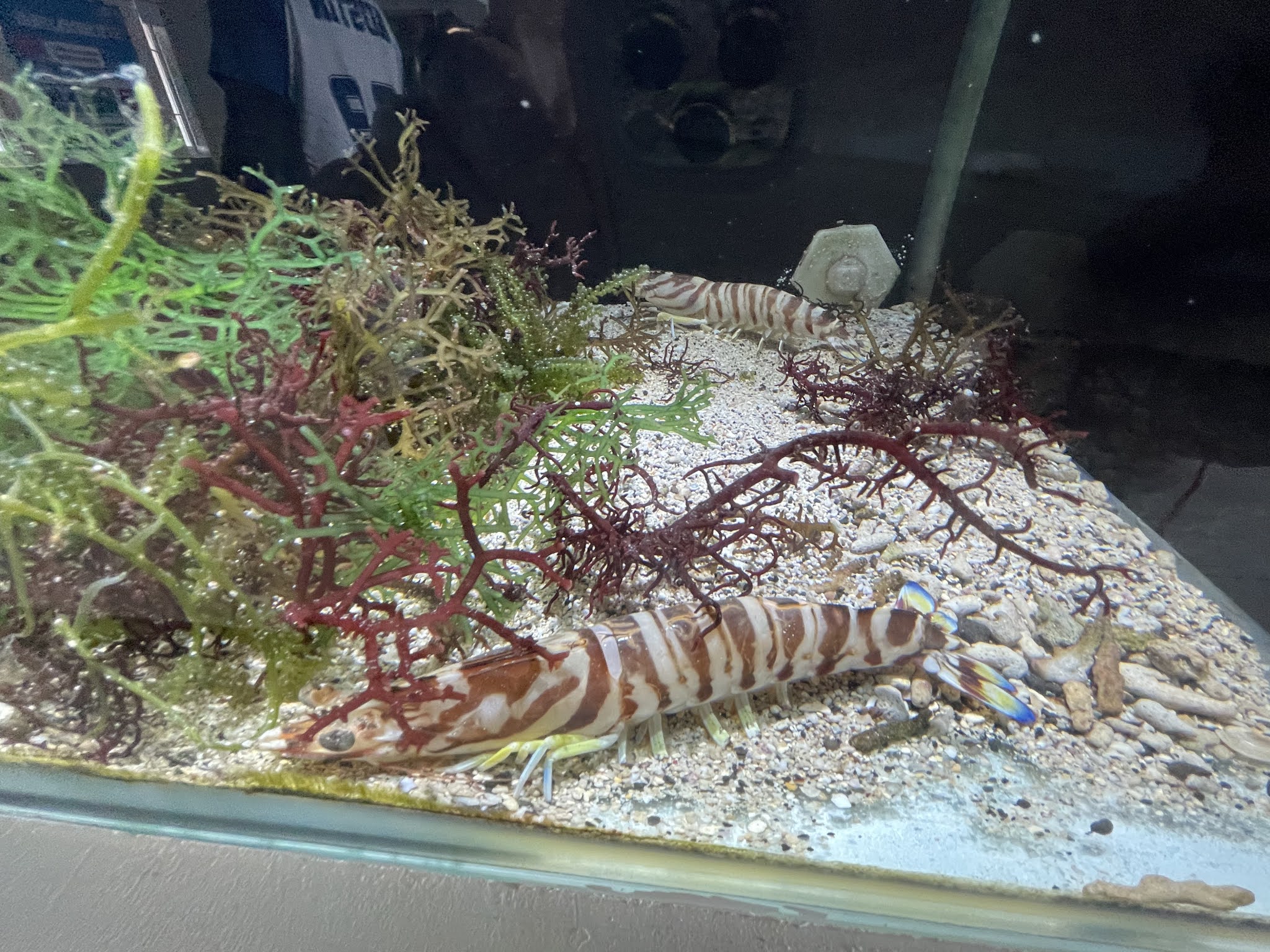
One interesting place we visited was the Aquatic Seedling Breeding Farm, managed by the Agriculture and Fisheries Bureau of Penghu County Government. It's a place where you can interact with starfish, sea cucumbers, and sea urchins. They also have several aquariums showcasing corals and other marine creatures. Additionally, they have large breeding tanks for fish, sea urchins, and seaweed.



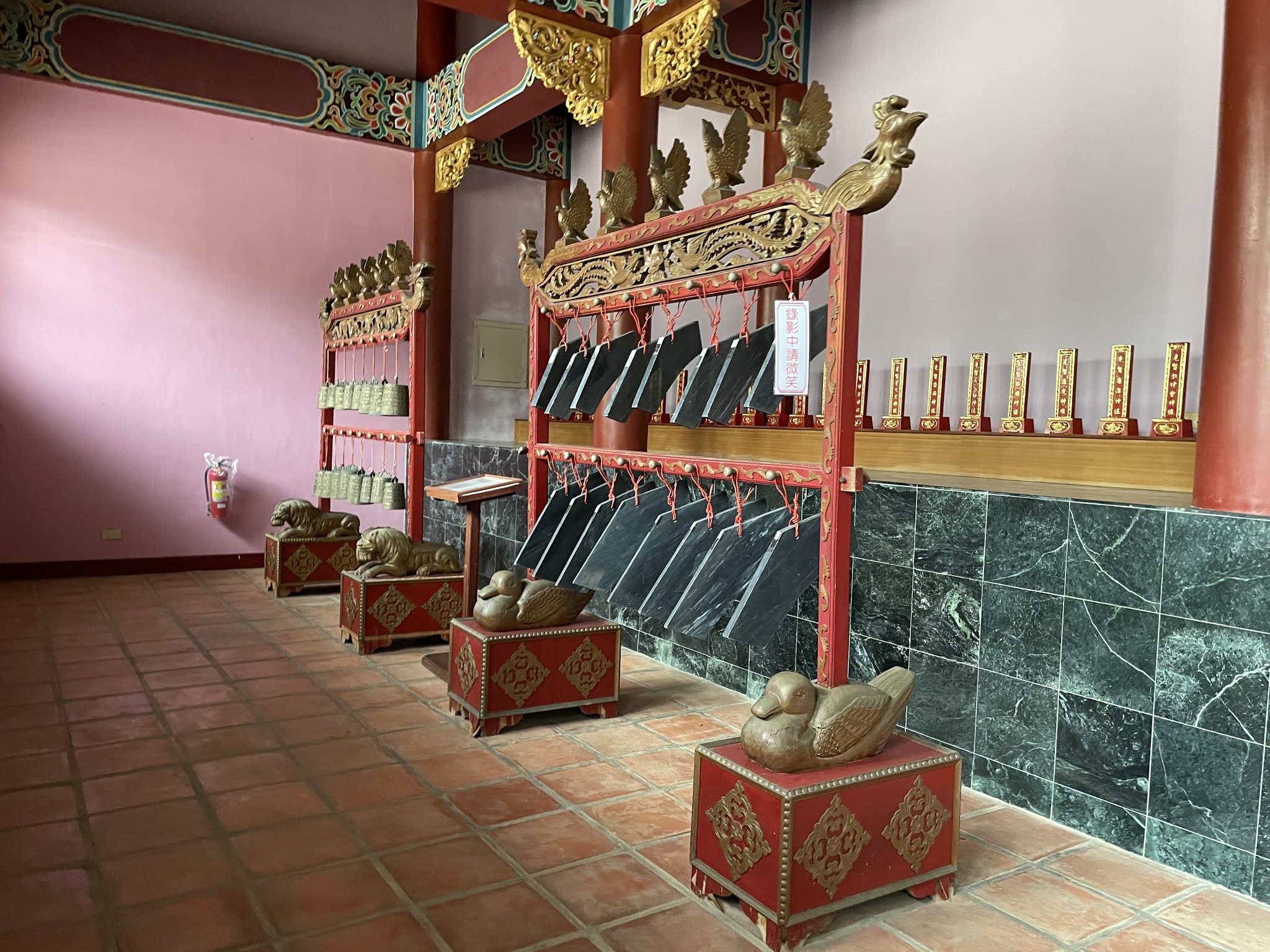
Confucius Temple (Wenshi Academy) 孔廟 (文石書院)

Another noteworthy visit was the Confucius Temple, also known as Wenshi Academy. Wenshi Academy was established in 1766 but unfortunately destroyed during the Sino-French War. During the early period of Japanese occupation, the academy was repurposed as a field hospital. However, after the hospital was closed, it underwent reconstruction and emerged as the Penghu Confucian Temple.
In 1963, following renovations, the original buildings of Wenshi Academy underwent significant changes, except for the Kuixing Building, which retained its original appearance. Recognizing its historical significance, the Kuixing Building was officially designated as one of the historic buildings in Penghu County on December 11, 2002.




Jinguitou Fort (金龜頭砲臺)

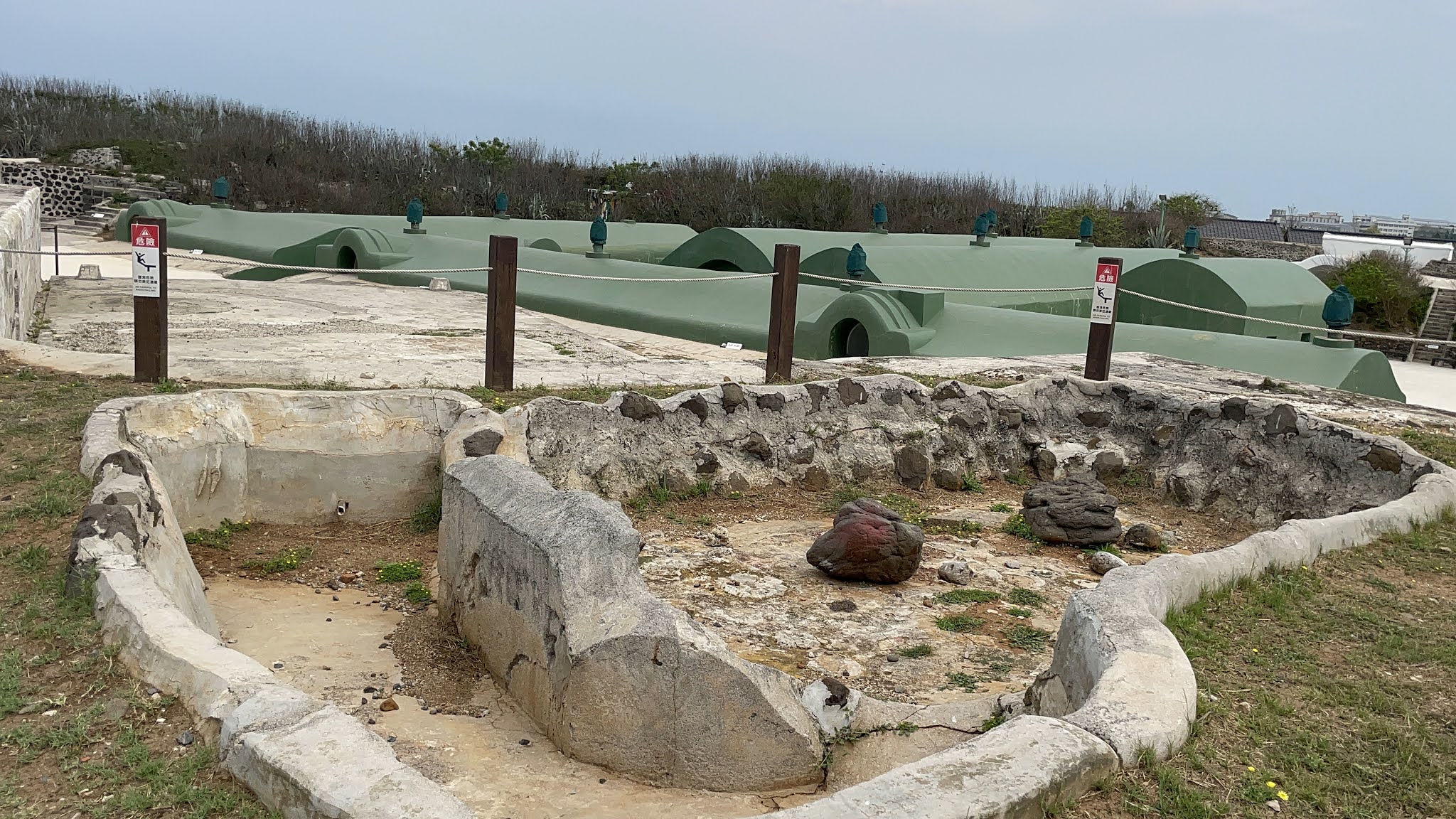
Jinguitou Fort is one of the twelve forts that protected the Penghu Hall City during the Qing Dynasty. The exact date of its original construction is unknown, but it was likely around 1718. However, the current fort we see today was built in 1887. In 2001, it was designated as a national monument.
During the Japanese occupation, the fort underwent reconstruction from 1902 to 1904 and was renamed Tiannan Rongtai. After World War II, it served as the headquarters of the Tiannan Camp, which was the Communication Battalion of the Penghu Defense Command in the Taiwan Army. Eventually, the military released the fort, handing it over to the Penghu County Government.

On September 25, 2013, the Cultural Bureau of the Penghu County Government installed a US-made M1 40mm anti-aircraft gun on the fort. This particular anti-aircraft gun was originally located here during the early days of the national army but was later removed due to changes in military equipment. In order to preserve its historical significance, the Cultural Bureau requested the Ministry of National Defense's approval and safely transported the gun from the Army Ordnance Industry Development Center in Nantou Jiji to its current location at the fort.




Address:

1. Agriculture and Fisheries Bureau: 880澎湖縣馬公市66之6號
2. Confucius Temple: 104澎湖縣馬公市新生路104-7號孔廟 (文石書院)
3. Jingueitou Fort: 880澎湖縣馬公市莒光村10-2號金龜頭砲臺

May 16, 2021

Penghu Travel: Magong City


Travel Date: 27/03/2021 - 01/04/2021

It's our first time visiting Penghu, and I'll describe the process, prices, our accommodation, and the places we visited in separate posts as I have a lot planned. 
We started by visiting the historical Ash Kilns and the famous attraction known as "Moses Parted the Sea," where we witnessed the low tide creating a pathway to a nearby small island. We also explored Nanliao Village, renowned for its traditional fishing settlement, with many interesting buildings to see.

In addition to the main island, we ventured to the smaller islands connected by sea-crossing bridge. On Yuwengdao Island in Xiyu Township, the furthest island, we visited the Yuwengdao Lighthouse, the Sanxian Pagodas with their breathtaking views of the sea, and observed the fake cannon. We also enjoyed the natural beauty of Daguoye Columnar Basalt, Niuxin Mountain and Paradise Road. In Xiyu, there are several forts worth exploring, such as the Western Fort, Eastern Fort, and the Five-hole bunker
Zhuwan Temple left me with mixed feelings as I enjoyed seeing the turtles but felt sorry for them living in captivity underground.
Chen Erkan Historical House, along with the entire village of unique old buildings, is a famous place to visit in Penghu. 
Going south on Magong Island, we explored the remains of a Dutch castle (actually a memorial), as well as the South and North Pagodas, which have unique and intriguing designs, though their exact story remains unknown. 
Magong City is also filled with historical architecture. We explored Zhongyang Old Street, old wells, Mazu Temple, and the sole remaining city gate.

We discovered a place in Penghu where you can interact with starfish and sea urchins, which was particularly interesting for kids as they could learn more about the underwater world. 
Another fort we visited, Jinguitou Fort, was once used to defend the island of Penghu. 
For those interested in temples and religions, the Confucius Temple is worth a visit. 
In just four days, we experienced an incredible amount. Penghu is truly beautiful, and I hope to revisit someday in the future.

On our third day in Penghu, we dedicated our time to exploring Magong City. The city area is quite extensive, encompassing not only the town itself but also the southern part of the island, which is a half-hour drive away from the bustling town. As an avid traveler, I make it a point to capture videos of every place I visit, although this takes considerably more time than simply taking photos. The most challenging part is the editing and uploading process, which requires hours upon hours of work.

Zhongyang Old Street (中央老街 )

One of the notable attractions in Magong City is Zhongyang Old Street, located adjacent to Tianhou Temple. This street has been a part of the local community since the founding of Magong. It is the oldest street in Penghu, stretching just two hundred meters and featuring traditional Fujian-style architecture. Many local products, such as Ruxiang and Shigong's Temple, have flourished in this area. Visitors can find must-try items like brown sugar cake, scallop paste, and Penghu's famous ice cream here. The nostalgic streets and alleys exude a distinct charm, with Baroque Chinese medicine shops and old Japanese hotels showcasing remnants of the past. Zhongyang Street, also known as the "first street," was officially designated as a "special area for preservation of historical sites" in 1973. In 1983, the residents formed the "Penghu First Street Revitalization Association," and with government support, the old street was restored and redeveloped into its current Fujian-style architectural design.


Wenjun Well (萬軍井)

Another spot to visit is Wenjun Well, located on the right side of the Shi Gong Ancestral Hall, formerly known as Ma Gong Dajing. Legend has it that during the Qing Dynasty, Admiral Shi Lang led a fleet expedition to Penghu to combat the Ming and Zheng navy. Fatigued soldiers passing through Penghu sought respite, and Shi Lang prayed for a well with abundant water using the emperor's sword. This well, known as Wanjun Well, was made available to all for drinking water. It is now classified as a national third-class monument, along with the Shi Gong Temple.

Four-eye Well (四眼井)

The Four-eye Well, the oldest ancient well in Penghu County, is another intriguing attraction. Established in the early Ming Dynasty (1592), this well appears to have four circular water intakes. However, it is essentially a single large well with ample water supply. The four circular water intakes were created by covering the well with six granite strips and surrounding it with red bricks. This well, which never runs dry regardless of rain or drought, played a crucial role in providing residents of Zhongyang Old Street with a source of living and drinking water.


Mazu Temple / Tianhou Palace (澎湖天后宮)

Tianhou Palace, also known as Mazu Temple, traces its origins back to the Ming Dynasty in Penghu. The temple's documented history dates back to 1604 when the Dutch East India Company arrived in Penghu. However, the temple has experienced its share of trials and tribulations over the centuries.
In 1664, after the Dutch East India Company lost its grip on Taiwan, Balthasar Bort, feeling disheartened and indignant, set fire to Tianhou Palace and the surrounding houses. This destructive act resulted in the temple's complete destruction.

In 1885, another challenge arose when the French army invaded Penghu, sparking the Battle of Penghu. The conflict took its toll on the temple, causing further damage.
However, resilience prevailed, and reconstruction efforts commenced in 1919. During the Japanese occupation, the temple underwent significant modifications. Notably, the Qingfeng Pavilion was added, later serving as a gathering place for local intellectuals. The architectural style and layout from that era have been preserved and can still be observed today.

In 1978, plans were made to rebuild the aging temple. However, just before the groundbreaking ceremony, Chen Qilu, an academician of the Academia Sinica, intervened, ordering a halt to the construction. This decision aimed to preserve the temple's historical authenticity. Consequently, the old temple remained in its original state.
The significance of Tianhou Palace as a historical site became widely recognized. On December 28, 1983, the Ministry of Internal Affairs designated it as one of the first batch of 15 first-class monuments. This classification marked the temple's status as a national heritage site.

Throughout its storied past, Tianhou Palace has endured hardships, embodying the spirit of resilience. It stands as a testament to the rich cultural heritage of Penghu. Despite the challenges and changes over time, the temple remains an iconic symbol, evoking a sense of reverence and preserving the historical legacy of the region.

Shuncheng Gate (順承門)

Shuncheng Gate, built in 1886 following the Sino-French War, is the small west gate of Penghu City (Magong). It was one of six gates in the city, including Chaoyang, Jixu, Gongchen, and Yingxun. Presently, only the Shuncheng Gate remains intact, along with the Great West Gate and part of the western wall. Despite the changes over time, Magong City retains its status as the largest preserved city within its current urban boundaries.


Address:

1. Zhongyang Old Street: 880澎湖縣馬公市中央街21號馬公中央老街
2. Tianhou Temple: 880澎湖縣馬公市正義街1號開臺澎湖天后宮
3. Shuncheng Gate: 880澎湖縣馬公市中山路80號順承門

May 11, 2021

Penghu Travel: Southern parts of Magong ~ Dutch Castle & South and North Pagodas


Travel Date: 27/03/2021 - 01/04/2021

It's our first time visiting Penghu, and I'll describe the process, prices, our accommodation, and the places we visited in separate posts as I have a lot planned. 
We started by visiting the historical Ash Kilns and the famous attraction known as "Moses Parted the Sea," where we witnessed the low tide creating a pathway to a nearby small island. We also explored Nanliao Village, renowned for its traditional fishing settlement, with many interesting buildings to see.

In addition to the main island, we ventured to the smaller islands connected by sea-crossing bridge. On Yuwengdao Island in Xiyu Township, the furthest island, we visited the Yuwengdao Lighthouse, the Sanxian Pagodas with their breathtaking views of the sea, and observed the fake cannon. We also enjoyed the natural beauty of Daguoye Columnar Basalt, Niuxin Mountain and Paradise Road. In Xiyu, there are several forts worth exploring, such as the Western Fort, Eastern Fort, and the Five-hole bunker
Zhuwan Temple left me with mixed feelings as I enjoyed seeing the turtles but felt sorry for them living in captivity underground.
Chen Erkan Historical House, along with the entire village of unique old buildings, is a famous place to visit in Penghu. 
Going south on Magong Island, we explored the remains of a Dutch castle (actually a memorial), as well as the South and North Pagodas, which have unique and intriguing designs, though their exact story remains unknown. 
Magong City is also filled with historical architecture. We explored Zhongyang Old Street, old wells, Mazu Temple, and the sole remaining city gate.

We discovered a place in Penghu where you can interact with starfish and sea urchins, which was particularly interesting for kids as they could learn more about the underwater world. 
Another fort we visited, Jinguitou Fort, was once used to defend the island of Penghu. 
For those interested in temples and religions, the Confucius Temple is worth a visit. 
In just four days, we experienced an incredible amount. Penghu is truly beautiful, and I hope to revisit someday in the future.

Magong Dutch Castle (馬公風櫃尾荷蘭城堡) 

Magong Dutch Castle, also known as Fengguiwei Castle, was constructed by the Dutch East India Company in December 1622 using soil, grass, wood, lime, and rocks. However, it was destroyed just two years later in September 1624. Over the years, the site of the former Dutch castle on the mountain in Magong (Penghu) was utilized for military purposes by various ruling powers, including the Ming Empire, the Dongning Kingdom, the Qing Empire, the Japanese Empire, and Taiwan.
Recognizing its historical significance, the castle was designated a national monument by the Taiwanese government on November 21, 2001 and listed as a cultural asset by the Ministry of Culture.

The Dutch commander, Wei Malang, occupied Penghu on August 7, 1604, following the advice of Zhangzhou Haicheng merchants Li Jin and Pan Xiu. The Ming Dynasty initially established the "Penghu guerrillas" to guard against flooding in the region, but they only stationed troops there during spring and winter.
Wei Malang's occupation of Penghu marked the first instance of Western powers exerting control over the islands. Today, a stone stele titled "Shen Yourong's resignation from Hong Mao Fan Wei Malang" stands in the Tianhou Palace in Penghu, commemorating this event.

After suffering defeat in Macau, the Dutch fleet, led by Admiral Raelson, sailed to Penghu and successfully landed on July 11, 1622. Raelson assessed the region for the establishment of a long-term stronghold, visiting locations such as Dagou (now Kaohsiung) and Dayuan (now Anping, Tainan). The Dutch tradition of constructing city walls in new territories led to the selection of Penghu due to its proximity to mainland China, better port conditions compared to Dayuan, and reduced vulnerability to attacks from the Spanish fleet based in Manila. Construction of the city on Shetou Mountain began on August 12, 1622.

During the fortification process, Lei Ersheng and Libang were dispatched to build another fortress in Mugalu Bay (present-day Tainan Shanhua) on October 15, 1622. However, due to the inability to defend both locations, the fortress was demolished on March 19, 1624, and the troops were transferred back to Penghu.
The Dutch East India Company reached an agreement with the Ming Dynasty government, stating that they must leave Penghu and relocate to Dayuan (Tainan). Furthermore, Dutch ships were prohibited from approaching the Chinese coast unless faced with dangerous weather conditions. The agreement also granted the Dutch East India Company the authority to handle cases involving Ming merchant ships selling counterfeit goods.

On August 26, 1624, the decision was made to demolish the Fengguiwei City in Penghu. The Ming army provided assistance in the demolition, and on September 16th, Libang and others, carrying the national flag and accompanied by the beats of drums, departed Penghu on the ship "Pormoren." This marked the beginning of Dutch rule over Taiwan's main island from 1624 to 1662.
Over time, the city remains served various military purposes under different ruling powers until November 21, 2001, when it was declared a national monument and opened for sightseeing.

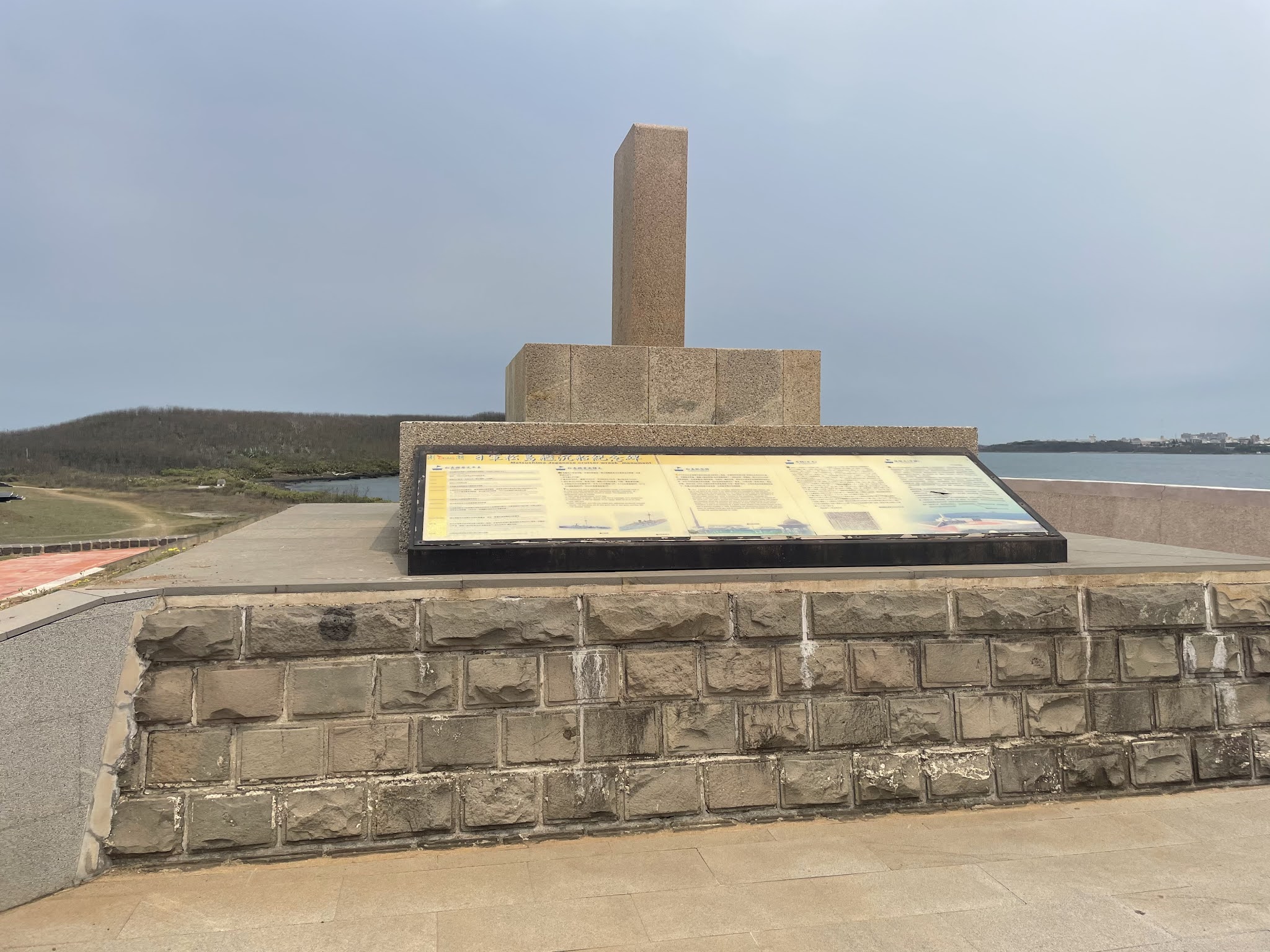
Shetou Mountain, the location where the Dutch East India Company was founded, earned the nickname "Dead Fanzi City." In addition to Dutch soldiers who died during the Ming army's attack in 1624, approximately 200 to 300 soldiers died of cholera during the French navy's occupation in 1885. Furthermore, in 1908, the Japanese Navy's Matsushima ship exploded, resulting in the deaths or disappearances of 222 people. Local residents feared supernatural disturbances due to the presence of foreign troops and horses.

See also: Nanliao Village


Fengguei Cave (風櫃洞)

Fengguei Cave is situated at the tip of the Fengguei peninsula and holds the status of being an ancient fishing village. It is renowned for three remarkable phenomena: the resounding waves, the spraying water columns, and the sound of sea water being drawn in. The fame of this location was further elevated by Hou Hsiao-hsien's movie, "People from the Fengguei."
The coastline of Fengguei is adorned with majestic columnar jointed basalts, which have been shaped over time by the relentless impact of the waves, giving rise to long and narrow sea trenches and sea caves. Whenever a massive wave surges towards the cave entrance, a thunderous roar reverberates within, resembling the blast of a bellows. Under favorable conditions of strong winds, the right direction, and high tides, one can witness the spectacle of water jets.


Shili Beach (嵵裡沙灘)

Shili Beach extends over a kilometer and boasts gentle waves and crystal-clear blue waters, making it the most idyllic natural beach on Penghu Island.

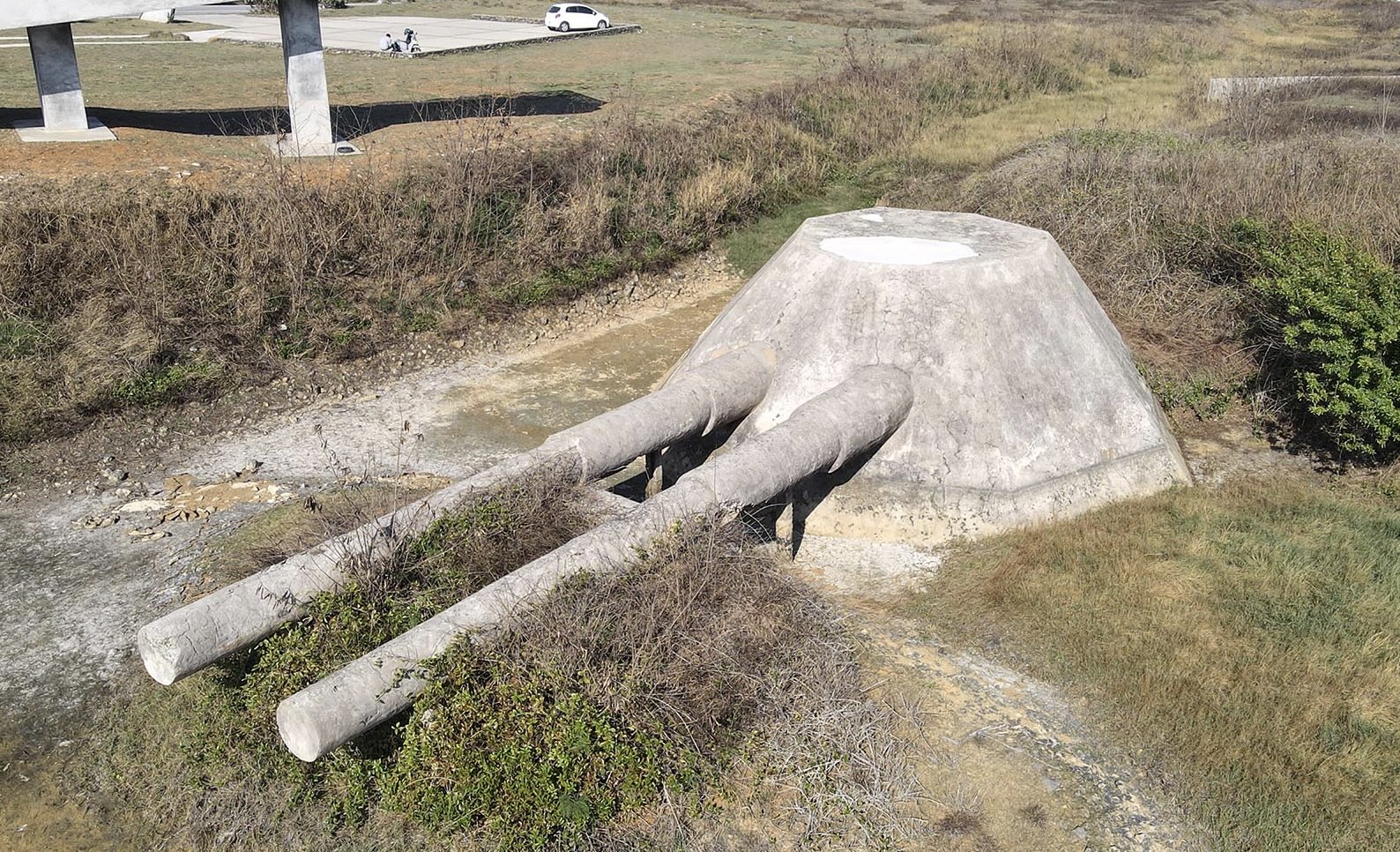
Five Virtues Fake Cannon (五德餌砲)

The Five Virtues Fake Cannon, also known as the Wude bait cannon, was constructed in the 1920s during the Japanese occupation of Penghu. It served as a decoy to deceive military restriction treaties. Unlike the air defense decoys built by the Japanese army in 1941 during World War II, this particular cannon failed to attract US aircraft to drop bombs.

The motivation behind the construction of the fake artillery was rooted in Japan's signing of the Washington Naval Treaty in 1922. Article 19 of the treaty imposed restrictions on naval bases and fortresses maintained by the United States, the United Kingdom, and Japan in the Pacific region. As a result, the Zhumu Shuishe Fort and Waianshe Fort under construction in Penghu were compelled to halt their progress. In 1923, with the approval of the Secretary of the Army, the Penghu Island Fortress Command secretly built two faux turrets that appeared authentic, thereby deceiving the United Kingdom and the United States into believing that the fortifications had been completed before the signing of the treaty. Subsequently, the actual cannons were reinstalled under the guise of routine maintenance, although they were eventually not installed for undisclosed reasons. The Wude Artillery is located in a remote depression around 250 meters northeast of the Wude Camp in Magong City. Builders excavated a partially covered position, and a semicircular 90-degree retaining wall was constructed in front. At the center of the position, a disc-shaped fully coated turret, resembling the Japanese Imperial Navy's "45-caliber 41-type 36 cm gun," was made using poured cement.

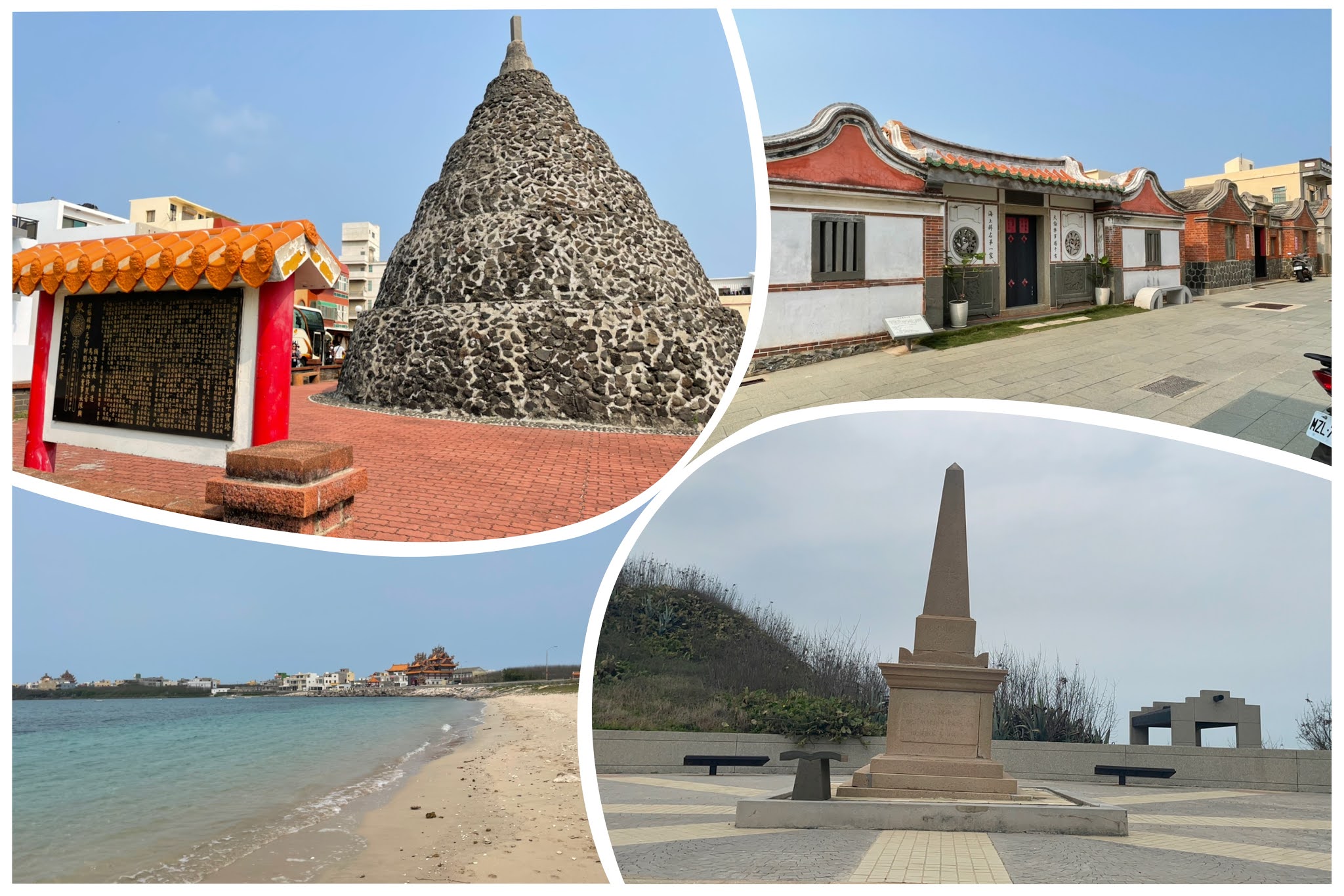
North and South Pagodas (鎖港北塔)

Mr. Wu, an 82-year-old resident, believes that the stone towers existed in his grandfather's time, but the exact date of their construction remains unknown. It is said that between the two stone towers, there once stood a dune that reached a height of two to three stories, serving as a crucial point of reference for fishing boats entering and exiting the port. However, one night, a powerful typhoon struck, and by the following morning, the sand dunes had disappeared, resulting in significant losses for the local residents. In response, Emperor Zhenwu of the North Pole Hall issued an order to construct the North and South Pagodas. The seven-story stone towers feature a golden whip warrior stele at the top.
Approximately forty years ago, a nun self-immolated under the South Tower and ascended to heaven. Soon after, amidst a howling in the early morning, the South Tower suddenly collapsed. Around ten years ago, the North Pagoda also fell down. Emperor Zhenwu instructed the villagers to rebuild a nine-story stone pagoda that symbolized longevity and endurance.

According to the accounts of residents in Suogang, there are several reasons behind the construction of the South Tower and North Tower:
1. According to ancestral legends, the east and west towers were initially built in Quanzhou on the mainland. The ancestors, who relied on the sea for their livelihoods and frequently sailed in and out of Quanzhou, chose to construct the south and north towers along the seashore in Penghu.
2. The ancestors, predominantly engaged in fishing along the coast, built the south and north towers to serve as visual markers for fishermen while they were working at sea. The towers provided identification indicators and helped fishermen determine the appropriate locations for setting their nets in the coastal waters.
3. Between the South Tower and the North Tower, there used to be a sand dune that served as a backing for the community. However, over time, the sand dune vanished due to the force of the wind. To compensate for its disappearance, two large stone towers were constructed on the original site, serving as a replacement for the lost landmark.


Cai Tinglan Historic Building (蔡廷蘭進士第)

The Cai Tinglan Historic Building, located in Xingren Village, Magong City, dates back to 1846 and is an ancient courtyard house. It stands as the sole example of a swallowtail-style building among residential houses in Penghu. In 1985, the government declared it a monument, and from 2011 to 2012, the Penghu County Government undertook restoration projects. The building opened for public visits on December 11, 2013. Cai Tinglan, the only scholar in Penghu during the Qing Dynasty and the speaker of Penghu Wenshi Academy, played a significant role in the development of Penghu. Notably, there is a plaque titled "Gongpisman" bestowed upon the Tianhou Palace in Magong, which further signifies Cai Tinglan's importance. After Cai achieved his scholarly status, he returned to his hometown to pay homage to his ancestors and constructed the Jinshi Mansion adjacent to the old house, symbolizing blessings bestowed upon his lineage.


Address:

1. Magong Dutch Castle: 880澎湖縣馬公市馬公風櫃尾荷蘭城堡
2. Fengguei Cave: 880澎湖縣馬公市風櫃里風櫃洞
3. Shili Beach: 880澎湖縣馬公市嵵裡沙灘
4. Five Virtues Fake Cannon: 880澎湖縣馬公市五德餌砲
5. North and South Pagodas: 880澎湖縣馬公市鎖港里鎖港北塔
6. Cai Tinglan Historic Building: 880澎湖縣馬公市雙頭掛29號蔡廷蘭進士第