Showing posts with label jingzijiao wapan salt fields. Show all posts

November 4, 2024

Exploring the Historic Beimen Salt Fields in Tainan


Travel Date: 2024/10/26

On October 16, Tainan’s Beimen Visitor Center launched the Glory Taiwan: Sustainable Tourism Connecting the World exhibition as part of Taiwan’s Tourism Bureau’s anniversary celebrations. The 2024 Kunshen Wang Peace Salt Festival will was held on October 26-27, featuring events like the Pah-Peng Challenge with cash prizes, a Peace Salt Bag exchange, and a concert. 
The Yunlin-Chiayi-Tainan (Yunchianan) Coastal Scenic Area Management Office has also organized the Beimen Temple Culture Tour in collaboration with local schools. This tour includes visits to temples where participants can collect stamps, redeemable for a limited-edition golden postcard on October 26. 

Beimen District (北門)

Located in northwest Tainan, Beimen District, once a sandbar at the Jishui River mouth, has rich mangroves, a tropical climate, and an economy based on agriculture and aquaculture. 
During the Daoguang period, salt production expanded in Beimen, experiencing a revival in 1899 after the Japanese colonial government reinstated salt monopolies. Beimen was once part of Tainan County but became Beimen District in 2010 after administrative restructuring that incorporated Tainan County into Tainan City.

Historically, Beimen’s population peaked in 1966 with 19,502 residents. Since the 1960s, industrial changes and the high labor demands of salt harvesting led many young adults to seek employment elsewhere, particularly in northern cities like Taipei and Kaohsiung. Recently, as employment opportunities have grown locally due to nearby science parks, the trend of outward migration has decreased. By 2023, Beimen had approximately 10,000 residents, facing similar aging and low birth rates to other areas in Taiwan.

Xing’an Temple (興安宮)

Around 200 years ago, ancestors of today’s residents migrated from Oulei Village to Yonghua Village, where they established Yingling Temple to honor Ji Fu Qiansui, seeking his blessings for protection, favorable weather, and peace. Over time, a unique spiritual exchange took place: Ji Fu Qiansui from Yingling Temple and Chi Fu Qiansui from Bao’an Temple were ceremonially “swapped” based on divine guidance, resulting in Ji Fu Qiansui’s permanent enshrinement in Oulei Village.

By 1976, the temple had fallen into disrepair, prompting the community to establish a reconstruction committee. With blessings from significant temples like Nankunshen and Bao’an, and support from dedicated patrons, rebuilding began. The newly completed temple opened in 1980, officially named Xing’an Temple in 1981, preserving the village’s rich cultural and spiritual heritage.


Jingzijiao Wapan Salt Fields (井仔腳瓦盤鹽田)

The Jingzijiao Wapan Salt Fields, Taiwan's oldest traditional salt production site with over 200 years of history, are celebrated for their scenic views and popularity among photographers, especially at sunset. Open year-round with free entry, visitors can observe salt production, often seeing workers tending to the fields in the early hours.

Salt-making along Taiwan's coast began centuries ago, initially by boiling seawater or trading with mainland China. In 1648, the Dutch East India Company attempted salt mining, but poor results led Taiwan to rely on imports until only small-scale production remained after the Dutch era. Under Japanese rule in 1895, the industry transformed as the Taiwan Salt Co., Ltd. was founded in 1919 to meet growing salt demands.
Relocated to northern Tainan in 1818, these fields became known as Yongdong Field. In 1952, they were redesigned with “tiled-paved” ponds lined with pottery and tile shards, producing clearer salt and speeding evaporation.

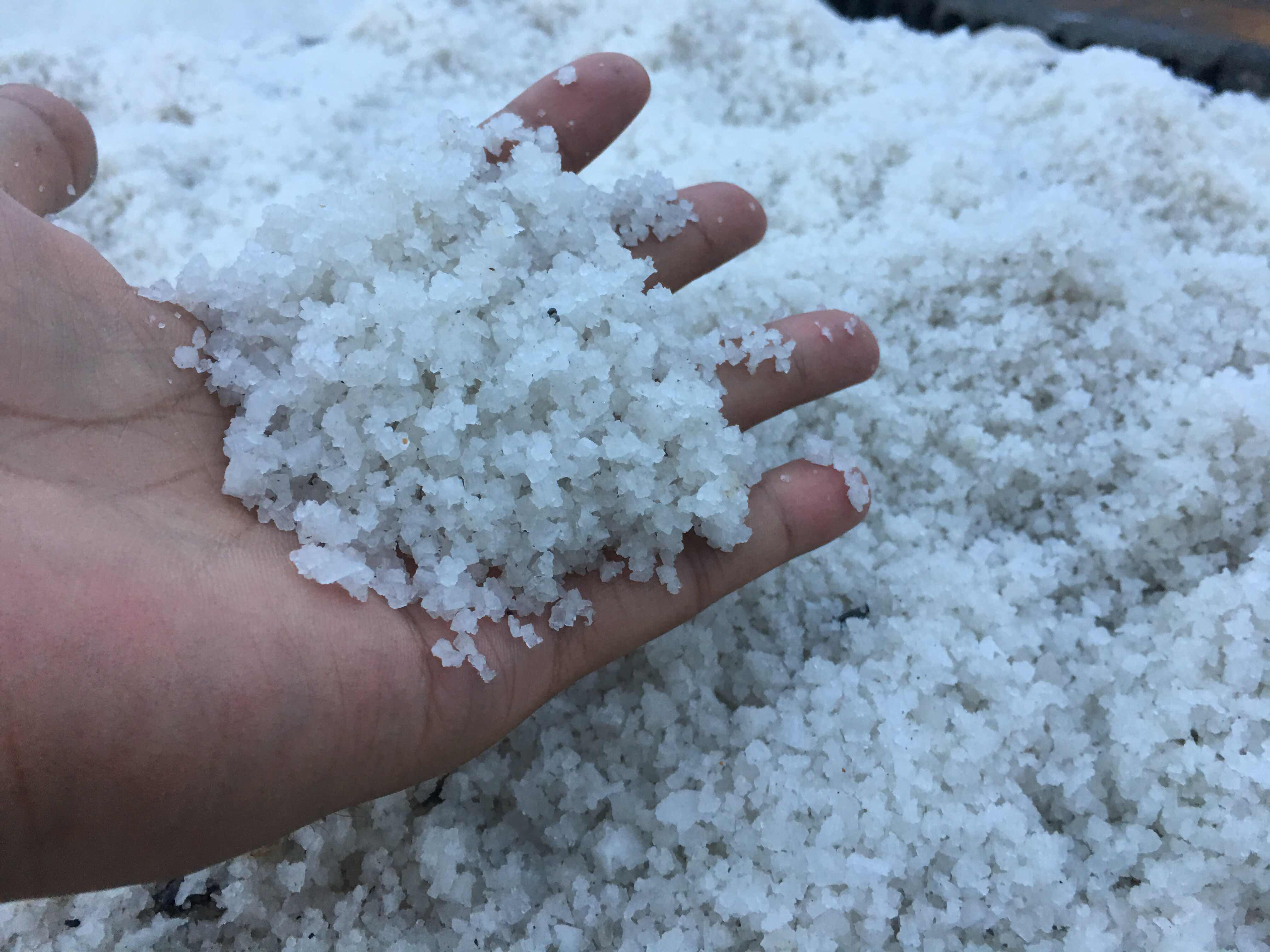
Today, the Yunjianan National Scenic Area has revived Jingzijiao as a cultural site. Visitors can enjoy a viewing tower, local salt products, and an enchanting, mirror-like view at dusk, where salt mounds reflect the sky. Designated play areas let children enjoy salt like snow, making Jingzijiao a magical experience for all.


Beimen Visitor Center (北門遊客中心)

Housed in the historic warehouses of the former Beimen Salt Washing Factory, the Beimen Visitor Center has become a lively attraction. With its theme, "Beimen Wedding Photography Paradise," the center features colorful artworks by local artist Hong Tong and vibrant murals ideal for wedding photos, drawing many visitors.

Inside, guests are welcomed by interactive floor projections that mimic Beimen’s coastal ecosystem, complete with playful bird footprints. A striking centerpiece is the preserved skeleton of a sperm whale, returned after international exhibitions, alongside a floor map of the Southwest Coast National Scenic Area that showcases key attractions.
The center also offers interactive multimedia games, making it a hit with children and an ideal first stop for discovering Beimen’s charm.

Beimen Salt Refinery (北門洗滌鹽廠)

The Beimen Salt Refinery in Tainan City, Taiwan, is a historic salt processing plant owned by the Taiwan Salt Industrial Corporation. Built in 1936 by the Monopoly Bureau of the Taiwan Governor’s Office during Japanese rule, the refinery aimed to produce 18,000 metric tons of salt annually. Its production reached impressive levels, with 17,096 and 18,386 metric tons in 1940 and 1941, respectively, establishing it as a key salt supplier for Taiwan.

After World War II, the Taiwan Provincial Administrative Office took over the refinery in 1946. Following extensive repairs, the plant resumed full-scale operations in 1955. In 1964, it began producing iodized salt with support from the United Nations, fulfilling Taiwan’s growing demand for iodine-enriched salt. A major facility upgrade in 1978 boosted its annual output to 30,000 metric tons. However, due to shifts in industry demand, the refinery ceased operations in 1998.

In 2003, Tainan County Government designated the refinery as a historical site, preserving this unique wooden structure—the only remaining Japanese-era salt refinery of the original four constructed by the Monopoly Bureau. The Beimen Salt Refinery, now a cultural landmark, offers visitors a window into Taiwan’s rich salt production history and its role in introducing iodized salt to the region.


July 3, 2019

Tainan Travel: History of Salt Fields and Salt Museum

salt fields, beimen, tainan, taiwan

Since we are living in Tainan, we are also revisiting places we saw two years ago. This time, we came to the salt fields in Beimen. These salt fields are the oldest manual salt production sites in Taiwan with a 200-year tradition. It's a famous spot for photographers, especially those trying to capture the sunset. The place is open to visitors for free. If you don't go too late, you can also see about three workers there. Although we visited after rainy weather this time, the salt hills were covered, and no one was working there. Also, not many people visited this place this time. It still offered a nice view, but I would highly recommend seeing this place during sunset.

There are also other places dedicated to salt that you can visit in Taiwan: Sio House, Remains of Taiwan Salt Co. in Anping, the Salt Mountain with sculptures, and the Salt Museum in Qigu.

Jingzijiao Wapan Salt Fields (井仔腳瓦盤鹽田)

The first salt fields were built during the Dutch era. In 1648, the Dutch East India Company imported 20 pieces of crushed stone from China and built crystallized pools. They also opened up salt mines, although the salt produced in Taiwan was bitter and couldn't be sold.
In June 1895, Japan began to rule Taiwan. During World War I, with the development of Japanese industry, the demand for industrial salt increased. The Taiwan Governor’s Monopoly Bureau decided to establish a new salt industry in Taiwan in 1919. "Taiwan Salt Co., Ltd." was responsible for salt production, while Dainippon Salt Co., Ltd. was responsible for exporting salt to Japan.

In 1938, the company established the South Japan Salt Industry Co. and was approved to open a total of 6,000 industrial salt fields in Chiayi, Tainan, and Kaohsiung in the same year.
In 1980, the low-capacity salt fields were closed, but the overall trend of salt field area and production in Taiwan was rising. In 1980, it reached the historical peak of the area and output of salt fields in Taiwan, although it could only supply 30% of Taiwan's industrial salt demand. At this time, Taiwan's salt was subject to high prices.

Taiwan's plan to reduce production costs and increase competitiveness was ultimately a failure. The production of salt was limited by Taiwan's climate. In 2002, all salt fields were closed or abandoned. In November of the same year, the official shares were withdrawn from the Taiwan Salt Company, and Taiwan Salt was transformed into a private company.
Originally, the salt fields were established in Fengshan but moved twice due to flooding. It hasn't been relocated since the establishment by salt farmers in the north of Tainan (Beimen) in 1818. It used to be called Yongdong Field. The site was a desert until 1952 when the area was redesigned and became a central-style tiled-paved salt field.

The management office of Yunjianan Binhai National Scenic Area made a lot of effort to attract tourists to this area. They wanted people to experience the tradition of salt making and salt picking.
Salt is made by drawing seawater into salt pans and evaporating it in the sun for 3-5 days. These salt fields are made by manually laying broken debris of pottery and tiles onto the crystallizing pond. This method results in purer and clearer salt being mined. The tiles absorb heat quickly, making salt production quicker in tile-paved salt fields. The process of making salt in sand-paved salt fields is slower but can produce more salt at a lower cost.
While staying there, you can also see a few people working and learn more about this culture. Additionally, you can visit the gift shop, which sells salt in 366 colors and some food items as well.
 
salt fields, beimen, tainan, taiwan

salt fields, beimen, tainan, taiwan

salt fields, beimen, tainan, taiwan

salt fields, beimen, tainan, taiwan

salt fields, beimen, tainan, taiwan 

salt fields, beimen, tainan, taiwan

Hong Guo Residence (井仔學堂)

Hong Guo Residence was built in the traditional three-sided courtyard style during the Japanese occupation period. It has wall foundations made of coral stone, with an open space embellished by the front lane and back screen. Sword lion decorations can still be seen on the gable wall. Later on, the house was bought for 300 NTD by Hong Hui and Hong Chao-bing. Hong Hui got the eastern half and the main hall, while Hong Chao-bing was left with the western half and the land beside the house, where he added another hall. The third-generation owner, Hong Zong-zhi, renovated the entire house in 2008 to serve as his residence in his old age. Part of it was converted into a B&B. An observation platform has been built on the eastern side of the house, perfect for watching the "Sunrise over Mt. Guanzai" and viewing the birds returning to roost in the evening.

hong guo residence, beimen, tainan, taiwan

hong guo residence, beimen, tainan, taiwan

hong guo residence, beimen, tainan, taiwan

hong guo residence, beimen, tainan, taiwan

hong guo residence, beimen, tainan, taiwan

Xing'an Temple (興安宮)

Keliaozai was settled by a man named Hong from Keliao around 1818. Most of the villagers are surnamed Hong. Initially, the villagers worshipped at Xingfu Temple, together with the people of Jingzaijiao. Later, in memory of their mother village, they built their own Yingling Temple in 1880. To serve as the host deity of this new temple, they brought in King Chi from Bao'an Temple in Keliao village. Later on, King Ji prompted his worshippers to exchange his place with the host deity of Bao'an Temple, an ancestor brought from China in 1678. In 1981, the temple was rebuilt in the southern style and renamed Xing'an Temple, and its current appearance is the result of a renovation carried out in 2013.

xing'an temple, beimen, tainan, taiwan

xing'an temple, beimen, tainan, taiwan

Salt Museum (臺灣鹽博物館)

On the way home, we also stopped by the Salt Museum in Qigu District. After more than ten years of planning, the museum opened in January 2005.
The first-floor exhibition room displays how salt workers worked in the salt fields in Taiwan in the 1960s. The second-floor exhibition room showcases the 30-year history of Taiwan's salt industries. The third-floor exhibition provides information about salt from around the world.
In the building, you can also find a gift shop with salt-themed products, as well as beverages, ice creams, and more.

salt museum, qigu, tainan, taiwan

salt museum, qigu, tainan, taiwan

salt museum, qigu, tainan, taiwan

salt museum, qigu, tainan, taiwan

salt museum, qigu, tainan, taiwan

Address:

1. Jingzijiao Wapan Salt Fields: 727台南市北門區西南郊復育鹽田
2. Hong Guo Residence: 727台南市北門區井仔學堂
3. Xing'an Temple: 727台南市北門區64號北門井仔腳興安宮
4. Salt Museum: 724台南市七股區鹽埕里66號七股鹽山

October 27, 2017

Preserving Tradition: The Art of Salt Harvesting in Tainan

sunset view at Jingzijiao Wapan Salt Fields, beimen, tainan, taiwan

Jingzijiao Wapan Salt Fields (井仔腳瓦盤鹽田)

On our visit to Tainan, we made sure to explore the Jingzijiao Wapan Salt Fields (井仔腳瓦盤鹽田), which is the oldest manual salt production site in Taiwan with a 200-year tradition.

The salt fields are renowned for their picturesque scenery, particularly during sunset, making it a popular spot for photographers. I observed and learned from their photography techniques, despite the cold weather. Many people come here to witness the beauty. The place is open to visitors at all times and admission is free. If you arrive early enough, you can also see around three workers tending to the fields.

The production of salt in Taiwan's coastal areas predates the formal salt production period. Initially, residents boiled seawater to obtain salt or traded with merchants from mainland China. In 1648, the Dutch East India Company imported crushed stones required for salt granulation from mainland China and established salt mines. However, the salt produced here was bitter and unsellable, so Taiwan relied on salt imports from mainland China until the end of Dutch rule. Only local residents continued to produce their own sea salt.

In June 1895, Japan began ruling Taiwan, and the monopoly system was abolished the following month. However, the sudden change resulted in the disintegration of Taiwan's original salt sales network. The salt produced here faced difficulties in finding buyers, and many salt farmers transitioned to sun-drying fields. Consequently, the area of the salt fields reduced from 640 to 203. During World War I, with the growth of Japanese industry, there was an increased demand for industrial salt. To meet this demand, the Taiwan Governor's Monopoly Bureau established the "Taiwan Salt Co., Ltd." in 1919, responsible for salt production, while Dainippon Salt Co., Ltd. handled salt exports to Japan.
sunset view at Jingzijiao Wapan Salt Fields, beimen, tainan, taiwan

sunset view at Jingzijiao Wapan Salt Fields, beimen, tainan, taiwan

Originally, the salt fields were located in Fengshan but were relocated twice due to flooding. Since their establishment in the north of Tainan in 1818 by salt farmers, they have remained in the same location. The area used to be called Yongdong Field. In 1952, the site was redesigned and transformed into a central-style tiled-paved salt field. Another notable attraction in the area is the salt mountain, which visitors can climb to the top, although there may be an entrance fee.

In 2002, many salt fields closed due to high costs, leading to the abandonment of several sites. The management office of the Yunjianan Binhai National Scenic Area has made significant efforts to attract tourists to the area, providing an opportunity for people to experience the traditional salt-making and salt-picking practices.
Salt production involves drawing seawater into salt pans and allowing it to evaporate under the sun for 3-5 days. The salt fields we visited are created by manually laying broken pottery and tile debris onto the crystallizing pond. This method produces purer and clearer salt. Tile-paved salt fields heat up faster, allowing for quicker salt production, while sand-paved salt fields have a slower process but can yield more salt at a lower cost.

During our visit, we observed people working in the fields, which provided us with insights into the local culture. There are also several shops in the area, offering different types of salt and traditional food. Additionally, visitors can climb the viewing tower to enjoy a higher vantage point and take in the surroundings.
The small salt hills surrounded by water and the reflection of the sunset create a truly breathtaking sight. This place has become a unique and captivating landscape. Children can also play in the salt fields, akin to playing with snow. There are two salt fields where they can freely explore and have fun.

sunset view at Jingzijiao Wapan Salt Fields, beimen, tainan, taiwan

Jingzijiao Wapan Salt Fields, beimen, tainan, taiwan


amwf couple, polish taiwanese couple, Jingzijiao Wapan Salt Fields, beimen, tainan, taiwan

Jingzijiao Wapan Salt Fields, beimen, tainan, taiwan

Address:

727台南市北門區西南郊復育鹽田