Showing posts with label museum. Show all posts

November 23, 2024

Exploring the Historic Tainan District Court: A Glimpse into Taiwan's Judicial Heritage

Travel Date: 2024/11/09

It just so happened that we found ourselves back in Tainan, and to my delight, Christmas decorations were already set up in front of the Shin Kong Mitsukoshi Store. I haven't seen any other shopping malls quite ready for Christmas yet, but this one is always the most beautifully decorated, bringing so much joy to my heart. 

Since we were already in the area, we decided to check out Blueprint Creative Park and the Tainan Judicial Museum. The museum visit took longer than expected - it's actually quite spacious inside! The volunteers there are incredibly friendly, and we even met one who, coincidentally, comes from my husband's hometown. Not just the same town, but even the same street! He had moved to Tainan about 20 years ago. Lucky him, I thought - I wish I could (once again) live in Tainan. 
Living up north now, the thing I miss the most is the food and the warm weather. Just recently, Miaoli had strong winds and temperatures dropped to around 13°C, making people break out their winter jackets. But in Tainan, we were greeted with a balmy 30°C, and I happily wore shorts once again. It's amazing how a 200 km distance can make such a huge difference in Taiwan's climate.

Even though we lived in Tainan before and have passed by these attractions many times, we never visited them until now. That’s the thing about Tainan - it’s easy to get swept up in its rich history and vibrant culture, and there’s always something new to discover. Honestly, one day is never enough to truly experience everything this city has to offer.

At the Judicial Museum, I even received a birthday gift! In November, they had a special offer: if you show your ID at the gift shop and your birthday falls within the month, you get a small present. I was delighted to receive some cookies. Somehow, everything in Tainan makes me happy - maybe it’s the warm weather or the friendly people, but it definitely feels like a world apart from living up north.

For a closer look at the festive Christmas decorations, check out my separate post LINK

Tainan District Court (臺南地方法院) 

Built in 1914 during the Japanese occupation of Taiwan, the Tainan District Court was designed to serve as a major judicial office in southern Taiwan. At the time, Taiwan’s legal system was undergoing significant changes, shifting from traditional local governance to a more modern court system modeled after Japan's legal structure. The court was part of the larger effort to modernize Taiwan's judicial system, which included establishing local, appellate, and high courts. 

Interestingly, the original location of the court was at the former site of Qing Dynasty government offices, specifically the Wanshou Palace and the Confucian Temple area. However, due to growing demands for a more suitable space, the Japanese authorities decided to build a new courthouse. The chosen site was once the residence of historian Lian Heng, making it a place rich in local heritage.


Architecture

The Tainan District Court building is a striking example of Western classical architecture infused with local elements. Designed by architects from the Japanese Governor-General’s Office, it features a blend of neoclassical and Baroque styles, which were popular during the early 20th century. The main structure is built with red bricks and has a distinctive asymmetrical design that sets it apart from other buildings of that era.

The court's most iconic feature is its grand facade with towering columns, a Baroque-style dome, and an intricate pediment. The interior is just as impressive, with a spacious lobby adorned with twelve classical columns, elaborate woodwork, and a central dome with a skylight that bathes the room in natural light. The building was constructed using the finest materials available at the time, making it a symbol of Tainan’s status as a key administrative center.


A Museum of Judicial History

The Tainan District Court is not only significant for its architecture but also for the pivotal events that took place within its walls. One of the most notable events was the trial of Yu Qingfang and his associates in 1915, following the Xilai An Incident (西來庵事件), an anti-Japanese uprising led by Taiwanese locals. The courtroom where the trial was held became a symbol of colonial rule and resistance, marking a poignant chapter in Taiwan’s fight for justice.
During the later years of the Japanese occupation, as the court’s jurisdiction expanded, it established branches in Chiayi and Kaohsiung to accommodate the growing need for judicial services.

After World War II, the court was handed over to the Kuomintang government, which renamed it the Tainan District Court (臺灣臺南地方法院). Despite the changes in administration, the building remained a vital part of Taiwan's judicial landscape. However, by the late 20th century, the old courthouse had become too small and outdated for modern legal proceedings.

In 2001, the court moved to a new, modern facility in Anping District, allowing the historic building to be preserved as a museum. The old courthouse underwent extensive restoration from 2009 to 2016, led by a team of architects dedicated to maintaining its original charm while updating it for public use.
In recognition of its historical significance, the Tainan District Court was designated a National Historic Site by Taiwan's Ministry of the Interior in 1991. Later, it was converted into the Judicial Museum in 2016. This transformation was part of a larger effort to preserve Taiwan's colonial-era architecture and educate the public about the country's legal history.


Visiting the Museum

Visitors to the Judicial Museum can explore exhibits that showcase Taiwan's judicial development, including rare historical documents, old court verdicts, and artifacts that provide a glimpse into the island’s legal past. The museum also hosts special exhibitions on topics like the evolution of Taiwan’s legal system, landmark court cases, and the role of law in society. It's a great spot for anyone interested in the intersection of history, law, and architecture.

One of the highlights at the Judicial Museum is the interactive courtroom exhibit. You can dress up in historical costumes, like a judge or prosecutor from past eras, making it a fun, immersive experience. 
There’s also a detention room where you can snap some hilarious photos. They’ve put up funny crime boards with playful labels like “Too Handsome”, ”Three Treasures” or “Love Scammer,” among many others. It’s a lighthearted twist on the serious atmosphere, adding a bit of humor to your visit!

Tickets: Free
Opening Time: Tuesday to Sunday, 9AM - 5PM
Guided Tours: Free guided tours are available to introduce visitors to the building. Groups of up to 10 people can access the catwalk beneath the roof.
Exhibits: Ancient legal documents, early verdicts, historical uniforms worn by judges and lawyers.
Special Exhibitions: The museum frequently hosts themed exhibitions, which delve deeper into specific aspects of Taiwan’s judicial history.


Cookies as a Birthday gift

Blueprint Cultural & Creative Park (藍晒圖文創園區)

If you ever find yourself exploring Tainan, one destination you shouldn’t miss is the Blueprint Cultural & Creative Park. Opened on December 12, 2015, this charming cultural park offers a unique blend of art, history, and creativity. Despite its modest size, it’s packed with experiences that will delight art enthusiasts and curious travelers alike.

What is a Blueprint?

In traditional engineering, a blueprint (藍圖) is a detailed technical drawing, typically used in construction and design projects. These plans are characterized by their iconic blue background and crisp white lines. Created through a special photo-reproductive process, blueprints are durable, easy to replicate, and resistant to fading. 

However, in the Chinese language, the term "藍圖" has a more poetic connotation—it’s often used metaphorically to represent a vision, dream, or strategic plan for the future. This dual meaning is beautifully embodied in the park’s concept, blending the literal and symbolic uses of blueprints to inspire creativity.

The Origins of Blueprint Park

The story of Blueprint Park began with an iconic piece of street art by architect Liu Guo-Tsang (劉國滄) in 2004. His artwork, titled “The Ruins Blueprint” (殘屋藍圖), transformed an old wall on Haian Road into a striking blue visual that resembled the architectural plans of a traditional house. This piece quickly became a beloved photo spot for both locals and tourists, adding to Tainan’s vibrant urban art scene.

Sadly, in February 2014, the wall was reclaimed by its owner, and the artwork was painted over. In a bid to preserve this iconic piece, the Tainan City Government invited Liu Guo-Tsang to recreate his masterpiece at a new location. By December 5, 2014, a new 3D blueprint installation was unveiled, laying the foundation for what would become the Blueprint Cultural & Creative Park.

Blueprint Park has repurposed old dormitory buildings, turning them into a lively cultural hub. Here’s what you can expect:
Here, you can browse through stalls featuring local artists, handmade crafts, and unique souvenirs. There are rotating displays of contemporary and traditional art, celebrating both local talent and global influences. After a day of exploring, unwind at one of the cozy cafes or eateries. Whether you're looking for a quick snack or a leisurely meal, there's something for everyone.


October 2, 2023

Exploring Hsinchu City: A Journey Through Its Rich History and Must-Visit Attractions


We lived in Hsinchu for a year between 2018 and 2019, so we are quite familiar with the city and the surrounding districts. When we moved back to the north, I didn't want to reside in the city again due to the bustling and crowded environment, so we settled in Toufen, Miaoli. While Miaoli may not offer as much as Hsinchu, we often find ourselves returning to Hsinchu for shopping and sightseeing.
Today's weather was exceptionally beautiful, so we decided to explore the city. It appeared that there was a Great Eater event and outdoor market taking place, but we missed the timing as we were hungry and it had almost concluded by the time we were free.
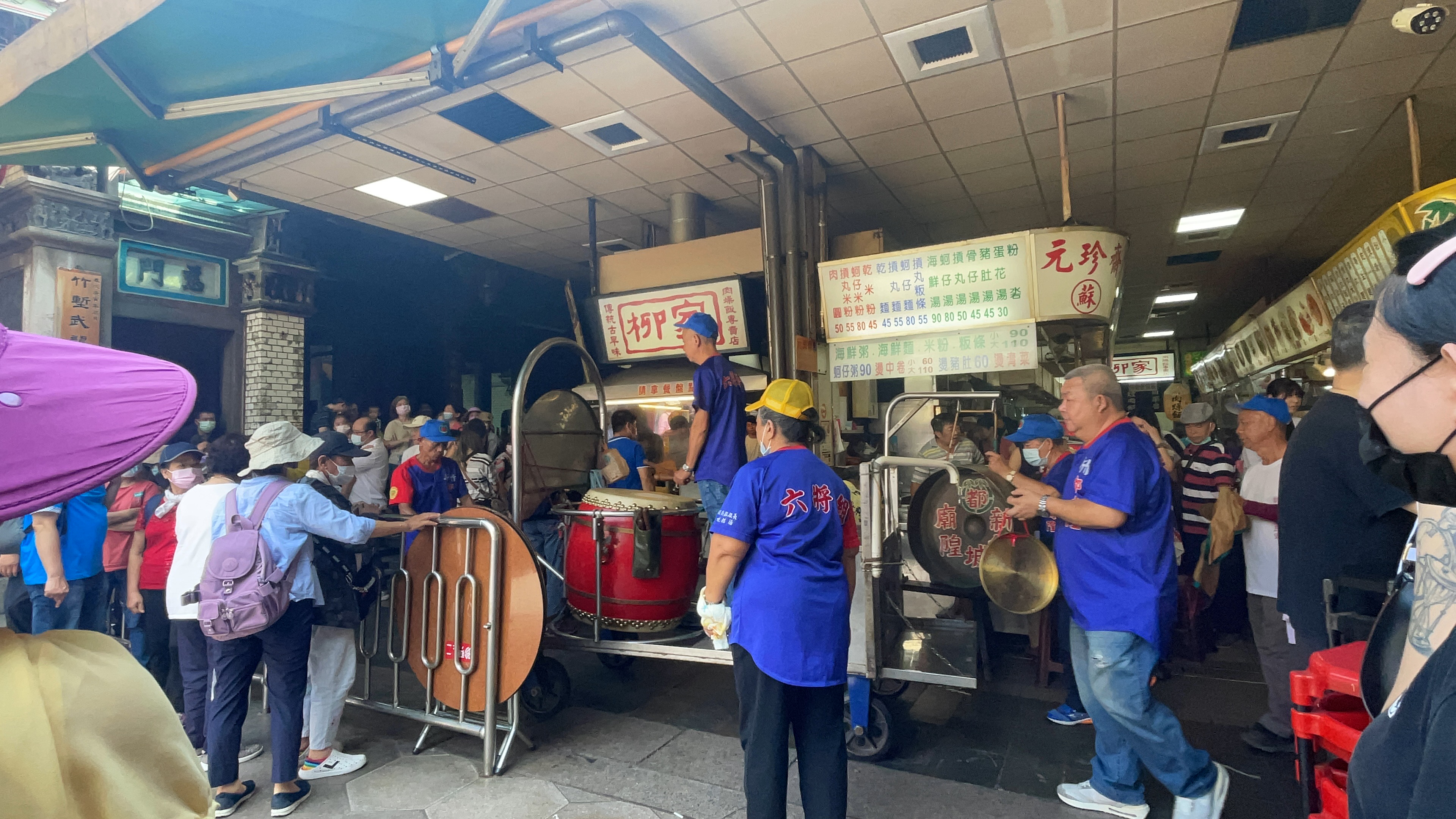
There was also an event at the Chenghuang Temple. Initially, we hadn't planned to watch it, but we found ourselves blocked from leaving by the incoming parade, so we decided to stay. It was quite noisy, and I don't typically enjoy temple events, but at least they set off the firecrackers outside the temple's market, not right in front of it. More about it at the end of my post.
Hsinchu County boasts several well-preserved Japanese-era remnants and other historical sites, making it a captivating destination for history enthusiasts.


History of Hsinchu City

Hsinchu City (Taiwanese: Sin-tik-tshī; Hakka: Sîn-chuk-sṳ) is located in the northwest of Taiwan. It was founded in 1718 and was originally known as "Zhuqian," which was the seat of the Taokas tribe of Pingpu aborigines. It is also commonly referred to as the "Wind City."

Hsinchu City serves as a vital hub for the global high-tech OEM industry. During the Japanese colonial period, the Taiwan Governor-General established the Natural Gas Research Institute here in 1936. In the 1970s, the Industrial Technology Research Institute was founded in the city, followed by the Institute of Natural Gas in the early 1980s. Hsinchu Science and Industrial Park has attracted significant investments from both domestic and international manufacturers, along with a substantial migration of high-tech talent, thereby accelerating the development of Taiwan's high-tech industry. Hsinchu City was designated as an international city at the Sufficiency level in the 2020 list of world-class cities published by the Globalization and World Cities Research Network (GaWC).

Originally known as "Tek-chhàm" due to its association with the Zhuqian Society of the Pingpu Daokas Tribe, Hsinchu received visits from Spanish missionaries after Spain ruled northern Taiwan in 1626. The area's development can be traced back to 1661 when Zheng Chenggong dispatched troops from Kinmen, passed through Penghu, and advanced toward the Dutch East India Company's dominance over Taiwan Island. Following the establishment of control, a large number of Han people migrated to Taiwan to cultivate the land.

In 1895, Taiwan entered the Japanese colonial period. During the Yiwei War in 1895, Hsinchu played a pivotal role as a stronghold resisting the Japanese army's occupation of northern Taiwan. Hsinchu was initially designated as Zhubei No. 1 Fort within the Hsinchu Branch Office of Taipei County. In 1897, it was transferred to Hsinchu County, though it was renamed under the jurisdiction of the Hsinchu District Affairs Office of Taipei County after a year. There were several administrative changes over the years, and in 1930, the town was elevated to the status of Hsinchu City. Following Taiwan's restoration in 1945, Hsinchu was designated as Hsinchu City, Taiwan Province. In 1946, neighboring districts were incorporated into Hsinchu City, forming Zhudong District and Baoshan District. In 1950, Hsinchu County was separated from Taoyuan County and Miaoli County. Finally, in 1982, Hsinchu City merged with Xiangshan Township in Hsinchu County and was once again upgraded to Hsinchu City, Taiwan Province.

Hsinchu City's northern half is situated on the Hsinchu Plain, formed by the alluvial deposits of Touqian Creek, Fengshan Creek, and Keya Creek, resulting in a low and flat terrain. The southern half extends from the western side of Zhudong Hills, with the highest peak being Wubuwei Mountain, reaching an altitude of 184 meters. The western coastal area features a narrow coastal plain. Over time, due to the sediment transported by the Touqian River and Fengshan River originating from the mountains, combined with the influence of the strong China Coastal Current and the northeast monsoon in the Taiwan Strait, the western coast plain has gradually shifted from the river mouths southward to Nanliao. This process led to the formation of shoals, which later transformed into wetlands, and the expansion of plains towards the sea—an example of natural river alluvial fan land-building. However, this phenomenon ceased after the completion of the Hsinchu Fishing Port.

Hsinchu City experiences an oceanic subtropical monsoon climate, characterized by year-round rainfall. Water shortages are common in both summer and winter. Precipitation in summer primarily results from typhoons forming in the Western Pacific, followed by afternoon convective rain, while winter and spring are marked by frontal rain. Snowfall is not observed throughout the year, although there was a recorded occurrence of snowflakes on January 24, 2016.

Hsinchu First Street


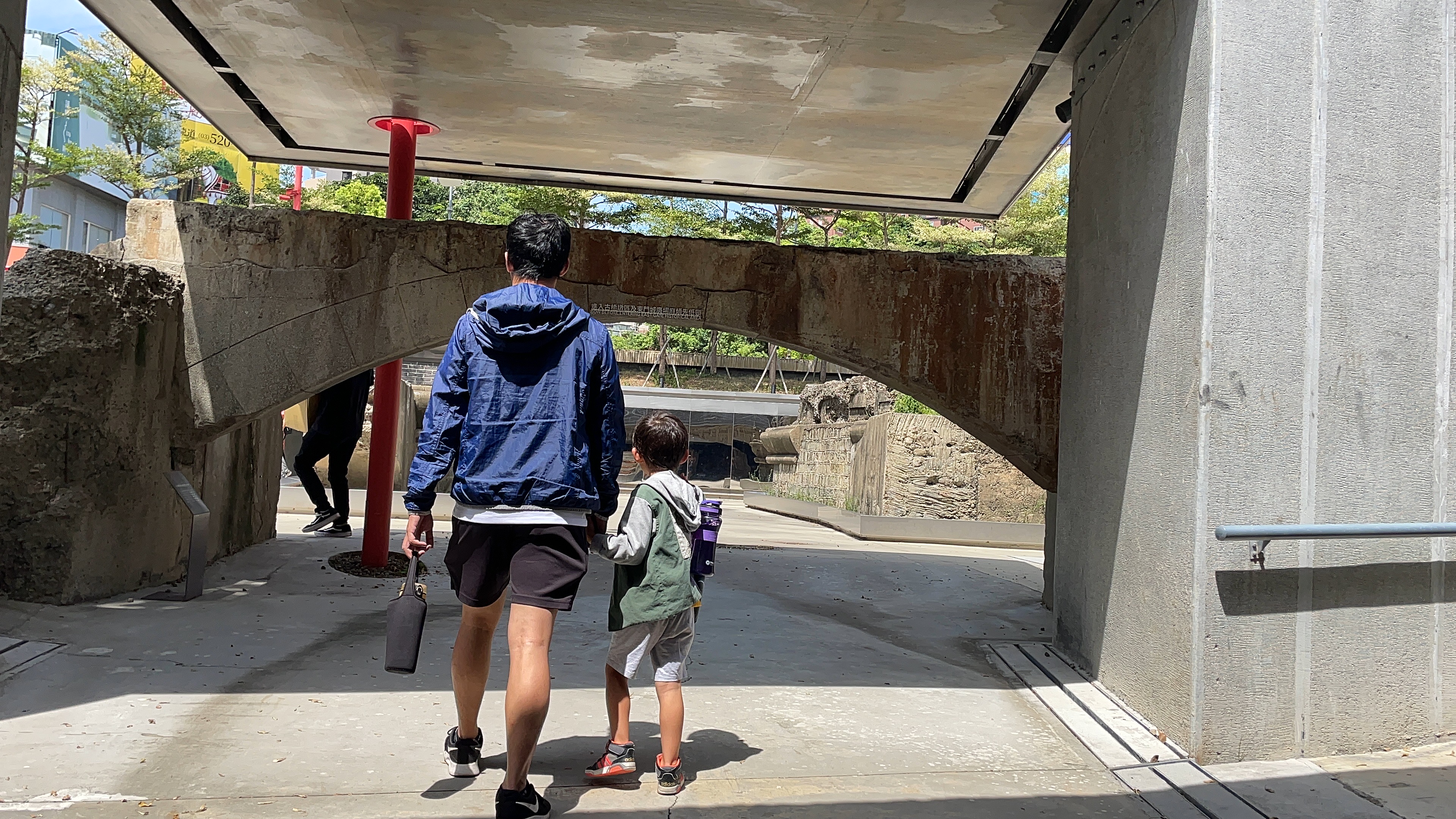
East Gate - Yingximen (竹塹城迎曦門)

In 1733, bamboo was the primary building material for the city walls. However, during the Qing Dynasty in 1827, the walls were reconstructed using bricks and stones, and a moat was excavated. At the onset of the Japanese occupation in 1902, the Governor's Office of Taiwan decided to implement urban improvements, leading to the demolition of the city walls and gates, with the exception of the East Gate. The East Gate is a two-story colonnade-style tower featuring arched door openings and a decorative inscription at the top of the main entrance. Originally constructed with a wooden roof, it was later reinforced with concrete during renovation.

Throughout the Japanese era, Hsinchu served as the primary administrative center between Taipei and Taichung. The city gained renown for its production of glass for medical equipment until 1960 when it shifted its focus to crafting decorative items. Today, Hsinchu is renowned as a hub for decorative glass products.


Site of Hsinchu Old Bridge (新竹郡舊橋遺址)

The Hsinchu Moat (護城河) extends from Linsen Road, near the train station, to Beida Road, close to the Hsinchu Cathedral. This riverbank park is situated around the city's oldest moat and serves as a delightful spot for leisurely activities, such as strolling, enjoying live music, and simply relaxing. If you happen to get hungry, you'll find numerous charming cafes and eateries in the vicinity. Additionally, there is a remnant of an old bridge that adds to the historical charm of the area.


Starbucks / Former Shinchiku Prefecture Library (新竹州圖書館)

The Hsinchu State Library was originally known as the "Hsinchu Street Library." It was constructed using funds to commemorate Emperor Taisho Prince Hirohito's visit to Hsinchu in 1923 and was completed in 1925. It was later renamed the "Hsinchu State Library." Following Taiwan's liberation, the library came under the management of the Hsinchu City Government. It was subsequently acquired and renamed the Hsinchu Municipal Library, later transitioning to the "Hsinchu County Library" for library purposes. In 1973, Shin Kong Group acquired the property rights. Thanks to both public and private efforts to preserve cultural assets, the library underwent restoration and reopened in September 2019. As part of a half-year curatorial activity in collaboration with the Taiwan Design Exhibition and the 110th Taiwan Lantern Festival, it was temporarily used as an exhibition space and later returned to its original function.

The library is a Western-style building with a simple and elegant façade. The columns on the front are adorned with brick-shaped stripes, lending an air of stability to the structure. The upper floor is slightly set back to create a balcony, and a small canopy extends from it. The columns support the roof beams, providing a sense of lightness to the roof while accentuating the solidity of the lower façade. The projecting entrance porch, widened door pillars, and central double pillars on the upper floor collectively create a strong and imposing entrance. The reinforced three-dimensional columns on the façade, in conjunction with the interplay of solid and virtual windows, impart a substantial and enduring quality.

On March 30, 2012, Starbucks opened its "Hsinchu State Library" store, marking it as the first city-designated historic store in the Taozhumiao District. It stands as a remarkable example of revitalizing and repurposing historic sites. It is among the three independent public libraries globally that have best preserved their original architectural authenticity since World War II. This nearly century-old municipal historic site, the "Hsinchu State Library," symbolizes the enduring cultural significance of Hsinchu and its surrounding region.


Hsinchu City Art Gallery (新竹市美術館) 

The Hsinchu City Art Museum was constructed during the Japanese colonial period and exhibits one of the prevailing European classical architectural styles of that era. The entrance features a Roman-style arch, with red bricks adorning the exterior walls and two white horizontal lines traversing the museum, along with Roman-style arches. The incorporation of traditional Japanese roof tiles into the design was a novel and progressive concept at the time. 

In 1920, the Japanese government updated the Local Government Systems Act and established the Hsinchu State Street Affair for Hsinchu Street. This affair fell under the governance of Hsinchu County, within Hsinchu Province. Initially, the affair was situated within the County Office, and it wasn't until 1925 that the Street Affair was constructed. This is the origin story of the Hsinchu City Art Gallery. The building has undergone several transformations. In 1930, Hsinchu was elevated to the status of Hsinchu City, and concurrently, the Hsinchu State Street Affair became the Hsinchu City Affair, functioning as the City Hall. In 1991, it was repurposed as the Hsinchu City Household Registration Office and was officially recognized as a city-level historic relic in a bulletin issued in 2001. After undergoing a three-year overhaul and renovation, it was reopened in 2007 as the Hsinchu City Art Gallery & Reclamation. In 2016, its focus shifted towards being a contemporary art exhibition space, officially becoming the Hsinchu City Art Gallery, with the aim of infusing Hsinchu with a vibrant artistic spirit.

Since 2016, the museum has reimagined its exhibition routes, focusing on contemporary art as its main theme. Presently, the Hsinchu City Art Museum has evolved into a hub for culture and art within the city. Beyond its role in displaying and collecting art, each exhibition period is meticulously planned around specific themes. The exhibition format incorporates digital interactive content and educational outreach efforts. The official buildings from the Japanese occupation era have retained their classic architectural and historical cultural value, embracing a new mission of promoting the growth of urban art and culture through their management.


Hsinchu Railway Station (新竹火車站)

Another historic building worth visiting is Hsinchu Railway Station. The railway station was first opened at the end of 1893, and the current railway building was constructed between 1908 and 1913 during the Japanese era. The Japanese architect drew inspiration from Western Gothic and Baroque styles that were popular at the time. It stands as the oldest active station in Taiwan and has been designated as a national monument. The building suffered damage during World War II but was subsequently restored in 1947 through funds raised by the Taiwan Provincial Government. In 1989, following the complete phase-out of steam locomotives, the fan-shaped garage was removed. The sole remaining fan-shaped garage in Taiwan can now be found in Changhua.


Hsinchu City Government (新竹州廳) 

Hsinchu City Hall is another monument that was constructed during the Japanese occupation and has been preserved to this day. The hall was originally built in 1925, and the entrance porch was expanded in 1932. In 1945, with the establishment of the Hsinchu City Government, the Hall building was repurposed for office use. Then, in 1982, when Hsinchu attained provincial city status, the state office became the municipal government office. In 1988, the Taiwan Provincial Government designated the State Hall as a provincial monument, leading to renovation work between 2000 and 2005.

The City Hall exhibits Western architectural influence, featuring a two-story brick structure. The floors and beams are primarily constructed from reinforced concrete, while the roof is composed of wood.


Hsinchu City Fire Museum (消防博物館)

The Hsinchu City Fire Museum was initially constructed as a fire station but has since been repurposed into a museum to conserve its historical significance. Within its walls, visitors can explore vintage fire engines and firefighting equipment used by early firefighters. Please note that the museum is currently undergoing renovations and is expected to reopen in 2025. For a glimpse of its interior, you can refer to my another post: HERE


Chenghuang Temple (新竹都城隍廟)

The most significant temple in Hsinchu City is Chenghuang Temple (新竹都城隍廟), built in 1748, and it stands as the most renowned temple in Hsinchu. Initially, the temple might not be immediately noticeable amidst the numerous food stalls that surround it, but it's a highly popular destination.

Chenghuang, which translates to "city wall and moat," is the deity of justice in the city. It is believed that prayers offered at this temple receive special attention because the spirits of the departed continually inform the God about the deeds, both good and bad, of the living. This God not only safeguards the city but is also invoked for assistance during natural disasters or in cases involving individuals accused of crimes. Hsinchu Chenghuang Temple is one of the three major temples, and during the Qing Dynasty, it held the distinction of being the sole City God Temple in Taiwan.

During the Japanese occupation, the temple underwent extensive renovations, resulting in the addition of numerous ornate decorations. Chenghuang's birthday, celebrated on the 29th of November in the Lunar Calendar, is traditionally marked with a grand parade and lively firecracker displays.

Adjacent to Chenghuang Temple is Falian Temple, which was incorporated into the complex during renovations in 1803.

The Chenghuang Temple's Night Market has a rich history. Originating during the Japanese era with only four vendors, it has grown over time to become a bustling market. The market around the temple operates daily from 10 am to 10 pm, offering a wide array of delectable foods, including oyster omelettes, meatballs (rou yuan), shaved ice, cooked mochi, and traditional bitter tea.


Address:

1. Yingximen (East Gate): 300新竹市東區竹塹城迎曦門
2. Hsinchu Moat: 300新竹市東區護城河
3. Starbucks / Former Shinchiku Prefecture Library: 300新竹市文化街8號
4. Hsinchu City Art Gallery: 300新竹市中央路116號
5. Train Station: 300新竹市東區中華路二段445號300
6. Hsinchu City Government: 300新竹市北區中正路120號新竹市政府
7. Fire Museum: 300新竹市北區中山路4號新竹市消防博物館
8. Chenghuang Temple: 300新竹市北區中山路75號新竹市城隍廟夜市