February 15, 2020

Poland: Toruń - Gingerbread traditions

Toruń gingerbread is a traditional Polish gingerbread that has been produced since the Middle Ages in the city of Toruń. Old Polish sayings are connected with Toruń's gingerbread-making, which started in the 13th century. Toruń holds an annual gingerbread celebration called Święto Piernika (the Gingerbread Festival).

The development of gingerbread-making in Toruń was greatly influenced by its excellent location. The area had high-quality soil that provided fine wheat for flour, and nearby villages supplied honey. The necessary spices were brought from distant countries, primarily India, through a trade route that went through the Black Sea and Lwów to the Holy Roman Empire. North-German trade companies transported the spices. Some spices also arrived by sea at the port of Danzig.

The first mention of Toruń gingerbread dates back to 1380 and refers to a local baker named Niclos Czana. The product quickly gained fame both in Poland and abroad. Toruń and the city of Nuremberg, known for its special pancakes, were eager to protect the secrets of their recipes from each other. Finally, in 1556, they reached an agreement allowing each city to bake the specialties of the other.
During the 18th and 19th centuries, Toruń experienced a decline in baking and craftsmanship. By 1825, only three bakers were left. With the rise of capitalism, large companies took over from local craftsmen, leading to mass production of gingerbread.

The largest factory belonged to Gustav Weese, who continued a tradition dating back to 1763 when Johann Weese began baking gingerbread. Gustav Traugott Weese inherited a small workshop from his father Andreas in 1824 and expanded it into a large company. In 1913, Gustav Weese constructed a factory that employed over 500 workers after World War I. In January 1939, Gustav Weese sold the factory to the Polish company "Społem" and focused on his other gingerbread factory in Germany. The company in Toruń still exists today and is the oldest confectionery company in Poland and one of the oldest in the world.

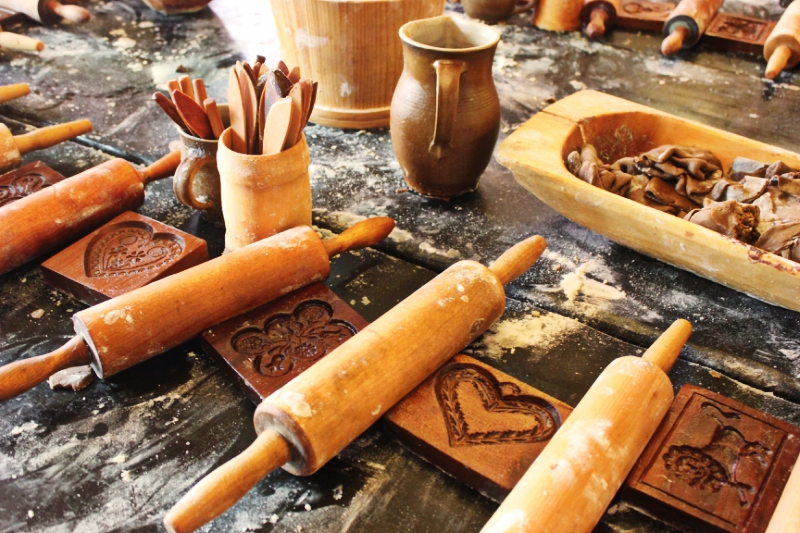
There is also a gingerbread museum where visitors can participate in an interactive show to learn how to make traditional gingerbread. The show consists of two parts: first, visitors are shown how the dough was made in the Middle Ages, and then they make their own gingerbread using traditional baking molds. Throughout the show, visitors are guided by a master baker, a gingerbread witch, and other craftsmen. Visitors also have the opportunity to participate in flour production using millstones. The museum is an integral part of the living gingerbread tradition in Toruń.




February 10, 2020

Poland: Toruń Castle and Nicolaus Copernicus house

Walking along the old town walls, you can have a nice view of the Vistula River. The old gates are still in use, and cars can drive in and out. The roads in the town are built with stones. Although not much of the castle remains, it is still an interesting part of the town. I love the old-style houses that line the streets. Toruń is truly beautiful and full of history, which is why it is a popular travel destination in Poland. Every year, 1.5 million tourists visit this place.

Nicolaus Copernicus House

These two houses used to belong to Nicolaus Copernicus senior, a merchant from Krakow. He moved to Toruń around 1456 and married Barbara Watzenrode from Toruń's patrician family, which allowed him to enter the town's elite. The houses are considered to be the birthplace of the astronomer and form a splendid Gothic complex of outstanding beauty. They now house the Museum of Copernicus' Epoch, where visitors can learn about Copernicus' life and work, explore the interiors of burghers' houses from the 14th to the 19th century, see a model of medieval Toruń, and learn about gingerbread making. The Copernicus house represents a popular dwelling-warehouse style that was common in the 15th century in towns along the southern coast of the Baltic Sea, members of the Hanseatic League. Several 14th-century elements are preserved in the building.


Nicolaus Copernicus House, Torun, Poland

Nicolaus Copernicus House, Torun, Poland

Nicolaus Copernicus House, Torun, Poland

leaning tower, Torun, Poland

leaning tower, Torun, Poland

gate, Torun, Poland

Torun, Poland

Torun, Poland

Torun, Poland

Torun, Poland

Leaning Tower of Toruń

The Leaning Tower of Toruń is a medieval tower located in the old town of Toruń. The top of the tower is displaced 1.5 meters from where it would be if the tower were perfectly vertical, hence the name "Leaning Tower." It is one of the most important landmarks in Toruń's Old Town. The tower was built in the 13th century for defensive purposes and was made of red brick. Over time, it started leaning due to the loamy ground on which it was built. In the 18th century, it ceased to be used for defensive purposes and was converted into a women's prison. Throughout the years, it has served various functions and now houses the Toruń Cultural Department and a café.

Toruń Castle

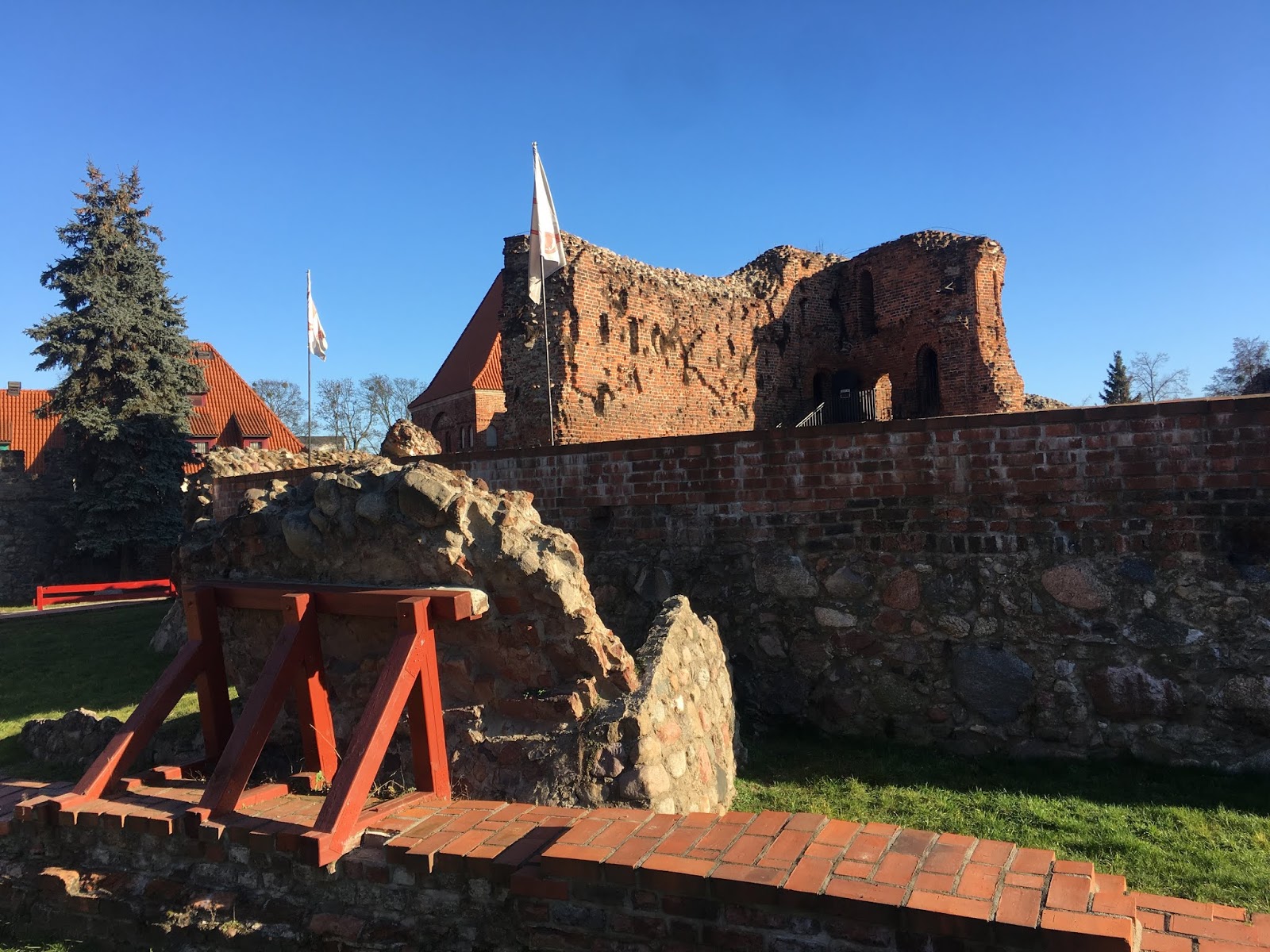
Toruń Castle, also known as Thorn Castle, is a 13th/14th-century castle built by the Teutonic Order. It is part of the Medieval Town of Toruń, a UNESCO World Heritage Site. The construction of the castle began in the mid-13th century and lasted for about a hundred years. It was the first Teutonic castle in the Chełmno Land. The castle played a significant role in the Teutonic Knights' mission to colonize pagan Old Prussians and the formation of the Teutonic state. Today, only a small part of the castle remains, including the sewage tower and the cellars. The castle has been partially excavated, rebuilt, and turned into a historical monument. The remaining sections now house permanent exhibits, allowing visitors to explore settings such as the armoury, kitchen, dormitory, scriptorium, and mint.


Torun, Poland

Torun, Poland

Torun, Poland

Torun, Poland

Torun, Poland

Torun, Poland

Torun, Poland

Torun, Poland

Torun, Poland

Torun, Poland

Torun, Poland

Torun, Poland

Torun, Poland

Torun, Poland

February 4, 2020

Poland Travel: Toruń Old Town

Since I first visited Toruń several years ago, I have always thought that the medieval town looks very beautiful. Now I also wanted to introduce this town to my husband. Toruń is only 1 hour away from my hometown.
I find the payment system for parking in Poland annoying. You need to know in advance how long you're going to stay and pay for it. In Taiwan, you can park and not worry about anything, as someone will check the timing and put a ticket on your car. That's much more convenient. Whenever we go somewhere, we are always checking the time to make sure we're not late to our car.
Mostly, we walked around the town, visited the Leaning Tower, old town gates, castle ruins, and, in the end, some gingerbread shops, handmade candy shops, the town hall, and Nicolaus Copernicus' house. It took us about 2 hours. Initially, I planned to visit the Museum of Gingerbread, but going back and forth to the car felt annoying. Besides, the weather was sunny but cold and windy.


Torun, Poland

Torun, Poland

Torun, Poland

Torun, Poland

Torun, Poland

History of Toruń 

Toruń is a historical city located on the Vistula River in north-central Poland. It has been a UNESCO World Heritage Site since 1997 and was added to the list of Seven Wonders of Poland in 2007. Believed to be one of the most beautiful cities in Europe, Toruń is renowned for its Museum of Gingerbread, which has a baking tradition dating back nearly a millennium, and its large Cathedral. Toruń is also the birthplace of astronomer Nicolaus Copernicus. The city has the largest number of preserved Gothic houses in Poland, many of which feature Gothic wall paintings or wood-beam ceilings from the 16th to the 18th centuries.

Toruń is one of the oldest cities in Poland, with the first settlement dating back to the 8th century. It was later expanded by the Teutonic Knights in 1233. From 1264 until 1411, Toruń was part of the Hanseatic League and became one of the elite trading points. This influenced the city's architecture, which ranges from Brick Gothic to Mannerism and Baroque styles. During the early-modern age, Toruń was a royal city of Poland and one of the four largest cities in the country at the time.
Throughout its history, Toruń has been home to notable individuals, scholars, and statesmen. Nicolaus Copernicus was born there in 1473, and Polish King John I Albert died in Toruń in 1501, with his heart being buried inside St. John's Cathedral. In 1500, the Tuba Dei, the largest church bell in Poland at the time, was placed in the Church of St. John the Baptist. A bridge across the Vistula River, the country's longest wooden bridge at the time, was also built. In 1506, Toruń became a royal city of Poland.

Old Town Hall (Ratusz Staromiejski)

The Old Town Hall dates back to the 13th century. In spring 1231, the Teutonic Knights crossed the Vistula River at Nessau and established a fortress. Due to frequent flooding, it was relocated to the present site of the Old Town in 1236. Franciscan friars settled in the city in 1239, followed by Dominicans in 1263. The adjacent New Town was founded in 1264 to accommodate Toruń's growing population of craftsmen and artisans.
The Old Town Hall was inaugurated in 1274 and was later extended and rebuilt between 1391 and 1399. It was extended again at the end of the 16th century. It is considered one of the most monumental town halls in Central Europe.

Dragon of Toruń

On August 13, 1746, a master carpenter named Johann Georg Hieronim and the wife of a city soldier named Kataharina Storchin certified at the town's administrative office in Toruń that they had seen a dragon in spring 1746. The creature could fly and swim, measured 2 meters long, had a dark-grey head and trunk, and a light-brown and shiny tail. The flying dragon appeared near Struga Toruńska in the Przedzamcze region and flew in the direction of the Teutonic Castle ruins.

See also: Toruń Castle

Torun, Poland

Torun, Poland

Torun, Poland

Torun, Poland

Torun, Poland

Torun, Poland

Torun, Poland

Torun, Poland

Torun, Poland

Torun, Poland

Torun, Poland

Torun, Poland

Torun, Poland

Torun, Poland