October 14, 2020

Kaohsiung Travel: Qiaotou Sugar Factory

Qiaotou Sugar Factory (橋頭糖廠)

The Qiaotou Sugar Factory, which commenced operations on January 15, 1902, was capable of processing 200 tons of sugarcane per day. It marked Taiwan's prosperous era of sugar production and achieved numerous notable records in the country's sugar industry. However, due to significant changes in the economic environment, the factory ceased operations on February 28, 1999.
Recognizing the special historical significance of the Qiaotou Sugar Factory, the former Kaohsiung County Government (now Kaohsiung City Government) designated it as a county historical heritage preservation area in 1988. Taiwan Sugar Corp. subsequently transformed the factory into a museum dedicated to Taiwan's sugar industry on May 1, 2006.
The museum currently preserves a section of the original factory wall, which was built 100 years ago, allowing visitors to reminisce about the past. The entire sugar manufacturing process, from transporting sugarcane to squeezing, cleaning, evaporation, crystallization, molasses separation, and packaging, is showcased to help visitors understand the challenges faced in the sugar production industry.

Piggy Heritage Museum (豬仔文物館)

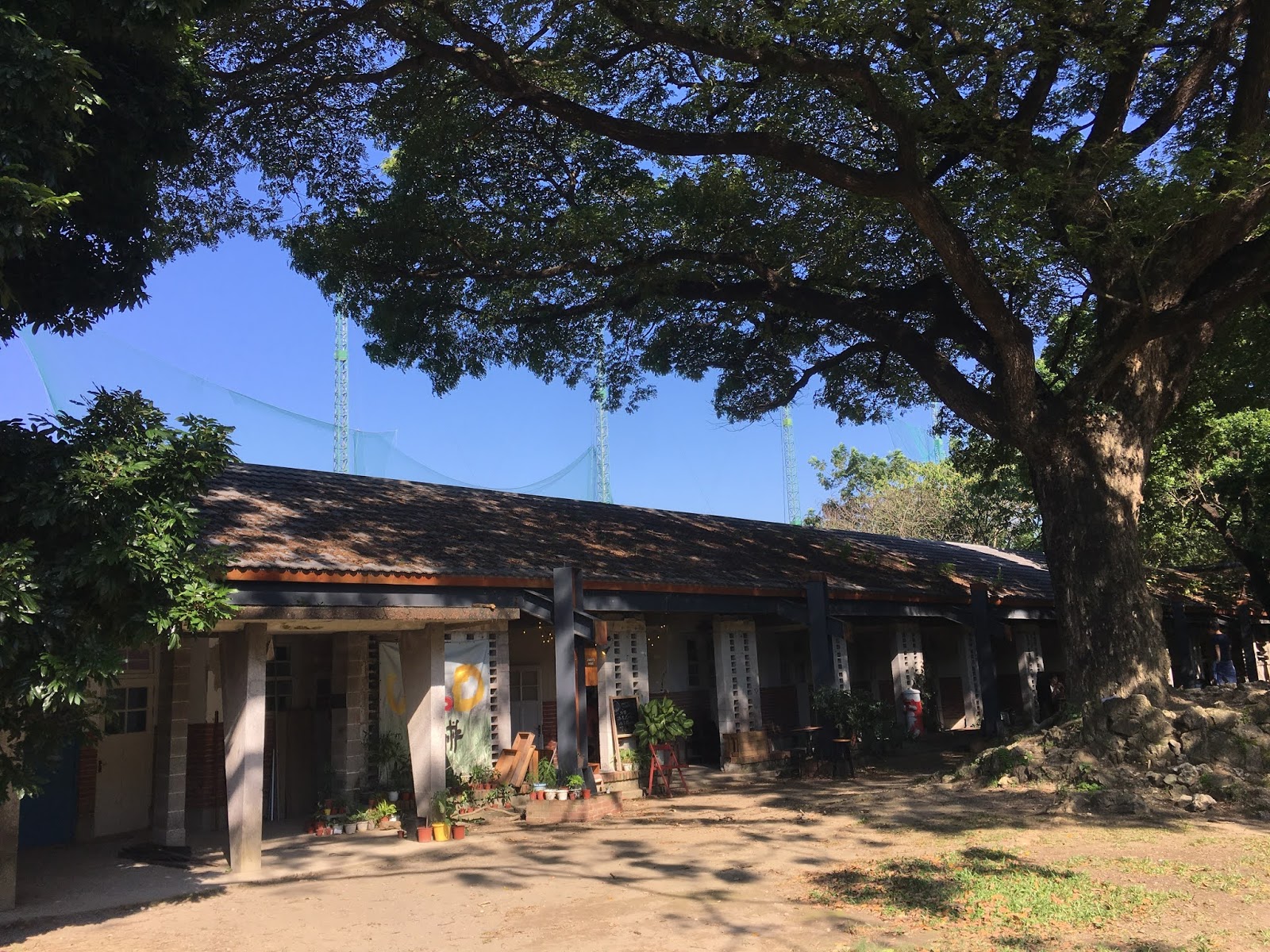
Originally built in 1902 as the club of the Qiaotou Sugar Factory, this building featured an open space in front that served as a training ground for the Japanese armed forces. The architectural style resembles that of Dutch colonies in Southeast Asia, incorporating elements of traditional European architecture such as elevated structures for ventilation and continuous arches. While the design drawings originated from the Netherlands, they also incorporate certain aspects of Japanese architectural style, such as the use of Japanese cypress in the construction of the roof.

The "Pig Club" building, also known as the Piggy Heritage Museum, is the largest structure within this historic site. It houses the "Piglet Cultural Relics Exhibition Area," which primarily showcases over 1,400 pig figurines donated by Professor Chen Shimeng of National Taiwan University. Additionally, the museum displays 514 piglet models donated by the former director of the Livestock Research Institute, Ge Fujiang. The collection includes cultural and creative wood-carved pigs from the Tsou tribe in Alishan, as well as exquisite pig figurines, paintings, mugs, toys, and more from various regions, including Hawaii, Greece, Peru, and Chile. The exhibition highlights the diverse and unique cultural works related to pigs from Taiwan's indigenous communities. The "Piggy Bank Area" within the museum exhibits piggy bank boxes made from various materials, showcasing different styles and creative ways of saving money.

Black Copper Guanyin

In 1902, President Suzuki, aiming to boost morale among Japanese technicians far from home and foster a sense of community among Taiwanese farmers involved in sugar production, collected bronze mirrors from mainland China and constructed a holy Guanyin statue next to the sugar factory office. The statue's design is inspired by the Sacred Guanyin statue at Yakushi Temple in Nara, Japan, and holds significant artistic value. Positioned to face the sugar factory, the Guanyin Buddha statue symbolizes protection for both the community house office and the well-being of the factory staff. President Suzuki originally cast four statues of Avalokitesvara Bodhisattva: one for Qiaotou Sugar Factory in Kaohsiung City, another for Morimachi in Shizuoka Prefecture (Suzuki's hometown), a third for Kanagawa Kamakura (Suzuki's villa), and the last for Tokyo Fukagawa (Japan Sugar Factory headquarters). Legend has it that the copper lightning rod installed above the sugar factory was stolen by anti-Japanese individuals shortly after its installation.

Qiaotou Sugar Factory, Kaohsiung, Taiwan

Qiaotou Sugar Factory, Kaohsiung, Taiwan

Qiaotou Sugar Factory, Kaohsiung, Taiwan

Qiaotou Sugar Factory, Kaohsiung, Taiwan

Qiaotou Sugar Factory, Kaohsiung, Taiwan

Qiaotou Sugar Factory, Kaohsiung, Taiwan

Qiaotou Sugar Factory, Kaohsiung, Taiwan

Qiaotou Sugar Factory, Kaohsiung, Taiwan

Qiaotou Sugar Factory, Kaohsiung, Taiwan

Social Housing Office (社宅事務所)

The Community House Office, currently classified as a third-class monument, holds significant historical value within the Qiaotou Sugar Factory. Its architectural style draws inspiration from Dutch colonies in Southeast Asia, reflecting the general European colonial style prevalent in tropical regions. The building features elevated structures for ventilation and incorporates cloisters and continuous arches, reflecting traditional European architecture. To counter anti-Japanese elements during that time, the Community House Office even imported reinforced concrete structures from the UK for the central porch and entrance base, allowing for fortification and the establishment of a defensive position. The parapet walls around the cloister's roof include gun holes for defensive purposes, and a basement was excavated beneath the building to store food. During attacks by "gangsters," the self-defense team formed by the Sugar Refining Institute staff defended the building while women and children sought refuge in the basement. The Community House Office became a fortified defensive fortress. This office of Taiwan Sugar Co., Ltd. was built in 1901 and symbolizes a milestone in Taiwan's emerging sugar industry, as well as an important building during the Japanese occupation period. The architectural structure combines wooden and brickwork elements.

Director's Dormitory

Constructed in 1940, the director's dormitory is a traditional Japanese-style official residence built for former director Zenzaburo Kinki. It covers an area of 59.62 square meters and features a cypress roof truss, raised floor, and wooden bed bundle. It represents the most iconic Japanese-style wooden dormitory in the factory. After the liberation in 1946, it served as the deputy director's dormitory. In 1955, the internal layout was slightly modified to accommodate daily life. The surrounding garden boasts tall Ceylon olive trees and Burmese garden flowers, creating an elegant yet melancholic ambiance. The movie "Prince of Tears" was filmed at this location, recreating the military village style of the 1950s. In an era of limited resources, incomplete remnants of fond memories are often tinged with a touch of nostalgia. Following its restoration in 2012, many people have visited to take pictures and appreciate its elegant appearance.

Deputy Director’s Dormitory

The deputy director's dormitory, constructed in 1940, occupies an area of 33.76 square meters. It served as the primary wooden residential building during the Japanese Occupation Period. The design of the dormitory included the planning of the front courtyard and backyard, providing a cohesive and harmonious environment. To this day, the main structure of the building and its surroundings remain intact, showcasing the distinctive Japanese-style wooden architecture and a meticulously crafted Japanese-style garden landscape within the factory area.
However, in June 1988, the Qiaotou Sugar Factory was closed, leading to the suspension of production. As a result, the dormitory of the deputy director suffered severe damage due to neglect and lack of maintenance caused by the factory's closure.

Qiaotou Sugar Factory, Kaohsiung, Taiwan

Qiaotou Sugar Factory, Kaohsiung, Taiwan

Qiaotou Sugar Factory, Kaohsiung, Taiwan

Qiaotou Sugar Factory, Kaohsiung, Taiwan

Qiaotou Sugar Factory, Kaohsiung, Taiwan

Qiaotou Sugar Factory, Kaohsiung, Taiwan

Qiaotou Sugar Factory, Kaohsiung, Taiwan

Qiaotou Sugar Factory, Kaohsiung, Taiwan

Qiaotou Sugar Factory, Kaohsiung, Taiwan

Qiaotou Sugar Factory, Kaohsiung, Taiwan

Qiaotou Sugar Factory, Kaohsiung, Taiwan

Qiaotou Sugar Factory, Kaohsiung, Taiwan

Qiaotou Sugar Factory, Kaohsiung, Taiwan

Qiaotou Sugar Factory, Kaohsiung, Taiwan

Qiaotou Sugar Factory, Kaohsiung, Taiwan

Qiaotou Sugar Factory, Kaohsiung, Taiwan

Address:

825高雄市橋頭區糖廠路24號台灣糖業博物館-橋頭糖廠

October 8, 2020

Kaohsiung Travel: Aviation Museum and Gangshan Town

Aviation Education Exhibition Hall (航空教育展示館)

The Aviation Education Exhibition Hall, located on the campus of the Air Force Officer School in Gangshan District, Kaohsiung City, opened on September 19, 2015. The main attractions of the exhibition hall include retired military aircraft, weapons and equipment, aviation engines, and precious historical relics of the Air Force. Additionally, there is a spacious public area outside the museum.

The entrance to the Aviation Education Exhibition Hall is situated on the second floor. For the general public, tickets are priced 200NT.
Notably, the Aviation Education Exhibition Hall is the only exhibition venue in the world where visitors can witness Chinese, American, and Soviet fighter aircraft. As you enter the exhibition hall, you'll encounter real airplanes scattered both on the ground and suspended from the ceiling.

Gangshan Aviation museum, Kaohsiung, Taiwan

Gangshan Aviation museum, Kaohsiung, Taiwan

Gangshan Aviation museum, Kaohsiung, Taiwan

Gangshan Aviation museum, Kaohsiung, Taiwan

Gangshan Aviation museum, Kaohsiung, Taiwan

Gangshan Aviation museum, Kaohsiung, Taiwan

Gangshan Aviation museum, Kaohsiung, Taiwan

Gangshan Old Street 

Gangshan old street, Kaohsiung, Taiwan

Gangshan old street, Kaohsiung, Taiwan

Gangshan old street, Kaohsiung, Taiwan

Gangshan old street, Kaohsiung, Taiwan

Gangshan old street, Kaohsiung, Taiwan

Gangshan old street, Kaohsiung, Taiwan

Gangshan old street, Kaohsiung, Taiwan

Gangshan old street, Kaohsiung, Taiwan

Gangshan old street, Kaohsiung, Taiwan

Gangshan old street, Kaohsiung, Taiwan

Gangshan old street, Kaohsiung, Taiwan

Address:

820高雄市岡山區致遠路55號航空教育展示館

October 5, 2020

Tainan Travel: Tainan Martyrs' Shrine

Recently, after watching YouTube videos from Ku's Dream, we discovered a breakfast shop that sells unusual flavors of danbing. Intrigued, we decided to visit South District. The breakfast shop is located near the Martyrs' Shrine, which we had never visited before. It always feels like there are so many things in Tainan that we have yet to explore, no matter how many times we visit.

Tainan Martyrs’ Shrine (臺南市忠烈祠)

Tainan Martyrs' Shrine was originally a private mansion. When the prince came to Taiwan to restore order, he stayed at the residence of Wu Ruxiang, a wealthy family in Tainan. Unfortunately, he contracted malaria and passed away in October. The Japanese government then designated the mansion as the "Prince Nohku Imperial Ruins of Kitashirakawa Palace," establishing a shrine to pay homage to the prince and house his relics. After World War II, the shrine was renamed the "Tainan Shrine" and later changed to the "Martyrs' Shrine" after Taiwan's recovery.

The current Tainan Martyrs' Shrine is a Chinese palace-style building. The entrance is marked by a torii gate engraved with the characters "Mighty Qianqiu." Most of the individuals memorialized at the shrine are soldiers, firefighters, and police officers who died in the line of duty. Every year on March 29th, the Youth Festival and during the Spring and Autumn Festivals on September 3rd, as well as on Military Day, ceremonies are held to honor the martyrs. Additionally, during these occasions, condolences are expressed to the families of military officers who have passed away within the last six months. While the interior of the shrine is not open to the public, the outer area offers a beautiful night view and is open for visitation. During the daytime, compared to the surrounding historic sites and temples, the shrine has a quieter atmosphere without the hustle and bustle.

The Tainan Shrine was established in 1923 in Nanmen Town (now the Central and Western District of Tainan City). The shrine also includes the imperial ruins established in 1901. It is one of only two official shrines in Taiwan. The shrine was constructed with a spiritual gate, worship hall, shrine gate, hand water house, torii, stone lanterns, and fences, all situated along the north-south axis facing Jinfuqian Road. The "Loyal Soul Stele," originally located at Taiwan's second garrison training ground outside the Great North Gate, was moved to the east of the Imperial Ruins Institute in 1903. The former Mizi Lin Chaoxing Palace was demolished, and statues of gods were placed there.

After World War II, in 1946, the Tainan Shrine was renamed the Martyrs' Shrine, and the torii gate at the entrance was replaced with a memorial arch inscribed with the characters "浩氣千秋." In 1952, the National Salvation Corps was stationed on the right side of the inner courtyard. The outer garden of the Tainan Shrine was rebuilt as Tainan Municipal Middle School in 1953. Over the years, the original outer garden was gradually demolished to make room for school expansion.
In 1969, the main building of the shrine was demolished and converted into a gymnasium. In 1991, it was transformed into a public parking lot. In 2019, the Tainan Art Museum was completed on the original site. The outer garden of the shrine is now part of Zhongyi Elementary School. In recent years, remnants of the school building of the neighboring Zhongyi Elementary School, such as the stone bridge (formerly known as Chenggong Bridge after the war), have been excavated and restored.

In July 1991, Mayor Shi Zhiming ordered the demolition of the stadium and the conversion of the area into a park and an underground parking lot in accordance with Urban Plan No. 11 Park. After the demolition, only a few remnants and objects from the Tainan Shrine were left, including the bronze horses and brow dogs that were relocated with the Martyrs' Shrine, as well as the Tainan Shrine Office, Chenggong Spring, and Wude Hall in Zhongyi Elementary School. On July 1, 2005, during the renovation of Wude Hall, the second arch bridge left in the outer garden of the shrine was excavated. It was engraved with the words "Bridge of Success," a title given by Yang Dejun, the head of Tainan Municipal High School. The city government made slight design changes, preserving the bridge deck and restoring the original appearance of Chenggong Creek.

Tainan Martyrs’ Shrine 臺南市忠烈祠, temple in Tainan City, Taiwan

Tainan Martyrs’ Shrine 臺南市忠烈祠, temple in Tainan City, Taiwan

Tainan Martyrs’ Shrine 臺南市忠烈祠, temple in Tainan City, Taiwan

Tainan Martyrs’ Shrine 臺南市忠烈祠, temple in Tainan City, Taiwan

Tainan Martyrs’ Shrine 臺南市忠烈祠, temple in Tainan City, Taiwan

Tainan Martyrs’ Shrine 臺南市忠烈祠, temple in Tainan City, Taiwan

Tainan Martyrs’ Shrine 臺南市忠烈祠, temple in Tainan City, Taiwan

The breakfast shop (驚炭奇) is located on the same road as the shrine. They offer a variety of breakfast options, including danbing with squid, instant noodles, and even century eggs.

century egg danbing, street food in Taiwan

century egg and instant noodles danbing, street food in Taiwan

instant noodle danbing, street food in Taiwan

breakfast shop, tainan, taiwan

breakfast shop, tainan, taiwan

breakfast shop, tainan, taiwan

Address:

702台南市南區健康路一段1號臺南市忠烈祠

October 2, 2020

Do I have a stalker?

Day I:
I went to the park and quickly noticed a man riding a bike around, watching me for over an hour. After riding around twice, he stopped and started talking. I could understand that he was asking about cakes, but I couldn't communicate well and didn't want to take orders from random people unless they sent a message on Facebook. He seemed to understand that we couldn't communicate and rode his bike away.
After a few minutes, he came back, this time with his smartphone, and started pointing to cake pictures on his phone, asking if I was the one selling cakes. I wanted to show him to just send a message to the page, but, like many older people, he didn't like messaging?! He kept saying to just talk to him slowly 😂 If we both talked slowly, would we suddenly get along??
Luckily, he wanted a flavor that I had just baked today for our landlady, so I thought I would just sell him the cake. Then, he didn't even want a bag. He held the box in one hand while riding his bike. I hope nothing happens to the cake before he arrives home.

Day II:
Just like yesterday, the same man came to the park. I tried to pretend I didn't notice him while playing with Adrian. He came again, talking about cakes. He must also know my Facebook or Instagram because I posted a cheesecake with raisins today, and he came asking about raisins. He even carried raisins in his hand to show me what he needed. I didn't know how to tell him that it was not for sale but just for me, so I told him he couldn't buy it today.
Then he asked about tomorrow and the day after tomorrow. I just said that I wouldn't be there on the weekend. In the end, I used Google Translate (which I noticed uses different words than I'm used to) to tell him to send a message to the cake page so my husband could answer. That seemed to work as he asked about Facebook and then went home. After a while, he came back and gave us a pomelo. At least my cake seems yummy if he comes back again. I'm starting to be afraid of going to the park though...

Later that day:
So I thought the man from the park would send a message to my page, but... He found my personal Facebook account, sent me a friend request (I didn't know who he was, but we had a mutual friend), and then started messaging me... At first, it was in Chinese, but I didn't realize who he was, so I just said I don't speak Chinese to end the conversation. Although he tried to translate everything he said into Polish language, not even English... I tried to answer with Chinese and English together (using a translator)... In the end, he said he wanted to buy the cake, so I asked about Sunday because my husband is home... The guy is kind of creeping me out. I hope he will not appear in the park again. I posted the whole story on my Facebook, and many of my friends are telling me to be careful now.