March 5, 2023

Miaoli Travel: Lion's Head Mountain Trails - Visiting Lingxia Cave


Finally, the weather improved and became warmer and sunny. I wasn't sure where to go, so I thought about Lion's Head Mountain, which we had passed by several times before. We parked at the beginning of the Shishan Historic Trail on Hsinchu's side and hiked all the way to Lingxia Cave (靈霞洞). Later on, we returned to our scooter and rode to Shitoushan Quanhua Temple, which is on Miaoli's side. There is a road that you can continue on from Lingxia Cave to reach the temple, although my husband and son were complaining about the amount of walking. Maybe next time we can explore another trail there.

Check out my YouTube video

Lion’s Head Mountain (獅頭山)

Lion's Head Mountain (獅頭山) is only 492 meters at its highest point and covers an area spanning Miaoli and Hsinchu counties. The mountain is considered sacred to Taiwanese Buddhists and is a popular weekend tourist destination due to the presence of numerous temples, shrines, and monasteries scattered throughout the mountain. Its slopes are covered in dense, lush forests with various rock walls, caves, and grottos.

In 1892, a Buddhist monk named Pujie from Taoyuan discovered a collection of bones in a cave while exploring the area. He requested the landowner to construct a temple to honor the deceased. The temple, initially known as Shiyan Dong (獅巖洞) or Lion Cave, was located near the peak of the mountain, which resembles a lion's head. It was later renamed Yuanguang Temple (元光寺). Following the construction of Shiyan Dong, many more temples were established, including Quanhua Temple (勸化堂) on the Miaoli side. Several of these temples were partially built within caves, on cliff walls, or beneath rock overhangs.
In 1993, Lion's Head Mountain was designated as a Provincial Scenic Area. This 24,221-hectare zone includes other attractions such as Emei Lake, famous for the Buddhist complex Nature Loving Wonderland, as well as the Beipu area, known for its Hakka culture, Old Street, and cold springs.

There are four main hiking routes on Lion's Head Mountain, all starting near the Shitoushan Visitor's Center on the Hsinchu side. The most popular trail is the Shishan Historic Trail (獅山古道), which leads from the Hsinchu side to Quanhua Temple on the Miaoli side. The trails on Lion's Head Mountain are well-marked and not too difficult. On weekends, you can often see local middle-aged and elderly hikers enjoying the trails.
Quanhua Temple's kitchen, located right next to the main shrine at Futian Temple, also serves simple Buddhist vegetarian meals by donation at 6:30 a.m., noon, and 5:30 p.m.

Fu Tian Temple (輔天宮)

Fu Tian Temple (輔天宮) is a Buddhist temple that was built during the Japanese Colonial Period in Taiwan. Completed in 1915, the temple incorporates traditional Taiwanese design elements adhering to Feng Shui principles. It stands as a testament to the Japanese influence on the local people at that time. The main shrine of the temple is dedicated to Ksitigarbha Buddha (地藏菩薩), a popular Japanese Bodhisattva commonly known as "Jizo" in Japanese. It is common to find depictions of Ksitigarbha in Taiwanese Buddhist temples.


 Lingxia Cave (靈霞洞)

Lingxia Caveis a natural cave known for its stunning rock formations and spiritual significance. 


Shitoushan Quanhua Temple (獅頭山勸化堂)

Shitoushan Quanhua Temple is situated on the Miaoli side of Lion's Head Mountain. The temple holds great cultural and religious significance in the area. It was established within a natural cave, blending harmoniously with the surrounding environment. Shitoushan Quanhua Temple is dedicated to Guanyin Bodhisattva, a revered figure in Buddhism known for compassion and mercy. 
Unfortunately, Shitoushan Quanhua Temple was not open to visitors today.


Address:

Lingxia Cave: 新竹縣峨眉鄉七星村六寮56號

February 28, 2023

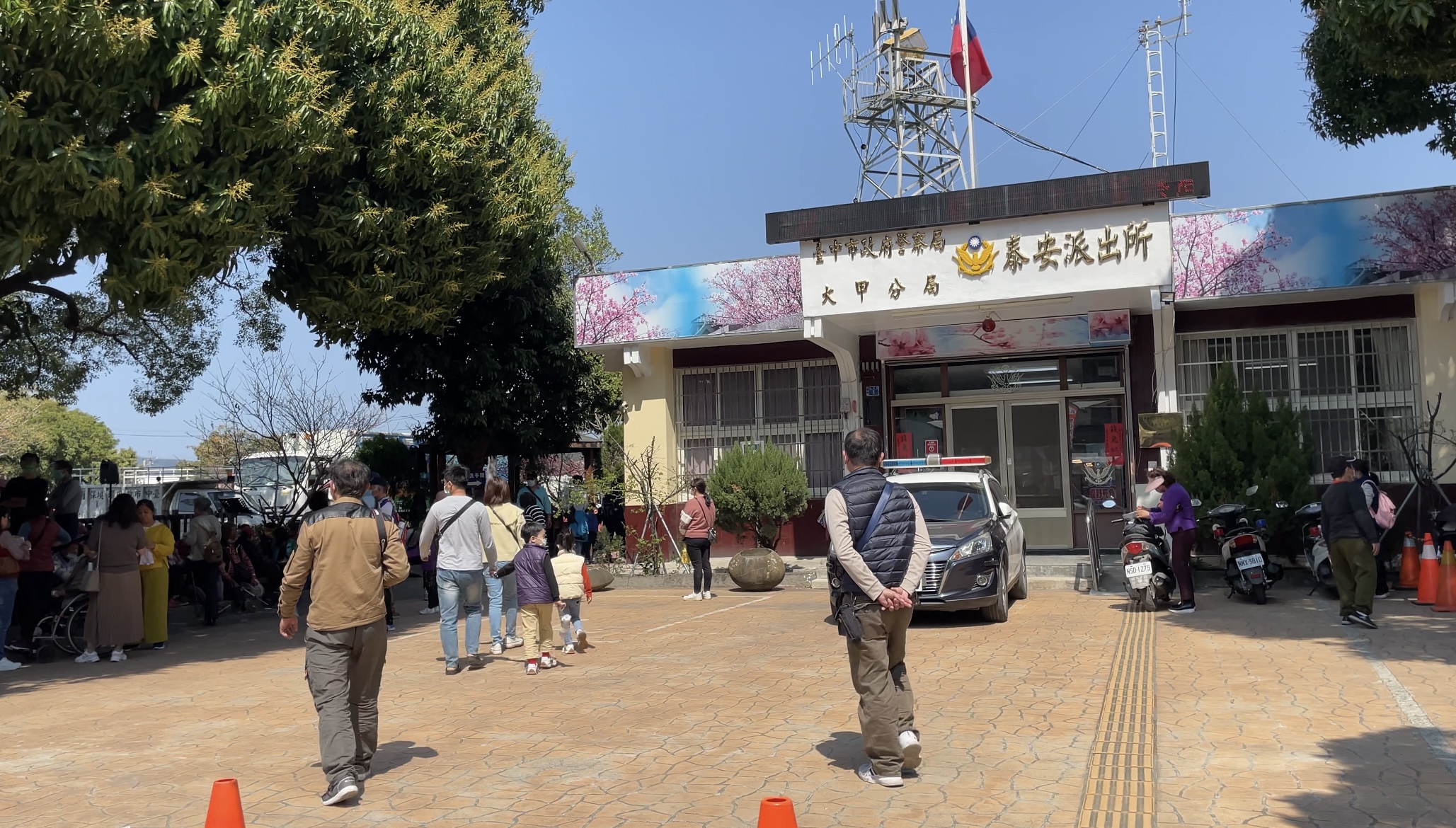
Taichung Travel: Tai'an Police Station Cherry Blossom 2023


This year, the cherry blossoms at Tai'an Police Station (臺中市政府警察局大甲分局泰安派出所) seem to be fewer compared to previous years. Several trees have been trimmed down, resulting in fewer flowers. Additionally, since you visited at the end of the season in late February, the flowers may not have looked as vibrant as they did earlier in the blooming period. It appears that the cherry blossoms bloomed earlier than usual this year in various locations.

Check out my YouTube video


Address:

421台中市后里區安眉路1號

February 13, 2023

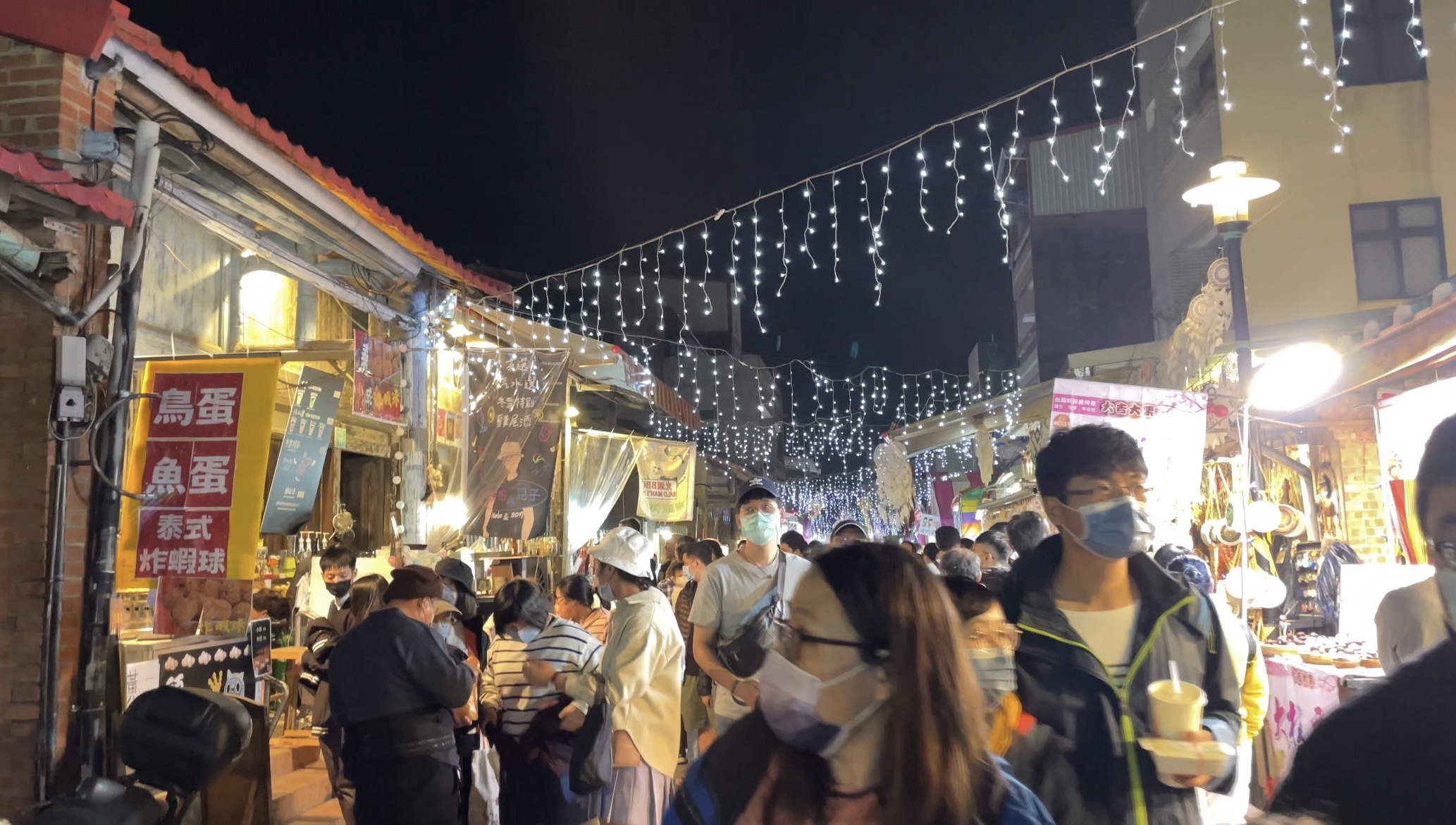
Tainan Travel: 2023 Yuejin Lantern Festival

Yuejingang Riverside Park (月津港親水公園)

This year, the biggest Lantern Festival was organized in Taipei, but many cities also had their own smaller-scale festivals. One famous place to visit is Yanshui in Tainan.

We went to Tainan for my husband's dentist appointment, so we also had a chance to stop by Yuejin Riverside Park in Yanshui. The weather in Tainan was great, warm, and sunny. We could even wear short sleeves. Miaoli, on the other hand, was completely different. When we left home in the morning, it was still cloudy and not very warm. We have to wear winter jackets every day here. The temperature difference between these two places is about 15 degrees.

The Yuejin Lantern Festival had the theme of "Moonlight in Town." We visited on the last weekend of the festival (Feb 11-12). Qiaonan Old Street was really crowded, with plenty of street food stalls around. If you visit this place on a normal day, not during a holiday, it's completely empty! We only walked along the river as it was getting late, so this time we didn't visit the town itself. It's always a happy feeling to come back to Tainan, even if it's just for a few hours.

Check out my YouTube video


Address:

737台南市鹽水區康樂路

February 8, 2023

[Recipe] What's Nian Gao? Lunar New Year Sticky Rice Cake

What's Nian Gao (年糕)?

Nian gao (年糕), a Chinese New Year's cake, is a food made from glutinous rice flour. It is considered good luck to eat nian gao during this time of the year because nian gao sounds like "higher year" or "grow every year" (年高) in Chinese, symbolizing a wish for a prosperous year. The traditional nian gao is round in shape with an auspicious decoration such as the character for prosperity (福) on top.
This sticky sweet snack was believed to be an offering to the Kitchen God, with the intention of sticking his mouth with the cake so that he would not badmouth the human family in front of the Jade Emperor.

There are several types of nian gao: Guangdong, Fujian/Hokkien, Jiangnan/Shanghainese, and Northern. Similar cakes can also be found in different countries such as Burma, Cambodia, Japan, Vietnam, Korea, and Indonesia.

In Guangdong, sweet nian gao is dipped in egg and pan-fried. It's usually sweetened with brown sugar, resulting in a distinct dark yellow color. The batter is poured into a cake pan and steamed until it solidifies. Once heated, the nian gao becomes stretchy and extremely sticky.
In the southern region of Fujian, nian gao is mainly used for New Year rituals and gifts. It is made of glutinous rice and taro, sliced and cooked before eating. It can also be wrapped in egg or cornstarch and fried.
Shanghai-style savory fried nian gao is made by mixing rice with glutinous rice powder. The softer version has a higher proportion of glutinous rice. Cooking methods include steaming, frying, slicing and frying, or using it in soup. The Shanghai style keeps the nian gao white, which is its distinct feature. When served as a dish, the most common method is stir-frying. There are three general types: savory with ingredients like scallions, beef, pork, cabbage, and Chinese cabbage; sweet using standard white sugar; and almost tasteless but enjoyed for its chewy texture.
Northern nian gao can be steamed or fried and is mainly sweet in taste. Beijing versions include jujube with either glutinous rice or yellow rice. Shanxi makes nian gao using yellow rice and fillings such as red bean paste or jujube paste. Hebei uses jujube, small red beans, and green beans to make steamed nian gao. Shandong nian gao is made of red dates and yellow rice, while the Northeast type is made of beans on sticky sorghum.

Steamed Nian Gao Recipe

Typically, in Taiwan, Guangdong-style Nian Gao is commonly eaten.

Ingredients:
300g glutinous rice powder
1200g dark brown sugar
220g water
Egg (for coating)
Oil (for pan-frying)

Instructions:
1. In a mixing bowl, combine glutinous rice powder, dark brown sugar, and warm water. 
2. Mix well until you achieve a smooth, lump-free batter.
3. Line a cake tin with parchment paper to prevent sticking. 
4. Pour the mixture into the prepared cake tin.
5. Place the cake tin in a steamer.
6. Steam the mixture for 1 to 1.5 hours until it solidifies. 
7. Allow the steamed cake to cool to room temperature. For best results, refrigerate overnight to let it harden.
8. Once the cake has hardened, remove it from the cake tin and slice it into your desired pieces.
9. Beat an egg in a bowl.
10. Dip each slice of the rice cake into the beaten egg
11. Heat oil in a pan over medium heat.
12. Place the egg-coated rice cake slices into the pan, cooking each side until golden brown and crispy.
13. Serve your pan-fried glutinous rice cakes warm.

I also have a video tutorial on my YouTube channel that you can check out for reference.

Baked Nian Gao Recipe

I also prepared another version of Nian Gao, which is not traditional but similar to Hawaiian Mochi Cake. Instead of steaming, it is baked, but it is still very easy to prepare.
Freshly baked, this cake boasts a delightful gooey texture. For the best experience, I recommend consuming it within the first three days. Refrigeration, while possible, may lead to a firmer texture as the cake continues to set. Enjoy the gooey goodness while it's at its prime!

Ingredients:
140g glutinous rice flour
80g brown sugar
200g milk
50g oil
2 eggs
4g baking powder
40g chopped walnuts (for topping)

Preparation:
1. In a mixing bowl, combine glutinous rice powder, oil, eggs, dark brown sugar, and warm milk. 
2. Thoroughly mix until all ingredients are well incorporated.
3. Line a rectangular or square baking tin with parchment paper. 
4. Pour the prepared mixture into the lined baking tin
5. Sprinkle a generous amount of chopped walnuts evenly over the top of the mixture in the tin. The walnuts will add a delightful crunch and flavor to the cake.
6. Place the baking tin in the preheated oven [180°C (356°F)] and bake the sticky rice cake for approximately 45 minutes or until it is fully set. 7. Once the cake is done baking, remove it from the oven and allow it to cool.
8. Freshly baked cake is nicely gooey. I don't recommend to keep it more than 3 days, as the cake will harden more once refrigerated.

I also have a video tutorial on my YouTube channel that you can check out for reference.