Showing posts with label Chenggong (成功). Show all posts

August 8, 2022

Taitung Travel: Amis Folk Center

2022/07/19-20

We attended the Hot Air Balloon Festival in Taitung after convincing my husband to go. We stayed in Taitung for only two days, primarily for the festival, but we also had the opportunity to visit other places. We attended the festival twice, once at night and once during sunrise. Unfortunately, the wind was too strong at night, resulting in fewer balloons being launched.
Additionally, we visited the Beinan Site and Longtian Village, which have many remnants from the Japanese era. We also made a stop in Hualien, specifically at a Japanese-era shrine. Lately, I've developed an obsession with Japanese buildings and shrines, even though I never had a desire to visit Japan. Perhaps I've become a bit bored with Taiwan and its architecture.

On our drive back along the coast road, we visited Nanrenshi, Sanxiantai, and even had the chance to see wild monkeys and the Amis Folk Center.
During our trip, my husband had a job interview with another company. He stayed in the car while I explored Beinan. Unfortunately, his interview was rescheduled and slightly disrupted our travel plans, as it was supposed to take place before we arrived in Taitung. Nonetheless, he managed to complete it. However, the signal in our accommodation wasn't strong enough for him to stay there, so he had to go to the nearby park.
We also had to shorten our trip because he had a second round of interviews. Wish him good luck anyway!

~ ~ ~ ~

While driving along the east coast of Taiwan, we made a stop at the Amis Folklore Center. Unfortunately, it was Wednesday, and the center was closed for the day. However, we were still able to walk around and admire the traditional Amis houses.
We spent the night in Taitung and the next morning, we purchased some sugar apples before driving back to Tainan. My husband had a scheduled second job interview that evening and needed to dress up properly for it.

Amis Folk Center (阿美族民俗中心)

The Amis Folklore Center is situated next to the Dongguan Office and covers an area of approximately 2 hectares. The park features an outdoor performance square, a grandstand that can accommodate 2,000 people, an archery experience area, and a traditional Amis family house. Operated by the Amis Gagen Orchestra, the center offers tourists the opportunity to try their hand at archery, engage in DIY activities to create Amis beads or traditional musical instruments like the pan flute, and enjoy performances of traditional Amis songs and dances, including the unique ga wa (bamboo bell) performance.

Construction of the Amis Folklore Center was completed in November 1995, with the main building, including the sacrificial house and family house, based on the designs of Japanese ethnologist Chien Iwasuke Taro in 1943 in Guangfu, Hualien County. The hand-painted drawings of the township survey were replicated from the priests' homes of the Taiba Long Society in Hualien County.

In addition to exploring the distinctive buildings and experiencing the beauty of Amis architecture, the Folklore Center also offers exhibitions of tribal cultural relics, handicrafts, special product displays and sales, and food services.


Address:

961台東縣成功鎮新村路25號

August 2, 2022

Taitung Travel: Nanrenshi, Sanxiantai and Wild Monkeys


2022/07/19-20

We attended the Hot Air Balloon Festival in Taitung after convincing my husband to go. We stayed in Taitung for only two days, primarily for the festival, but we also had the opportunity to visit other places. We attended the festival twice, once at night and once during sunrise. Unfortunately, the wind was too strong at night, resulting in fewer balloons being launched.
Additionally, we visited the Beinan Site and Longtian Village, which have many remnants from the Japanese era. We also made a stop in Hualien, specifically at a Japanese-era shrine. Lately, I've developed an obsession with Japanese buildings and shrines, even though I never had a desire to visit Japan. Perhaps I've become a bit bored with Taiwan and its architecture.

On our drive back along the coast road, we visited Nanrenshi, Sanxiantai, and even had the chance to see wild monkeys and the Amis Folk Center.
During our trip, my husband had a job interview with another company. He stayed in the car while I explored Beinan. Unfortunately, his interview was rescheduled and slightly disrupted our travel plans, as it was supposed to take place before we arrived in Taitung. Nonetheless, he managed to complete it. However, the signal in our accommodation wasn't strong enough for him to stay there, so he had to go to the nearby park.
We also had to shorten our trip because he had a second round of interviews. Wish him good luck anyway!

~ ~ ~ ~

After enjoying the Hot Air Balloon Festival in the morning, we drove along the mountain road up north, eventually reaching Yuli in Hualien to visit the remains of a Japanese shrine. Later, we took road no30, which led us to the coast. Along the coast, there are several interesting places to visit, such as Nanrenshi (Man's Stone), Sanxiantai, wild monkeys in Donghe, Torik Shrine, the Amis culture center, and "Water going upward." We had seen most of these places three years ago, but it was nice to revisit them. The heatwave across Taiwan made the sun scorching hot, and by the afternoon, I didn't feel like traveling anymore. All I dreamed about was getting into an air-conditioned space. We only took a break at noon to find some lunch, and in the afternoon, we met my husband's uncle for dinner. It was an opportunity to try some aboriginal cuisine, which I had always wanted to taste because it's not easy to find those dishes in western Taiwan.

Nanrenshi / Man's Stone (男人石)

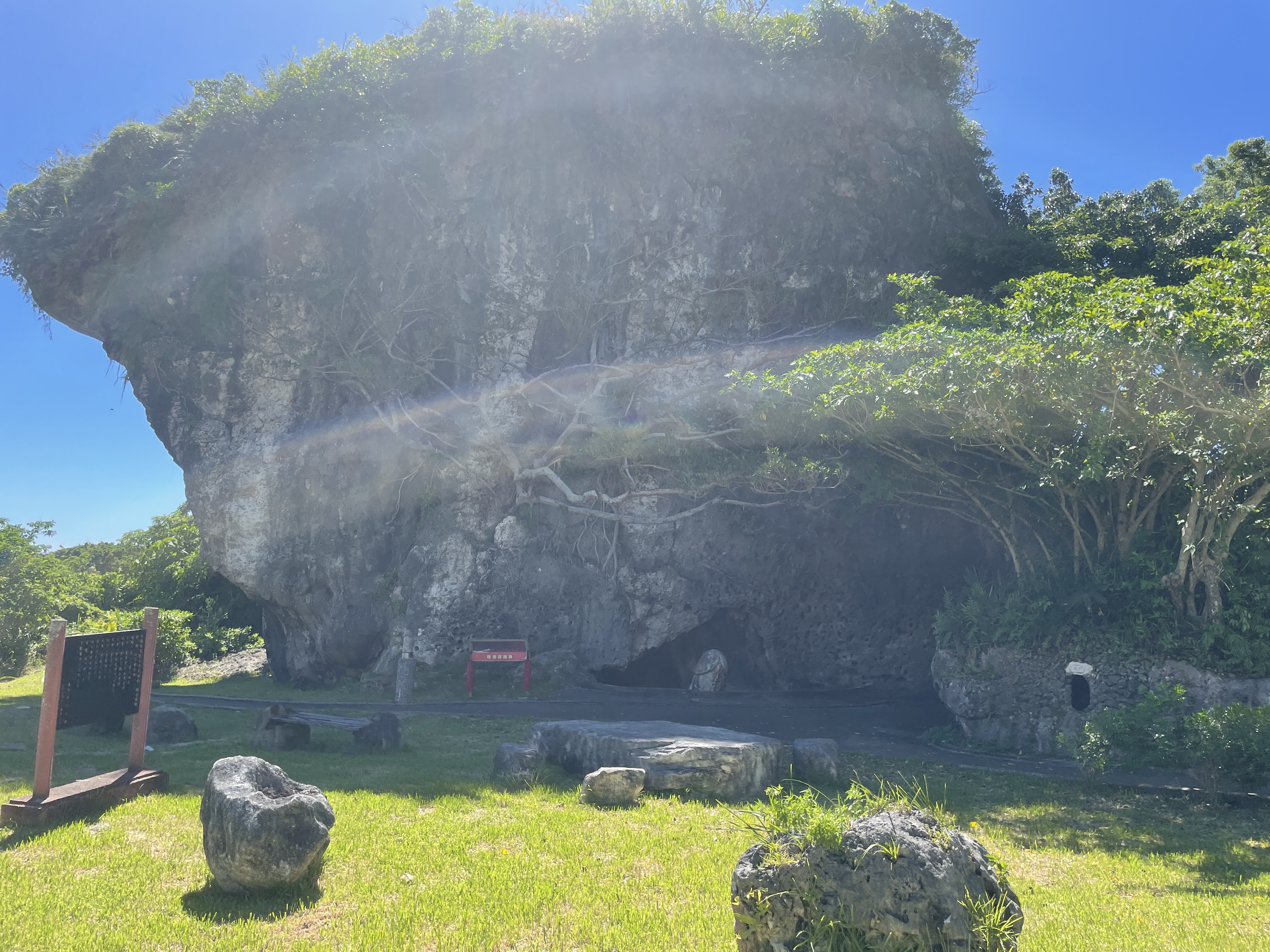
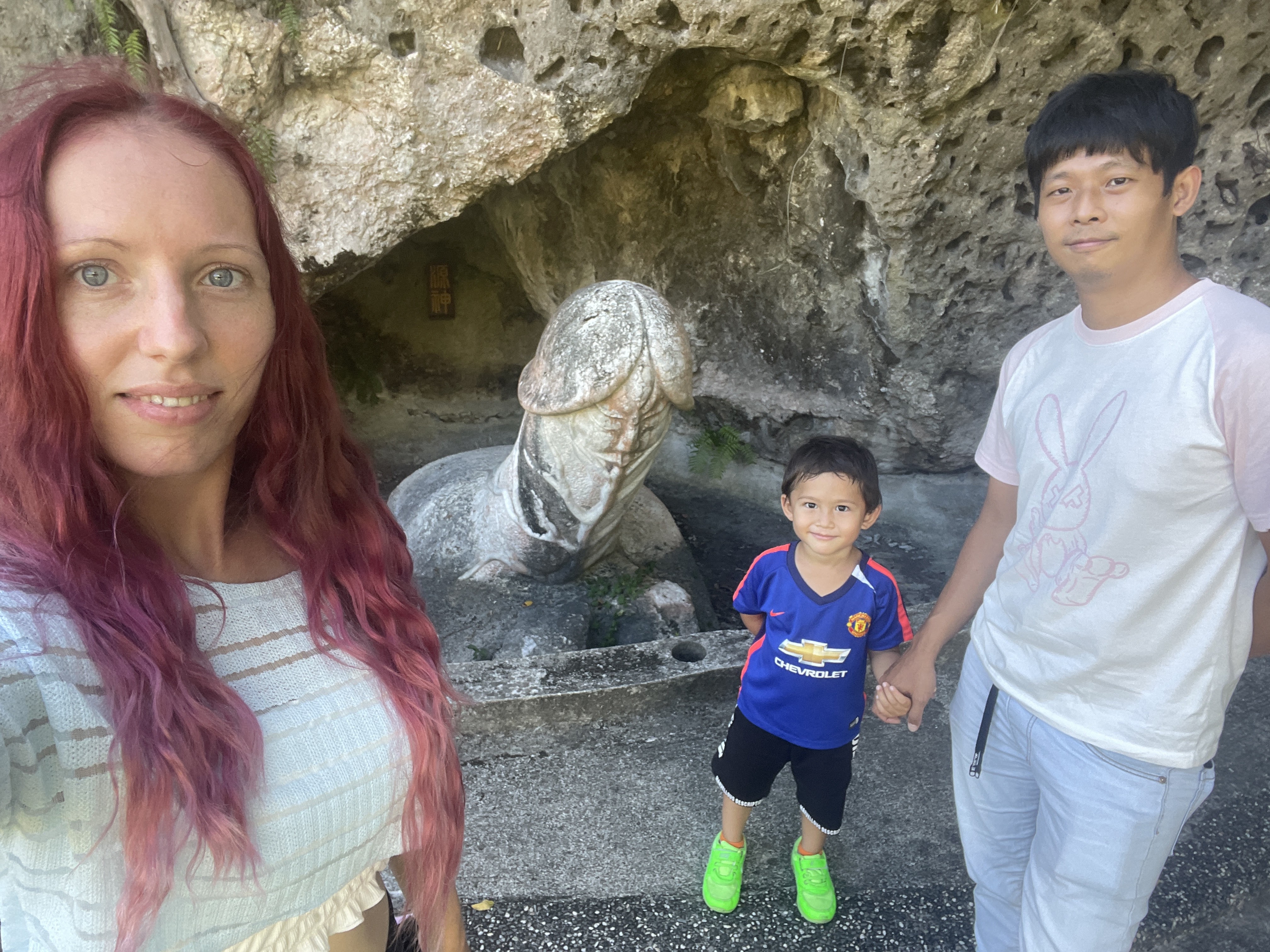
The Man's Stone is an isolated limestone sea erosion column, standing approximately 35 meters tall at its highest point. It serves as evidence of the early seismic site's relative uplift movement and shares similarities with the sea steps near the "stone umbrella" (石雨傘). The Amis people, who immigrated earlier, referred to the Man's Stone as "kotid ni malataw," which means "the glans of the gods," evoking a sense of awe. Another story calls the Man's Stone "fasonihar," where "fasiaw" means "a kite," and "fasonihar" refers to "a place to tie a kite." The Man's Stone is located approximately 25 kilometers north of Baxiandong and 6 kilometers south of Sanxiantai. The similar geographical positions have given rise to various legends. According to one legend, the Sendai tryst, where Lu Dongbin met his lover, took place here. In anger, Lu Dongbin swung his sword and slashed the pair, turning Baxiandong Cave into the woman and the Man's Stone into the man. Subsequently, a temple was built around the Man's Stone with nine stone-carved phalluses surrounding it. The Man's Stone has now become a trail with prescribed methods of making wishes and offering prayers. Apart from seeking marriage and children, visitors can also pray for wealth, career, and health. It stands as a unique religious and cultural attraction.


Sanxiantai (三仙台) 

Sanxiantai is a well-known tourist attraction in Taitung County, comprising a small offshore island, a coral reef coast, and a gravel coast. Covering an area of approximately 22 hectares, it takes about one hour to visit. Due to minimal human disturbance, it is also an important base for studying coastal plant ecology and is listed as a nature reserve. In the Ami language, "nuwalian" means "the most eastern place," while "Pisirian" signifies "the land of the shepherd." The highest point, standing at around 77 meters above sea level, belongs to the volcanic agglomerate of Tuoshan Mountain. Over the years, through weathering and seawater erosion, various unique sea-eroded landforms have formed, including sea-eroded columns, potholes, and tunnel-type sea-eroded gates. The northern end of the island features numerous potholes, with the largest having a diameter of 5 meters and a depth of 4 meters. On the northeast coast, there is a tunnel-type sea-eroded gate known as Acacia Cave, measuring 58 meters in length, 3 meters in width, and 3 meters in height.
Both the Han people and the local Ami people have their own legends about Sanxiantai. According to one legend, the "Eight Immortals" - Li Tiezhu, Lu Dongbin, and He Xiangu - once stopped on the island, leaving behind three immortals in the mountains, hence the name Sanxiantai. The Ami people tell the story of Sanxiantai being protected by the patron saint "Wu'an." The Sanxiantai Lighthouse is located on the second peak of the island and requires climbing 287 stone steps from the base. To facilitate tourist access to the island, an eight-arch cross-sea pedestrian bridge was constructed in 1987. Its beautiful shape has made it a local landmark.


Wild monkeys in Donghe

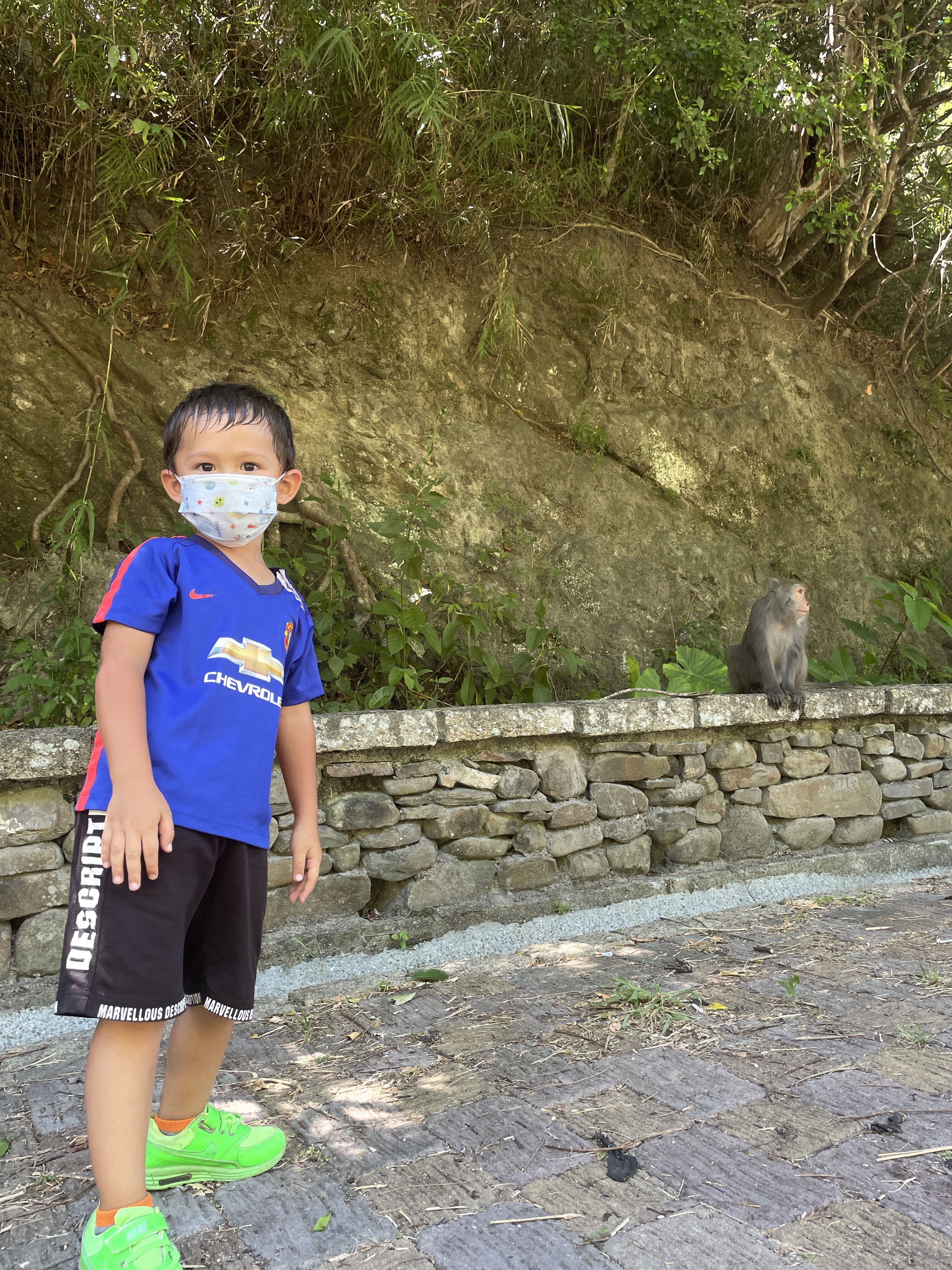
Traveling from Donghe Bridge along the Dongfu Highway into the coastal mountains, one arrives at the famous Taiyuan Valley. Surrounded by mountains and sculpted by rivers, it features canyon terrain and serves as a paradise for Taiwanese macaques. Monkeys can often be seen in the woods or approaching tourists to seek food, creating a unique scenery. It is the best place in Taitung to observe monkeys, adding more charm to the journey. It is recommended to visit in the morning or afternoon (after 4 PM) during the summer days, as monkeys do not fare well in the heat and tend to stay hidden. When we arrived at 2:30 PM, it was initially empty, but just as we were about to leave, we spotted two monkeys.


Address:

1. Nanrenshi / Man's Stone: 961台東縣成功鎮石傘路男人石
2. Snaxiantai: 961台東縣成功鎮基翬路74號
3. Monkeys: 959台東縣東河鄉東富公路登仙橋遊憩區

July 26, 2022

Taitung & Hualien Travel: Japanese era heritage buildings


2022/07/19-20

We attended the Hot Air Balloon Festival in Taitung after convincing my husband to go. We stayed in Taitung for only two days, primarily for the festival, but we also had the opportunity to visit other places. We attended the festival twice, once at night and once during sunrise. Unfortunately, the wind was too strong at night, resulting in fewer balloons being launched.
Additionally, we visited the Beinan Site and Longtian Village, which have many remnants from the Japanese era. We also made a stop in Hualien, specifically at a Japanese-era shrine. Lately, I've developed an obsession with Japanese buildings and shrines, even though I never had a desire to visit Japan. Perhaps I've become a bit bored with Taiwan and its architecture.

On our drive back along the coast road, we visited Nanrenshi, Sanxiantai, and even had the chance to see wild monkeys and the Amis Folk Center.
During our trip, my husband had a job interview with another company. He stayed in the car while I explored Beinan. Unfortunately, his interview was rescheduled and slightly disrupted our travel plans, as it was supposed to take place before we arrived in Taitung. Nonetheless, he managed to complete it. However, the signal in our accommodation wasn't strong enough for him to stay there, so he had to go to the nearby park.
We also had to shorten our trip because he had a second round of interviews. Wish him good luck anyway!

~ ~ ~ ~

In our second day of exploring Japanese-era buildings, I felt a sense of weariness living in Taiwan. It has been nearly three years since I last visited Poland, and I find myself surrounded by the same concrete buildings. This is perhaps why I suddenly became more interested in discovering Japanese-style architecture throughout the island. For a brief moment, it felt different and more beautiful (my apologies to Taiwanese people, but the houses here are not as aesthetically pleasing).

During the second day, we came across some remarkable buildings. As it was time to head back home, I realized there was an old Japanese station just a few kilometers away from our hotel. Fortunately, we needed to stop by my husband's uncle's place, and the station happened to be on the way. My husband stopped to buy breakfast while I quickly ran to the station to take some pictures. After returning to the car, I checked Google Maps and realized there were a few more things to see just a couple of meters away, but I didn't have the chance to go there. That's a shame, but perhaps next time!

Penang Railway Station (檳榔火車站站房)

The Penang Railway Station in Taitung was established in 1922 during the Japanese colonial rule of Taiwan. At that time, narrow-gauge trains ran along the old Beinan River, passing through Binglang, Dongcheng, Chulu, Jiafeng, Zhongxing, and Luye Station. In 1943, the station was rebuilt as a parking lot. With the completion of the east line railway widening project, the Penang Railway Station, along with four other stations including Jiafeng, Dongcheng, and Chulu, were declared abandoned in 1971. Despite being a mini-type railway station, the Penang Station played a crucial role as a meeting point for trains traveling from north to south. It is the only remaining Japanese-style wooden railway station among the abandoned stations along the Eastern Railway.


Yuli Shrine Heritage (玉里神社遺址)

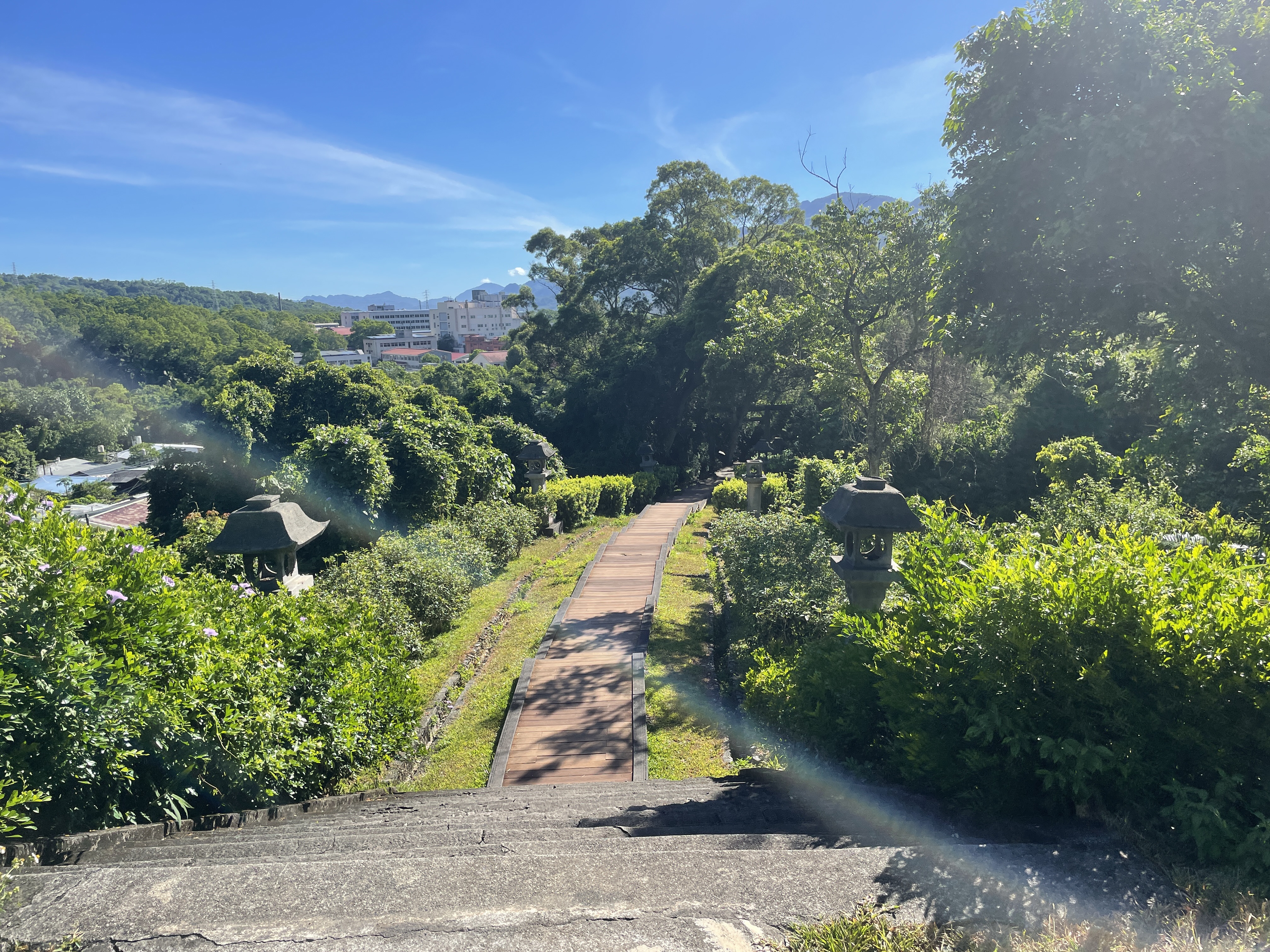
Although the Yuli Shrine now lies in ruins, it is the most well-preserved relic of a Japanese shrine in Hualien County, Taiwan. It has been listed as a county historic site. Initially, it was challenging to find the shrine as Google Maps indicated a slightly different road, appearing like an overgrown path in the forest. I wandered around attempting to find a way but eventually gave up. It turns out that the road was just a few meters ahead of where Google Maps had directed me, and it was a straightforward walk. The entrance to the shrine is through a small alley amidst old houses, making it inconspicuous at first glance. The Yuli Shrine was completed in 1928, but the main shrine was destroyed when the Japanese retreated after World War II. The remaining elements include pilgrimage steps, 17 stone lanterns, 2 torii gates, and a monument of loyalty. On July 23, 2008, the Hualien County Government recognized it as a county historic site under the name "Remains of Yuli Society." The Yuli Shrine was initially buried in grass and forest until 1998 when a group of local literature and history enthusiasts initiated a clean-up activity. Although there were volunteers interested in restoring it, the project proved too extensive, and the shrine remains in its current state of ruins.


Tori Shrine Ruins (都歷神社遺址)

The Tori Shrine was established on October 3, 1927, and was the earliest shrine of the East Coast tribe during the Japanese occupation period. In 2006, it was restored and transformed into the "Machinois Incident Memorial Garden" to commemorate the Amis Anti-Japanese Incident that occurred in the area in 1911. The shrine is currently located in someone's yard, hidden among trees. However, there is no issue with entering the premises and exploring the site.


Address:

1. Yuli Shrine: 981花蓮縣玉里鎮西邊街玉里神社遺址
2. Penang Railway Station: 954台東縣卑南鄉賓朗路510巷32號
3. Torik Shrine: 96144台東縣成功鎮都歷路64號之4號都歷神社遺址