October 12, 2017

Visiting Chimei Museum in Tainan

Chimei Museum (奇美博物館)

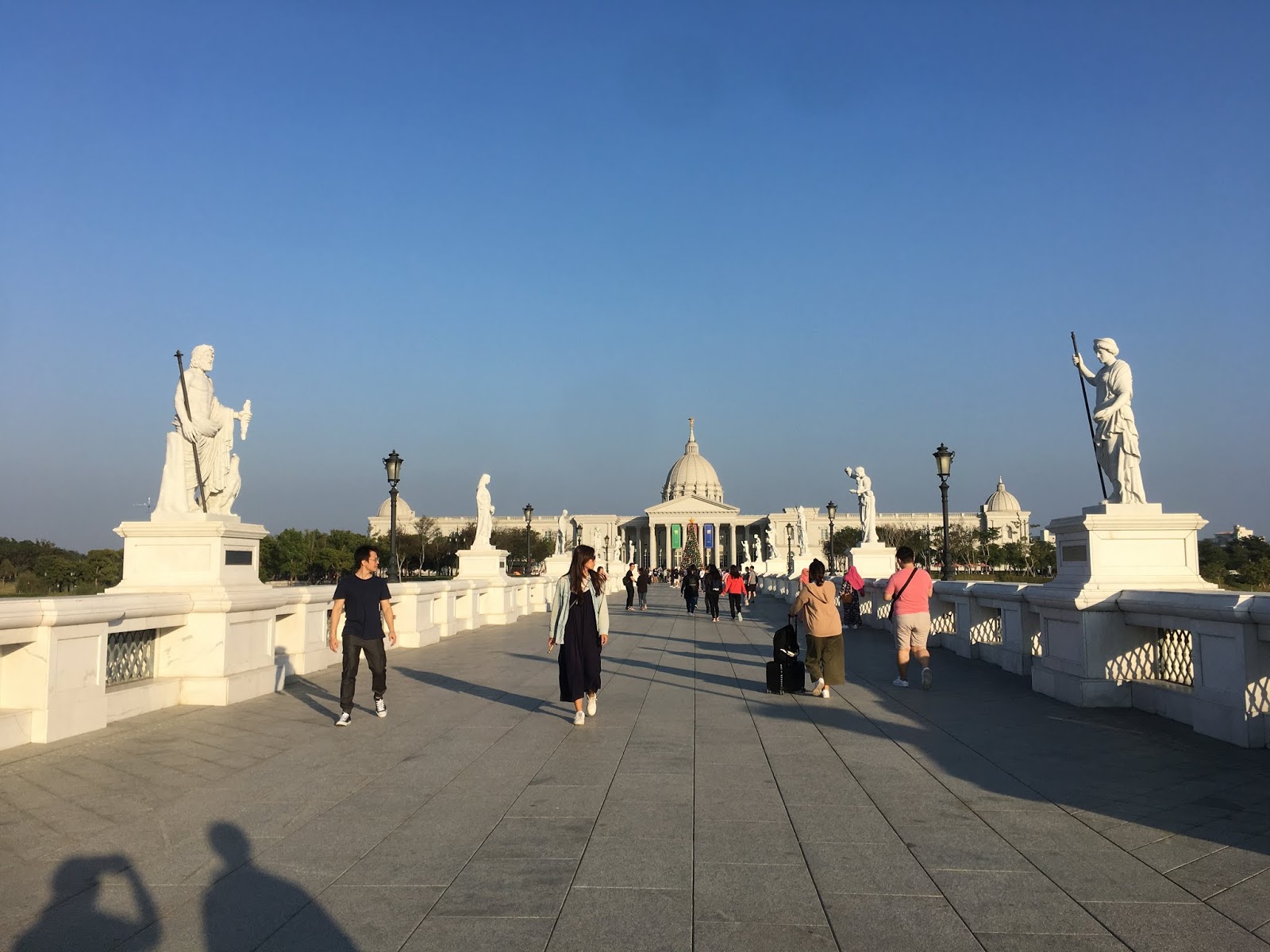
On the way to Kaohsiung, we decided to make a stop in Tainan and visit the beautiful Chimei Museum (奇美博物館). Located in the Rende District of Tainan, the museum was founded by Xu Wenlong, the founder of Chi Mei Industrial. It is the largest private museum and art museum in Taiwan. The museum's collection is based on Western art and is divided into four major fields: art, musical instruments, weapons, and natural history.

In the field of musical instruments, the Chimei Museum has the largest number of violin collections in the world, including masterpieces from major luthiers. The art collection showcases a comprehensive collection of Western paintings and sculptures in Taiwan. The weapons collection displays precious ancient weapons from various countries in Asia, presenting a history of technological evolution through war weapons. The natural history collection boasts the largest collection of animal specimens in Asia, covering mammals and birds from five continents.
The Old ChiMei Museum was officially opened in 1992, utilizing the 5th to 8th floors of the Chi Mei Industrial Building for free public visits. However, the exhibits have been relocated to the new building in the Tainan Metropolitan Park since May 2013. The new building was completed in December 2008 at a cost of NT$1.85 billion. It covers an area of 9.5 hectares and was donated to the Tainan Municipal Government on May 17, 2012. The museum officially opened on January 1, 2015.

Xu Wenlong, inspired by his visits to the Tainan State Education Museum as a child, had a vision to open his own museum when he grew up. After establishing Chi Mei Industrial and developing an interest in art and music, Xu began collecting famous pianos, gradually expanding the field of art collection. In 1977, the Chimei Cultural Foundation was established, followed by the opening of the Chimei Art Museum in 1989. In 1992, the Chimei Museum was established, occupying the 5th to 8th floors of the Chi Mei Industrial Building. It was opened to the public free of charge on April 1 of the same year. The Nankeqimei Museum was established in the Tainan Science Park in 2001 to showcase the history of human evolution from art to machinery. In 2012, the Chimei Group donated the museum buildings in the Tainan Metropolitan Park to the Tainan Municipal Government. The museum and the South Library collection were relocated to the new Metropark, which opened in 2015.

The art collection at the Chimei Museum is primarily focused on Western oil paintings and sculptures. The museum has systematically searched for works from various schools of art history since 1988, including ancient Roman mosaic art, Renaissance, Baroque, Rococo, Neoclassical, Romanticism, and Post-Impressionism. The collection of French paintings and sculptures from the nineteenth century is particularly extensive.
The museum's weapons collection includes Japanese samurai swords from hundreds of years ago, various armors, and more. It encompasses weapons from China, Japan, Europe, ancient India, Persia, Asia, and the Middle East.

The musical instruments collection starts with world-famous pianos and includes two Antonio Stradivari pianos. Notably, one of them is the 1730 cello "Bauer" and the other is the 1722 violin "Yao A-Xue-Ellman." The collection also features two violins by Guarneri del Gesù, namely the 1744 "Ole Bull" and the 1733 "Lafont-Siskovsky." The Guadagnini violin "OleBull," worth about 300 million TWD, is considered a treasure of the Chimei Museum. The collection of violins exceeds 450 in total. In addition to violins, the museum also collects automatic instruments and ancient instruments from around the world, including stringed instruments, wind instruments, keyboard instruments, percussion instruments, and more.
In the automatic instrument exhibition area, there is an American automatic piano from 1920 that is controlled by punched paper rolls, which represent different musical compositions. The rolls control various instruments such as the piano, mandolin, flute, xylophone, drum, castanets, triangle, and bird songs. The exhibition also features three mechanically constructed violin and piano automatic ensemble instruments that simulate the movements of human fingers, bowing, and string playing with exquisite craftsmanship.

To allow more people to enjoy the famous instruments, the Chimei Museum lends violins from its collection to renowned performers such as Ma Youyou, Lin Zhaoliang, Lu Siqing, and Zeng Yuqian. The Chimei Philharmonic Orchestra, established in 2003, holds a concert tour every year. In early 2007, the orchestra was reorganized and renamed the Chimei Philharmonic Orchestra, becoming a regular organization. Orchestra members can also apply to borrow the famous pianos from the museum's collection.
In addition to the art, weapons, and musical instruments, the Chimei Museum also houses ancient artifacts from Egypt, Mesopotamia, Greece, Rome, China, Islam, and Buddhism. The Animal Hall exhibits over 2,000 animal specimens, categorized by regions such as North America, Africa, Arctic, Antarctic, South America, Australia, India, Europe, Asia, Taiwan, as well as birds, fossils, and meteorites.

Chimei Museum, Tainan, Taiwan

Chimei Museum, Tainan, Taiwan

Chimei Museum, Tainan, Taiwan

Chimei Museum, Tainan, Taiwan

Address:

717015台南市仁德區文華路二段66號奇美博物館

October 5, 2017

Changhua Travel: Tianwei Highway Garden - Colorful Bougainvillea

Tianwei Highway Garden (田尾公路花園)

Tianwei Highway Garden is a large botanical recreational area in Changhua, Taiwan. This place is known for producing the most varieties of plants. Tianwei Highway Garden covers an area of 1000 hectares and is located along provincial highway 1. The gardens span two townships - Tianwei and Yongjing.
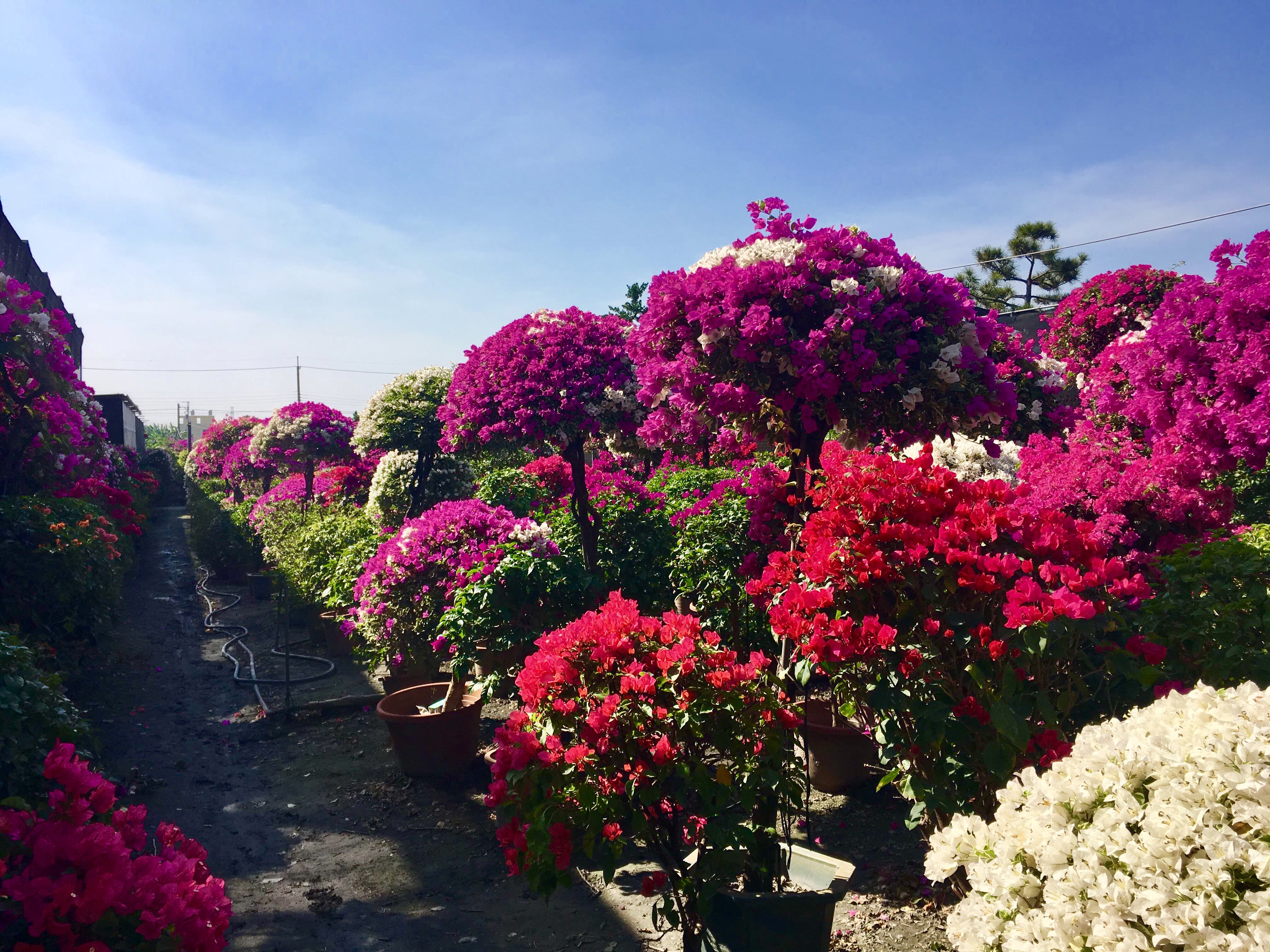
During autumn, bougainvilleas become incredibly colorful. Their flower-like leaves can have different colors such as white, pink, purple, and orange. This plant can grow to be quite tall, reaching up to 12 meters.
If you visit any flower exhibition, you can be sure that the flowers come from Tianwei. In Tianwei, you will find numerous gardens, some of which are incredibly large and specialize in specific types of flowers. You can visit orchid gardens, cactus gardens with over 500 different species, bougainvillea gardens, and many others.

Many people in Tianwei plant different kinds of flowers, trees, and fruit trees, resulting in a vibrant mix of around 100 different plants in one place. You can either buy flowers or simply take a leisurely walk among them, as entry to the gardens is free. Along the streets, you will also find food stalls and souvenir shops. You can find everything you need for your garden, including shops with plenty of decorations, although some of them can be quite expensive. Restaurants and cafes are also available in the area, and some gardens offer special food items like cactus or jabuticaba (Brazilian grapetree) ice creams.
Renting a bike to ride around the gardens is a great idea, especially during the summer when it can be quite hot. The gardens usually open at 8 am and close around sunset. Even at night, you can still enjoy a special view created by lamps that help chrysanthemum flowers grow. If you're a fan of chrysanthemums, the best place to see them is at the Chrysanthemum Festival in Tongluo, Miaoli.


bougeanvilla, tianwei highway garden, changhua, Taiwan

bougeanvilla, tianwei highway garden, changhua, Taiwan

bougeanvilla, tianwei highway garden, changhua, Taiwan

bougeanvilla, tianwei highway garden, changhua, Taiwan

bougeanvilla, tianwei highway garden, changhua, Taiwan

bougeanvilla, tianwei highway garden, changhua, Taiwan

amwf couple, polish taiwanese couple, bougeanvilla, tianwei highway garden, changhua, Taiwa

amwf couple, polish taiwanese couple, bougeanvilla, tianwei highway garden, changhua, Taiwa

bougeanvilla, tianwei highway garden, changhua, Taiwa.

bougeanvilla, tianwei highway garden, changhua, Taiwa

bougeanvilla, tianwei highway garden, changhua, Taiwa

bougeanvilla, tianwei highway garden, changhua, Taiwa

Address:

522彰化縣田尾鄉民族路一段156號田尾公路花園

September 27, 2017

AMWF couple : Gardening and barbeque in Poland

My husband thinks that the countryside where I live looks like one big field. Sometimes you can see houses, but they are often not very close to each other. Everyone has their own place to plant whatever they want, which he really likes. We also bought some seeds, and he planted them in my flower bed. He also wanted to do some garden work and removed some weeds, even though it's not the planting season.

This time, we are mostly busy with paperwork. There are a lot of documents that need to be translated and legalized, and we don't have much time. While getting our Chinese translations, we also visited the botanical garden in Łódź. My husband got to see an old-style countryside house as well. It's already the beginning of the autumn season. Some trees have started turning orange, but mostly everything is still green. There are also a lot of butterflies flying around blooming flowers.

butterfly on flower, garden, Poland

amwf couple, polish taiwanese couple, poland

countryside house, poland

Gardening has a long tradition in Poland. It's a way to relax in the fresh air and spend time with family. Many people have their own gardens and take care of them themselves. People spend a lot of time planting flowers and shrubs, watering the grass, and trimming hedges. We are proud of our gardens! For people who don't have much time, planting fruit trees and conifers is common since they require less attention.

People who take care of their gardens tend to be happier. Engaging in everyday activities definitely improves your health and makes life more beautiful. Gardening doesn't only mean planting flowers or decorative trees; many people also plant vegetables. That's especially popular in rural areas.

My husband envies the fact that people have gardens and can plant whatever they want. He doesn't realize that it's often hard work, especially when planting a lot of vegetables. In the future, he wants to have his own small farm, but it seems difficult in Taiwan. Land is very expensive unless we live in the mountains. We have a friend who does farm work in Nantou, and we sometimes visit him, but my husband hasn't had much chance to do any work except cutting and packing lettuce.

taiwanese boy does gardening, Poland

taiwanese boy does gardening, Poland

One way to relax in the garden is to have a barbecue. People love spending time with family or friends, eating food surrounded by nature. Many women want to get a tan, so it's a good place to stay almost naked without anyone around to see. I mean, if you live in the countryside. Near cities, homes are close together, and people often watch their neighbors too. For many people, it's hard to imagine living in the city without having their own green space and a few pets running freely around.

We also had a barbecue at my aunt's place. It's a different experience than in Taiwan. In Taiwan, people sit by the road on a small plot of land, barbecue, and talk. They don't have dedicated spaces with tables or beautiful barbecue areas like we do in Poland. Also, in Taiwan, it's not an activity for every weekend but something more special, like during the Mid-Autumn Festival.

barbecue, garden, poland

Now that I live in Taiwan, there's no space for even a tiny garden. People keep flowers in pots, often in very small spaces or on balconies. There's also no space to keep pets here. Although life here is convenient, with many shops and restaurants everywhere, in my home in Poland, I have a lot of land that I can use. I enjoy planting flowers, different fruits, and vegetables. I love watching them grow, as they change a little every day. What's better than having your own fruits and vegetables? They are 100% healthy and organic. It's the reward you get for taking care of them all year.

In our free time, we also bought wedding rings. I wanted tohave one, even though we didn't have a formal wedding. My husband doesn't seem to like wearing it... I don't want to force him, but I would be happy if he wore it from time to time. We have collected all the documents for my visa. One of the most important ones we received just two hours before our flight... It was stressful, as we didn't have enough time. I needed to change my ID card, passport, and take care of some other things. All of these processes usually take 2-4 weeks, especially getting a new passport, which can take a long time. Fortunately, everything is done now. We just need to obtain the visa, and then we can finally take a break from all the paperwork.

autumn view, garden, poland

autumn view, orange leaves, garden, poland


September 23, 2017

Poland Travel: I took my husband mushrooms hunting

We went back to Poland for three weeks, and the weather this time was pretty nice. I decided to take my husband mushroom hunting. This year hasn't been too wet in this region, so we probably won't find much. He has never been mushroom picking in the forest before. In Taiwan, no one does that; people only buy mushrooms in shops. I hope it will be a nice experience for him.

Mushroom hunting (in Polish: grzybobranie) is very popular in Poland. It's one of the activities families enjoy from July to September. Even kids enjoy running around the forests, often showing any kind of mushroom they find to their parents. It's like a tradition that has been passed down from our grandparents to our parents and now to us. However, it seems like people might forget about it soon, as kids these days don't want to do it anymore.

People often don't have time, but when the weekend comes, they prepare everything and go mushroom picking, often very early, around 5 am. Why? Everyone wants to be the first to have a chance to find them!
As a kid, I was always excited whenever my family talked about picking mushrooms. I didn't care if it was 5 am or 10 am; every time was good. We often went with a few family members. Older people didn't care, but for us kids, it was kind of a rivalry. Everyone wanted to find more mushrooms than the others. Sometimes we spent a few hours in the forest trying to find any, but there was almost nothing. But we didn't give up because mushrooms grow every day, so every day is another chance to hunt for them.

Poland is rich in forests, which cover 30% of the territory, and most of them are accessible to the public. Many people pick mushrooms to sell them. If you travel around Poland, you will often see people near the road selling mushrooms.
In other countries, it's not as common to pick mushrooms. Why? In many places, you need to pay or there are limits on how many you can pick. And most importantly, people are afraid of picking poisonous mushrooms. Since childhood, I have picked a lot of mushrooms every year, and I would say it's not hard to recognize them. Mostly, I only pick the ones with a sponge under the cap as they are safer. Picking mushrooms is free, and there is no limit on how many mushrooms you can take, so if you are lucky, you will leave the forests with full baskets.

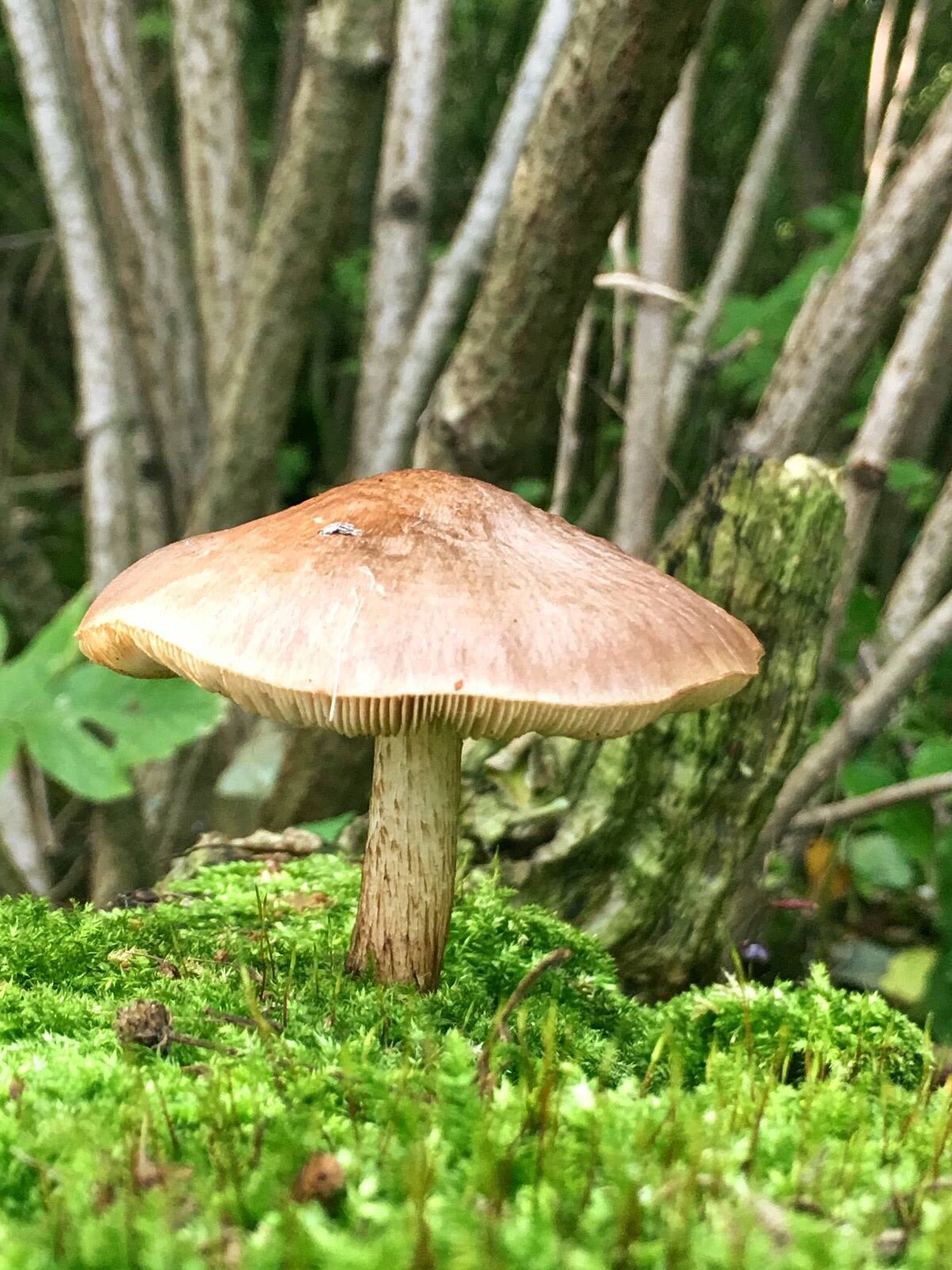
mushrooms, forest, Poland

mushrooms, forest, Poland

mushrooms, forest, Poland

mushrooms, forest, Poland

Unfortunately, we weren't lucky at all! After nearly one hour, we had maybe 10 mushrooms. Such a pity. My husband got bored in the end. Anyway, he found a lot of mushrooms, but they weren't edible (or at least my family never picked them). I still cooked a meal for him using the mushrooms we found because he really likes them.

So, how do people keep mushrooms for a long time? After we clean them (which is the worst part of mushroom hunting), we can freeze them (after cooking them first), dry them, or pickle them. Mushrooms are full of vitamins and minerals, and 100g of mushrooms contain only 15 kcal.
The tradition of homemade pickles has been known in Poland for hundreds of years. We pickle mushrooms with a mixture of boiled water, vinegar, and some spices. They are served as a side dish or as an accompaniment to cold hams or sausages. Unfortunately, it's not as common anymore since we can easily buy them; many people won't waste time making their own.
People here are soup lovers! We have many kinds of soups, and one of them is mushroom soup. You can use fresh or dried mushrooms to make it.It's really easy to make and full of flavor. Mushroom soup is also one of the traditional foods served for Christmas.
Mushrooms can also be used as stuffing for dumplings or cabbage rolls (gołąbki). You can make a very aromatic sauce using them or add them to your salad. There are really many dishes that involve mushrooms!

mushrooms, forest, Poland

mushrooms, forest, Poland

September 9, 2017

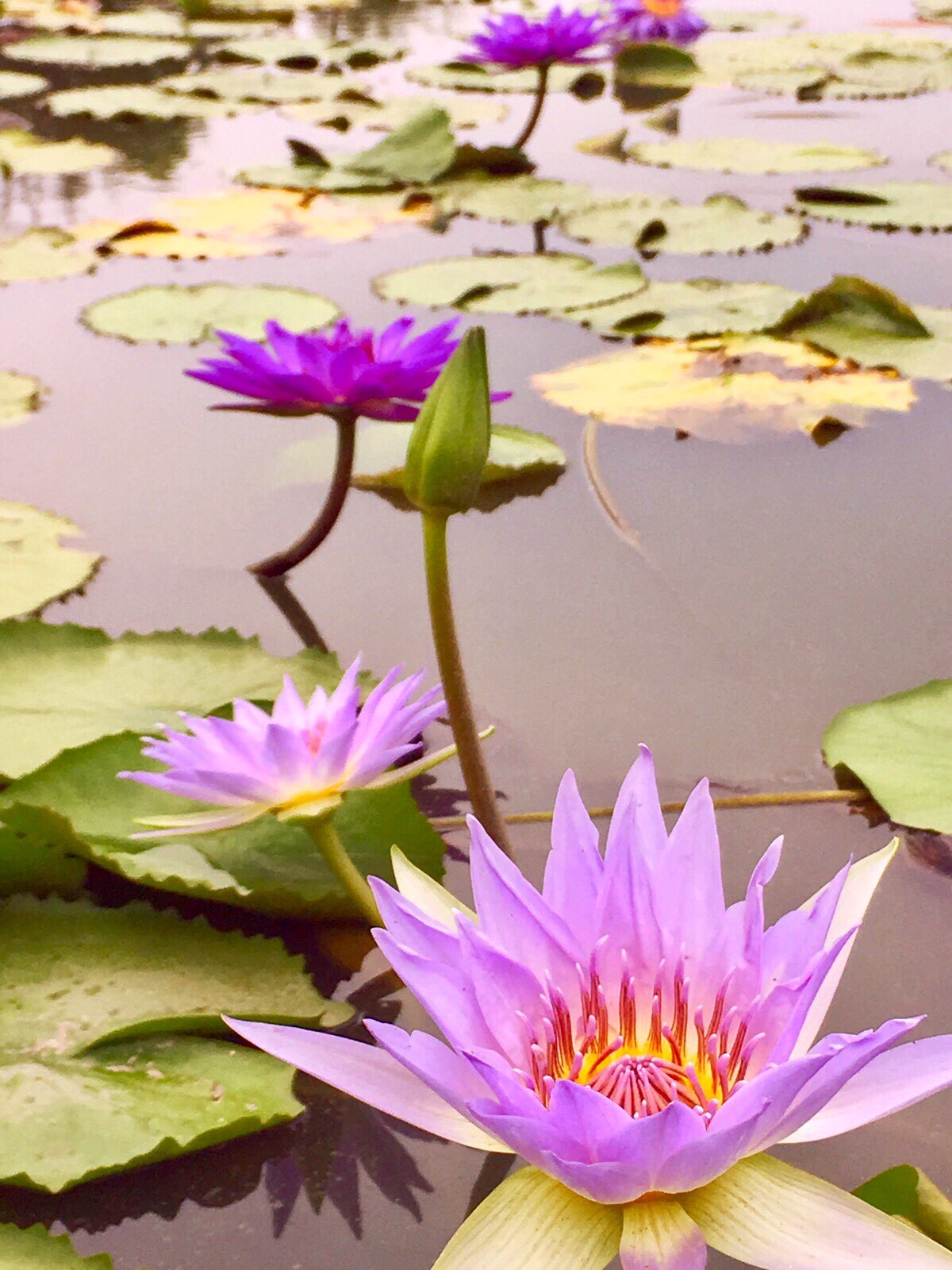
Tainan Travel: Exploring Lotus and Water Lily Farms


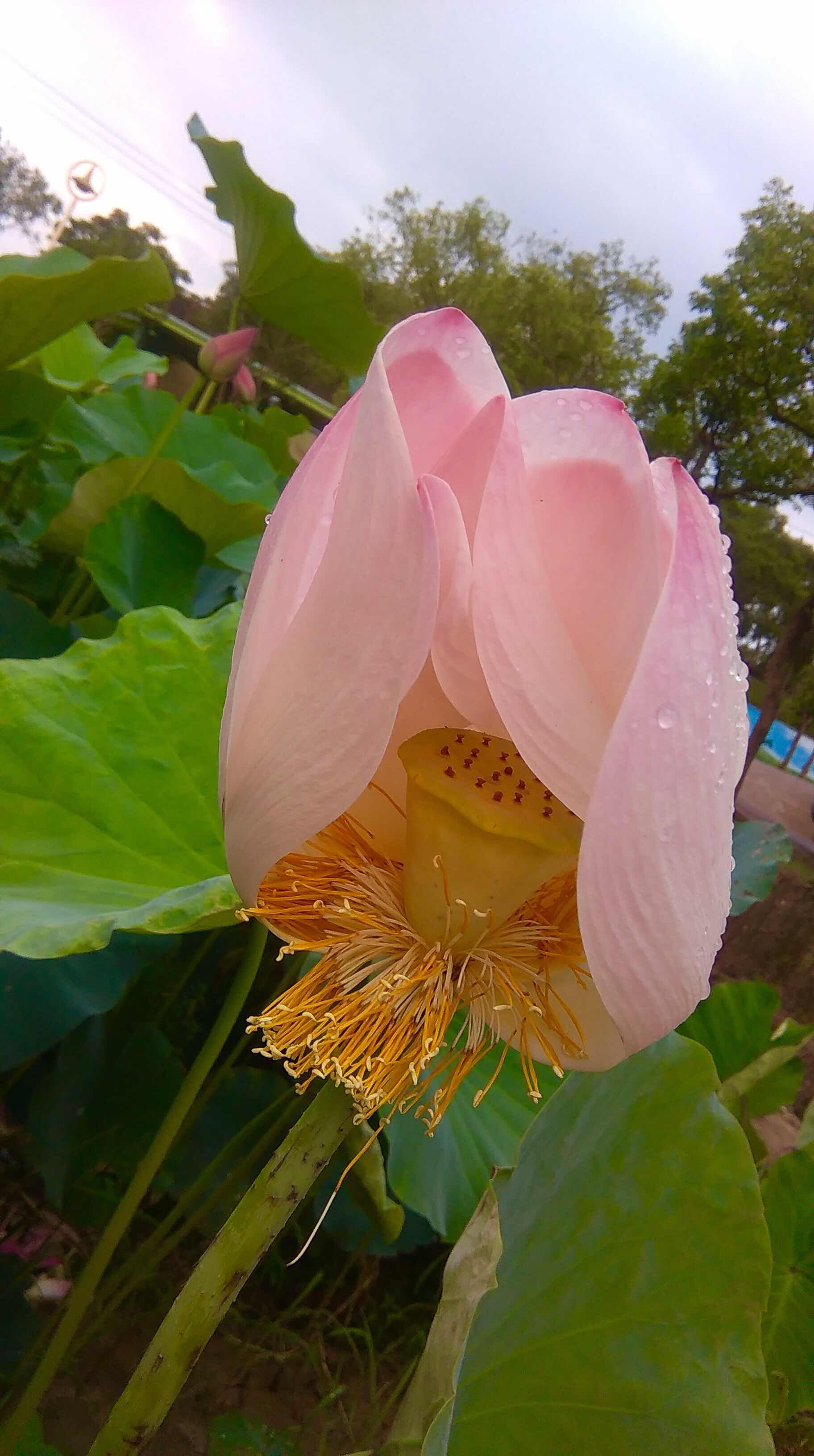
lotus water lilies , taiwan,  tainan,  beihe

I love lotuses and water lilies, so my husband took me to Baihe, which is well known for planting lotus. Baihe produces two-thirds of all lotus seeds in Taiwan. Every summer, the Lotus Festival is held to promote the tourism industry. The other place that organizes this festival is Taoyuan, which is the second-largest producer of lotus in the country.

Lotus has a very long history of being cultivated for edible seeds, spanning about 3000 years. Their seeds can remain viable for many years. The oldest lotus plant was grown from a 1300-year-old seed found in China.
The distribution of this plant ranges from central and northern India through northern Indochina and East Asia. Due to human translocation, these species can now be seen worldwide.
Lotus roots are planted in the soil of rivers or ponds, while the leaves float on the water or grow well above it. The flowers are not difficult to spot as they rise several centimeters above the leaves. Lotus plants usually grow up to 150 cm in height and 3 meters in width. The leaves can be 60 cm wide, and the flowers are about 20 cm in size.
Lotus rhizomes are consumed as vegetables in Asian countries. They are usually cooked or fried, used in soups, soaked in syrup, or pickled in vinegar. They contain a high amount of starch without a characteristic taste or odor. Lotus seeds are processed into moon cakes, noodles, and various forms of food such as paste, fermented milk, rice wine, and ice cream. You can also find lotus seed tea.

In Buddhism, lotus flowers represent purity of the body, speech, and mind. According to legend, Gautama Buddha was born with the ability to make lotus flowers bloom wherever he stepped. In Christianity, the St. Thomas Cross features a lotus at the base of the cross. In literature, lotus represents beauty, elegance, perfection, and grace.


lotus water lilies , taiwan,  tainan,  beihe

lotus water lilies , taiwan,  tainan,  beihe

lotus water lilies , taiwan,  tainan,  beihe

lotus water lilies , taiwan,  tainan,  beihe

lotus water lilies , taiwan,  tainan,  beihe

lotus water lilies , taiwan,  tainan,  beihe


amwf couple, polish taiwanese couple, lotus water lilies , taiwan,  tainan,  beihe

lotus water lilies , taiwan,  tainan,  beihe


Address:

732台南市白河區蓮花公園

September 3, 2017

Tainan Travel: Guanziling's Fire and Water Sprin A Natural Wonder of Contrasting Elements

fire and water spring, guanziling, beihe, tainan ,taiwan

Fire and Water Spring (水火同源) 

And once again, we find ourselves exploring the mountains, this time in Tainan to visit the Fire and Water Spring (水火同源) in the Guanziling Scenic Area. Guanziling is nestled amidst hills and mountain ranges and is known for its unique hot springs, specifically the mud hot springs, which are the only ones of their kind in Taiwan. These springs have a temperature of 75 degrees Celsius and are believed to be effective in treating various ailments such as skin allergies, exhaustion, gastrointestinal problems, rheumatism, and arthritis.

The Fire and Water Spring gets its name from the natural gas that rises from the water, creating flames. This phenomenon is caused by underground gas ascending through rocks as the Liuchong River passes through the area. The discovery of the fire dates back to 1701 when a Fujianese monk from Daxian Temple first noticed it. The fire has been maintained ever since, although it became weaker after the Baihe earthquake in 1964, spreading out from several pores. During the Japanese era, villagers erected a statue of the deity Shuihuo for worship.

Legends surround the origins of the Fire and Water Spring. One tale speaks of a creature named Kirin that lived in the area, with the fire and water cave representing its head and its tail extending to the Hongye Tunnel. According to this legend, the hot spring water was Kirin's urine, and it delighted in entertaining people by creating fire. Another legend tells of a conflict between two dragons, a fire dragon and a water dragon, resulting in their defeat. The fire dragon transformed into fire, and the water dragon became water, giving rise to this unique landscape.

See also newer post: Fire and Water Spring

Daxian Temple (白河大仙寺)

On our way, we also made a stop at Daxian Temple (白河大仙寺). The temple features two spiritual pagodas for ancestral worship and a park. With over 300 years of history, Daxian Temple is considered one of the 100 Religious Scenes of Taiwan. It showcases an iconic blend of Sino-Japanese architecture that has inspired a new style of Buddhist temples.
There are two versions regarding the origin of Daxian Temple. According to the first account, the temple was established in 1701 by a Zen master from Fujian who worshipped Guanyin Bodhisattva. When he arrived in Baihe, he temporarily placed the statue of the Bodhisattva on a stone. Upon his return, he found that the Bodhisattva seemed to be stuck to the stone and couldn't be moved. Interpreting it as a sign that the Bodhisattva intended to draw people to the location, the Zen master decided to establish Daxian Temple.

The second account suggests that the temple was constructed in 1719. Legend has it that during the Ming Dynasty in 1666, a Zen master was invited by Chen Yonghua to Taiwan to share teachings on Dharma. The Zen master resided in the Chishan Longhuyan Temple and later settled in Guanziling in 1701. In 1719, a Guanyin Bodhisattva statue was brought from Longhuyan Temple. Due to the immense respect for the Zen master, the temple was built at its current site.
During the Japanese occupation in 1895, the temple was used as a military base and later fell into disrepair. Reconstruction efforts began in 1915 after funds were raised. Unfortunately, in 1930, an earthquake caused the temple to collapse. However, it was quickly rebuilt through further fundraising. In 1931, Biyun Temple, a part of Daxian Temple, gained independence. TDaxian Tempe also raised funds to build Guanyin Temple in 1948-1950, although during an earthquake in 1964, the temple together with Daxian Hall was destroyed. The reconstruction was completed in 1985.
daxian temple, baihe, tainan, taiwan

daxian temple, baihe, tainan, taiwan

daxian temple, baihe, tainan, taiwan

daxian temple, baihe, tainan, taiwan

Address:

1. Fire and Water Spring: 732台南市白河區水火同源
2. Daxian Temple: 732台南市白河區1號大仙寺