June 29, 2023

Miaoli Travel: Silkworm Farm, Shitan Old Street, Wenchang Temple


Travel Date: 2023/06/25

Today, we drove around Miaoli, visiting a few places. We stopped at Ming-te Reservoir, the Silkworm Farm, Shitan Old Street, Wenchang Temple in Miaoli City, and then drove back to our home in Toufen.
We didn't do much over the 4-day long Dragon Boat Festival holidays because, unfortunately, our son got sick and had been coughing, so we had to skip going to the waterfall again.

One thing that can be easily spotted along roads in Miaoli are the "Watch out for wildlife" signs that feature leopard cats.
The endangered leopard cat is one of only two wild cat species native to Taiwan. Leopard cats don't look all that different from a house cat, with the most obvious difference being the white patch they have behind their ears. Miaoli County has a relatively large population of leopard cats, but development has endangered them. Local news often reports on more and more cats losing their lives under speeding cars...

Ming-te Reservoir (明德水庫)

We went to Ming-te Reservoir (明德水庫), but it's currently under renovation, so there wasn't much to see. We only drove around the road surrounding it. We stopped at Rixindao (日新島), which is an island on the water reservoir. The entrance fee is free for people living in Miaoli, but for others, it's 100NT. We didn't go inside anyway.

Unlike in other counties, Miaoli doesn't consider foreigners who have a household in Miaoli as residents, which is quite amusing. I've lived in Yunlin, Hsinchu, and Tainan previously, and after registering my household in those places, my ARC (Alien Resident Certificate) clearly stated that my living place was there. In Taiwan, the Taiwanese ID card also includes information about the spouse and child, so it's another proof that I am who I am and living in the exact same place as my spouse. Each time I visited places in any of those three counties, I wouldn't be asked to pay for a ticket because they counted me as residing in that particular city. However, it doesn't work the same way in Miaoli... I feel a bit upset (not because I would have to pay), but because I've been living here for almost a year (6 years in Taiwan), and things like this only happen in Miaoli. The guy selling tickets didn't even bother to check my ARC or my husband's ID card. He just told us straight away that we had to pay for the ticket... Actually, before we parked, we stopped to ask about the ticket price and what there was to see, and he was the only one who told us that people living in Miaoli could enter free of charge lol.

Check out my YouTube video


Silkworm Farm (泉明蠶寶寶生態教育農場)

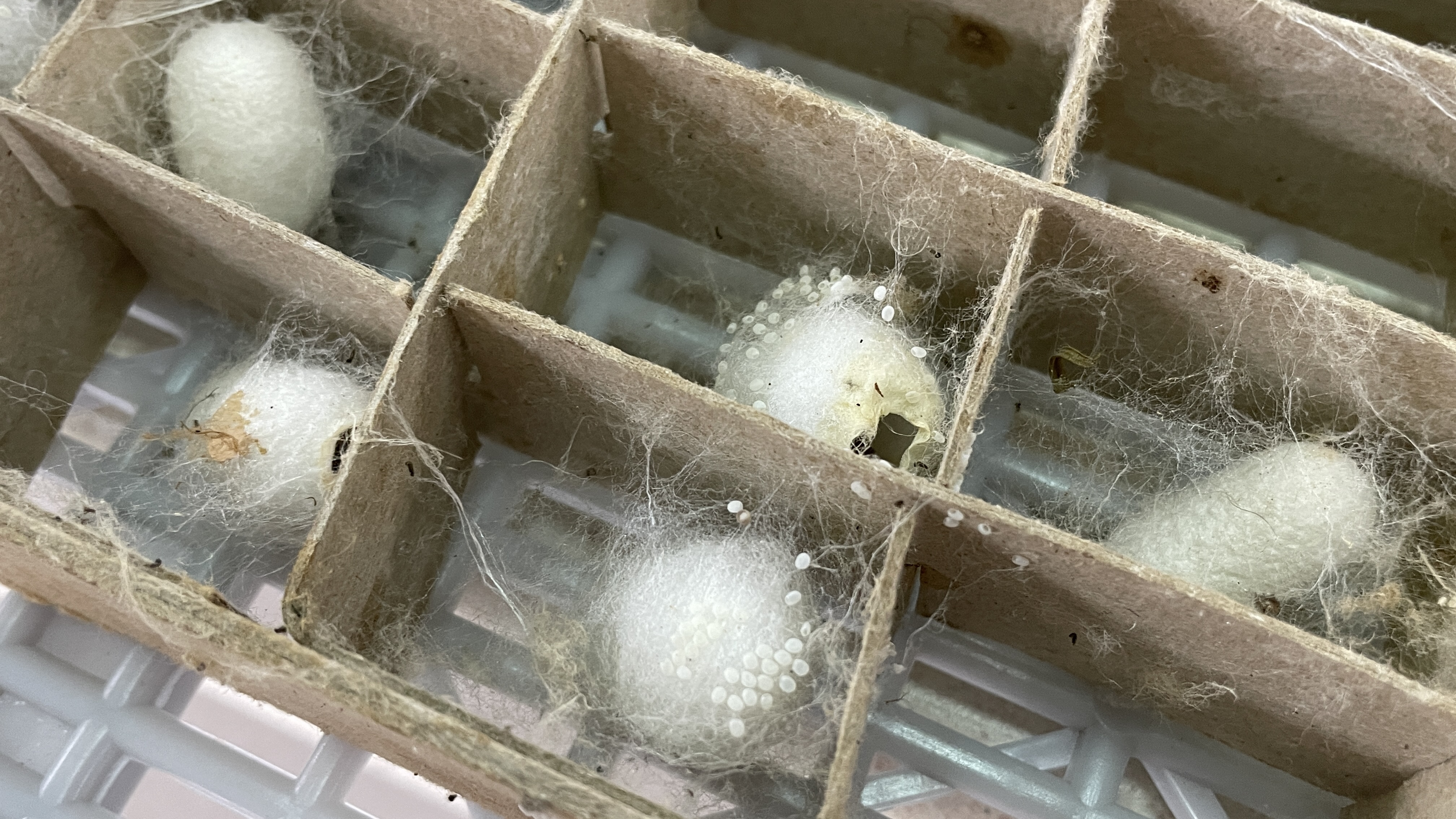
Not far from the water reservoir is the Silkworm Farm (泉明蠶寶寶生態教育農場). I'm not a fan of bugs, although I haven't seen silkworms in real life before (or I'm not aware that the bugs I saw were actually silkworms), so we also went there for a while. At the entrance, I got to try their two special teas. However, I didn't know at that time that one of them was actually made from silkworm feces. Needless to say, I wouldn't dare to try it at all, lol.
At the Silkworm Farm, you can see silkworms at different stages of their lives. For me, the scariest stage is when they become moths. I don't know why, but moths always scare me...
Behind the building, you can also see the farm growing trees that the silkworms feed on. These trees are a type of mulberry tree.
Nearby this place, there is also an owl farm, but unfortunately, it wasn't open that day.




Shitan Old Street (獅潭新店老街) 

After lunch, we continued our trip through the mountains and arrived at Shitan Old Street (獅潭新店老街). It wasn't busy at that time; I remember seeing a lot more people here in the past. If you are traveling around Miaoli, you can actually skip this place if you aren't in the area, as there isn't much to see here.

For our meal, we decided to eat at Rixin Restaurant (日新飲食店), which has been open for 50 years. The food was okay, perhaps not the best we've ever had, but it didn't taste bad either. The restaurant is quite popular in the area.


Wenchang Temple (苗栗文昌祠)

After lunch, we drove to Miaoli City. While passing through the city, we made a stop at Wenchang Temple (苗栗文昌祠). This temple was formerly known as Yingcai Academy (英才書院). It is dedicated to Wenchang Dijun, the deity of culture and literature. In addition to Wenchang Dijun, other deities like Confucius, Cangjie, and Kui Xing are also worshipped in the main shrine. During the Qing Dynasty era, the temple served as the county magistrate's office before a separate county hall was built.

Miaoli was originally an agrarian settlement, but in the 19th century, the city's growth saw the rise of an academic society. In 1882, five local scholars proposed the idea of building a temple dedicated to Wenchang Wang, and Wenchang Temple was completed in 1885. In 1889, when Miaoli County was established, it lacked a county hall, so county magistrate Lin Gui-fen set up his office within the temple. That same year, Yingcai Academy was established on the temple grounds as a shuyuan, a type of educational institution.

However, six years later, Yingcai Academy was shut down by Japanese authorities when Taiwan was ceded to Japan in the 1895 Treaty of Shimonoseki. Nevertheless, the temple continued to be a congregating place for scholars. In 1927, a group of academics formed Lishe (栗社), which regularly held public poetry readings in the temple. The temple itself suffered heavy damage during the 1935 Shinchiku-Taichū earthquake and was further affected when it was used by the Japanese as military barracks and government dormitories.
On 19 August 1985, the Miaoli County Government protected Wenchang Temple as a county-level monument, which allowed for preservation work to be carried out between 1997 and 2002.

Usually, the middle door to Wenchang Temple is closed to worshippers and can only be accessed by zhuangyuan, or people who achieve full marks on the Imperial examination. However, in 2007, the Miaoli County Government began hosting ceremonies to honor students for their academic achievements by allowing them to step through the middle door. Participants range from those who obtained doctorate degrees to those who acquired good grades on their high school entrance examinations. This is the only government-hosted event of its type in Taiwan.


Address:

1. Ming-te Reservoir: 362苗栗縣頭屋鄉
2. Silkworm Farm: 354苗栗縣獅潭鄉永興村11鄰14-1號
3. Shitan Old Street: 354苗栗縣獅潭鄉台3線
4. Rixin Restaurant 日新飲食店: 354苗栗縣獅潭鄉
5. Wenchang temple: 360苗栗縣苗栗市中正路756號

June 24, 2023

Little Life Update: Why Are We Moving Again?


We moved to Miaoli last August, and now we're moving again, but fortunately, it's just across the street, not 200km away. Unfortunately, our current landlady wants to increase the rental fee, which is already not the cheapest in the area. I really like our current place because it's larger compared to many other apartments we've seen, so it's sad to have to move.
Luckily, we found a new place very quickly, and our new landlady is super nice, so that's a positive aspect. However, the new place will be smaller, especially the kitchen, which is really small. So, I hope that we can move again in the near future 😂
I really enjoy living in this area. It's newer, has sidewalks, and is convenient but not too busy, so it's quieter here. Our community consists of six flats, and we have a shared garden, although there are no other facilities.

One annoying aspect of moving frequently is having to change all my documents. I need to update my ARC card, driving license, and everything else. Without proper household registration, our son wouldn't be able to attend kindergarten and later school. I personally feel that this rule is a bit excessive. Many landlords don't want tenants to register their household as they want to avoid paying taxes and keep their presence hidden. However, this is not legal, and it is possible to report such cases, although it's not commonly done. Renting a place in Taiwan often involves either paying a higher price or landlords offering discounts but not providing a proper address for tax reporting or access to rental subsidies, among other issues.

We are currently living in an apartment building where the manager also works as a salesperson, and it's becoming quite frustrating. She constantly tries to persuade us to rent other places, all of which are highly priced. Even though she knows we have already rented a new place!
In comparison to the community we are about to move into, our current neighbors are extremely distant and show no concern for one another. For instance, we have a Line group with all the residents in our building. Ever since we moved here, our upstairs neighbors have been consistently loud, both during the day and at night, even as late as 1-2 am. Every time we send a message in the group expressing our discomfort with the noise, we are completely ignored. This has been going on for the entire year.
Furthermore, the building manager hasn't taken any action to address this issue, aside from sending one message a long time ago, reminding everyone to be quiet after 10 pm. It seems like nothing has changed since then.

Check out my YouTube video


June 16, 2023

Hakka Festivals in Miaoli: Sanyi Cloud Fire Dragon Festival 三義雲火龍


Travel date: 2023/06/10

Sanyi Cloud Fire Dragon Festival (三義雲火龍)

Today, we visited Sanyi Township in Miaoli to witness a unique festival that is exclusively held in this town. The Sanyi Cloud Fire Dragon Festival (三義雲火龍) takes place every summer, but it had been put on hold for the past three years due to the COVID-19 pandemic. This year, it made a comeback!

When we arrived in Sanyi, we didn't have much information about the festival beforehand, so we weren't sure what to expect. The weather wasn't favorable, with cloudy skies and intermittent rain. I even considered skipping the festival. However, my husband knew how excited I was to come here (I had discovered the festival a month ago and marked it on his calendar), so he insisted that we still go.

The dragon parade started at 16:30 and lasted until 19:00, when the dragons reached their final destination. We arrived in Sanyi around 17:30, unaware of the exact route of the parade. We thought of waiting at the final spot, but before that, we went out to find some dinner. We ate at a shop, and although the food was good, we had to rush out when we realized that the parade was passing right by that road. I didn't even finish my meal and don't remember the name of the shop! I quickly joined the parade to witness their activities, while my husband and son joined me later.

Since this festival is not widely known, there weren't many people in attendance. Two dragons paraded down the street, performing dances and prayers along the way. They occasionally stopped, allowing people to take pictures with them. My son and I also took photos and videos with the dragons. The organizers were happy to see us participating (I only saw one other foreigner there).

At around 18:30, the dragon reached the final destination. Government officials gave speeches, and there was a short dance performance. The final ceremony took place at 19:00, during which incense was placed on the dragon. After the ceremony and prayers, the dragons departed. We were about to leave as well when we realized that we had left our umbrella at the restaurant where we had dined. My husband went back, but unfortunately, the umbrella was nowhere to be found. It seems that umbrellas have a tendency to disappear! However, don't worry about leaving other valuable items behind, such as phones, laptops, wallets, or even scooters with the keys in them. Taiwan is generally safe, and people are honest. We have forgotten our keys, phone, and wallet multiple times in the past, walked around for hours, and returned to find everything still there. So, it's quite safe in Taiwan.


Check out my YouTube video


By the way, if you're interested in another dragon-related festival, I recommend visiting the Bombing Dragon Festival in Miaoli, which is a lantern festival tradition of the Hakka people. You can find more information about it in the post: Bombing Dragon Festival.

Sanyi, located in the southern part of Miaoli, is not only known for its wood sculptures but also as a Hakka settlement, with 94% of its residents being Hakka people. The town has preserved the Hakka traditional culture that has been passed down for generations, including the Cloud Fire Dragon Festival.
Since 2007, Sanyi's Shuangtan community has actively promoted this unique Hakka traditional folk custom, integrating it with local rural life and religious beliefs, and making the Sanyi Cloud Fire Dragon one of the distinctive dragon dance cultures among Hakka towns and villages in Taiwan.

The Hakka ancestors originally lived in the Central Plains of China. After they migrated overseas, certain rural folklore activities unique to the Hakka people, such as the "Straw Dragon" or the "Cloud Fire Dragon," gradually faded away. However, this Hakka cultural heritage with a history of over a thousand years somehow made its way to Taiwan from China about 400 years ago. Since then, this cultural tradition has been passed down from generation to generation within Taiwan's Hakka communities, and in recent years, it has become a festival in Sanyi Township, Miaoli County.

In the past, after harvesting their rice crops in the autumn, the Hakka people would weave giant straw dragons using straw knots, bundles, and bamboo chips. These dragons were placed at important intersections in the villages, and during the festival, prayers were offered to honor the Divine Agricultural Deity, Shennong, who is associated with the Five Grains. Incense sticks would be placed all over the straw dragon's body, and when lifted by the dancers during the dance, the dragon would be filled with the fragrance of golden incense. When seen from a distance, it appeared as if the dragon god was leaping in the clouds, thus earning the name "Cloud Fire Dragon."

This religious custom also gave rise to the Hakka people's unique traditions of welcoming the dragon, worshiping the dragon, parading with the dragon, dancing with the dragon, bidding farewell to the dragon, and burning the dragon. Parading the dragon symbolizes well wishes for the local neighborhoods and communities, praying for protection from epidemics and evil.

In the past, the Cloud Fire Dragon would go on two tours each year, with the "fire dragon" touring on the 12th day of the first lunar month and the "water dragon" going on its excursion during the Dragon Boat Festival in the summer. In recent years, these activities have merged into one annual Hakka festival.
The Cloud Fire Dragon embodies the wish for wind and rain to bring auspiciousness and prosperity. During the dragon's tour, it visits local neighborhoods, and every family prepares tea, wine, and eggs to share with relatives and friends as part of the festivities.


June 9, 2023

Hsinchu Travel: Water Adventure at Fengxiang Falls


Travel Date: 2023/05/28

Fengxiang Falls (豐鄉瀑布) 

The weather was good, with a beautiful blue sky and hot temperatures. However, knowing that Typhoon Mawar would be approaching Taiwan next week, we took the opportunity to go to the mountains before it hit. After researching different waterfalls, I chose Fengxiang Falls (豐鄉瀑布) in Hsinchu as it was the easiest one to reach. There is a car park available, with space for around 10-12 cars. The waterfall is also located very close to the road, so no climbing was necessary.

Swimming in the waterfall is not allowed, as the water serves as a water source for the aboriginal people in the area. Additionally, there is information indicating that three people have drowned there in the past. However, the river flowing from the waterfall is a popular spot for people to play in. It has several layers and is a safe place for families, especially those with children. When we arrived at 11 AM, the water was quite cold. We met a few aboriginal kids who had moved there from Taroko, Hualien.

Since we have visited several other waterfalls in the past, if you are interested in discovering more places, feel free to check out my previous posts.

Check out my YouTube video


Address:

312新竹縣橫山鄉竹35鄉道旁號

June 6, 2023

Blossoming Beauty: Embrace the Daylilies Season in Changhua


Travel Date: 2023/05/27

Hushan Daylilies (虎山巖金針花)

Hualien and Taidong are the most famous places to see daylilies blooming, but they are not the only places where you can find these flowers. Small fields can also be found in the west of Taiwan, such as Miaoli, Taichung, Changhua, or Nantou. Although the view may not be as stunning as in the high mountains of the East, it's still a nice trip if you're in the vicinity.

Today, we had a meeting with a Polish woman in Taichung as my husband wanted to gather more job-related information. It was actually our first time meeting her. We met at Taichung Art Museum, which has plenty of outdoor space. The museum is free to visit. While it may be a nice place for those interested in art, it didn't particularly captivate me. However, the outdoor areas were great, and our son had fun playing with other kids. There is also a restaurant and a beverage shop. The prices for drinks range from 150NT and up, which I suppose is quite normal for the city.

We also drove to Changhua to see the daylilies. We went to Hushan (虎山), a famous place to visit during the flowering season. We didn't know that there was a car park (free of charge), so we parked about half a kilometer away in the village. The car park was not small, and there was still plenty of space when we arrived. Perhaps because we went around noon on a hot day, there were slightly fewer people.

There is an old temple (虎山巖觀音佛祖), plenty of street food and other products, as well as restaurants. The hill is not very big (though it's still larger than the one in Dahu, Miaoli), but overall, it's a decent place for a walk. Daylilies bloom here from April to June. We've been to Taidong and Hualien before, so compared to those places, Changhua is not that special. I highly recommend visiting the mountains in the East of Taiwan, where the blooming season is from July to September. If you want to know more about Taidong or Hualien, feel free to check out my previous posts.

Daylilies are native to Asia, and there are more than 80,000 cultivars of these flowers. They thrive in low temperatures with high humidity. The Liliaceae family, to which they belong, is known for its adaptability to the environment. The golden needle flower is grown and cultivated at altitudes of 700 to 1000 meters. Aside from the coastal plains, most of them are found in mountainous areas.

Due to their beautiful flower patterns and vibrant colors, daylilies have earned the reputation of being the "beauty of the day" in Europe and America. In Chinese, they are also called "Mother Flower." The finished product, with its golden yellow color and needle-like shape, is named "Golden Needle" and "Yellow Cabbage" based on its color, shape, and use. Daylilies are planted for culinary purposes, especially in soups, and are sold to many restaurants throughout Taiwan. Almost all parts of the daylily plant are edible. They can be eaten raw, cooked, or deep-fried. The flowers can also be made into dried vegetables by steaming and drying.

Daylilies are also used as a natural dye. This plant is rich in protein, fat, and carbohydrates. It contains vitamin C, carotene, calcium, and potassium. The roots of daylilies contain compounds with anti-tumor properties. They can also help relieve pain, prevent vomiting, relax muscle spasms and cramps, reduce fever, and promote sleep.

Interestingly, it's quite common to see daylilies in Poland. I had several plants in my garden. In Poland, we often call them "smolinosy," which translates to "something that will make your nose dirty." This's because when we try to smell them, our noses become orange from the pollen.


Check out my YouTube video


Address:

Car parking: 503彰化縣花壇鄉503

June 2, 2023

Journey of Living Abroad: Reflections on Six Years in Taiwan


June 2017 was the first time I came to Taiwan. It started as a 3-month stay and turned into 6 years. So much has happened throughout the years. I got married, had a child, and started my cake business. Living abroad has its good and bad parts.

1. Leaving everything behind is definitely difficult. I left my family, friends, and pets, and it completely changed my life. Was it worth it? At some point, yes, but I do wish I had more time to spend with family members and my beloved cat who sadly isn't around anymore. It's challenging to keep in touch with family due to the distance and time difference. I miss out on a lot of things, such as weddings or other events. I feel like life goes on without me.
2. Being away from family and my country has taught me to appreciate them more. Now when I go back, I see Poland in a different light. I think it's a beautiful country, I love the architecture in most Polish cities, and I miss the countryside. I hate to say it, but I don't find Taiwan as aesthetically pleasing. People here don't seem to care much about renovating houses or even about cleanliness.
3. Moving here has allowed me to see different places, experience different lives, and immerse myself in a different culture. Before I moved to Taiwan, I didn't really travel, but now I enjoy visiting new places, witnessing different festivals, and learning about religions I had never heard of before.
4. Living in a different country can open up new opportunities. For example, in Poland, I would have never thought about starting my own business. It feels like there are too many rules and regulations, especially when it comes to selling food. But in Taiwan, it feels much simpler. All you need is a product to sell, and you're good to go!
In the past 6 years, I've noticed that especially in the countryside, people don't seem to care much. I've seen cockroaches or rats in restaurants while eating out. Here, it doesn't seem like a big deal, but in Poland, the place would definitely be closed.
5. The biggest challenge of living abroad is the language barrier. I know that after 6 years, I should be more proficient in Chinese, but I'm a shy person. I find it difficult to strike up conversations with strangers, and I even struggle to make friends here. So, learning the language hasn't been easy for me.
6. Moving to a different country can result in a huge culture shock and homesickness. During the first year here, I felt really down. I hated everything, I cried a lot, and I just wanted to go back home. However, as time went by, I adapted to life and the food here. I've even come to love stinky tofu, so I guess it's not that bad anymore.
7. It's challenging to make friends here. While I do know some other foreigners, due to our frequent moves, sometimes over 200km away, it's difficult to maintain long-lasting friendships unless they're online. I also find it challenging to form close friendships with Taiwanese people due to the cultural differences.

What's your experience with living abroad? Let me know in the comments!

Check out my YouTube video