Showing posts with label Hakka. Show all posts

November 5, 2023

Hsinchu Travel: Sun-Dried Persimmons - A Must-See Experience in Taiwan


Travel Date: 2023/11/04

Despite it being the beginning of November, the weather was pleasantly warm. The day welcomed us with a clear blue sky and a temperature of 30 degrees Celsius. However, it appears that this might be the last week of summer in Taiwan. Next weekend, a cold front is expected to arrive, bringing cooler, windier, and rainy weather, with temperatures ranging between 17 and 23 degrees only.
While we don't reside in Hsinchu, we find ourselves traveling here more often than around Miaoli where we are currently living. 
Once again, we rode a scooter, as it's easier to park. It was an hour's drive, but we were able to visit not only Xinpu but also Hukou. I'll share more about Hukou Old Street in my next post: HERE

Also check out my video

Weiweijia Persimmon Orchard (味衛佳柿餅工廠)

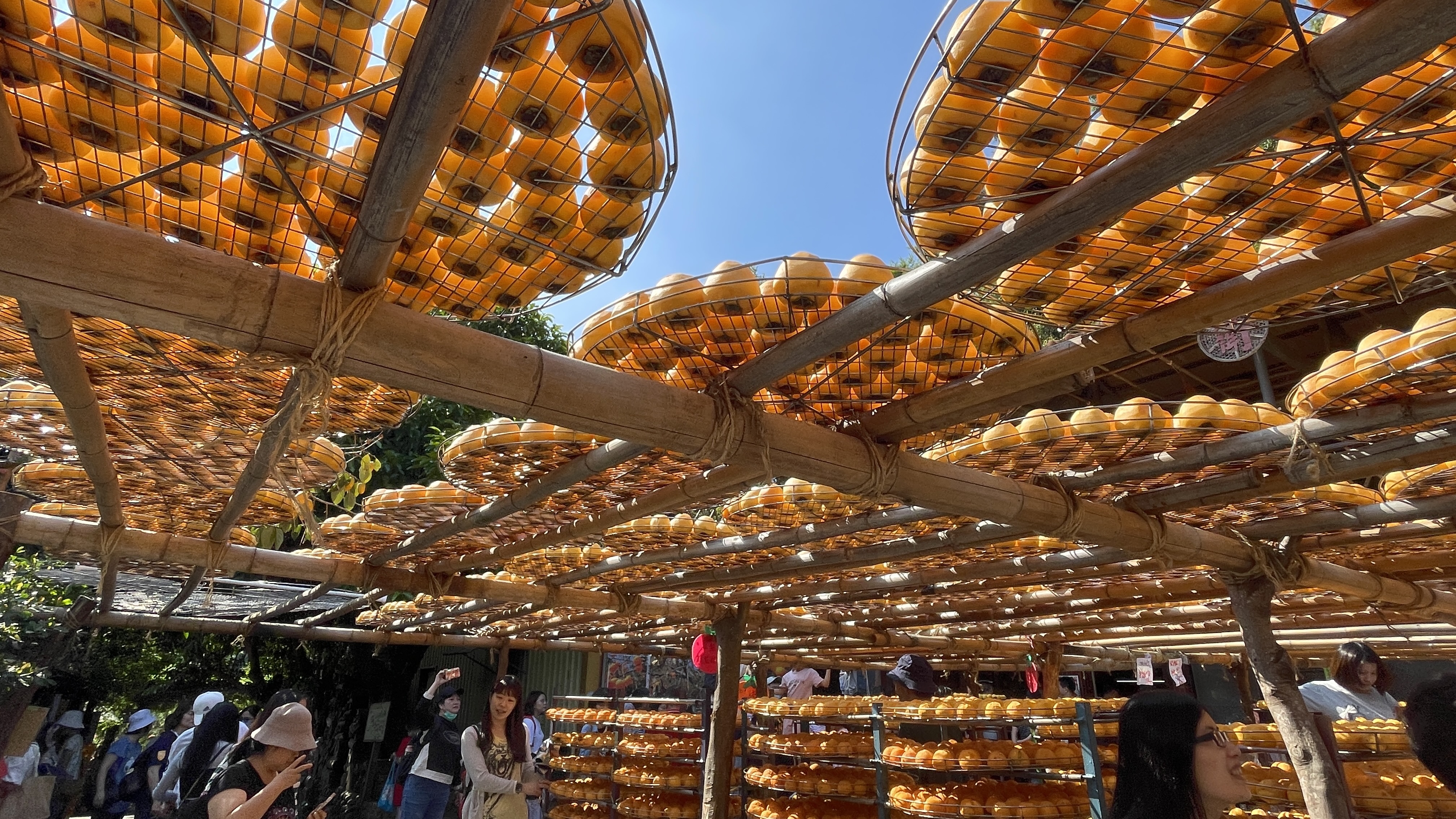
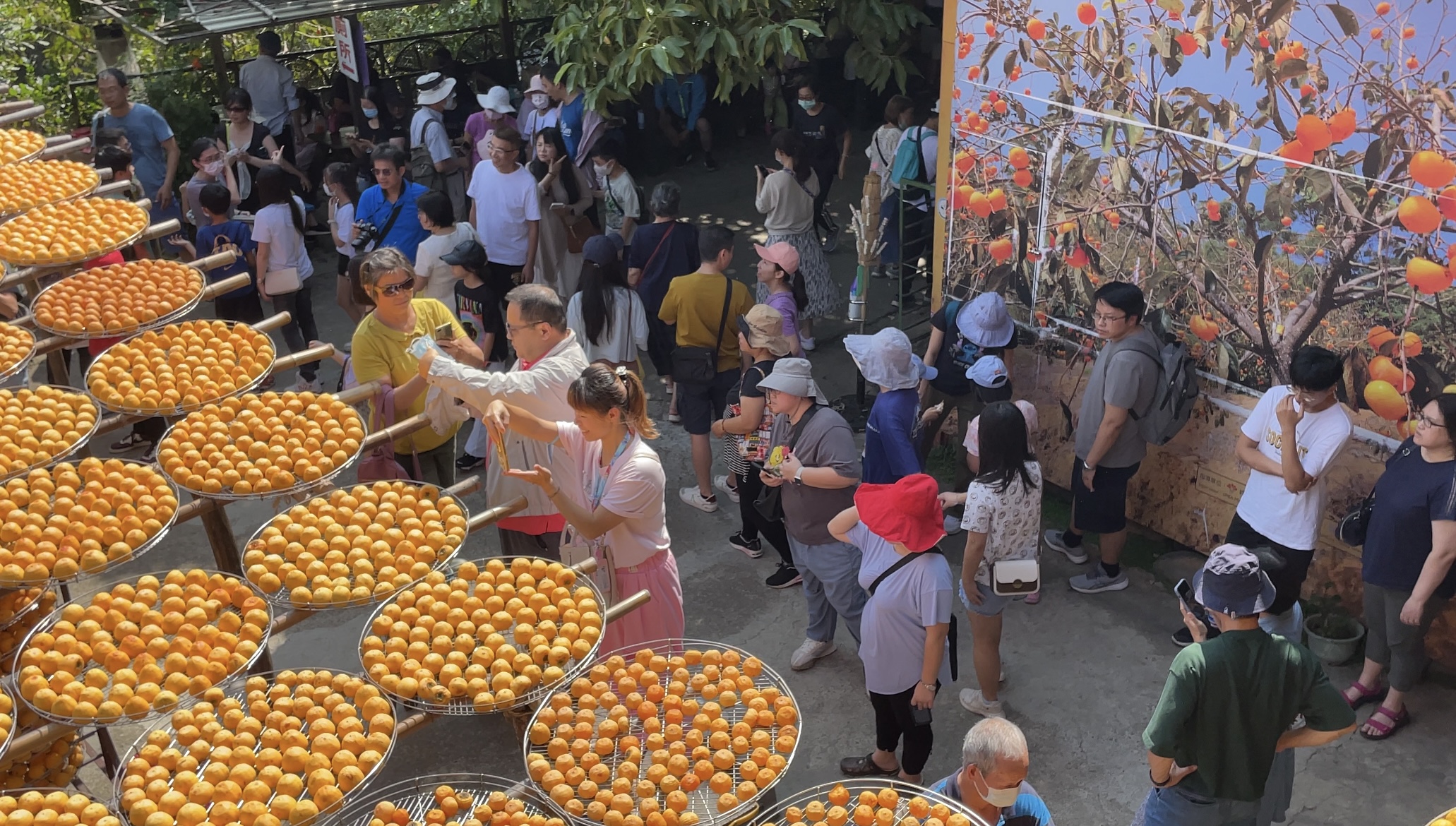
We've had the pleasure of visiting the Weiweijia Persimmon Orchard in 2018 and again last autumn, with this year's visit being particularly rewarding. The decision to return this November was fruitful as the orchard was abundant with persimmons... and visitors.

The boss generously treated us to persimmon popsicles (Thank you a lot 老闆,非常感謝您!). They were incredibly delicious, and I highly recommend trying them! The taste even inspired me to consider making a persimmon cake, although I'm unsure of the outcome. I'm also an enthusiast of dried persimmons. In my opinion, they surpass the fresh ones, but perhaps taste may vary among different varieties of fruits.

The history of dried persimmons, known as "柿餅" in Xinpu (新埔), spans three centuries. This delicacy is a specialty of the Hakka (客家) people, and Xinpu contributes up to 80% of Taiwan's dried persimmon production. The weather conditions in Xinpu village, especially during the autumn season, with its hilly terrain and dry winds, create the ideal environment for making dried persimmons.

While Weiweijia Persimmon Orchard welcomes tourists throughout the year for free, the prime persimmon season typically spans from the end of September to January. The best visits are on sunny days with clear blue skies, allowing for a stunning view of the orange fruits drying under the open sky.

Various spots within the orchard offer perfect photo opportunities - whether standing under the drying persimmons, using platforms for a close-up view, or even from an elevated vantage point. Although there used to be an area where visitors could wear a farmer's hat and pose with baskets of persimmons, I'm unsure if this feature is still available. I haven't seen it this year, but back in 2018.
For a fee of 200NTD, visitors can paint their own design on a bag using natural paints. This artistic activity adds a personal touch to the experience.

The process of making dried persimmons is a labor-intensive, traditional craft. The fruits are picked from the trees when they're around 70-80% ripe to facilitate peeling. The orchard showcases the fruits waiting to be picked, and workers, accustomed to visitors taking pictures, occasionally pause their work to smile for photographs.

Following the picking, the fruits undergo a meticulous process involving hand or machine peeling, charcoal grilling for sterilization, and subsequent drying in the sun for 3-4 days. Workers then carefully press the fruits into their distinctive shape. After an additional 3-4 days, the persimmons are disinfected in a baking chamber before being packed for sale.

Super recommend to visit!


Address:
305新竹縣新埔鎮旱坑路一段283巷53號味衛佳柿餅教育農園

July 10, 2023

Hsinchu Travel: Visiting Beipu Old Street and Cold Springs


Travel Date: 2023/07/02

It was still good weather and very hot when we left home. We planned to visit Beipu Old Street, Cold Springs, and drive further into the mountains, but our trip was interrupted by afternoon rain. Since we didn't want to play in the water under the rain, we might consider going there in the future. There are plenty of food stalls on the streets, although some of them are small and pricey. All the popular shops were crowded, with many people waiting in line, so we decided to go to a less busy place. We should have checked Google reviews first; the place wasn't empty for no reason! The food wasn't tasty at all; it was just noodles with canned sauce on top, tasting like the famous instant noodles here.

Beipu Old Street (北埔老街)

Beipu Old Street is located in Hsinchu County, Taiwan. Famous tourist attractions in the area include Jinguangfu Mansion, historic sites such as Tianshuitang, Jiang'a Xinyang Building, Beipu Citian Temple, and Beipu Zhongshu Hall. The specialties of Beipu Old Street include persimmon cakes, dried persimmons, and taro sweet potato mooncakes. Beipu Township, along with the nearby Emei Township and Baoshan Township, was formerly known as "Daai," which was originally the domain of the Saisiyat people. The Han people did not reclaim this area until the early Daoguang period of the Qing Dynasty. Around 1835, a command center was established at the current site of the "Jin Guangfu Mansion" to manage the reclamation affairs. During this period, Jiang Xiuluan planted bamboo walls on the west, south, and north sides of Beipu, and built four city gates to form the scope of the "Old Settlement of Beipu."

After the Japanese ruled Taiwan in 1895, Beipu remained bustling. At that time, there was a tea testing ground here, and many factories emerged due to the popularity of the tea produced in Beipu. However, the tea industry in Beipu declined after the closure of the tea company owned by the tea king Jiang Axin in 1965. Additionally, the prosperity of Beipu was also supported by nearby coal mines, but after the depletion of the mines, Beipu's prosperity waned. The relocation of the Beipu Township Office and the widening of the Taiwan Third Line further contributed to the decline of this place. However, due to the Hakka-style snacks and the nostalgic appeal of the old street, Beipu has transformed into a tourist attraction.

Check out my YouTube video


Beipu Citian Temple (北埔慈天宫)

Beipu Citian Temple is a Guanyin Temple listed as a county-designated historic site. The exact founding date of the temple is subject to different opinions, but it is believed to have been established by Jiang Xiuluan after he settled in Beipu in 1835. The temple is closely associated with the reclamation activities of the Han people in the area. According to legend, the Guanyin Bodhisattva enshrined in this temple was brought by Jiang Xiuluan from mainland China, and a small house was built in Beipu to worship it. In the early stages of reclamation, people would pray for safety and success in the face of casualties during battles with the aborigines. In 1840, the temple was rebuilt into a wooden structure for worship.

The temple serves as the religious center of Beipu Township and is similar in size to Lianhua Temple in Zhubei. It was previously used as the Beipu Branch School of the Hsinchu Mandarin Institute, which was later converted into a classroom for the Beipu Public School. The Jiang Yifeng family donated the land where the school was located before relocating the school to restore the temple. In 1985, the temple was approved as a third-class historic site, along with Jin Guangfu Mansion and Jiang'a Xinyang Mansion. During the Lantern Festival, residents of Beipu gather in front of the temple, light bamboo torches, and participate in a parade to worship the mountain gods on Xiuluan Mountain. On the 19th day of the second month of the lunar calendar, a grand worship ceremony is held to celebrate Guanyin's birthday.


Tianshui Temple (天水堂)

The exact founding date of Tianshuitang is not recorded, but it is believed to have been established by Jiang Xiuluan after his arrival in Beipu in 1835. The temple has been repaired and maintained by the Jiang family for over 100 years. Descendants of the Jiang family still reside inside, and the temple is not open to the public for visiting. It remains a private house.

Ah Xin Mansion (阿新洋楼)

Jiang Axin Mansion, located in Beipu Township, is a "Baroque-like" residential-commercial mansion. Construction of the mansion began in 1946 and was completed in 1949. It was built by Jiang Ahxin, a well-known tea merchant, to receive guests from foreign tea merchants and to serve as his daily residence. The mansion witnessed the prosperous era of Taiwan's tea industry, known as the "tea gold" era. It was designated as a historic site in Hsinchu County in July 2006 and later bought back by Jiang Axin's descendants in 2012. The mansion is now managed and operated by the "Jiang Axin Education Foundation" and is open to the public.

Jiang Axin's Yongguang Company experienced two collapses of Taiwan's tea industry in 1950 and 1959, and declared bankruptcy in 1964. The whole family moved to Taipei. After regaining the property rights, the Taiwan Province Cooperative Bank used the mansion as a warehouse for storing sundries. Due to a lack of maintenance, the building suffered significant damage. In August 1995, the "Jinguangfu Cultural and Educational Foundation," primarily focused on the preservation of old houses, rented Jiang'a Xinyang Mansion from the Taiwan Provincial Cooperative Treasury and began restoration work, which was completed in December 1996. With the active efforts of the "Jin Guangfu Cultural and Educational Foundation," Jiang Axin Mansion was designated as a historic site in Hsinchu County. In 2012, the cooperative treasury commercial bank intended to sell the mansion, but Jiang Axin's descendants sought to reclaim the memories of their family's past life.

Beipu Cold Springs (北埔冷泉)

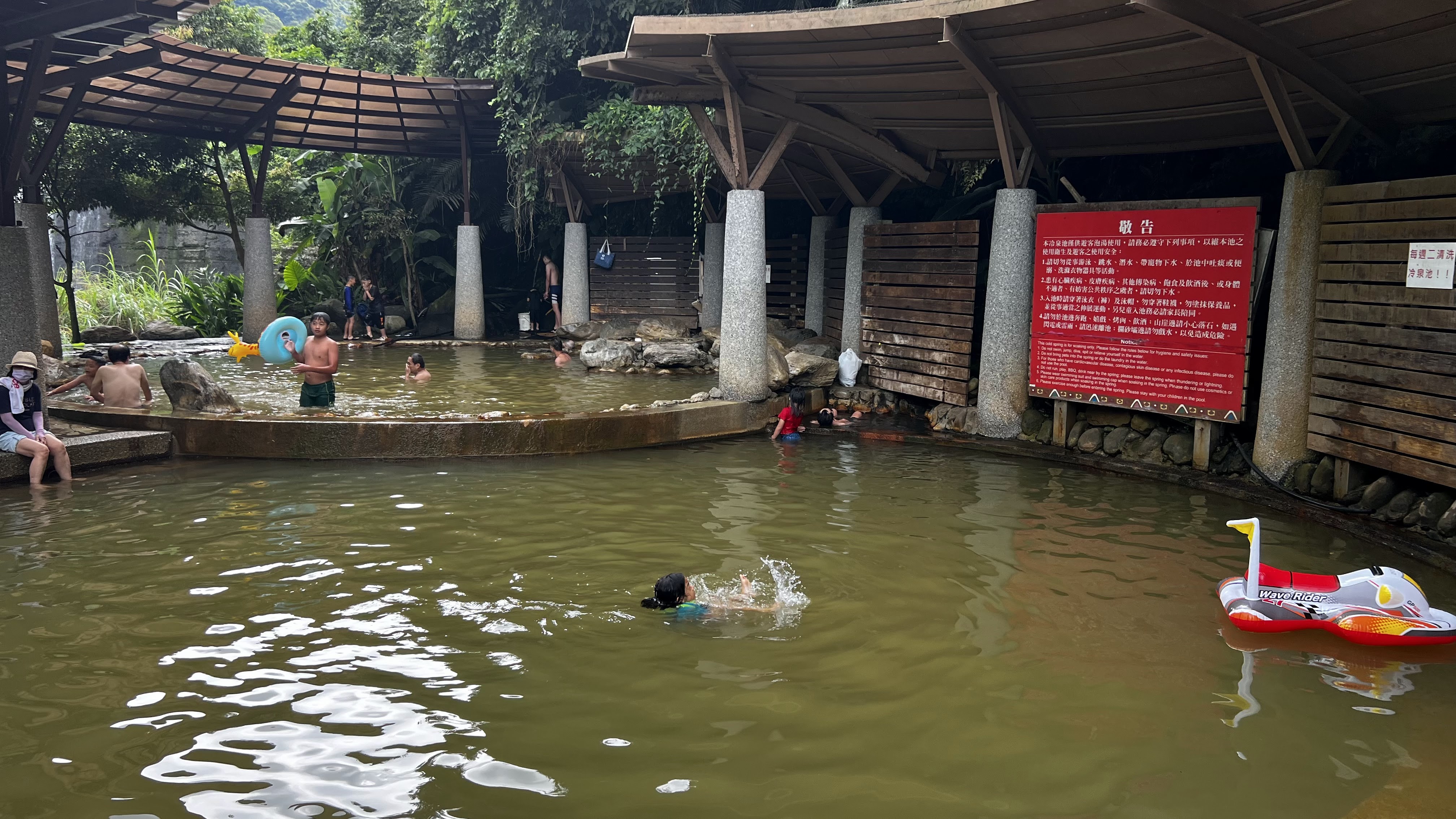
We visited Beipu Cold Springs for the first time. Unfortunately, when we arrived, it started to rain lightly, and the sky turned grey and dark. After a while, we decided to head back home. There is a car parking area available, as well as plenty of space along the road for parking. The Cold Springs were crowded with people playing in the water. It seemed safe for kids, as there were areas with both deeper and shallower water to play in the river. Facilities such as toilets and pools for kids to play in were also available. Beipu Cold Springs in Beipu Township, Hsinchu County, produce weakly alkaline carbonic acid water with temperatures ranging from 10 to 15 degrees Celsius. 


Address:

1. Beipu Old Street: 314新竹縣北埔鄉北埔街北埔老街
2. Beipu Cold Spring: 314新竹縣北埔鄉北埔冷泉

June 16, 2023

Hakka Festivals in Miaoli: Sanyi Cloud Fire Dragon Festival 三義雲火龍


Travel date: 2023/06/10

Sanyi Cloud Fire Dragon Festival (三義雲火龍)

Today, we visited Sanyi Township in Miaoli to witness a unique festival that is exclusively held in this town. The Sanyi Cloud Fire Dragon Festival (三義雲火龍) takes place every summer, but it had been put on hold for the past three years due to the COVID-19 pandemic. This year, it made a comeback!

When we arrived in Sanyi, we didn't have much information about the festival beforehand, so we weren't sure what to expect. The weather wasn't favorable, with cloudy skies and intermittent rain. I even considered skipping the festival. However, my husband knew how excited I was to come here (I had discovered the festival a month ago and marked it on his calendar), so he insisted that we still go.

The dragon parade started at 16:30 and lasted until 19:00, when the dragons reached their final destination. We arrived in Sanyi around 17:30, unaware of the exact route of the parade. We thought of waiting at the final spot, but before that, we went out to find some dinner. We ate at a shop, and although the food was good, we had to rush out when we realized that the parade was passing right by that road. I didn't even finish my meal and don't remember the name of the shop! I quickly joined the parade to witness their activities, while my husband and son joined me later.

Since this festival is not widely known, there weren't many people in attendance. Two dragons paraded down the street, performing dances and prayers along the way. They occasionally stopped, allowing people to take pictures with them. My son and I also took photos and videos with the dragons. The organizers were happy to see us participating (I only saw one other foreigner there).

At around 18:30, the dragon reached the final destination. Government officials gave speeches, and there was a short dance performance. The final ceremony took place at 19:00, during which incense was placed on the dragon. After the ceremony and prayers, the dragons departed. We were about to leave as well when we realized that we had left our umbrella at the restaurant where we had dined. My husband went back, but unfortunately, the umbrella was nowhere to be found. It seems that umbrellas have a tendency to disappear! However, don't worry about leaving other valuable items behind, such as phones, laptops, wallets, or even scooters with the keys in them. Taiwan is generally safe, and people are honest. We have forgotten our keys, phone, and wallet multiple times in the past, walked around for hours, and returned to find everything still there. So, it's quite safe in Taiwan.


Check out my YouTube video


By the way, if you're interested in another dragon-related festival, I recommend visiting the Bombing Dragon Festival in Miaoli, which is a lantern festival tradition of the Hakka people. You can find more information about it in the post: Bombing Dragon Festival.

Sanyi, located in the southern part of Miaoli, is not only known for its wood sculptures but also as a Hakka settlement, with 94% of its residents being Hakka people. The town has preserved the Hakka traditional culture that has been passed down for generations, including the Cloud Fire Dragon Festival.
Since 2007, Sanyi's Shuangtan community has actively promoted this unique Hakka traditional folk custom, integrating it with local rural life and religious beliefs, and making the Sanyi Cloud Fire Dragon one of the distinctive dragon dance cultures among Hakka towns and villages in Taiwan.

The Hakka ancestors originally lived in the Central Plains of China. After they migrated overseas, certain rural folklore activities unique to the Hakka people, such as the "Straw Dragon" or the "Cloud Fire Dragon," gradually faded away. However, this Hakka cultural heritage with a history of over a thousand years somehow made its way to Taiwan from China about 400 years ago. Since then, this cultural tradition has been passed down from generation to generation within Taiwan's Hakka communities, and in recent years, it has become a festival in Sanyi Township, Miaoli County.

In the past, after harvesting their rice crops in the autumn, the Hakka people would weave giant straw dragons using straw knots, bundles, and bamboo chips. These dragons were placed at important intersections in the villages, and during the festival, prayers were offered to honor the Divine Agricultural Deity, Shennong, who is associated with the Five Grains. Incense sticks would be placed all over the straw dragon's body, and when lifted by the dancers during the dance, the dragon would be filled with the fragrance of golden incense. When seen from a distance, it appeared as if the dragon god was leaping in the clouds, thus earning the name "Cloud Fire Dragon."

This religious custom also gave rise to the Hakka people's unique traditions of welcoming the dragon, worshiping the dragon, parading with the dragon, dancing with the dragon, bidding farewell to the dragon, and burning the dragon. Parading the dragon symbolizes well wishes for the local neighborhoods and communities, praying for protection from epidemics and evil.

In the past, the Cloud Fire Dragon would go on two tours each year, with the "fire dragon" touring on the 12th day of the first lunar month and the "water dragon" going on its excursion during the Dragon Boat Festival in the summer. In recent years, these activities have merged into one annual Hakka festival.
The Cloud Fire Dragon embodies the wish for wind and rain to bring auspiciousness and prosperity. During the dragon's tour, it visits local neighborhoods, and every family prepares tea, wine, and eggs to share with relatives and friends as part of the festivities.