December 10, 2018

Taoyuan Travel: Exploring the Charm of Daxi Old Street - Japanese Architecture in Taiwan

Travel Date: 2018/12/10

We are planning to visit Christmasland today, but first, we will make a stop in Daxi to explore the area. Finding parking space in Daxi can be quite challenging. It took us around 15 minutes to find an available spot, and unfortunately, it was over 1 km away from Old Street. I felt a bit upset today, especially after witnessing a woman lying on the road with no one seeming to care. People were passing by without stopping...
Daxi is renowned for its dried tofu and production of wooden furniture. You can also visit the mausoleum of Chiang Kai-shek and his son, Chiang Ching-kuo. The area is dotted with tea plantations and a tea factory. We recently visited Shihmen Reservoir and Bald Pine Avenue in this vicinity as well.

Daxi Old Street (大溪老街) 

Daxi is considered one of the top ten popular small tourist towns. Daxi Old Street is one of the most fascinating old streets in Taiwan. The buildings along Heping Road have beautiful facades that are unique to this area. If you want to take pictures of buildings without people around, I recommend exploring the nearby streets. One of the streets resembles an Old Street but without shops and the usual crowd. Additionally, you'll notice the Cikang Overpass next to Daxi Old Street, designed to have an antique appearance and add to the street's atmosphere.

In the past, the Daxi area was known as Dagu, inhabited by the Atayal people. Dagu, meaning "big water," was later renamed Daxu in the 1860s due to superstitions surrounding its name. In 1920, it was changed to Daxi, a name that is still used today.
In the 1810s, agriculture began to flourish, and Dahanxi shipping played a significant role in the area's prosperity. A small market was established during that time. In 1890, with the establishment of the North Road Sulfur Monopoly Bureau, Daxi became a distribution center for camphor, tea, and wood.

During the Japanese era in 1918, a wave of street reconstruction occurred. Two brothers, Chen Wanglai and Chen Sanchuan, learned skills from the Japanese and applied them to the temple's architecture, including shearing and cross-toe burning of the archway facade. Their unique style attracted others to follow suit, resulting in the intricate decorations adorning the facades of the houses along the streets. These Baroque-style buildings are a perfect blend of Eastern and Western influences.

See also: Christmasland

Daxi Old Street 大溪老街, taoyuan, taiwan

Daxi Old Street 大溪老街, taoyuan, taiwan

Daxi Old Street 大溪老街, taoyuan, taiwan

Daxi Old Street 大溪老街, taoyuan, taiwan

Daxi Old Street 大溪老街, taoyuan, taiwan

Daxi Old Street 大溪老街, taoyuan, taiwan

In this old part of town, you can also find several temples. The first one, located on Heping Road, is Furen Temple, built in 1813. Inside, you can find deities from the Hakka, Taochew, and Quanzhou traditions, which is quite rare. During the Japanese era, the temple served as a military hospital. After two reconstructions, it has become one of the largest temples in Daxi.

The Puji Temple, constructed in 1902, has undergone three stages of development. Initially built as a private shrine for the Jiang family, it later transformed into an ancestral hall influenced by Furen Palace Temple. In 1907, the Puji Temple was opened to the public. It holds one of the most significant celebrations in town.

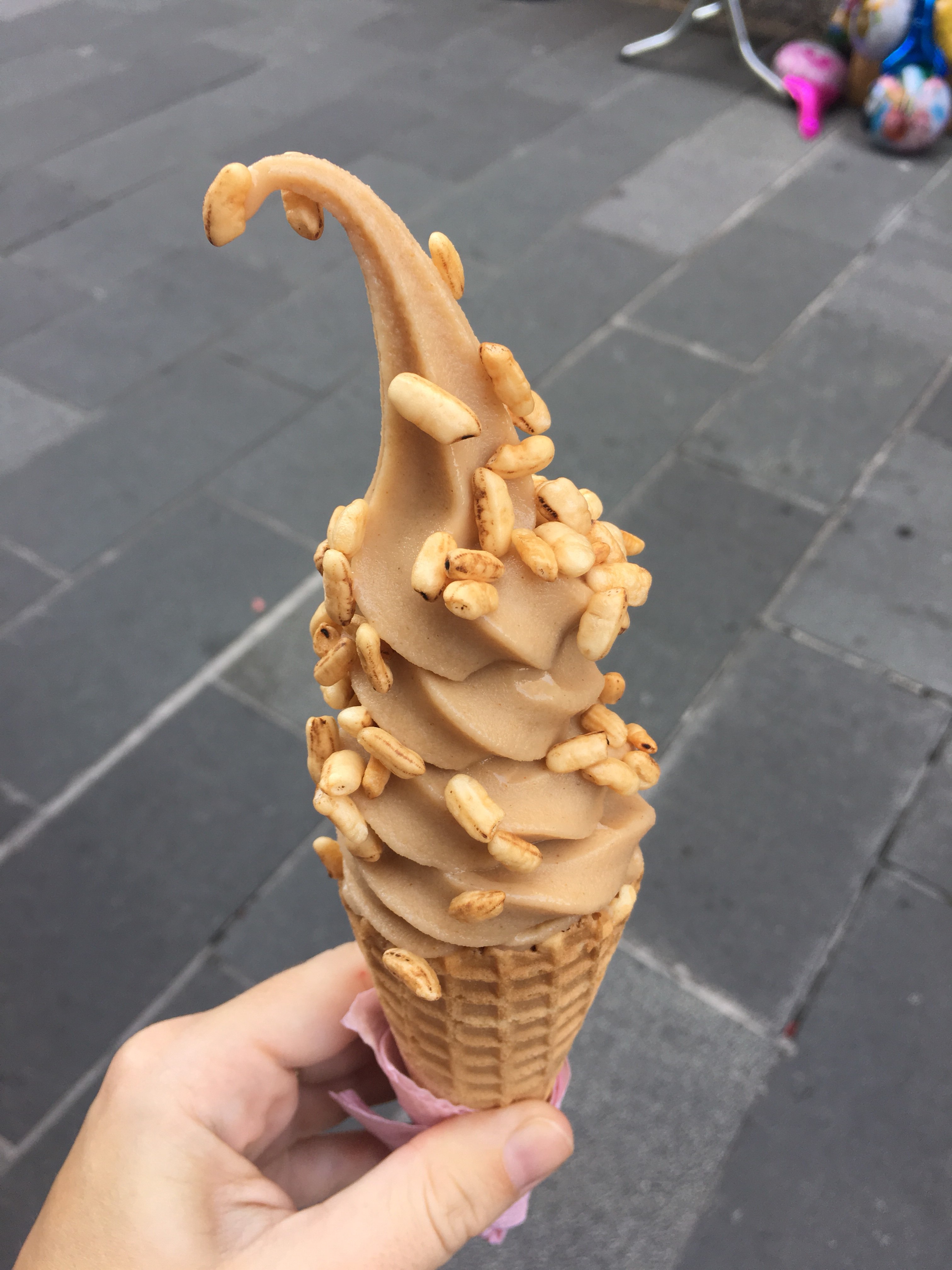
Daxi is most famous for its tofu. Daxi Old Street is filled with street food stalls offering a variety of delicacies. One of the popular treats here is peanut candy, along with rice ice creams. I also came across yam pancakes, which had a unique mix of yellow and purple colors. There is an abundance of special food to try in this area. However, be prepared for long waits, as many shops are crowded, with some lines lasting over half an hour.

Along Heping Road, you can find traditional shops selling wooden toys for children. I spotted many folklore toys made of wood, which were quite different from those of my childhood. I also loved the postcards made of wood in the shape of Taiwan with various decorations.

One of the houses was open to the public, allowing visitors to step inside and experience the style of an old building. Although there weren't many items inside, they did provide a few pictures and explanations, although only in Chinese.

Daxi Old Street 大溪老街, taoyuan, taiwan, puji temple

Daxi Old Street 大溪老街, taoyuan, taiwan, puji temple

Daxi Old Street 大溪老街, taoyuan, taiwan, puji temple

Daxi Old Street 大溪老街, taoyuan, taiwan, rice ice cream

Daxi Old Street 大溪老街, taoyuan, taiwan, peanut candy

Daxi Old Street 大溪老街, taoyuan, taiwan

Address:

335桃園市大溪區和平路大溪老街

December 3, 2018

Hsinchu & Taoyuan Travel: Autumn in Taiwan - Bald Cypress

Travel Date: 2018/12/03

We set out to see some autumn trees and came across the bald cypress trees, which have started to attract visitors, even though their colors haven't changed much yet. We arrived in Beipu, a place well-known for its Hakka culture, and had previously visited Beipu Old Street.
In Taiwan, there aren't many trees that change colors in the winter season. Bald cypress, pines, and maple trees are popular during the autumn-winter season. As the weather gets colder, these trees will transition to yellow and even red hues.

Beipu Liutang Bald Cypres (北埔六塘石柿餅.落羽松)

The location is not far from Beipu Town and is easily accessible. People have created two ponds near the row of trees, one on each side. You can also take a look at a nearby farm. I noticed some recently planted maple trees, but they didn't look very vibrant yet. Beipu is also famous for its persimmon cultivation. On the other side of the road, you can spot farmers drying fruits, although the view may not be as impressive as the dried persimmons in Xinpu.

One of the maple trees has already started changing its leaves to a golden color. Unfortunately, the sky wasn't blue today. If you walk down to the pond, you will find around 10 more trees.

Beipu doesn't have as many trees as Daxi's Bald Pine Avenue in Taoyuan, which must be truly stunning when the trees change colors further. In Daxi, you can also explore numerous tea plantations and visit a tea factory. Daxi is one of the ten small tourist towns in Taiwan, known for its wooden furniture production, dried tofu, and the mausoleum of Chiang Kai-Shek and his son, Chiang Ching-Kuo.
Not far from this place, you can also find the Bald Cypress Forest, which is another popular attraction. Although we haven't been there yet, we may visit next January when the colder weather enhances the colorful scenery.
Bald cypress trees are unique because they are the only trees in their family that lose their leaves. The needle-like leaves turn yellow or copper-red during the autumn season. Bald cypress trees thrive in full sunlight and wet soil.


beipu, bald cypress, hsinchu, Taiwan

beipu, bald cypress, hsinchu, Taiwan

beipu, bald cypress, hsinchu, Taiwan

beipu, bald cypress, hsinchu, Taiwan

daxi, bald cypress, taoyuan, Taiwan

daxi, bald cypress, taoyuan, Taiwan

daxi, bald cypress, taoyuan, Taiwan

daxi, bald cypress, taoyuan, Taiwan

Address:

314新竹縣北埔鄉上大湖62號北埔六塘石柿餅.落羽松

November 27, 2018

Miaoli Travel: The Chrysanthemum Morifolium Festival

Travel Date: 2018/11/27

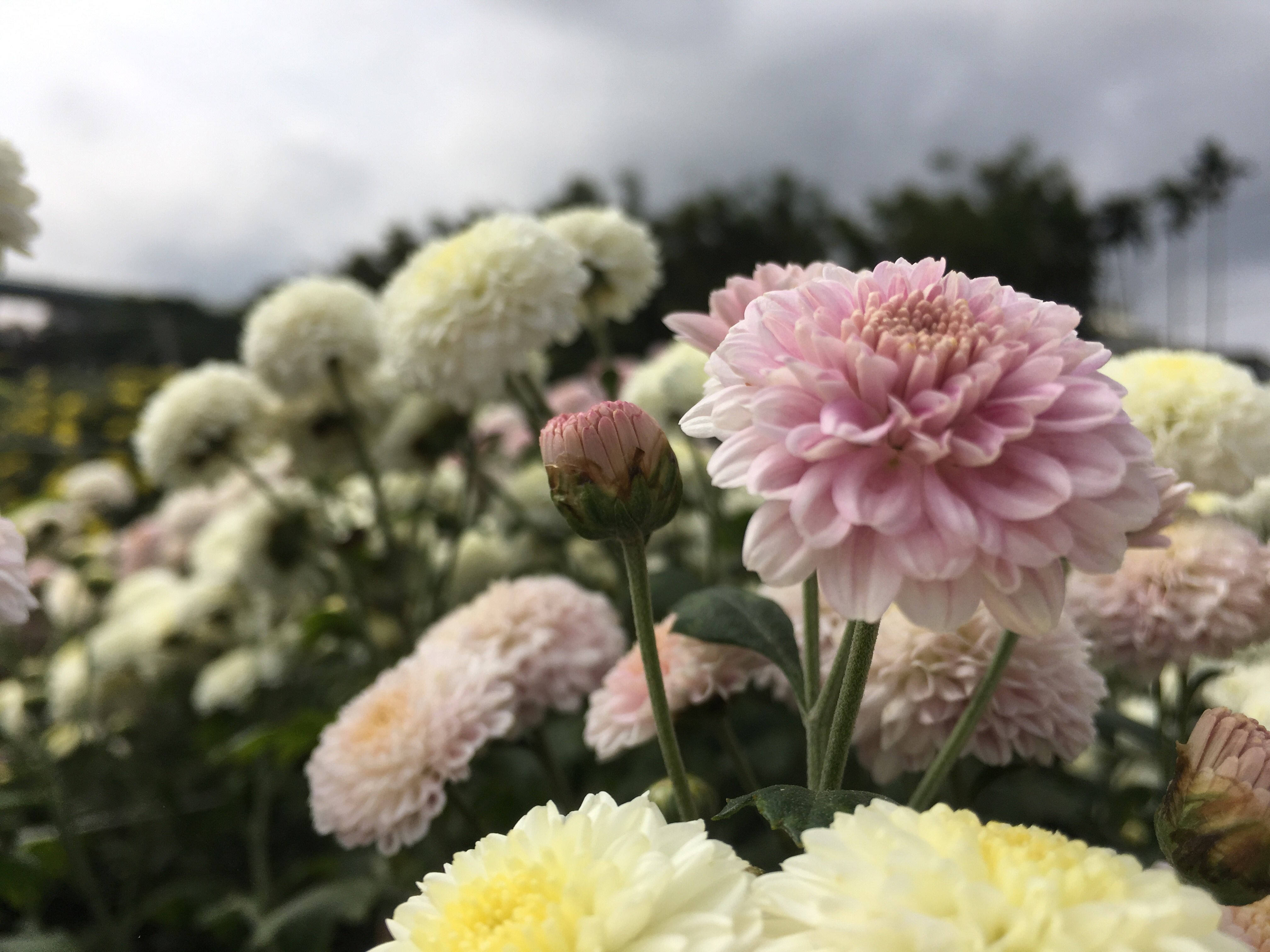
Today, we visited Miaoli to see the blooming chrysanthemums. Despite the less-than-ideal weather, the view was still beautiful. Many people had also come to see the flowers, making it a bit crowded and challenging to find parking space on the small roads. Around Tongluo, there are several places where you can enjoy the flowers and also find food stalls and vendors selling fresh and dried flowers. Don't miss the opportunity to try chrysanthemum tea, it's quite delightful. If you arrive early enough, you can witness the workers picking the flowers.

Every year, Tongluo Township organizes the Chrysanthemum Morifolium Festival, which starts on November 8th. This year, the chrysanthemum fields cover 60 hectares, making it the largest of its kind in Taiwan. Jiuhu Village, with its ample sunlight and heavy fog, is particularly suitable for growing chrysanthemums. The farming area initially covered 18 hectares in 1971 but has expanded over time. In 2012, they developed a pesticide-free cultivation method, which involves cutting off the buds that are most likely to have insects and drying them under the sun to prevent infestations. This reduced the use of pesticides by more than 90%.

Chrysanthemums are cold-resistant and can tolerate temperatures ranging from 10°C to 32°C. They can grow in sunny or slightly shaded areas and are resistant to dryness. The flowering period begins in November and lasts for three months, with blossoms in white, yellow, and occasionally purple. In some parts of Asia, chrysanthemums symbolize happiness and long life, while in Europe, they are associated with death and are used for funerals and graves. In Australia, they are popular flowers for Mother's Day.

Chrysanthemum morifolium is not only visually appealing but also has medicinal uses. It has been cultivated since the 15th century BC in China. The flowers can be used in various products such as bath essence, shampoo, hand lotion, and masks. Medicinally, they can treat dysentery, inflammation, lower blood pressure, and strengthen the body. Chrysanthemum tea is a popular beverage, and the leaves can be used in culinary preparations. Chemical analysis has shown that chrysanthemums contain volatile oil, amino acids, flavonoids, vitamins, and trace elements, which contribute to their health benefits.


chrysanthemum fields, miaoli, Tongluo, Taiwan

chrysanthemum fields, miaoli, Tongluo, Taiwan  

chrysanthemum fields, miaoli, Tongluo, Taiwan

chrysanthemum fields, miaoli, Tongluo, Taiwan

chrysanthemum fields, miaoli, Tongluo, Taiwan

chrysanthemum fields, miaoli, Tongluo, Taiwan

chrysanthemum fields, miaoli, Tongluo, Taiwan

chrysanthemum fields, miaoli, Tongluo, Taiwan

chrysanthemum fields, miaoli, Tongluo, Taiwan

chrysanthemum fields, miaoli, Tongluo, Taiwan

chrysanthemum fields, miaoli, Tongluo, Taiwan

chrysanthemum morifolium fields miaoli Tongluo Taiwan flowers in bloom

chrysanthemum morifolium fields miaoli Tongluo Taiwan flowers in bloom

Address:

366苗栗縣銅鑼鄉九湖村10鄰92-16號九湖農場

November 22, 2018

Keelung Travel: Fairy Cave and Buddha's Hand Cave

Travel Date: 2018/11/10

Today's weather isn't good, it has been rainy since the morning. I hope this doesn't ruin our trip. I have chosen six places to visit: Golden Waterfall, Remains of 13 Levels, Yin Yang Sea, Elephant Trunk Rock, Helping Island Park, and the Fairy Cave and Buddha's Hand Cave.
It's our second time visiting Golden Waterfall and Remains of 13 Levels. This time, we are not traveling alone; a nice guy from Slovakia has joined us. I don't often have the chance to meet other foreigners, so it's pretty nice. I hope this trip is really interesting for him.

It's time to visit the last place on our list - a temple in the cave. There are two caves near each other, and we are going to see both of them. These caves are among the many natural marine caves in Keelung.

Fairy Cave / Xiandongyan Zuisheng Temple (仙洞巖最勝寺)

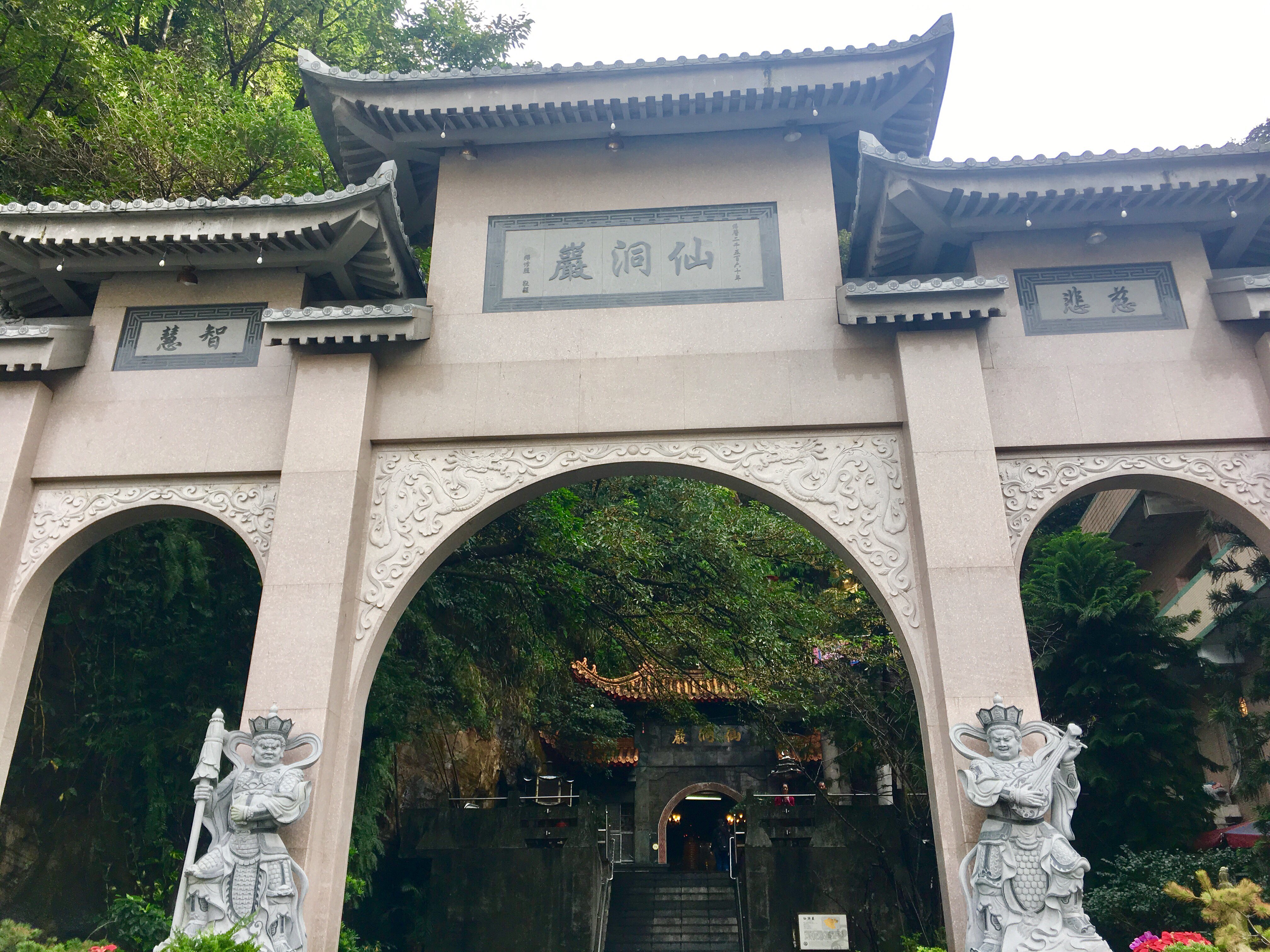
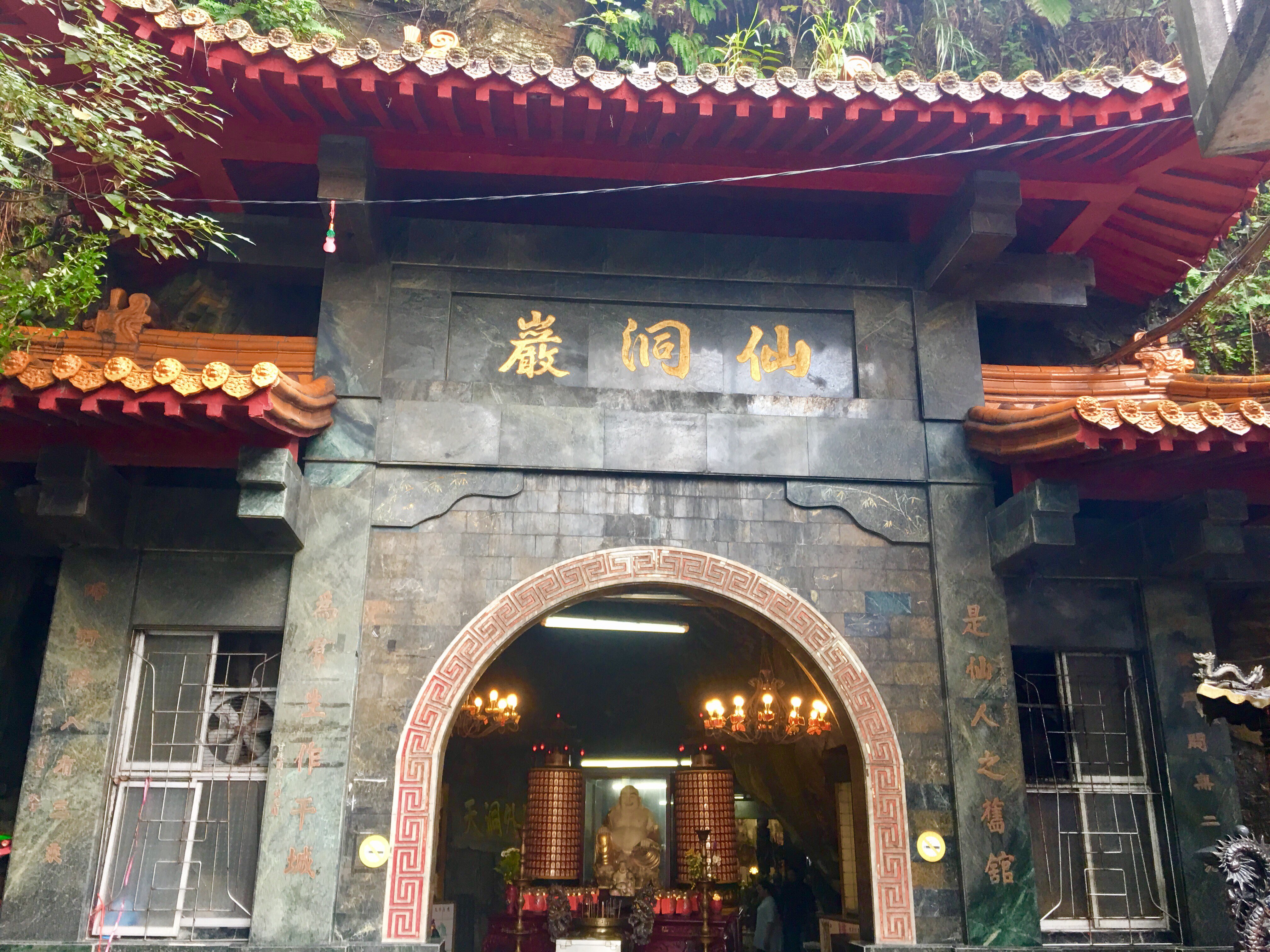
Finding this place isn't difficult. In front of the cave, you will see the gate of the temple and a Buddha sculpture a little further up. The cave is open for tourists every day from 8am to 5pm.
No one knows when the shrine inside the cave was built. It's said that a fairy used to live inside the cave, which is why it is named Fairy Cave. In 2006, the cave was announced as a Cultural Landscape.
The Fairy Cave was naturally formed by sea erosion and is the largest cave in Keelung, spanning over 80 meters in length. The cave is divided into two parts: the left one and the right one.

The right cave is quite big but not very deep. On the walls, you can see carvings of Buddhas and calligraphy from the Qing Dynasty. There are also a few Buddha sculptures where people come to pray.
The area around this cave used to be an important fortress during the Qing Dynasty. Inside the cave, you will also see Buddhist statues that were left after Japanese rule. There are many poems and other calligraphy left on the walls as well.
The left cave is a narrow tunnel but much deeper. If you decide to go there, you should be careful of people walking back. This part of the cave is quite small, and sometimes you may have to almost kneel down to finally arrive and see the Buddha sculpture, where people are praying.

Fairy Cave, Xiandongyan Zuisheng Temple, keelung, taiwan

Fairy Cave, Xiandongyan Zuisheng Temple, keelung, taiwan

Fairy Cave, Xiandongyan Zuisheng Temple, keelung, taiwan

Fairy Cave, Xiandongyan Zuisheng Temple, keelung, taiwan

Fairy Cave, Xiandongyan Zuisheng Temple, keelung, taiwan

Fairy Cave, Xiandongyan Zuisheng Temple, keelung, taiwan

Fairy Cave, Xiandongyan Zuisheng Temple, keelung, taiwan

Fairy Cave, Xiandongyan Zuisheng Temple, keelung, taiwan

Fairy Cave, Xiandongyan Zuisheng Temple, keelung, taiwan

Fairy Cave, Xiandongyan Zuisheng Temple, keelung, taiwan

Fairy Cave, Xiandongyan Zuisheng Temple, keelung, taiwan

Fairy Cave, Xiandongyan Zuisheng Temple, keelung, taiwan

Buddha's Hand Cave (佛手洞)

Close to the Fairy Cave, you can see another one called the Buddha's Hand Cave. There is not much to see inside this cave. It doesn't have sculptures, and no one prays here. So, what attracts people to this cave? It's a huge handprint on the stone ceiling, resembling the hand of Buddha.
Inside the cave, there are several chambers, so you should follow the signs on the walls to get to see the Buddha's Hand. The handprint was created due to weathering and resembles the hand of Buddha.

buddha's hand cave, keelung, taiwan

buddha's hand cave, keelung, taiwan

buddha's hand cave, keelung, taiwan

Keelung Shengan Temple (基隆聖安宮)

You can also climb higher up to the park and Shengan Temple. From here, you can see Keelung Harbor, a lighthouse, and an old fort on the mountains in the west side.

The founder of the temple, Shuangzong, was originally a railway employee in the Dajia area during the Japanese occupation period. Later, he gathered Dajia folks who came to work in Keelung and formed a pilgrimage group. They visited Beigang Chaotian Temple with Zhenlan Palace and established the tradition of returning to Zhenlan Palace for incense grabbing. In the same year, villagers from the Xiandong area invited the Heavenly Virgin Liu Ma to visit the Keelung Xiandong area and enshrined her in the Xiandong Rock.

The pilgrimage group continued to visit Zhenlan Palace in Dajia, and with the approval of the chairman Guo Jinkun, Liu Ma's spirit was separated to the west bank of Keelung Harbor. The statue was initially enshrined in Xiandongyan and later in rented houses, which eventually led to the establishment of the Sheng'an Palace. In 1967, the temple was officially built at its current location on Zhongshan 3rd Road.
In 1993, construction began on a new temple, which took nearly 20 years to complete. The temple features a town hall Mazu and two fairies carved from camphor wood, which were consecrated in 2012. The chairman Shuang Jinchun expressed his hope to rebuild the temple into a five-story museum if funds allow.
Sacrificial activities at Sheng'an Palace include annual pilgrimages to Zhenlan Palace on March 20 of the lunar calendar and the driving around the border ceremony. The pilgrimage is warmly welcomed by the directors, supervisors, and local residents of Zhenlan Palace.

shengan temple, keelung, taiwan

shengan temple, keelung, taiwan

Address:

20343基隆市中山區仁安街1號仙洞巖最勝寺