Showing posts with label Beipu (北埔). Show all posts

March 21, 2024

Exploring Nature's Beauty: A Day Trip to Fengxiang Waterfall and Beipu Cold Springs


Travel Date: 2024/02/12

During the Lunar New Year holidays, our family had initially planned to visit Taipei Zoo. However, as often happens, traffic intervened and rerouted our plans. Spontaneously, we opted to head towards the mountains instead, seeking the tranquility of nature.

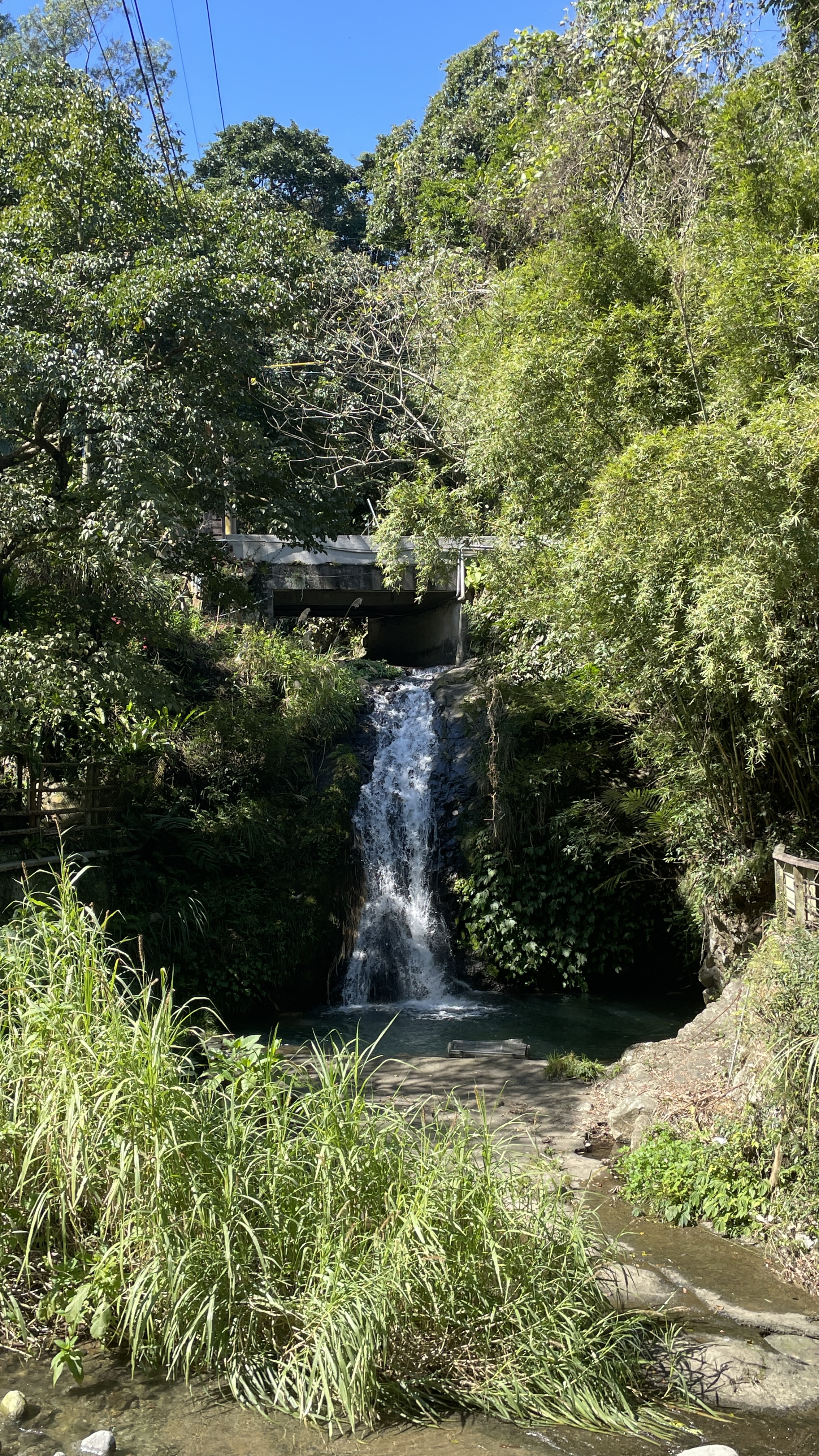
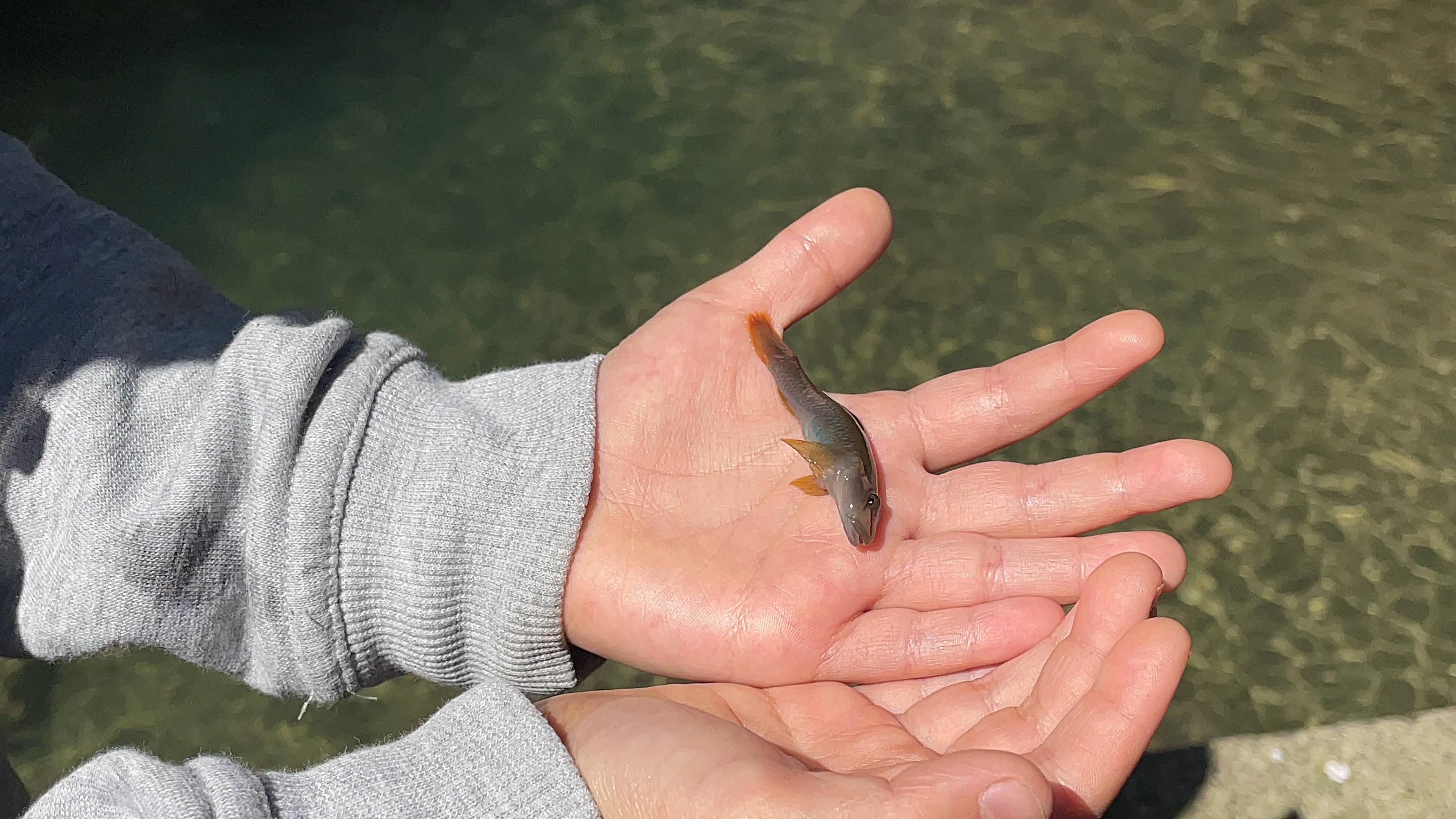
Exiting the highway near Hsinchu, we embarked on a familiar path towards Fengxiang Waterfall (豐鄉瀑布), a destination we had explored the previous summer. As we approached, the awe-inspiring sight of the cascading water greeted us once more. Surprisingly, we found ourselves among the few visitors, aside from a couple enjoying a serene fishing session. Engaging with the local ecosystem, we discovered fascinating insights into the fish and frogs that call this area home.

Originating from higher elevations in the mountains, the water is cool even in the summer. Unlike our previous visit, when the site bustled with activity, today we savored the solitude of our surroundings. It's no wonder families frequent this spot, considering its safety and natural playground for children. Reflecting on our past experience, I recalled capturing the essence of this place in a video during our previous visit, which you can also explore.

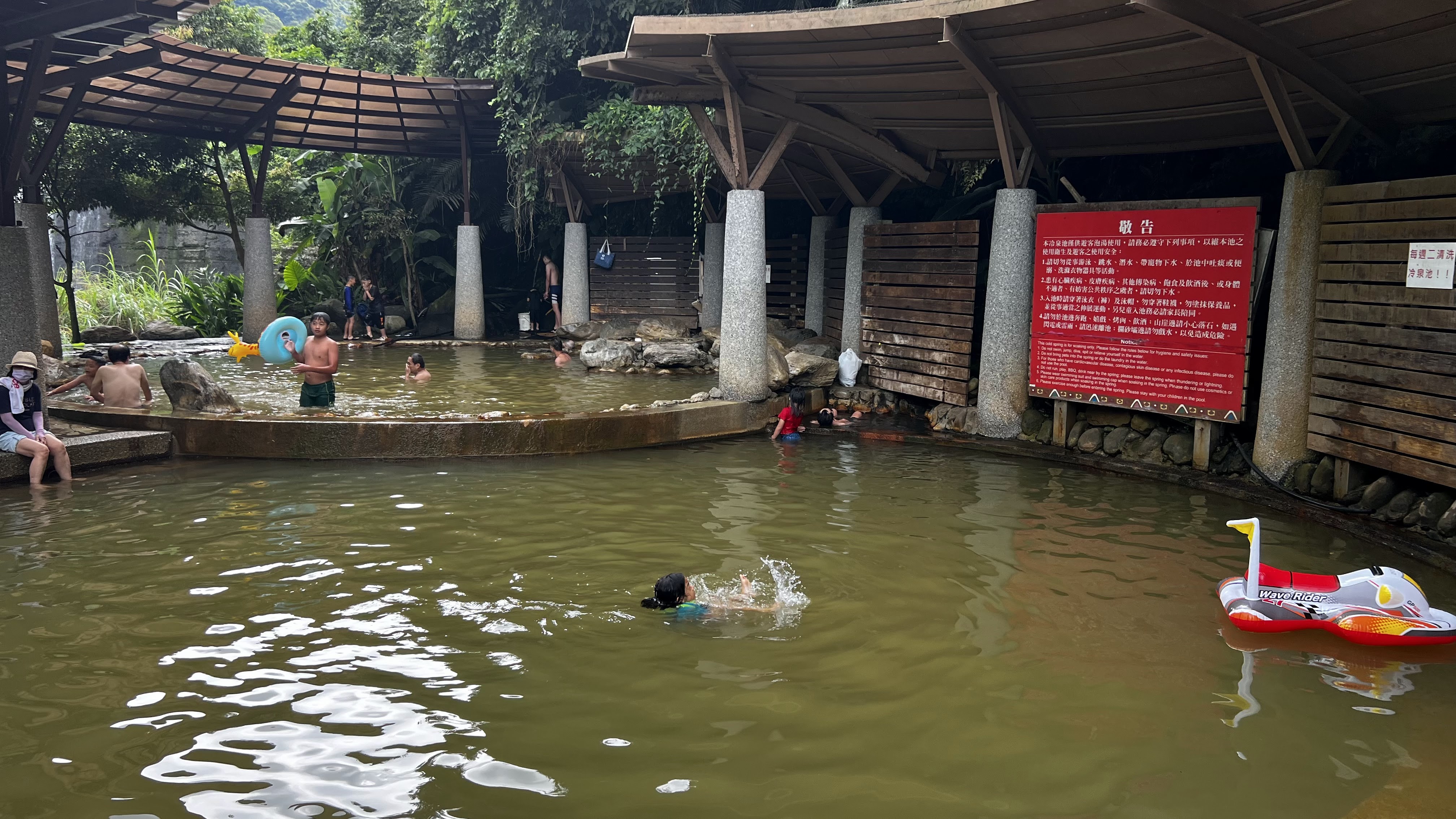
On our journey homeward, we made an impromptu stop at Beipu Cold Springs (北埔冷泉). Despite the chilly waters, a handful of adventurous souls braved the cold for a refreshing dip. Personally, I've never been fond of cold water, even during the warmer months. Yet, observing others revel in the river's embrace during summer made me question my resilience. Growing up in Poland, where cold waters were the norm, I never shied away. However, living in Taiwan has shifted my perspective, fostering a newfound appreciation for warmth.

With the off-season upon us, the usual bustle was absent, and the amenities typically available during summer were nowhere to be found. Nonetheless, basking in the sunlight, we relished the tranquility before bidding farewell to our serene sanctuary and journeying homeward.



Address:
1. Waterfall: 312新竹縣橫山鄉竹35鄉道旁號豐鄉瀑布
2. Cold Springs: 314新竹縣北埔鄉北埔冷泉

July 10, 2023

Hsinchu Travel: Visiting Beipu Old Street and Cold Springs


Travel Date: 2023/07/02

It was still good weather and very hot when we left home. We planned to visit Beipu Old Street, Cold Springs, and drive further into the mountains, but our trip was interrupted by afternoon rain. Since we didn't want to play in the water under the rain, we might consider going there in the future. There are plenty of food stalls on the streets, although some of them are small and pricey. All the popular shops were crowded, with many people waiting in line, so we decided to go to a less busy place. We should have checked Google reviews first; the place wasn't empty for no reason! The food wasn't tasty at all; it was just noodles with canned sauce on top, tasting like the famous instant noodles here.

Beipu Old Street (北埔老街)

Beipu Old Street is located in Hsinchu County, Taiwan. Famous tourist attractions in the area include Jinguangfu Mansion, historic sites such as Tianshuitang, Jiang'a Xinyang Building, Beipu Citian Temple, and Beipu Zhongshu Hall. The specialties of Beipu Old Street include persimmon cakes, dried persimmons, and taro sweet potato mooncakes. Beipu Township, along with the nearby Emei Township and Baoshan Township, was formerly known as "Daai," which was originally the domain of the Saisiyat people. The Han people did not reclaim this area until the early Daoguang period of the Qing Dynasty. Around 1835, a command center was established at the current site of the "Jin Guangfu Mansion" to manage the reclamation affairs. During this period, Jiang Xiuluan planted bamboo walls on the west, south, and north sides of Beipu, and built four city gates to form the scope of the "Old Settlement of Beipu."

After the Japanese ruled Taiwan in 1895, Beipu remained bustling. At that time, there was a tea testing ground here, and many factories emerged due to the popularity of the tea produced in Beipu. However, the tea industry in Beipu declined after the closure of the tea company owned by the tea king Jiang Axin in 1965. Additionally, the prosperity of Beipu was also supported by nearby coal mines, but after the depletion of the mines, Beipu's prosperity waned. The relocation of the Beipu Township Office and the widening of the Taiwan Third Line further contributed to the decline of this place. However, due to the Hakka-style snacks and the nostalgic appeal of the old street, Beipu has transformed into a tourist attraction.

Check out my YouTube video


Beipu Citian Temple (北埔慈天宫)

Beipu Citian Temple is a Guanyin Temple listed as a county-designated historic site. The exact founding date of the temple is subject to different opinions, but it is believed to have been established by Jiang Xiuluan after he settled in Beipu in 1835. The temple is closely associated with the reclamation activities of the Han people in the area. According to legend, the Guanyin Bodhisattva enshrined in this temple was brought by Jiang Xiuluan from mainland China, and a small house was built in Beipu to worship it. In the early stages of reclamation, people would pray for safety and success in the face of casualties during battles with the aborigines. In 1840, the temple was rebuilt into a wooden structure for worship.

The temple serves as the religious center of Beipu Township and is similar in size to Lianhua Temple in Zhubei. It was previously used as the Beipu Branch School of the Hsinchu Mandarin Institute, which was later converted into a classroom for the Beipu Public School. The Jiang Yifeng family donated the land where the school was located before relocating the school to restore the temple. In 1985, the temple was approved as a third-class historic site, along with Jin Guangfu Mansion and Jiang'a Xinyang Mansion. During the Lantern Festival, residents of Beipu gather in front of the temple, light bamboo torches, and participate in a parade to worship the mountain gods on Xiuluan Mountain. On the 19th day of the second month of the lunar calendar, a grand worship ceremony is held to celebrate Guanyin's birthday.


Tianshui Temple (天水堂)

The exact founding date of Tianshuitang is not recorded, but it is believed to have been established by Jiang Xiuluan after his arrival in Beipu in 1835. The temple has been repaired and maintained by the Jiang family for over 100 years. Descendants of the Jiang family still reside inside, and the temple is not open to the public for visiting. It remains a private house.

Ah Xin Mansion (阿新洋楼)

Jiang Axin Mansion, located in Beipu Township, is a "Baroque-like" residential-commercial mansion. Construction of the mansion began in 1946 and was completed in 1949. It was built by Jiang Ahxin, a well-known tea merchant, to receive guests from foreign tea merchants and to serve as his daily residence. The mansion witnessed the prosperous era of Taiwan's tea industry, known as the "tea gold" era. It was designated as a historic site in Hsinchu County in July 2006 and later bought back by Jiang Axin's descendants in 2012. The mansion is now managed and operated by the "Jiang Axin Education Foundation" and is open to the public.

Jiang Axin's Yongguang Company experienced two collapses of Taiwan's tea industry in 1950 and 1959, and declared bankruptcy in 1964. The whole family moved to Taipei. After regaining the property rights, the Taiwan Province Cooperative Bank used the mansion as a warehouse for storing sundries. Due to a lack of maintenance, the building suffered significant damage. In August 1995, the "Jinguangfu Cultural and Educational Foundation," primarily focused on the preservation of old houses, rented Jiang'a Xinyang Mansion from the Taiwan Provincial Cooperative Treasury and began restoration work, which was completed in December 1996. With the active efforts of the "Jin Guangfu Cultural and Educational Foundation," Jiang Axin Mansion was designated as a historic site in Hsinchu County. In 2012, the cooperative treasury commercial bank intended to sell the mansion, but Jiang Axin's descendants sought to reclaim the memories of their family's past life.

Beipu Cold Springs (北埔冷泉)

We visited Beipu Cold Springs for the first time. Unfortunately, when we arrived, it started to rain lightly, and the sky turned grey and dark. After a while, we decided to head back home. There is a car parking area available, as well as plenty of space along the road for parking. The Cold Springs were crowded with people playing in the water. It seemed safe for kids, as there were areas with both deeper and shallower water to play in the river. Facilities such as toilets and pools for kids to play in were also available. Beipu Cold Springs in Beipu Township, Hsinchu County, produce weakly alkaline carbonic acid water with temperatures ranging from 10 to 15 degrees Celsius. 


Address:

1. Beipu Old Street: 314新竹縣北埔鄉北埔街北埔老街
2. Beipu Cold Spring: 314新竹縣北埔鄉北埔冷泉

December 3, 2018

Hsinchu & Taoyuan Travel: Autumn in Taiwan - Bald Cypress

Travel Date: 2018/12/03

We set out to see some autumn trees and came across the bald cypress trees, which have started to attract visitors, even though their colors haven't changed much yet. We arrived in Beipu, a place well-known for its Hakka culture, and had previously visited Beipu Old Street.
In Taiwan, there aren't many trees that change colors in the winter season. Bald cypress, pines, and maple trees are popular during the autumn-winter season. As the weather gets colder, these trees will transition to yellow and even red hues.

Beipu Liutang Bald Cypres (北埔六塘石柿餅.落羽松)

The location is not far from Beipu Town and is easily accessible. People have created two ponds near the row of trees, one on each side. You can also take a look at a nearby farm. I noticed some recently planted maple trees, but they didn't look very vibrant yet. Beipu is also famous for its persimmon cultivation. On the other side of the road, you can spot farmers drying fruits, although the view may not be as impressive as the dried persimmons in Xinpu.

One of the maple trees has already started changing its leaves to a golden color. Unfortunately, the sky wasn't blue today. If you walk down to the pond, you will find around 10 more trees.

Beipu doesn't have as many trees as Daxi's Bald Pine Avenue in Taoyuan, which must be truly stunning when the trees change colors further. In Daxi, you can also explore numerous tea plantations and visit a tea factory. Daxi is one of the ten small tourist towns in Taiwan, known for its wooden furniture production, dried tofu, and the mausoleum of Chiang Kai-Shek and his son, Chiang Ching-Kuo.
Not far from this place, you can also find the Bald Cypress Forest, which is another popular attraction. Although we haven't been there yet, we may visit next January when the colder weather enhances the colorful scenery.
Bald cypress trees are unique because they are the only trees in their family that lose their leaves. The needle-like leaves turn yellow or copper-red during the autumn season. Bald cypress trees thrive in full sunlight and wet soil.


beipu, bald cypress, hsinchu, Taiwan

beipu, bald cypress, hsinchu, Taiwan

beipu, bald cypress, hsinchu, Taiwan

beipu, bald cypress, hsinchu, Taiwan

daxi, bald cypress, taoyuan, Taiwan

daxi, bald cypress, taoyuan, Taiwan

daxi, bald cypress, taoyuan, Taiwan

daxi, bald cypress, taoyuan, Taiwan

Address:

314新竹縣北埔鄉上大湖62號北埔六塘石柿餅.落羽松

September 26, 2018

Hsinchu Travel: Beipu Old Street ~ Hakka Style and Heritage

Travel Date: 2018/09/18

Bored at home, we decided to go somewhere. I had an idea of a place to visit, and my husband agreed. After a 30-minute drive, he asked, "Where exactly do you want to go in this town?" I checked Google Maps and realized we were in completely the wrong place! But never mind, since we had never been here before, we decided to take a walk around Beipu Old Street.

See never post about Beipu Old Street: HERE

Beipu Township is dominated by hills and mountains and is densely covered by rivers, with the longest river being Dapingxi. It was one of the earliest developed areas in Hsinchu. The development of Hsinchu began in the late Qing Dynasty by people from Fujian and Guangdong. Beipu was originally named Zhubei Yibao Nanxingzhuang (竹北一堡南興莊). The settlement buildings in Beipu focused on multi-layered protection, creating a settlement with good defensive function. Beipu's natural and pollution-free environment makes it a good place to watch fireflies from the end of April to the beginning of May. The viewing period is very short, lasting about two weeks.

Beipu, a small village in Hsinchu, is home to about 1,000 residents, most of whom are Hakka people. The unique culture and lifestyle of the Hakka people are the main attractions here. Many of the original buildings have been preserved or renovated. The Hakka people first moved to Beipu about 150 years ago, but they faced friction with the Saisiyat tribe, who inhabited the nearby mountains. As a result, the Beipu town suffered many attacks.
Beipu Township, along with the nearby Emei and Baoshan Townships, was formerly known as "Dayu." It was a community for the Pingpu ethnic group. In 1826, the first Han people entered the area. Under the leadership of Jiang Xiuzhen, people from Zhudong entered the area and built Jinguangfu Mansion.

During the Japanese occupation, Beipu was very prosperous. A tea factory was opened here due to the popularity of tea in Japan. However, in 1964, the tea factory collapsed, and the tea industry in Beipu declined. In addition to the tea industry, Beipu's prosperity was also influenced by coal mines. Unfortunately, this period of history was marked by the suffering of the people under Japanese oppression. In 1907, a group of Hakka people, supported by the Saisiyat tribe, killed 57 Japanese officers and their families. As a brutal retaliation, 100 people were killed by the Japanese.

After the coal mines were depleted, Beipu once again declined. At that time, this place had almost completely lost its commercial prosperity. However, due to the Hakka food and the old street, it has now become a tourist destination. The main tourist attraction is Beipu Old Street, which is crowded with many food stalls. Walking there, you can explore many narrow streets that resemble a maze for every tourist.

See also: Xinpu

beipu old street, hsinchu, taiwan

beipu old street, hsinchu, taiwan

beipu old street, hsinchu, taiwan

beipu old street, hsinchu, taiwan

beipu old street, hsinchu, taiwan

In Beipu, you can also visit Grade 1 historic sites such as Jinguangfu Residence, Chiang Family's Tianshui Hall, or Chiang-a-xin Residence. These buildings are over 160 years old and serve as witnesses to the development in the mountainous area during the Qing Dynasty. Jinguangfu Mansion was built in 1835. The word "Jin" means gold, "guang" refers to the Hakka people in Guangdong, and "fu" represents the people from Fujian. This building is built in the Hakka style, without many decorations.

Another notable site is Ci Tian Temple, which was initially a small shrine built in 1835 by farmers to pray for peace. In 1846, it was rebuilt into a wooden temple and completed in 1848, becoming the religious center of Beipu. In 1874, two side wings and a front building were added to the construction. The temple primarily worships Kwan-yin, along with other gods. Ci Tian Temple is a courtyard-style temple with two entries, two corridors, and two wing-rooms. The major wood used in the temple's construction comes from the camphor tree. The temple features a rare stone-carved dragon pillar, as well as colored drawings, clay sculptures, and Koji poetry.
Due to its historical and cultural value, the temple was designated as a third-grade relic in 1985.

Beipu is also known for its dried persimmons. A kind woman noticed me and invited me to try this fruit. It's quite yummy, and I think it's even better than the fresh ones.

Another place to visit is Chiang-A-Xin House. Chiang-A-Xin was born in 1901 and was the chairman of Zhudong Tea Company. After the end of Japanese rule, he founded Yung Kwang Co, which exported black tea. His house was built between 1946 and 1949 and served as accommodation for foreign guests and living quarters. The building is mainly decorated in a modern style. It was repaired and restored to its original appearance in 1995.

Lastly, you can explore Chiang's Family Ancestral Temple. This temple, completed in 1924, belonged to the largest family in Beipu at that time—the Chiang family. The temple's main hall is dedicated to worshiping the Chiang ancestors. It features colored drawings, sandstone carvings, and wood carvings. Due to its artistic value, this temple is recognized as one of the four largest ancestral temples in Taiwan.


beipu old street, hsinchu, taiwan

beipu old street, hsinchu, taiwan

beipu old street, hsinchu, taiwan

beipu old street, hsinchu, taiwan

beipu old street, hsinchu, taiwan


Address:

314新竹縣北埔鄉北埔街北埔老街