Showing posts with label Chinese New Year. Show all posts

February 3, 2022

Lunar New Year Food and Its Symbolism


Parents-in-law being vegetarians, many of these foods don't appear on our table during Chinese New Year. However, if you join a traditional non-vegetarian family for dinner, these are the must-have dishes for Chinese New Year.

The most common Chinese New Year foods

Fish - an Increase in Prosperity

Fish is one of the most typical Chinese New Year foods. In Chinese, "fish" (魚 ; Yú) sounds like surplus. People believe that having a surplus at the end of the year will lead to making more in the next year. Steamed fish is one of the most famous Chinese New Year recipes. There are several types of fish that can be eaten during this time:
Crucian carp: The first character of 'crucian carp' (鯽魚 ; jìyú) sounds like the Chinese word 吉 (jí ; good luck), so eating crucian carp is considered to bring good luck for the next year.
Chinese mud carp: The first part of the Chinese for mud carp (鯽魚 ; lǐyú) is pronounced like the word for gifts (禮 ; lǐ), symbolizing a wish for good fortune.
Catfish: The Chinese for "catfish" (鯰魚 ; niányú) sounds like 年餘 (nián yú), meaning 'year surplus', representing a wish for surplus in the year.

Dumplings - Wealth

With a history of more than 1,800 years, dumplings (餃子 ; Jiǎozi) are a classic lucky food for Lunar New Year and a traditional dish eaten on New Year's Eve. Chinese dumplings can be made to look like Chinese silver ingots, which are boat-shaped, oval, and turned up at the two ends. Legend has it that the more dumplings you eat during the New Year celebrations, the more money you can make in the New Year. Popular fillings include minced pork, diced shrimp, fish, ground chicken, beef, and vegetables. Dumplings can be cooked by boiling, steaming, frying, or baking. On New Year's Eve, it's a tradition to eat dumplings with cabbage and radish, implying that one's skin will become fair and one's mood will become gentle.

Spring Rolls - Wealth

Spring rolls (春捲 ; Chūnjuǎn) are named because they are traditionally eaten during the Spring Festival. They are a dim sum dish consisting of cylindrical-shaped rolls filled with vegetables, meat, or something sweet. The fillings are wrapped in thin dough wrappers and then fried until they turn golden-yellow.

Sweet Rice Balls (Tangyuan) - Family Togetherness

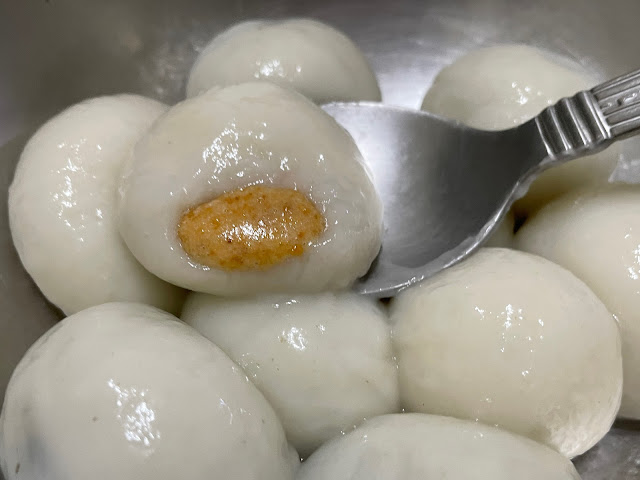
Sweet rice balls (湯圓 ; Tāngyuán) are the main food for the Lantern Festival. The pronunciation and round shape of tangyuan are associated with reunion and togetherness.
Longevity Noodles - Happiness and Longevity

Longevity noodles (長壽麵 ; Chángshòu Miàn) symbolize a wish for longevity. They are longer than normal noodles and remain uncut, either fried and served on a plate or boiled and served in a bowl with broth.

Good Fortune Fruit - Fullness and Wealth

Certain fruits are eaten during the Chinese New Year period, such as tangerines, oranges, and pomeloes. These fruits are selected because they are particularly round and "golden" in color, symbolizing fullness and wealth. Eating and displaying tangerines and oranges is believed to bring good luck and fortune due to their pronunciation and symbolism.

Prosperity cake (Fa Gao) - Fortune 

Prosperity cake (Fa Gao, 发粿) is a steamed, cupcake-like pastry commonly enjoyed during Chinese New Year. It's also known as Fa ban (发粄) among the Hakka community. The name "Fa Gao" translates to "prosperity cake" or "fortune cake" in English. When cooked, the cake has a characteristic split top.

The name "Fa Gao" carries symbolic meanings related to prosperity and expansion. The Chinese character "fa" represents both prosperity and expansion, while "gao" means cake. This conveys the idea of the cake expanding and bringing forth prosperity and fortune.
In Hakka tradition, the split top of the Fa Gao is called "xiao," which means smiling. It is seen as a sign of incoming fortune. The bigger the split top, the better it is believed to be for one's fortune.

The cake is typically made from rice flour, leavening agents (traditionally yeast, but chemical leavening can also be used), and sugar. It is steamed on high heat until the top splits into three or four segments.
Fa Gao cakes are often dyed in bright colors such as white and pink, but they can also be turned brown by adding palm sugar for a different flavor and appearance.

New Year Cake (Nian Gao) - Higher Income or Position

Nian gao (年糕), also known as Chinese New Year's cake, is a traditional food made from glutinous rice flour. It is considered good luck to eat Nian Gao during the Chinese New Year as the name is a homonym for "higher year" or "grow every year" (年高), symbolizing a more prosperous year ahead. The traditional Nian Gao is round in shape and often decorated with auspicious characters like the character for prosperity (福) on top.
According to folklore, Nian Gao was believed to be an offering to the Kitchen God to ensure he couldn't speak ill of the human family in front of the Jade Emperor. The sticky nature of the cake was thought to stick the Kitchen God's mouth together.

Regional variations of Nian Gao

Guangdong: Sweet Nian Gao in Guangdong is dipped in egg and pan-fried. It is typically sweetened with brown sugar, resulting in a dark yellow color. The batter is poured into a cake pan and steamed until it solidifies. Once heated, the Nian Gao becomes stretchy and extremely sticky, and it is served in thick slices.
Fujian/Hokkien: In the southern region of Fujian, Nian Gao is commonly used for New Year rituals and gifts. It is made with glutinous rice and taro, usually sliced and cooked before consumption. It can also be wrapped in egg or cornstarch and fried.
Jiangnan/Shanghainese: Shanghai-style Nian Gao can be savory or sweet. It is made by mixing rice with glutinous rice powder and can be steamed, fried, sliced, or used in soups. The Shanghai variety is usually packaged as a thick, soft rod to be sliced and stir-fried or added to soup. The sweet version uses white sugar, while the almost tasteless version is enjoyed for its chewy texture.
Northern: Northern Nian Gao can be steamed or fried and is mainly sweet in taste. Different regions in the north have their own variations. For example, Beijing versions may include jujube and either glutinous rice or yellow rice, while Shanxi uses yellow rice and red bean paste or jujube paste for filling.

Nian Gao-like cakes can also be found in other countries such as Burma, Cambodia, Japan, Vietnam, Korea, and Indonesia, each with their own unique preparations and flavors.


February 2, 2022

Yunlin Travel: Xiluo Old Street and Fuxing Temple


Unlike on Monday (Lunar New Year's Eve), today the traffic on the highway was regulated by traffic lights. We had to wait for several minutes before joining the highway. Other than that, the traffic wasn't too bad before noon. However, the situation was different in the evening. The police were checking the number of people in each car before allowing them to enter the highway. During holidays, at least three people per car are required to enter. Additionally, the traffic in Tainan was very congested from Xiaying all the way to the city, so we decided not to drive on the highway there.

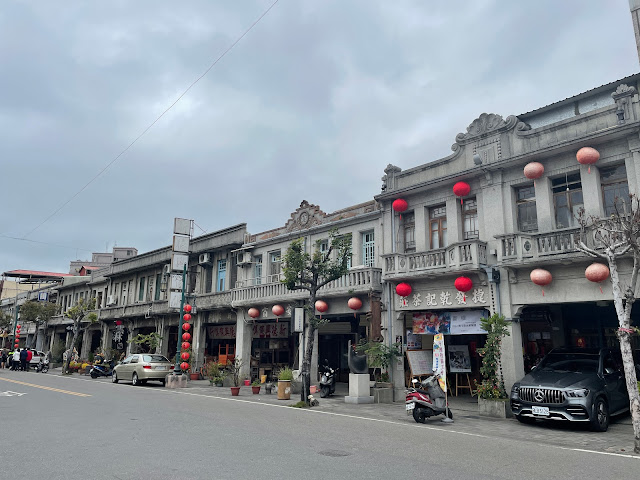
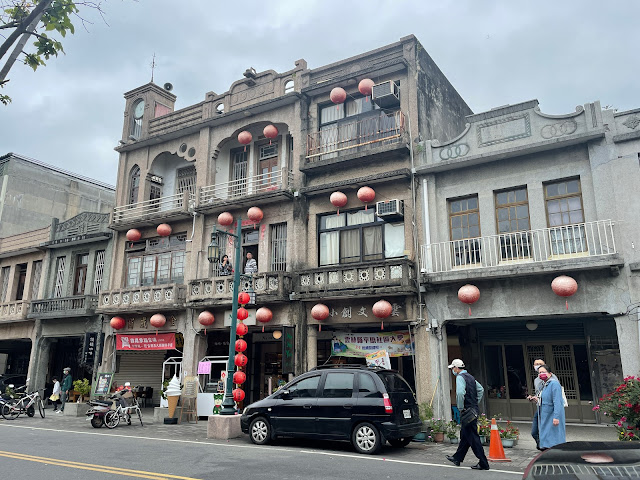
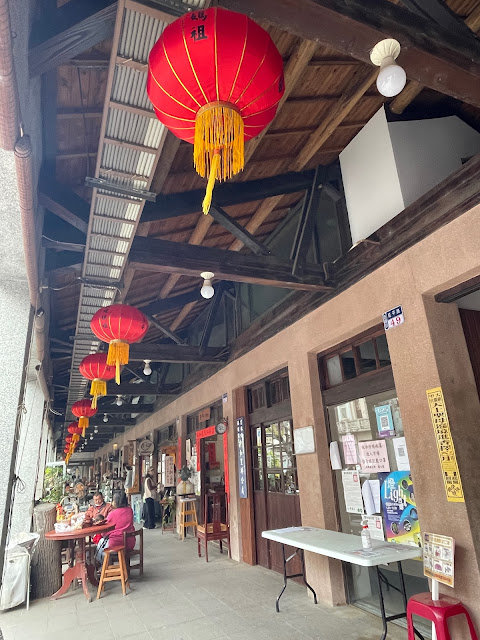
Today, we met more family members. We drove to Xiluo, where we had lunch with two aunts, uncles, and cousins. One of the aunts told us that there are plenty of decorations around Mazu Temple on Xiluo Old Street, so we left our son at their house for a while and went into town. It had been a long time since we visited the old street in Xiluo. It was quite crowded at that time. In the afternoon, we drove back to my parents-in-law's place, where another family came to visit.

Xiluo Old Street - Yanping Old Street (延平老街)

Xiluo Old Street, also known as Yanping Road, was an early Taiwanese market for the distribution and trading of rice, vegetables, and fruits. It was one of the important towns for water and land freight exchange. Xiluo Street was formed more than 170 years ago. Today, Yanping Road still constitutes part of the core area of Xiluo Market Street. The Yanping Historic District is covered by Datong Road, Zhongxing Road, Xiuwen Road, Zhongshan Road, and Renhe Street.

Most of the ancient Western-style buildings in Xiluo Old Street were constructed in the 1930s. During that time, the Japanese government encouraged the construction of single-room, narrow-faced, and wide-street houses, influencing Taiwanese craftsmen under Japanese rule. Yanping Road is considered a representative example of street house architecture from that period.

The buildings on Xiluo Yanping Old Street and Douliu Taiping Old Street belong to the same era. They are Baroque-style buildings introduced during the Japanese occupation. With a history of over 60 years, most of them are two- or three-story structures. The buildings mainly use mold printing, stone washing, and veneering bricks as construction materials. The most eye-catching feature of these buildings is the parapet wall with various shapes on the front.


Xiluo East Market (西螺東市場)

Xiluo East Market is a traditional market with a history that can be traced back to the Qing Dynasty. The market area was initially located near the ferry station in Zhuoshui River, and a market gradually formed in the back street area of the city. The market building was constructed in the 1950s using leftover wood from the construction of the Xiluo Bridge. The reinforced concrete section was completed in 1965. Due to the shift in the business district, the market gradually declined. The East Market faced demolition disputes but was eventually preserved through the "Revitalization of Stores in Xiluo Historic District and Reconstruction of Old Houses" initiated by the Luoyang Cultural and Educational Foundation. Restoration was completed in 2011, and the market was registered as a historic building in Yunlin County in 2010.

Xiluo Fuxing Palace (西螺福興宮)

Xiluo Fuxing Palace is dedicated to Mazu and has its origins in 1717. A monk named Minghai from Yongquan Temple in Fujian came to Taiwan to enshrine the statue of Mazu from Meizhou and built a temple in Xiluo. In 1770, the old temple was demolished, and a new temple was relocated to the main street with the agreement of Xiluo officials. In 1800, the temple underwent renovations and expanded to have two entrances. The renovation was completed in 1874.
Fuxing Palace serves as the first stop for Dajia Mazu to rest after entering Yunlin, and it is the only temple where Dajia Mazu will return to and depart from.


Address:

1. Yanping Old Street: 648雲林縣西螺鎮延平路130號延平老街
2. Fuxing Temple: 648雲林縣西螺鎮延平路180號西螺福興宮

February 1, 2022

Chinese New Year Decorations and Their Meaning


Taiwanese people engage in various decorations for Chinese New Year, with most of them taking place on New Year's Eve. However, some individuals begin decorating their houses around 10 days prior to the event. The majority of these decorations incorporate the color red and auspicious imagery. In 2022, being the Year of the Tiger, tiger decorations will also be prominent.

Popular decorations during Lunar New Year

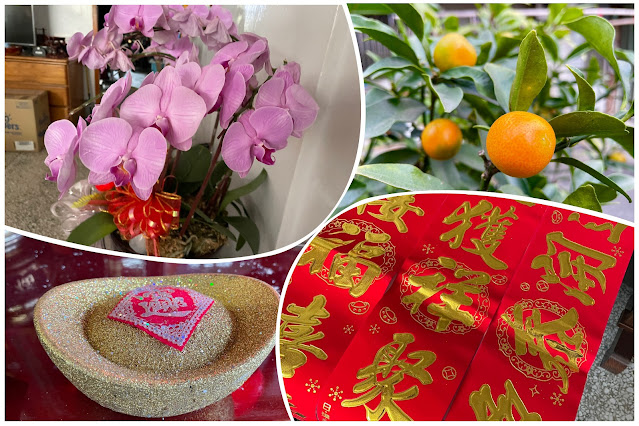
Red Lanterns - Used to Drive Off Bad Luck

Chinese lanterns, commonly seen during important festivals like the Spring Festival and the Mid-Autumn Festival, are hung on trees, office buildings, and house doors during Chinese New Year. Placing a red lantern in front of the door is believed to ward off bad luck.

Door Couplets - Conveying Best Wishes

New Year couplets (對聯; duìlián) are affixed to doors, expressing good wishes or meaningful statements. These couplets are usually written in black ink on red paper, with even numbers being preferred for their association with good luck and auspiciousness in Chinese culture. The couplets consist of two lines, often containing poetry related to the arrival of spring or expressing desires such as harmony and prosperity. Additionally, a four-character idiom of well wishes is commonly added to the crosspiece of the door frame.

Paper Cuttings - Symbolizing Luck and Happiness

Paper cutting is an art form in which designs are intricately cut out of paper, typically using red paper for the Spring Festival. The cutouts are then glued to a contrasting background or a transparent surface. Each animal or plant depicted in the paper cutting carries a different wish or symbol, such as peach for longevity, pomegranate for fertility, mandarin duck for love, pine tree for eternal youth, and peony for honor and wealth.

New Year Paintings - Representing New Year's Greetings

New Year paintings (年畫; niánhuà) are pasted on doors and walls during the New Year as decorative elements and symbols of New Year's greetings. These paintings often depict auspicious scenes, cultural motifs, or symbolic figures associated with good fortune and blessings.

Upside-Down Fu Characters - Inviting Luck

Inverted diamond-shaped calligraphy characters of the Chinese word 福 (fú), meaning good fortune, are affixed to or hung over doors. The characters are intentionally placed upside down, symbolizing the desire for good fortune to "pour out" onto the household.
Meanings of fruits and flowers during Chinese New Year

Kumquat Trees

Symbolizing Wealth and Good Luck. Kumquat trees, known as jinju shu (金桔樹; jīnjú shù) in Chinese, represent a wish for both wealth and good luck. The word jin (金) in Chinese means gold, while ju sounds similar to the word for good luck (吉; jí).

Pomelos

Signifying Good Luck and Family Unity. Pomelos, whether green or yellow, are considered significant fruits. They are used in cooking during the season leading up to the New Year and are believed to bring good luck to the household.

Apples

Representing Harmony and Peace. Apples, called píngguǒ (蘋果) in Chinese, sound similar to the word 平 (píng), meaning peace or tranquility. Green apples symbolize money, while red apples represent prosperity and abundance.

Watermelons

Symbolizing Wealth and Prosperity. Watermelons are associated with wealth and prosperity due to the abundance of seeds they contain.

Grapes 

Grapes are symbolic of wealth, fortune, fertility, and prosperity.

Decorating homes with blooming flowers symbolizes the anticipation of a prosperous new year. Traditional choices include branches of plum blossoms, orchids, peonies, and peach blossoms.

Pussy Willows  

Signifying Growth and Prosperity: Pussy willows are considered a symbol of growth and prosperity, representing the arrival of good fortune.

Lucky Bamboo 

Lucky bamboo is a Chinese symbol of strength and resilience. It is often shaped into various forms, decorated with red ribbons and lucky ornaments.

Orchids 

Symbolizing Fertility and Abundance: Orchids are delicate, elegant flowers associated with feminine beauty, innocence, affection, and charm. They are also considered symbolic of fertility and abundance.

Peach Blossoms 

Signifying Prosperity and Growth: Peach blossoms symbolize romance, prosperity, and growth. They are particularly favored by single young people seeking love.

Plum Blossoms 

Representing Endurance and Courage: Plum blossoms, with their vibrant pink color, symbolize endurance and courage. They are associated with perseverance and reliability, traits essential for achieving success in life. The plum, along with orchid (purity), bamboo (uprightness), and chrysanthemum (humility), is considered one of the "Four Nobles" in Chinese culture.

Peonies 

Symbolizing Richness and Peace: Peonies are beautiful flowers associated with richness, peace, and prosperity. They are often admired for their elegance and charm.

Narcissus or Water Fairy Flowers

Representing Good Fortune and Prosperity: Narcissus or Water Fairy Flowers are considered symbols of good fortune and prosperity. These delicate flowers have a unique appearance and are highly valued during the Lunar New Year.

Flamingo Lily

Signifying Prosperity: Red or pink flamingo lilies are commonly used decorations during Chinese New Year, symbolizing prosperity. With blossoms shaped like little hearts, these flowers are also popular for Valentine's Day.

January 31, 2022

Celebrating Lunar New Year in Taiwan


Happy Lunar New Year! Today is New Year's Eve (31.01.2022), so we returned to my parents-in-law's place to celebrate. My husband and I prepared decorations and put up couplets on the doors. While my parents-in-law prepared food for the prayers and celebrations later, we went out to find some food for ourselves. It was quite difficult to find an open restaurant. Afterward, we bought scratch cards, two for ourselves and two as a gift for my parents-in-law. We spent 400NT on ours, but unfortunately, none of them had a winning number this year. We weren't lucky.

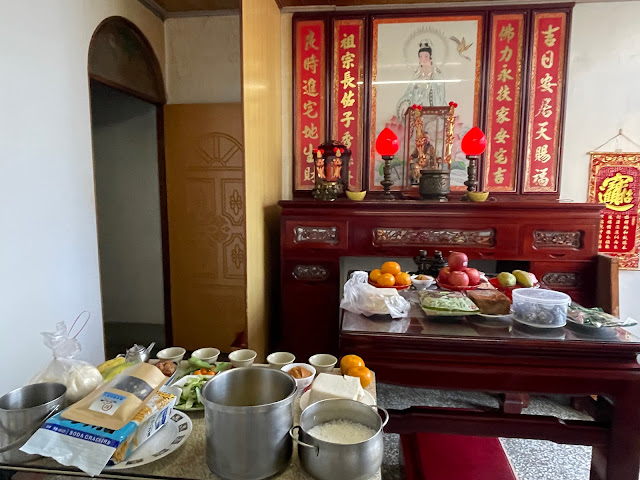
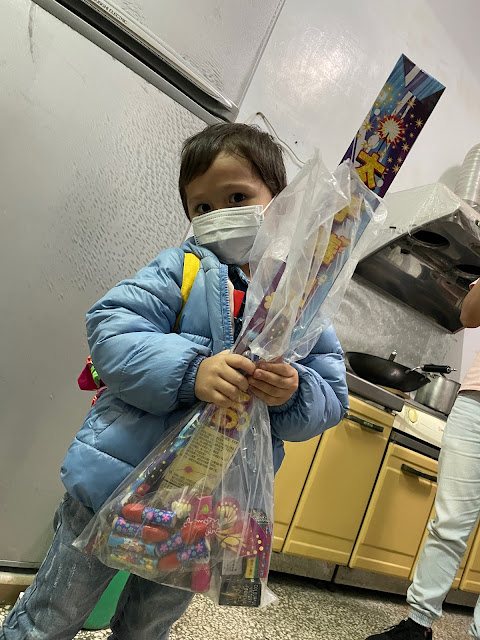
In the afternoon, my husband went out to meet his friends, but my sister-in-law kept me company. She taught me and Adrian how to make soap at home. We were all ready to move the food upstairs to the Buddha Room when my husband came back, just in time to join us. I feel like there was much more food this year compared to the past, and I have developed a liking for more types of food. We took some incense and prayed there, performing a small ceremony of pouring water in cups for our ancestors. As new members of the family, Adrian and I also participated in this ritual. After a few minutes, we were ready to move all the food downstairs and enjoy our dinner. My husband and I warmed everything before eating, and my sister-in-law took our son to buy fireworks.

Some of the food we had today included bok choy, beans, mushrooms, vegetarian meatballs, radish cake, and sweet treats like New Year Cake (nian gao). I will be writing another post in the future to introduce Lunar New Year food and its significance.

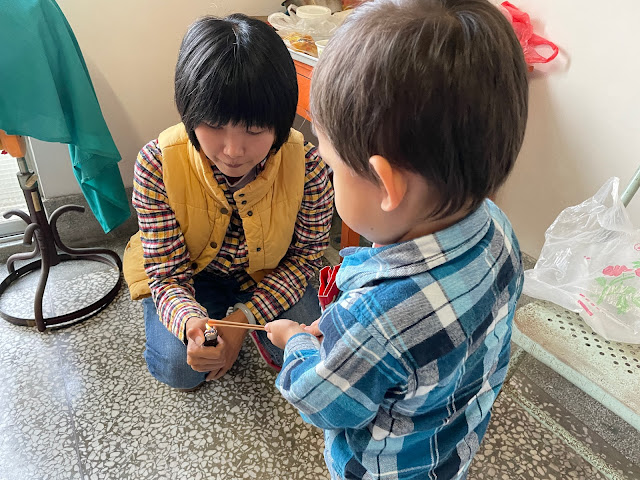
Later on, we went to an empty parking lot to play with fireworks. Actually, I haven't played with fireworks much in the past, so I thought it might be dangerous for a small child like Adrian. They lit incense sticks and Adrian was really happy about it. Actually, I had a nice day too. We felt closer and more like a family, even though we barely speak much due to my limited Chinese (and the fact that I don't like talking too much). We don't have a good relationship with my sister-in-law as she often causes trouble and creates conflicts that make everyone dislike her. However, today she was really nice.

Unlike Christmas, the date of Chinese New Year changes each year. It always falls between January 21 and February 20 and is determined by the lunar calendar. This year (2022), New Year is celebrated on February 1st.
Every Chinese New Year marks the beginning of a new animal's zodiac year. There are 12 Chinese zodiac animals in order: Rat, Ox, Tiger, Rabbit, Dragon, Snake, Horse, Goat, Monkey, Rooster, Dog, and Pig. 2022 is the Year of the Tiger.
The festival is celebrated for 16 days, culminating in the Lantern Festival. Traditionally, each of the 16 days from Chinese New Year's Eve to the Lantern Festival had its own special celebration activity.

How to wish Happy New Year in Chinese? 

新年好 (Xīnnián hǎo) - to wish a Good New Year
新年快乐 (Xīnnián kuàilè) - to wish a Happy New Year
恭喜发财 (Gōngxǐ fācái) - to wish prosperity and wealth
大吉大利 (Dàjí dàlì) - to wish luck and great fortune
年年有余 (Nián nián yǒuyú) - to wish abundance (endless fish)
步步高升 (Bùbù gāo shēng) - to wish someone will move up in the world
五福临门 (Wǔfú línmén) - to wish someone five blessings (longevity, luck, safety, morality, satisfaction)
合家团圆 (Hé jiā tuányuán) - to wish family reunion
虎虎生风 (Hǔ hǔ shēng fēng) - to wish the strength and vigor of a Tiger

Traditions and Activities during New Year

Chinese New Year's Eve  (Jan. 31, 2022)

Putting Up New Year Decorations

Houses are decorated with red lanterns, red spring couplets, paper cuttings, and New Year's paintings to keep evil away and pray for blessings, longevity, health, and peace.


Offering Sacrifices to Ancestors

Offering sacrifices to ancestors is an important practice during Chinese New Year as a way to show respect and piety. It is believed that ancestral spirits protect their descendants and bring them prosperity.

On Chinese New Year's Eve, many people worship their ancestors before the reunion dinner, symbolically allowing their ancestors to "eat" first. Offerings such as meat, wine, joss sticks, and joss paper are placed in front of the ancestral shrine. However, if your parents-in-law are vegetarian, they may offer fruits or cakes as common alternatives, such as nian gao or fa gao. These offerings are a way to honor and remember the ancestors and seek their blessings for the coming year.


Enjoying a Reunion Dinner

The Lunar New Year's Eve reunion dinner is a significant and cherished tradition where all family members come together to celebrate. It's considered a "must-do" dinner to welcome the new year. During this special meal, dishes with symbolic meanings are often prepared to bring good luck and prosperity for the coming year.
Some of the traditional dishes commonly included in the reunion dinner are fish, dumplings, Nian Gao (sticky rice cake), and spring rolls. Fish symbolizes abundance and prosperity, dumplings represent wealth and good fortune, Nian Gao signifies growth and advancement, and spring rolls symbolize wealth and a fresh start. These dishes are believed to bring luck and blessings to the family.
Although in my in-laws' house, the food is more focused on vegetarian options such as rice, radish cake, and leafy vegetables. I have never experienced a traditional Lunar New Year dinner that includes non-vegetarian dishes.


Watching New Year Gala

Watching the New Year Gala has become a customary tradition for many families. The Gala typically begins at 8 pm and continues until midnight when the Chinese New Year arrives. When I was living with my in-laws, they would always watch it, but I personally found it a bit outdated.

Giving Red Envelopes (Lucky Money) to Kids

Another tradition during Lunar New Year is giving red envelopes, also known as lucky money, to kids. Parents usually give these envelopes to their children after the reunion dinner, expressing their wishes for their children's health, growth, and success in the upcoming year. The money inside the red envelopes is believed to bring good luck, as the color red is considered auspicious in Taiwan.


Staying Up Late

Staying up late on Lunar New Year's Eve is a custom known as "shousui" (守歲), which means to keep watch over the year. In the past, people used to stay up all night, but nowadays most people stay up until midnight when the firecrackers and fireworks have subsided.

Buying lottery or cratch cards 

Another popular activity during Lunar New Year is buying lottery tickets or scratch cards. Lottery and scratch cards are highly sought after during this time, and lottery shops are often crowded as people hope for a chance to win. We also decided to try our luck and purchased some scratch cards. Fortunately, our winnings covered the cost of the scratch cards, bringing some extra excitement to the festivities.


Chinese New Year's Day (Feb. 1, 2022)

Setting Off Firecrackers and Fireworks

It's believed that the louder the firecrackers, the better and luckier it will be for business and farming in the coming year. This tradition originated from the legend of the monster called Nian, which would emerge on New Year's Eve to devour villagers and destroy their homes. The discovery that burning dry bamboo created explosive sounds scared away the monster, leading to the use of firecrackers during Chinese New Year.

Putting on New Clothes and Extending New Year Greetings

On the first day of Lunar New Year, people dress in new clothes and greet each other with phrases like "gongxi" (恭喜), which means greetings or best wishes.

Watching Lion and Dragon Dances

Lion and dragon dances are popular performances on Lunar New Year's Day. These vibrant and lively dances symbolize good luck, fortune, and warding off evil spirits.

Public Celebrations at Parks and Temple Fairs

Public celebrations take place in parks and temple fairs during Chinese New Year. These events often feature cultural performances, traditional games, food stalls, and other festive activities.


Chinese New Year: Day 2 (Feb. 2, 2022)

Traditionally, married daughters visit their parents' homes on the second day of Chinese New Year. They bring gifts and red envelopes (lucky money) to their families and relatives. On this day, people also offer sacrifices to the God of Wealth, hoping for a more prosperous year ahead.

Lunar New Year: Days 3–7 (Feb. 3–7, 2022)

From the third to the seventh day of the Lunar New Year, people visit relatives and friends to extend greetings and exchange gifts.
Chinese tradition discourages cleaning homes during the first two days of the New Year, as sweeping during this time is believed to sweep away the accumulated good luck from firecrackers, red paper, wrappers, and other signs of celebration. The first house-sweep usually takes place after these initial days.

New Year: Day 8 (Feb. 8, 2022)

On the eighth day, people typically return to work. The number eight is considered highly auspicious in Taiwan, so many businesses choose to reopen on this day to attract good luck.

New Year: Day 15 (Feb. 15, 2022) - Lantern Festival

The fifteenth day of the New Year is known as the Lantern Festival (元宵節). It marks the traditional end of the Spring Festival celebrations. During this festival, people release floating lanterns onto the sea or rivers or send glowing lanterns into the sky, creating a beautiful spectacle of lights.