


2022/07/19-20
We attended the Hot Air Balloon Festival in Taitung after convincing my husband to go. We stayed in Taitung for only two days, primarily for the festival, but we also had the opportunity to visit other places. We attended the festival twice, once at night and once during sunrise. Unfortunately, the wind was too strong at night, resulting in fewer balloons being launched.
Additionally, we visited the Beinan Site and Longtian Village, which have many remnants from the Japanese era. We also made a stop in Hualien, specifically at a Japanese-era shrine. Lately, I've developed an obsession with Japanese buildings and shrines, even though I never had a desire to visit Japan. Perhaps I've become a bit bored with Taiwan and its architecture.
On our drive back along the coast road, we visited Nanrenshi, Sanxiantai, and even had the chance to see wild monkeys and the Amis Folk Center.
During our trip, my husband had a job interview with another company. He stayed in the car while I explored Beinan. Unfortunately, his interview was rescheduled and slightly disrupted our travel plans, as it was supposed to take place before we arrived in Taitung. Nonetheless, he managed to complete it. However, the signal in our accommodation wasn't strong enough for him to stay there, so he had to go to the nearby park.
We also had to shorten our trip because he had a second round of interviews. Wish him good luck anyway!
~ ~ ~ ~
Longtian Village is situated on the high river step of Luye Stream, which was an undeveloped area during the Qing Dynasty. In 1915, Taitung Sugar Co., Ltd. established a Japanese immigrant village in this location, covering what is now Longtian Village and Luye Village. The immigrants mainly hailed from Niigata Prefecture, Japan, and were primarily engaged in agriculture.
During the Japanese occupation period, the Taiwan Governor's Office provided generous subsidies to incentivize mainland (Japanese native) peasants to immigrate to Taiwan. Taitung Sugar Co., Ltd. also invested heavily in constructing houses for the immigrants, providing three years of rent-free accommodation and a ten-year interest-free payment plan for purchasing the houses. Additionally, amenities such as medical centers, elementary schools, nurseries, shrines, and youth clubs were built. The farmland and village roads were neatly planned, and each household was promised 3.5A (about 3.395 hectares) of land after reclamation.
Luye Village Office (鹿野庄役場)
The Luye Village Office, also known as Luye District Yard, is one of the few remaining Japanese-style buildings in Luye Township, Taitung. After the occupants vacated or passed away in 2005, the Luye Township Office reported it as a historic building to the Taitung County Government. It was officially recognized as a historic building in 2012. In 1905, during the early days of Japanese occupation, the "Luliao District" was established in the present-day area of Luye Township. The district chief was initially served by the Beinan district chief or the Lilong district chief. In 1920, the district was renamed "Luye District." The Taitung Office appointed Saito Yugoro as the district chief on April 12 of the following year, and the district office was set up in Luye District. Initially, the office of Luye District was located in the 68th household of Luye Village, but in 1921, a formal office building was constructed in the 85th household of Luye Village (next to the Baojia Guild Hall). In 1937, the Taitung Office restructured the local system, transforming Luye District into Luye Village. In 1939, after the Luye Public School moved near the station, the Village Office was relocated to the former school site, and the original buildings were repurposed as government offices. After World War II, the building was taken over by the Luye Township Office as a dormitory but remains under the ownership of Taiwan Sugar Corporation.


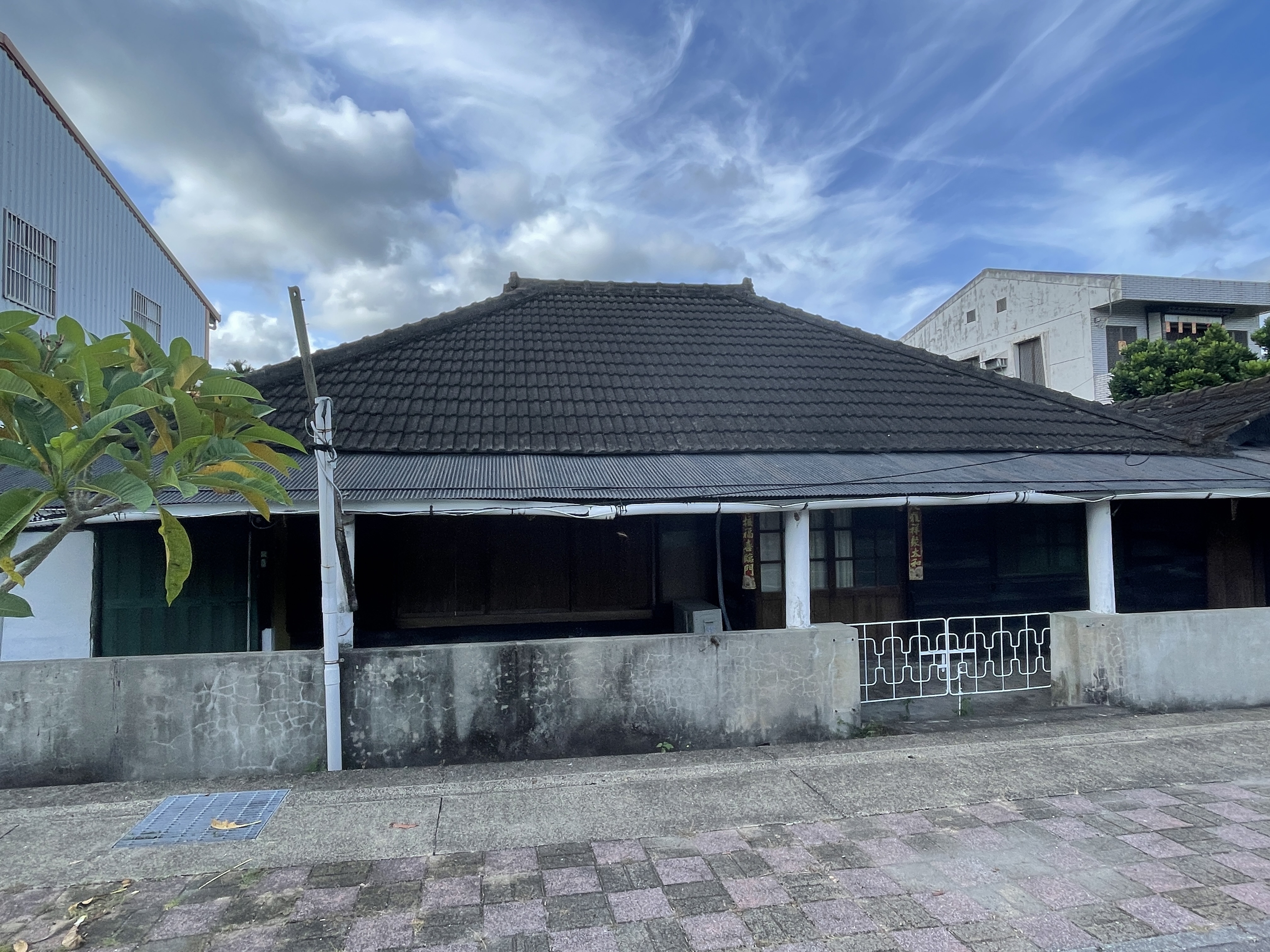
Japanese style residence (龍田村邱宅)
In 1916, Otaki Tokichi, an immigrant from Niigata Prefecture, Japan, moved to Kano Village and built a traditional Japanese house. After Taiwan's recovery, Otaki Tokichi repatriated to Japan and sold his house to Qiu Yunhai (1917-1995), who served as the head of Luye Township, the director-general of the Luye Area Farmers Association, and the Taitung County Councilor. Qiu's House, located on Siposhui, is a Japanese-style wooden house. The roof was originally thatched but was later changed to black tiles. Qiu's House is the most well-preserved Japanese-style building in Longtian Village and the only remaining Japanese immigrant village house from the Japanese occupation period.
Longtian Elementary School Japanese-style Principal's Dormitory and Nursery (鹿野鄉龍田國小日式校長宿舍及托兒所)
The Longtian Elementary School Principal's Dormitory and Nursery are situated on the right side of the campus, occupying a vast area. The grounds feature a well-designed Japanese garden with numerous flowers and trees. The pine trees, camphor trees, and maple trees that were planted many years ago have been preserved as precious old trees. The predecessor of Longtian Elementary School was the Luye Ordinary Elementary School, established in 1917 exclusively for Japanese children. The school building was constructed in 1921, the student dormitory in 1930, and the principal's dormitory in 1936. In 1941, Luye Elementary School was renamed Luye National School, and Luye Public School, where local children studied, was established in 1923 and relocated to Luye Railway Station in 1938. In January 1928, the Taitung Office Branch of the Patriotic Women's Association established Luye Nursery in Luye Immigrant Village, becoming Taiwan's first nursery school during the Japanese occupation period. The principal of Luye National School also served as the director of the nursery school. The nursery building, completed in 1934, is also a wooden structure with a Kirizu roof. After the recovery of Taiwan, the National Government took over Luye National School and renamed it Taitung County Luye National School. Luye National School at Luye Elementary School closed, and the school site and building were handed over to the Luye Township Office. In 1947, the Luye Township Office and Taitung County Luye National School exchanged land, and Taitung County Luye National School relocated to the former site of Luye Elementary School. In 1961, administrative boundaries were adjusted, and Luye Village was divided into Luye and Longtian villages.


Luye Shrine (鹿野神社)
Luye Shrine is the shrine for Longtian Village. It was funded by Taitung Sugar Co., Ltd. and constructed jointly by Japanese immigrants from Luye Village. The shrine was built on July 10, 1923. Initially, it was located in the northern part of the village, near the foothills near Mabei, at the end of Beilongliu Road when heading north. On November 13, 1931, it was moved to its current location at Kunci Hall. Luye Shrine is a Wuge shrine, which belongs to Japan's national Shinto system. It is dedicated to the three gods of development (Daguo Hunming, Shaoyan Mingming, Daji Guiming) and the Prince of North Baichuan Palace. The shrine's architecture is simple, featuring the main hall, torii gate, and Temizuya. The main annual festivals during the Japanese occupation period included the New Year Festival (June 8) and Taiwan Shrine Township Day (October 28). Staff, teachers, and students from various institutions and schools would come to the shrine to participate in these festivals. It is the most important shrine in Luye District. Villagers often visit the shrine freely, and weddings are frequently held there. When villagers were called to join the army, grand farewell ceremonies were conducted at the shrine. After the war, the shrine was demolished, leaving only its pedestal. In 2014, in an effort to restore the historical features of Longtian Village, Luye Shrine was rebuilt using Japanese cypress and technical guidance from Japanese craftsmen, with the aim of recreating the historical atmosphere of the Japanese immigrant village in Longtian.


