May 20, 2019

AMWF couple: We moved to Tainan

goats, tainan, taiwan

goats, tainan, taiwan

We've recently moved to Tainan, and it feels like starting all over again with new people and new places. It seems like we change our location every year, from Yunlin to Hsinchu, and now to Tainan.

Not much has happened in the past year. We live alone and don't visit family-in-law very often, especially after one incident. It was our first anniversary in June 2018, and we wanted to spend two days alone. My sister-in-law initially promised to take care of our son during that time. However, just a few days before, she changed her mind because her mother told her it could be dangerous. I didn't feel very good about it, especially when my family is far away, but they would always offer to help if we were back home. Since then, we haven't talked much. There have been many sad incidents involving them in the past, and I can't understand their behavior well. My husband doesn't understand why I'm upset about those things, though.

Finding work opportunities in Taiwan isn't easy, except perhaps for English teachers. English is not my native language, and I don't feel comfortable teaching either. I tried it once in the past because my husband was pushing me a lot, but I didn't enjoy it. He still occasionally mentions that it's an easy job with good pay, but I always refuse. I don't feel happy relying solely on him for income. I tried to make some money by selling my cakes. His coworkers in Hsinchu loved the Polish taste of my cheesecakes, but other people would often request little to no sugar at all. I don't like making such adjustments because it changes the nature of the cake.

I don't go back to Poland very often, not even once a year. We went there for Christmas time from December 21, 2018, to January 4, 2019, but it was only a two-week visit. My husband doesn't get many consecutive days off from work. It's fortunate that he works for a Dutch company because Taiwanese companies rarely grant long vacation periods, usually not more than three days. Overtime work is very common here, and it seems almost impossible for people to leave work on time.

I'm used to being alone with our baby. It's not as difficult as people may think. I've noticed that in Taiwan, many women hire nannies even if they are not working. They don't want to take care of the baby themselves and consider it to be hard work. I was raised differently, where my grandmother, mother, and aunts all stayed home with their kids. They often didn't work until the children started school. Life here is different, as women typically leave their babies and go to work.
Some married couples also live separately. The woman stays with her parents so they can help with the kids, while the husband lives somewhere else due to his work. Sometimes, even if the woman doesn't live with her parents, she still lives separately from her husband. It's a completely strange situation for me, but I've heard about some couples doing that.

Finally, I made some friends at the beginning of this year. One of them is a Polish girl who is married to a Taiwanese man and has had similar experiences in her past life. I have also met other girls from Bulgaria, Japan, and Algeria. Unfortunately, this all happened in the last few months in Hsinchu. In the past two months, I barely saw my husband as he either worked in a different city or went abroad for a short time. I feel quite lonely, and it seems like our marriage isn't as it used to be. However, a few days ago, we moved to Tainan, and luckily there is another Polish girl living not far from my place. We have already chatted and met today!

golden shower trees, tainan, taiwan

golden shower trees, tainan, taiwan

golden shower trees, tainan, taiwan

May 14, 2019

Exploring the Baba Tunnel - An Old Coal Mine Experience in Maioli

The Baba Tunnel Leisure Mine (巴巴坑道休閒礦場) 

The Baba Tunnel Leisure Mine (巴巴坑道休閒礦場) is located in Nanzhuang, Miaoli. It is a leisure-type mine that preserves the early years of Nanzhuang mining culture. Nanzhuang's mining culture flourished in the 1940s to 1950s but has since declined. Mr. Chen Guiwen opened the Baba Tunnel as a tribute to his father, who worked in the mine. He invested a considerable amount of money and more than ten years to realize this dream with his family.

Today, visitors can find a restaurant, coffee shop, DIY projects for kids, and can walk inside the mining tunnel. The ticket fee is 150 NTD, but you can exchange 30 NTD for a DIY project or 100 NTD for food. The prices in the restaurant are usually higher than these amounts, except for mochi, beans, and ice creams. The site showcases various tools used in the mining process, displays old pictures in a gallery, and offers an immersive experience of the mining environment. Children can enjoy a train ride and participate in a treasure hunt in the coal.

Coal is one of the earliest fossil fuels used by humans. The Chinese began using coal two thousand years ago, while the British started using it in the 12th century. Coal is a solid fuel that is difficult and dangerous to mine, and its transportation and storage are inconvenient. Initially, coal played a crucial role in the emergence of industrial society. In the 19th century, coal provided power to the industry on a large scale. However, in the early 20th century, oil replaced coal as the primary energy source.

During Taiwan's early stage of economic development, domestically produced coal served as the main energy source, powering the country's industrial development. According to data released by the Energy Commission of the Ministry of Economic Affairs in 1984, Taiwan's coal production reached 5.08 million metric tons. However, due to high mining costs, coal production has steadily declined over the years.

Coal fields in Taiwan are predominantly located in the central part of northern Taiwan, spanning an area of approximately 2,000 square kilometers. This region includes Keelung, Taipei, Taoyuan, Hsinchu, and Miaoli. The Nanzhuang coalfield consists of more than 20 mining sites, with the Nanzhuang Coal Mine being the largest. The coalfield features hilly terrain with altitudes ranging from 500 meters to 2,000 meters. It is divided into a northern area covering 130 kilometers and a southern area spanning 32 square kilometers.


baba tunnel. ,coal mine miaoli, taiwan

baba tunnel. ,coal mine miaoli, taiwan

baba tunnel. ,coal mine miaoli, taiwan

baba tunnel. ,coal mine miaoli, taiwan

baba tunnel. ,coal mine miaoli, taiwan

baba tunnel. ,coal mine miaoli, taiwan

baba tunnel. ,coal mine miaoli, taiwan

baba tunnel. ,coal mine miaoli, taiwan

baba tunnel. ,coal mine miaoli, taiwan

baba tunnel. ,coal mine miaoli, taiwan


Additionally, you can see a few blooming tung trees. Tung trees can grow up to 20 meters tall and produce hard, pear-shaped fruits containing oily seeds. All parts of the tung tree are poisonous, and contact with the leaves can cause a rash similar to poison ivy. The seeds of these trees are used to produce tung oil, traditionally used in lamps. Tung oil is also employed as an ingredient in paint, varnish, and caulk. Furthermore, the oil is utilized to protect and waterproof wooden furniture.

tung trees, miaoli, taiwan

tung trees, miaoli, taiwan

tung trees, miaoli, taiwan

Adddress:

352苗栗縣三灣鄉15-1樓巴巴坑道休閒礦場

May 9, 2019

Hsinchu Travel: A Journey Through Tea Heritage ~ Guanxi Tea Factory and Guanxi Old Street


Lately, we visited a tea factory in Emei, and this time we are traveling to Guanxi to visit the Jintai tea factory. In the shop, you can see many different kinds of tea. However, the tea is not currently made there, but you can still see the old factory with plenty of machines. You can also observe people packing tea leaves and find some Hakka fruit tea. Inside the factory, there is a movie that can be watched (although it wasn't playing when we visited) and some old pictures. Unfortunately, the information provided there is only in Chinese, unlike the Fuxing Tea Factory in Emei. Not far from this location, there is also the Museum of Tea established.

Jintai Tea Factory (錦泰茶業股份有限公司) 

Jintai Tea Factory is a long-established tea factory in Guanxi, known for producing Oriental Beauty Tea, Lei Cha, and fruit tea, which are three of the most famous Hakka teas. Guanxi is a town in Hsinchu County. In 1793, during the Qing Dynasty, immigrants first came here attracted by the mountains and rivers, and they named it "Mili Zhuang." In 1823, a new street was built. In the 1920s, the Japanese government changed its name to "Kansaizhuang." Tea cultivation began in the Hsinchu area in 1876. The environment and climate in Kansai were suitable for tea growth, and it became a significant tea production area, becoming a symbolic industry for the Hakka community.

Jintai Tea Industry Co., Ltd. (formerly known as Jintai Tea Factory) was established in 1936 by the family's first grandfather, Luo Jinxi. The equipment used in Jintai Tea Factory is over 70 years old. During the Japanese occupation, more than 50 employees worked here 24 hours a day, producing around 50,000 kg of raw tea. The finished tea was exported to numerous port cities abroad. To support the hard-working employees, the factory even set up a rice mill to produce a large amount of rice, which won a grand prize. It is one of the representative tea factories, known for its large output and high-quality products. In 1937, the factory was awarded the second prize in the Hsinchu County Black Tea Competition. In the early 1940s, it received the "Dragon Bird Taste" award from the renowned Concord Bank of Taipei. Additionally, it won the special prize in the tea sanitation facilities competition among the 12 provinces.

In 1938, the new Guanxi Factory was founded. The original location of Jintai Tea Factory was situated next to the restaurant of Guanyulou. As business boomed, there was a need for more production space. Many cultural relics and literary materials dating back 70 years have been carefully preserved and are displayed in an orderly manner. After the completion of the new plant, the old-fashioned machines purchased 70 years ago were not sufficient, so a large number of additional machines were added. The scale of the entire factory was increased by at least three times to improve production efficiency. The longstanding Jintai factory covers an area of approximately 5,000 pings.

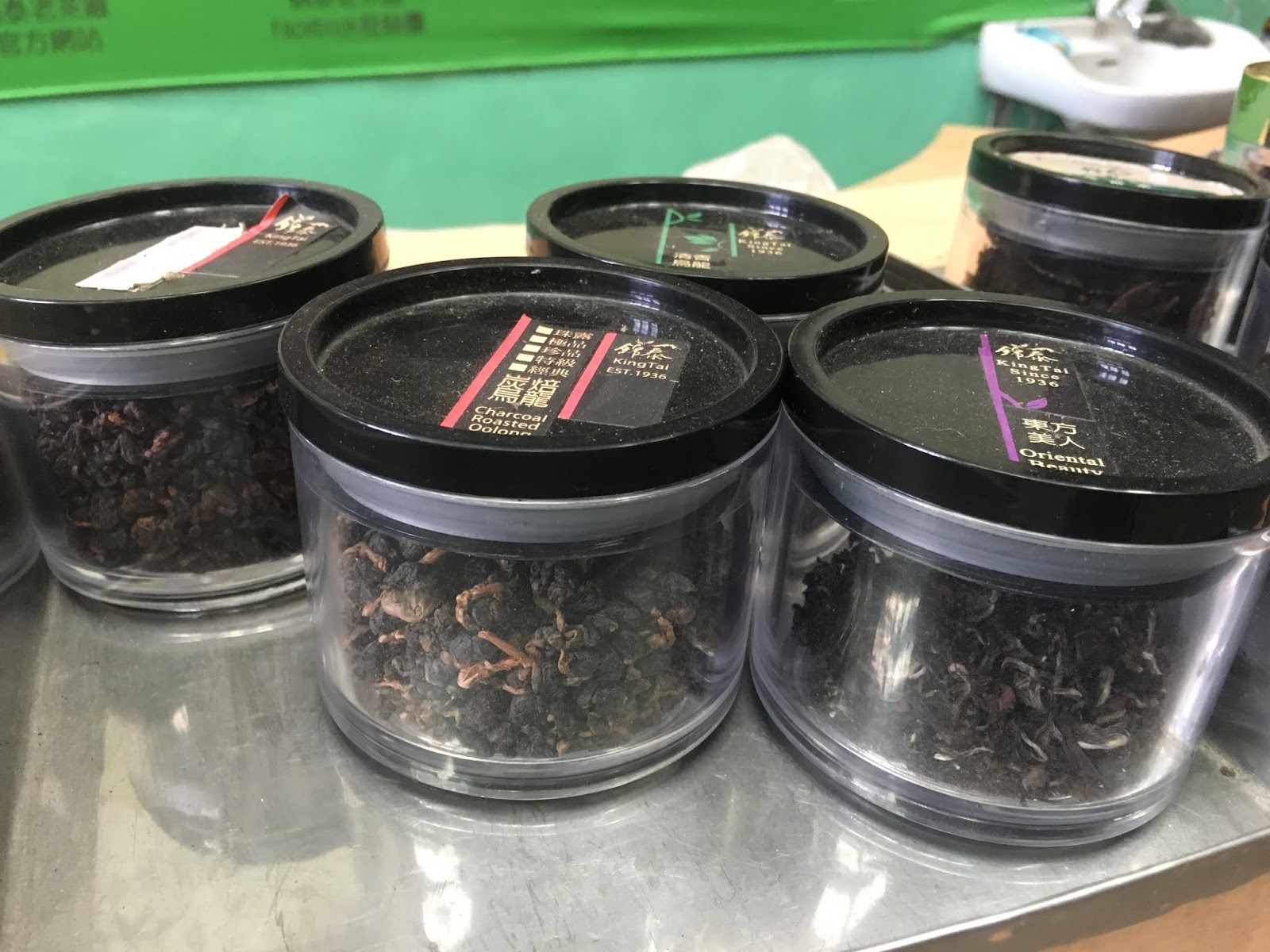
As the tea industry in the Kansai region gradually declined due to the reduction of tea gardens, Mr. Luo Jinxi began to plan for the future. On November 13, 1991, the company transformed into a tourism-oriented establishment and established a domestic R&D department to promote the development of black tea, green tea, and health fruit teas. These include sour citrus tea, lemon tea, mountain bitter gourd tea, and other innovative and uniquely researched tea series. Combining traditional technology from the Tang and Song dynasties with modern science and technology, the company strives to bring out the characteristics and essence of various teas. For instance, they use longan charcoal to roast alpine oolong tea, reducing bitterness and astringency, and developing various charcoal-roasted teas with special aromas. Such roasting techniques are rare in the tea industry.

The company's factory building preserves many precious and complete tea-making equipment from earlier years. It also preserves numerous historical materials and has been adapted to meet public requirements. In November 2002, it was transformed into the Kansai Jintai Sightseeing Tea Factory, and the Jintai Tea Cultural Relics Museum was established. The factory has been listed as a cultural monument for the history of tea.


jintai tea factory, hsinchu, taiwan

jintai tea factory, hsinchu, taiwan

jintai tea factory, hsinchu, taiwan

Hakka-style tea

One of the Hakka fruit teas is Bitter Orange Tea, made from Huton Gan, a large-sized bitter citrus fruit. This fruit is often used as decoration during Chinese New Year, but its bitter flavor prevents it from being used for consumption. The fruit is cleaned from the inside, and tea is placed in the cavity. The fruit tea has a sweet, slightly sour, and bitter taste. It undergoes a process of nine steaming and nine drying, which takes about half a year to complete. This tea has a unique flavor due to long-term air drying, contains no added preservatives, and is less prone to foaming compared to regular tea.

Another famous tea is Lei Cha (Pounded Tea). According to legend, during the Three Kingdoms period, soldiers were infected by a plague. An old herbal doctor used raw tea, rice, and ginger mixed with boiling water to make tea, which helped the soldiers regain their health. Nowadays, Lei Cha can be served as a beverage or as a dessert. Various ingredients can be added, such as sesame, red beans, soybeans, barley, lotus seeds, or pumpkin.

Roasted oolong tea is made using charcoal roasting. The tea's color changes to brown oolong tea during the baking process. The resulting tea has an amber-colored infusion, a strong taste, and a unique aroma. It has the effect of removing greasiness, aiding digestion, relieving drunkenness, and is particularly suitable for consumption after an oily meal.

See also: History of tea

jintai tea factory, hsinchu, taiwan

jintai tea factory, hsinchu, taiwan

jintai tea factory, hsinchu, taiwan

jintai tea factory, hsinchu, taiwan

jintai tea factory, hsinchu, taiwan

jintai tea factory, hsinchu, taiwan

jintai tea factory, hsinchu, taiwan

jintai tea factory, hsinchu, taiwan

jintai tea factory, hsinchu, taiwan

jintai tea factory, hsinchu, taiwan

jintai tea factory, hsinchu, taiwan

Guanxi Old Street (關西老街)

Guanxi Street was originally called Guanxi Zhuang and was established in 1920. The houses on Guanxi Old Street are mostly two-story buildings with Baroque-style facades. Normally, Old Streets are bustling with visitors during weekends, but we didn't see many when we visited. Here, you can find shops like a century-old bookstore, which is said to have a collection of 3,000 books. There is also a clothing store that uses natural dyes and a teahouse.

You can also explore the historical alley, which is full of memories. This narrow alley, which has existed for more than 100 years, used to be a shortcut to the Dongtai Theatre, where many young people watched movies and shared their love stories. It holds indelible memories of past generations. The aim was to recreate the atmosphere of this narrow alley in today's life, allowing young people to experience its history and enjoy a unique and comfortable walking experience. While walking along this alley, you can see paintings on the ground and stories written on the walls. The theatre building appears quite dilapidated now, but you can find a QR code on the building that links to a video about Guanxi.

guangxi old street, hsinchu, taiwan

guangxi old street, hsinchu, taiwan

guangxi old street, hsinchu, taiwan

guangxi old street, hsinchu, taiwan

guangxi old street, hsinchu, taiwan

guangxi old street, hsinchu, taiwan

guangxi old street, hsinchu, taiwan

guangxi old street, hsinchu, taiwan

Address:

1. Jintai tea Factory:  306新竹縣關西鎮中豐路一段336號錦泰茶業股份有限公司
2. Guanxi Old Street: 306新竹縣關西鎮中正路關西老街

May 2, 2019

Hsinchu Travel: Stepping into History ~ Exploring the Historical Fuxing Tea Factory

This time, we traveled to Emei Township, located in the southern part of Hsinchu County. We had only been here once before to visit Nature Loving Wonderland, a Maitreya Buddha Temple. Anyway, before moving to Tainan, I wanted to visit some historical places in Hsinchu and found an old tea factory in Fuxing, Emei.
When we arrived there, we found an old man in the factory, but he didn't introduce anything. He was just sitting there, looking unhappy and drinking tea. There was a room where a video should have been played, but it was turned off. The building wasn't well-maintained. Part of the roof was leaking, and the water had damaged a few machines. Additionally, the upper floor was blocked off and inaccessible.

Tseng Family History 

The Tseng Family's ancestors came from China and settled down as farmers in Miaoli. In 1853, they moved to Fuxing, bringing uncultivated land under cultivation and acquiring more lands. They became the most prestigious family in Fuxing and also played a leading role in local affairs. They initiated the construction of Longsheng Temple in 1890, which became the center of belief in Fuxing. They provided funds and efforts for the subsequent repairs and reconstructions of the temple.
Mr. Tseng Sin-gu is the founder of the Fuxing Tea Factory. He devoted himself to local public affairs. As part of the Emei Township Farmers Association in 1951, he requested a large number of subsidies for warehouses, offices, rice mills, and a duty room. He also funded the construction of a waterworks system and supported engineering projects in Fuxing. As a result, in the 1950s and 1960s, the people in Fuxing had access to clean tap water and stable power supply.


fuxing tea factory, emei, hsinchu, taiwan

fuxing tea factory, emei, hsinchu, taiwan

fuxing tea factory, emei, hsinchu, taiwan


fuxing tea factory, emei, hsinchu, taiwan

fuxing tea factory, emei, hsinchu, taiwan

fuxing tea factory, emei, hsinchu, taiwan

Fuxing Tea Factory (富興茶葉文化館(老茶廠) ) 

The production of tea in the Fuxing Tea Factory (富興茶葉文化館(老茶廠)) is closely related to the tea industry in Taiwan. Taiwan Black Tea began to gain prominence in 1928 and reached its peak in 1937. Initially, black tea, green tea, and oolong tea were produced here and exported to Europe and North Africa. During that time, Hsinchu was the largest production area for black tea. The Fuxing Tea Factory was founded in 1944 and started its tea production business by producing crude black tea. Before the construction of its new factory, the major place for producing crude tea was the "Chaliao" (tea dorm).
At that time, there were only three tea factories in Emei Township. According to the data from 1951, the Fuxing Tea Factory was roughly 430 square meters in size, with 3 employees, 11 workers, and the largest amount of tea produced reaching 133,800 kilograms. The Fuxing Tea Factory was the number one tea factory among the large tea manufacturers in Hsinchu County.
The development of the tea industry shifted from the production of black tea to the exportation of roasted green and steamed tea. In the 1980s, a large number of workers migrated outside the area, and workers' wages increased, causing the production costs to rise. Meanwhile, the tea industry in central and southern Taiwan flourished. All these factors had an impact on the Fuxing Tea Factory. Tea production decreased and eventually ceased in 1991. However, the tea-making equipment was preserved and carefully cleaned. In 1995, the Cultural Bureau registered this factory as a historical building. Inside, you can find a tea museum where you can learn about the tea-making process.

Inside the Fuxing Tea Factory 

The withering room on the second floor of the factory was an important space. In the production of black tea, the leaves must be rolled immediately after withering. For the convenience of moving withered tea leaves to the first floor, there were holes on the floor with rolling machines located below. The tea was sent into the machines through pipes.
Humidity in the air plays a significant role in the production process, especially during withering and fermentation. To fully adjust the temperature and humidity, the tea factory had many windows. The factory had undergone several reconstructions in different periods.
During the earthquake in 1935, the factory was destroyed. The walls in the front section still remain as they were built 100 years ago, although other departments were reconstructed. The building materials are mainly eucalyptus, which is durable and resistant to insects, allowing it to maintain its original appearance.
When the new factory was under construction in 1935, the entire structure was made of brick, with only the upper edges and eaves of the doors and windows built with reinforced concrete. The tea factory was also expanded and transformed several times. In 1950, additional space was added to meet the growing demand for black tea. The roof was used for withering under sunlight, while the indoor area was used for producing crude black tea. From 1951 to 1961, the production of tea shifted to green tea. The right space of the factory was expanded to accommodate blanching machines and the family's main entrance.
The Tea Factory consisted of both production and living spaces. It was the only two-story building in Fuxing. The second floor contained the withering space with its equipment, while the main production space equipped with a variety of machines was located on the first floor. The floor and roof trusses on the second floor were made of wood and covered with traditional red flat tiles. The office and living spaces surrounded the factory.

See also: History of tea

fuxing tea factory, emei, hsinchu, taiwan

fuxing tea factory, emei, hsinchu, taiwan

fuxing tea factory, emei, hsinchu, taiwan

fuxing tea factory, emei, hsinchu, taiwan

fuxing tea factory, emei, hsinchu, taiwan

fuxing tea factory, emei, hsinchu, taiwan

Tea Production process 

Fresh tea leaves:

Tea leaves are picked from tea trees. Usually, the young stems of tea leaves are carefully pinched using the thumb and forefinger. Different parts of tea leaves are picked according to different varieties of tea. For example, some pick the terminal bud and the first leaf next to it (one-bud-one-leaf), some pick two leaves (one-bud-two-leaves), and some pick one bud and three leaves.

Withering:

Withering can be done through "sunlight/hot air withering" or "indoor withering".
In the first process, sunlight or hot air is used to evaporate the water from fresh tea leaves and lower the cell activity. This allows the chemical components, especially catechin, to undergo fermentation. After this process, the tea leaves must be stirred and placed indoors for further withering.
Workers use both hands to stir the fresh tea leaves, causing them to rub against each other. When the leaf margin is damaged and exposed to the air, it facilitates fermentation and evaporation of water content. Later, the tea leaves must be spread out separately for a while before being gathered.

Blanching:

This process can be divided into two types: "parching" and "steaming". In Taiwan, the process of parching is mostly used.
In parching, high temperatures are used to destroy the enzyme activity and prevent continuous fermentation of tea leaves. This helps maintain the special fragrance and soft texture of the tea leaves, making them easier to roll into a bar shape and then dry.

Rolling:

There are two methods of rolling. The first method involves putting tea leaves into a rolling machine for pressing and rolling. The other method involves wrapping tea leaves in cloth and manually pressing and rolling them into a ball shape. Under pressure, the tea leaves take on roll, spherical, and hemispherical shapes. During this process, parts of the tea leaf tissues are destroyed, making them easier to brew.

Separation:

After rolling, tea leaves become twisted together due to the tea juice, making them difficult to dry. Before the drying process, the tea leaves need to be separated.

Drying:

Tea leaves are dried in a dryer machine. High temperatures are used to suppress the remaining enzyme activity in the tea leaves. Once dried, the tea is called "crude tea" or "raw tea." It requires further refinement to become a high-quality tea product.

fuxing tea factory, emei, hsinchu, taiwan

fuxing tea factory, emei, hsinchu, taiwan

fuxing tea factory, emei, hsinchu, taiwan

Address:

315新竹縣峨眉鄉大同街8號富興茶葉文化館