Showing posts with label Taiwanese desserts. Show all posts

September 26, 2023

From Scratch to Sweet Success ~ My First Time Making Mooncakes!


This year, I bought a mooncake mold and tried my best to make some by myself. I can say it's a labor-intensive task. It also requires a bit of skill because I ended up with some broken dough, which made the filling visible. Although they're not perfect, I'm happy with the result since it was my first time making mooncakes. While searching through many recipes, I noticed that all of them used golden syrup, which I couldn't find anywhere.

I tried two combinations. First, I replaced the golden syrup with honey, and I think the result was really good, although the flavor wasn't the same as the original. The second time, I used sugar and water. Although it's possible to do, I would recommend using honey. The dough was a bit drier and less flexible, which led to some broken spots when I tried to put the filling in. Flavor-wise, the mooncakes were still really good though.

I'm a big fan of Hong Kong-style mooncakes, so that's the version I made. I filled one with cheesecake (a very unusual filling) and another with red bean. I also attempted one with taro and mochi inside, but I think I bought the wrong taro paste (probably just blended taro, not paste), as it was impossible to maintain the shape, resulting in a lot of filling leakage.

You can find the recipes at the bottom of my post!

What are a Mooncakes?

A mooncake (月餅) is a bakery product traditionally eaten during the Mid-Autumn Festival (中秋節) in parts of Asian countries. The festival is about lunar appreciation and moon watching, and mooncakes are regarded as a delicacy. Mooncakes are offered between friends or family while celebrating the festival.

Typical mooncakes are round pastries with a rich and thick filling, usually made from red bean paste or lotus seed paste, surrounded by a thin 2–3 mm crust. They may also contain yolks from salted duck eggs, symbolizing the full moon. Traditional mooncakes have imprints on top consisting of the Chinese characters for "longevity" or "harmony," as well as the name of the bakery and the filling inside. Additional decorations may include imprints of the Moon, Lady Chang'e on the Moon, flowers, vines, or a rabbit (symbol of the Moon).

Traditional fillings include:

Lotus seed paste (蓮蓉) - Considered by some to be the original and most luxurious mooncake filling. White lotus paste is even more premium. Sometimes, white kidney bean paste is used as a filler due to the high price of lotus paste.
Sweet bean paste (豆沙) - There are various pastes commonly used as fillings in Chinese desserts. While red bean paste made from azuki beans is the most common worldwide, regional preferences exist for bean paste made from mung beans or black beans.
Jujube paste (棗泥) - This sweet paste is made from ripe jujube (date) fruits. It has a dark red color, a slightly fruity/smoky flavor, and a slightly sour taste.
Five kernels (五仁) or mixed nuts - A filling made of coarsely chopped nuts and seeds, held together with maltose syrup. Different regions use various nuts and seeds such as walnuts, pumpkin seeds, watermelon seeds, peanuts, sesame seeds, or almonds. Candied winter melon or rock sugar pieces are often added for additional flavoring.

Traditional mooncake crust include:

Chewy - This crust, commonly used in Cantonese-style (Hong Kong style) mooncakes, has a reddish-brown tone and glossy sheen. It's made using a combination of thick sugar syrup, lye water, flour, and oil, resulting in a rich taste and a chewy yet tender texture. Maltose syrup can be added to increase chewiness.
Flaky - Flaky crusts are indicative of Suzhou- and Taiwan-style mooncakes. The dough is made by rolling alternating layers of oily dough and flour that has been stir-fried in oil, resulting in a texture similar to puff pastry.
Tender - Mooncakes from certain provinces of China, such as Shanghai-style mooncakes, have a tender crust instead of a flaky or chewy one. The texture of this crust is similar to the shortcrust pastry used in Western pie crusts or tart shells. It's made with a mixture of sugar, oil, flour, and water. This type of crust is also commonly used in other types of Chinese pastries, such as egg tarts.
Crumbly - Yunnan-style mooncakes have a dense, crumbly crust made using a hot water crust pastry that combines different kinds of flour with oil, salt, and hot water. This type of crust is uncommon in other regions.

Less traditional types of mooncake crusts can be made with:
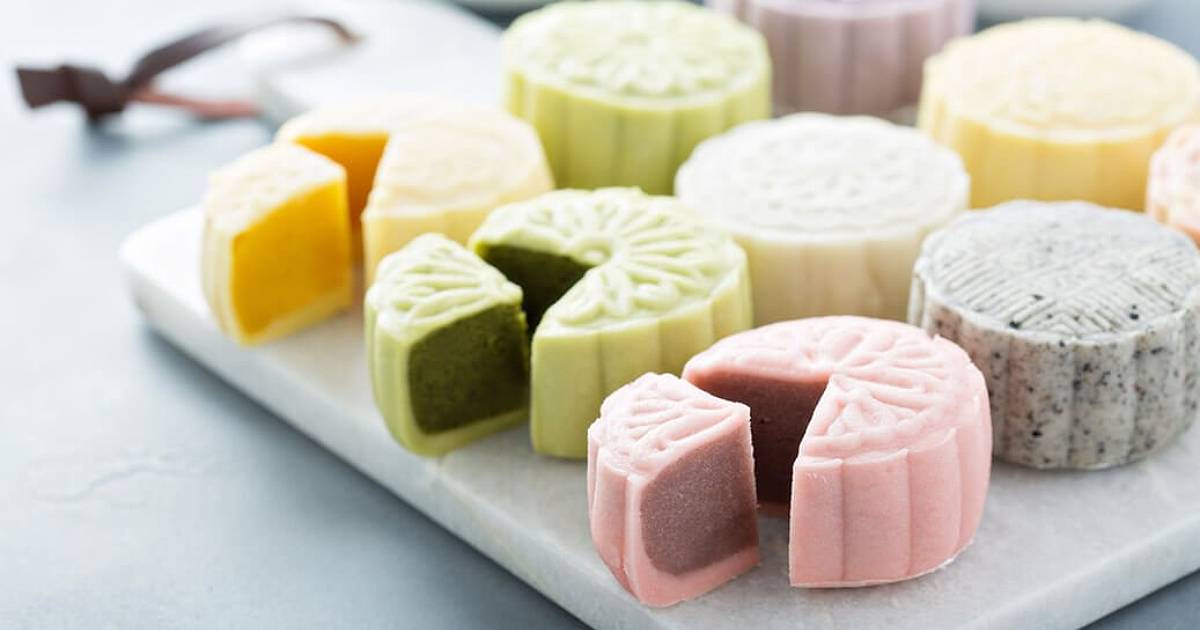
Glutinous rice - This crust has a texture similar to mochi and is known colloquially as "snowskin mooncakes". Snow skin mooncakes are non-baked mooncakes originating from Hong Kong. snow skin mooncakes can be filled with a variety of fillings such as mung bean paste, fruit, green tea, jam, strawberry, chocolate, coffee, and cheese. Other flavored fillings include durian, sesame, mango pomelo sago, and purple yam.
Jelly - A crust made from gelling mixtures such as agar, gelatin, or konjac, flavored with a wide variety of fruit flavors.

How to make Mooncakes?

Making mooncakes takes plenty of time (or maybe I lack experience). The first time I made cheesecake filling, so yes, it took longer as I had to bake the cheesecake first. But the second time, when I made 40 mooncakes with strawberry filling, it took a total of 3.5 hours. I think that's quite a long time, and I was really tired at the end, lol.

All the recipes call for golden syrup, which I searched for in several shops, but unfortunately, it was nowhere to be found. In my first attempt, I used honey. I think the texture of the dough is quite nice, although it lacks flavor and color, but it's not a big deal. Using sugar melted with water isn't a very good idea. I found the dough much more difficult to work with than the one with honey, and it was a lot less flexible. I will still share both variations I used.

Recipe 1 - Cheesecake Filled Mooncakes (12 mooncakes, 50g mold)


Ingredients
-> Dough:
150g flour
80g golden syrup or honey 
30g oil
1/3 teaspoon Kansui / lye water
-> Cheesecake filling:
250g cream cheese 
2 eggs 
30g sugar 
-> Egg wash:
1 egg yolk
1 tbsp water

Preparation
-> Preparing cheesecake:
Mix cream cheese (at room temperature) with sugar. Add eggs one at a time and mix until smooth. I used a 6-inch square pan to bake it. Bake for about 15-20 minutes at 200 degrees Celsius. It's also possible to steam it instead, but I prefer the flavor of baked cheesecake. Allow it to cool down and then divide it into 12 pieces, rolling them into balls. Each piece should be 30g in size.
-> Preparing mooncake crust:
Mix all the dough ingredients together until a smooth dough forms. Divide the dough into 12 pieces, with each piece weighing 20g.
-> Assembling:
Roll or flatten a ball of dough in your hand. Place the filling in the middle and then cover it with the dough. Roll it into a ball. Repeat this process with every piece. Dust the mooncake mold with some flour or cornstarch. Place each ball in the mold and press down gently to shape it.
-> Baking:
Once all the mooncakes are shaped, place them in a preheated oven at 190 degrees Celsius. Bake for 5 minutes. After this time, remove the mooncakes from the oven and gently brush them with egg wash. Place them back in the oven and bake for an additional 20-25 minutes at 170 degrees Celsius or until they turn golden brown.
-> Storing:
Mooncakes can be stored for up to 2 weeks in an airtight container in the fridge.

You can also check out my video:

Recipe 2 - Read beans Filled Mooncakes (20 mooncakes, 50g mold)


Ingredients
-> Dough:
110 g sugar
40 g water
50g oil
220g flour
-> Filling:
600g store-bough red bean filling
-> Egg wash:
1 egg yolk
1 tbsp water

Preparation
-> Preparing mooncake crust:
Mix sugar with warm water until all is melted, and syrup forms. Add oil and flour, mix until a smooth dough forms. Divide the dough into 20 pieces, with each piece weighing 20g.
-> Preparing filling:
Divide the bean paste into 20 balls, each weighing 30g.
-> Assembling:
Roll or flatten a ball of dough in your hand. Place the filling in the middle and then cover it with the dough. Roll it into a ball. Repeat this process with every piece. Dust the mooncake mold with some flour or cornstarch. Place each ball in the mold and press down gently to shape it.
-> Baking:
Once all the mooncakes are shaped, place them in a preheated oven at 190 degrees Celsius. Bake for 5 minutes. After this time, remove the mooncakes from the oven and gently brush them with egg wash. Place them back in the oven and bake for an additional 20-25 minutes at 170 degrees Celsius or until they turn golden brown.
-> Storing:
Mooncakes can be stored for up to 2 weeks in an airtight container in the fridge.

You can also check out my video:

September 25, 2021

Delicious Delicacies: Exploring the World of Mooncakes


I had many different mooncakes this Mid-Autumn Festival, although I finished them before I got the idea of writing a blog post about them. Usually, mooncakes have egg yolk inside, which isn't really my type of food. Luckily, my son likes the salty yolk, so I can eat the rest with red bean or mung bean paste.
This year was my first time trying Hong Kong style mooncakes, and I'm in love with them! Not only do they taste good on the outside, but they also have many non-traditional fillings. We had some with banana, strawberry, and pear flavors!

What is a moon cake?

A mooncake (月餅) is a bakery product traditionally eaten during the Mid-Autumn Festival (中秋節) in parts of Asian countries. The festival is about lunar appreciation and moon watching, and mooncakes are regarded as a delicacy. Mooncakes are offered between friends or family while celebrating the festival.

Typical mooncakes are round pastries with a rich and thick filling, usually made from red bean paste or lotus seed paste, surrounded by a thin 2–3 mm crust. They may also contain yolks from salted duck eggs, symbolizing the full moon. Traditional mooncakes have imprints on top consisting of the Chinese characters for "longevity" or "harmony," as well as the name of the bakery and the filling inside. Additional decorations may include imprints of the Moon, Lady Chang'e on the Moon, flowers, vines, or a rabbit (symbol of the Moon).

Traditional mooncake fillings

Lotus seed paste (蓮蓉)

Considered by some to be the original and most luxurious mooncake filling. White lotus paste is even more premium. Sometimes, white kidney bean paste is used as a filler due to the high price of lotus paste.

Sweet bean paste (豆沙)

There are various pastes commonly used as fillings in Chinese desserts. While red bean paste made from azuki beans is the most common worldwide, regional preferences exist for bean paste made from mung beans or black beans.

Jujube paste (棗泥)

This sweet paste is made from ripe jujube (date) fruits. It has a dark red color, a slightly fruity/smoky flavor, and a slightly sour taste.

Five kernels (五仁) or mixed nuts

A filling made of coarsely chopped nuts and seeds, held together with maltose syrup. Different regions use various nuts and seeds such as walnuts, pumpkin seeds, watermelon seeds, peanuts, sesame seeds, or almonds. Candied winter melon or rock sugar pieces are often added for additional flavoring.

Mooncake crusts

Mooncake crusts vary widely depending on the region where they are produced. Most regions have many types of fillings but only one type of crust. While vegetarian mooncakes may use vegetable oil, many mooncakes use lard. 

The most popular types of crusts are:

Chewy

This crust, commonly used in Cantonese-style (Hong Kong style) mooncakes, has a reddish-brown tone and glossy sheen. It is made using a combination of thick sugar syrup, lye water, flour, and oil, resulting in a rich taste and a chewy yet tender texture. Maltose syrup can be added to increase chewiness.

Flaky

Flaky crusts are indicative of Suzhou- and Taiwan-style mooncakes. The dough is made by rolling alternating layers of oily dough and flour that has been stir-fried in oil, resulting in a texture similar to puff pastry.

Tender

Mooncakes from certain provinces of China, such as Shanghai-style mooncakes, have a tender crust instead of a flaky or chewy one. The texture of this crust is similar to the shortcrust pastry used in Western pie crusts or tart shells. It is made with a mixture of sugar, oil, flour, and water. This type of crust is also commonly used in other types of Chinese pastries, such as egg tarts.

Crumbly

Yunnan-style mooncakes have a dense, crumbly crust made using a hot water crust pastry that combines different kinds of flour with oil, salt, and hot water. This type of crust is uncommon in other regions.

Less traditional types of mooncake crusts can be made with:

Glutinous rice

This crust has a texture similar to mochi and is known colloquially as "snowskin mooncakes".

Jelly

A crust made from gelling mixtures such as agar, gelatin, or konjac, flavored with a wide variety of fruit flavors.


Left: Hong Kong style mooncake with banana filling
Right: Taiwanese style mooncake with red bean paste and salted egg yolk

Thousand layer mooncake with taro and egg yolk
Photo by: whisknfold.com

No bake mooncakes with outer layer made of jelly
Photo by: eatwhattonight.com

Snow skin mooncake

Snow skin mooncakes are non-baked mooncakes originating from Hong Kong. They can also be found in Macau, Mainland China, Taiwan, Vietnam, Singapore, Malaysia, and Indonesia. Unlike traditional mooncakes that are baked in ovens, snow skin mooncakes are not baked. Additionally, while traditional mooncakes are typically served at room temperature, snow skin mooncakes are typically eaten cold.

The snow skin mooncake emerged in the 1960s when a bakery in Hong Kong developed it as an alternative to traditional mooncakes, which had high sugar and oil content due to the use of salted duck egg yolks and lotus seed paste. To address customer concerns about the oily nature of traditional mooncakes, the bakery used fruit for filling and reduced the amount of oil, creating a mooncake with lower fat content. In the 1970s, snow skin mooncakes gained popularity and were also referred to as "crystal mooncakes" (水晶月饼). The name "Bing Pi Yue Bing" (冰皮月饼) appeared in advertisements in the early 1980s.

The crust of snow skin mooncakes is made from glutinous rice, which is frozen. This crust is similar to the ones used in mochi ice cream or yukimi daifuku, as they all have glutinous rice crusts and need to be kept frozen. Snow skin mooncakes are typically white and served cold, hence the name "snow skin". However, mooncakes can have other colors due to added flavors in their crusts. While traditional mooncakes are commonly filled with salted duck egg yolks and lotus seed paste or red bean paste, snow skin mooncakes can be filled with a variety of fillings such as mung bean paste, fruit, green tea, jam, strawberry, chocolate, coffee, and cheese. Other flavored fillings include durian, sesame, mango pomelo sago, and purple yam.

Snow skin mooncakes
Photo by: eastcoastpodiatry.sg

History of Mid-Autumn Festival

The Mid-Autumn Festival, also known as the Moon Festival, is a traditional festival celebrated in mainland China, Taiwan, Hong Kong, Macau, Vietnam, as well as by overseas Chinese and Vietnamese communities. Similar holidays are observed in Japan (Tsukimi), Korea (Chuseok), and throughout Southeast Asia. It is one of the most significant holidays in Chinese culture, with a history dating back over 3,000 years. The festival is held on the 15th day of the 8th month of the Chinese lunisolar calendar, which usually corresponds to mid-September to early October on the Gregorian calendar. On this day, it is believed that the moon is at its brightest and fullest, coinciding with the harvest season in the middle of autumn. In Taiwan, outdoor barbecues have become a popular tradition for friends and family to gather and enjoy each other's company.

July 1, 2021

Adrian's first time making Aiyu Jelly


Still staying home, not only because of the virus but also due to plenty of rainy days. I'm starting to feel a little tired always needing to entertain our son, Adrian. He likes to play in the kitchen with me, although our space is really small, and it's inconvenient for me if he wants to cook together. Especially lately, he watched some videos with me where a little girl was helping her parents cook (or rather make a mess).
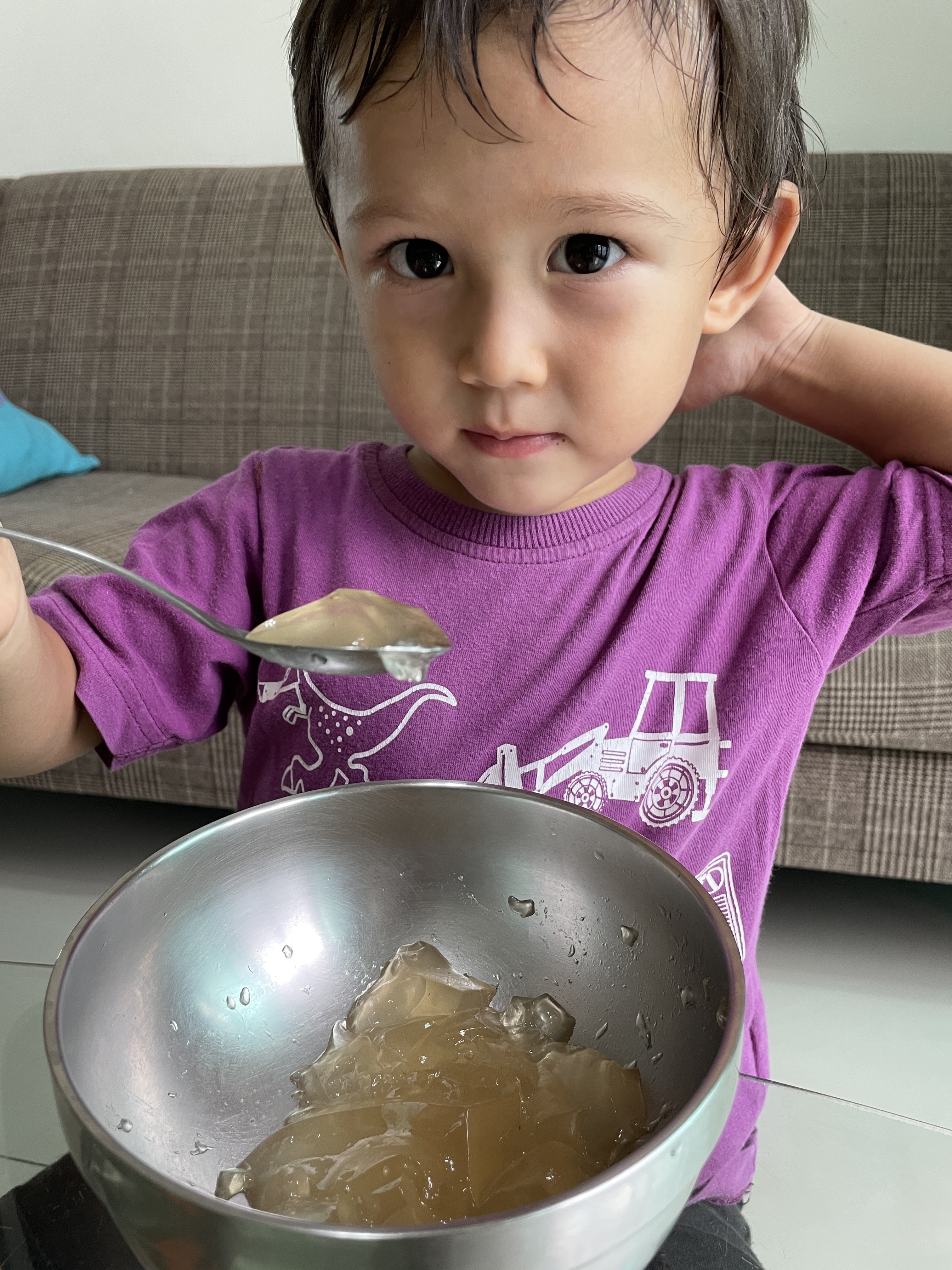
While doing some cleanup in the kitchen, I found many aiyu shells waiting in the cupboard to be used. Actually, I tried to make my first aiyu jelly two years ago, but it was a fail. After that, the remaining seeds were left unused. I was lazy to do anything with them, but now that I have a lot of free time, I have no excuses. This time, at least, it really condensed and made jelly, not just gelatinous water. Yay! Adrian was really excited to eat it.

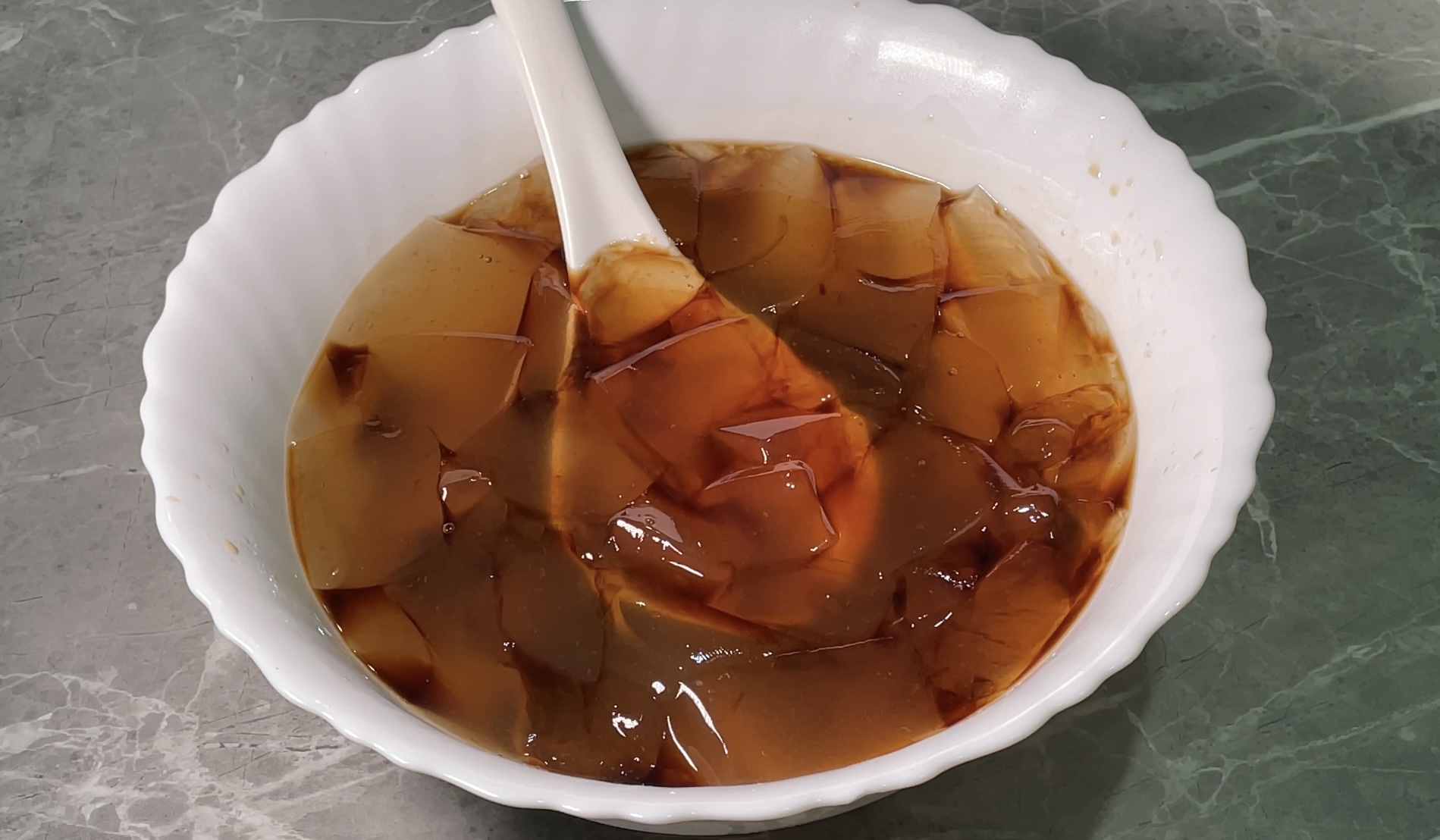
We started by scrubbing the seeds from the aiyu plant and placing them in a bag. We bought the bag at a grocery store, specifically made for washing aiyu. After gently rubbing the seeds in water, they soon became more gelatinous and turned yellowish in color. I added some sugar melted in warm water, and then we cooled it down in the fridge. After about half an hour, it was ready to eat!

If you want to know what's aiyu, check my another post HERE.


September 24, 2019

[Recipe] What is Aiyu Jelly and how to prepare it

aiyu jelly, desserts, taiwan

Visiting my husband's uncle in Taidong, we discovered some aiyu plants in his garden. It was the first time for me to see the plant and learn about the preparation process. We even got some aiyu seeds to make our own jelly at home.

Aiyu jelly (愛玉凍; àiyùdòng) is a jelly made from the gel extracted from the seeds of the awkeotsang creeping fig, which is found in Taiwan and other East Asian countries with similar climates. The jelly is not commonly made or found outside of Taiwan and Singapore, although it can be purchased fresh in specialty stores in Japan and canned in Chinatowns. Aiyu jelly is also used in Taiwanese cuisine and is popular in the historical town of Ipoh in Malaysia, known as Aiyu Jelly or "wan tau long" in the local Cantonese dialect.
Traditionally, aiyu jelly is served with honey and lemon juice. It can also be added to other sweetened beverages or shaved ice, making it a refreshing drink, particularly during hot summers. Due to the gel's resistance to dissolving in hot water, aiyu is sometimes used as an ingredient in hot pot dishes.

The gelling agent in aiyu seeds is pectin, which is found in the transparent layer on the surface of the seeds. To extract the pectin, the seeds are washed and rubbed rather than ground into a powder. The main component of the water extract is LMP (low methoxy pectin), as opposed to the high methoxy pectins found in commercially used sources such as apples or citrus peels. LMP gels in the presence of divalent cations, which are present in water (when it's not distilled), resulting in the formation of jelly.

aiyu figs vine and fruit, taiwan

aiyu figs fruit peels, taiwan

aiyu figs fruit, taiwan

The origin of Aiyu jelly

According to oral history, the plant and the jelly were named after the daughter of a Taiwanese tea businessman in the 1800s. The jelling property of the seeds was discovered by the businessman as he drank water from a creek in Chiayi. He noticed a clear yellowish jelly in the water and found it refreshing upon tasting it. When he looked above the creek, he saw fruits on hanging vines that contained seeds exuding a sticky gel when rubbed.

Impressed by the discovery, he collected some fruits and served them at home with honeyed lemon juice and sweetened beverages. The jelly-containing beverage became popular and was eventually sold by his 15-year-old daughter, Aiyu. As the snack gained popularity, the businessman named the jelly and the vines after his daughter. However, the Austronesian name "igos," derived from the Spanish word "higo," suggests a possible Austronesian origin for this food.

aiyu figs fruit seeds, taiwan

aiyu figs fruit seeds, taiwan

Harvesting and preparation of jelly 

The fruits of the creeping fig (Ficus pumila var. awkeotsang) resemble large fig fruits about the size of small mangoes and are harvested from September to January, just before they ripen to a dark purple color. The fruits are halved and turned inside out to dry over several days.
To prepare the jelly, the aiyu seeds are placed in a cloth bag and submerged in water. The bag is then rubbed, extracting a slimy gel from the seeds. This process is known as "washing aiyu" in Chinese (洗愛玉). The washed gel is then left to set into a jelly in a cool location or in the refrigerator.

To make aiyu jelly you need about 20g aiyu seeds and 1L water.
Separate the aiyu seeds from the shells.
Place the seeds in a cloth bag and soak them in water for about 5 minutes.
Wash the seeds in water, gently rubbing them for 3 minutes.
During the washing process, the water will become more gelatinous.
Allow the aiyu jelly to set in a cool place or in the fridge.
Cut the jelly into smaller pieces.
Add some sugar syrup and lemon juice, as the jelly itself doesn't have a strong flavor.


making aiyu jelly, taiwan

making aiyu jelly, taiwan

making aiyu jelly, taiwan

making aiyu jelly, taiwan

making aiyu jelly, taiwan

making aiyu jelly, taiwan

making aiyu jelly, taiwan

making aiyu jelly, taiwan

March 8, 2018

Taiwanese street food: 酥 (su), 糕 (gao), 餅 (bing) (part II)

Cakes in Taiwan belong to three different categories: 酥 (su), 糕 (gao), and 餅 (bing).
Su (酥) is a pastry made with shortening and tends to crumble.
Gao (糕) starts with batter and is then steamed or baked.
Bing (餅) is a general name for wheat-flour-based food with a flat or disc-like shape. Many of them are similar to Indian roti, French crepes, and Mexican tortillas, but they can also resemble Western-style cakes and cookies. Bings can be sweet or savory.

1. Cōng dà bǐng (蔥大餅)

This pancake is made of dough with scallions, garlic, cheese, or brown sugar and baked, not fried. The flavor is very light and a little dry.


2. Cōng zhuā bǐng (蔥抓餅)

Cōng zhuā bǐng (fluffy scallion pancake) is one of the most famous pancakes in Taiwan. It's made with dough that is formed into a log, flattened, brushed with seasoned roux, and rolled. Later, the dough is pulled out and stretched, which forms layers, and it is then pan-fried.


3. Cōng yóubǐng (蔥油餅) 

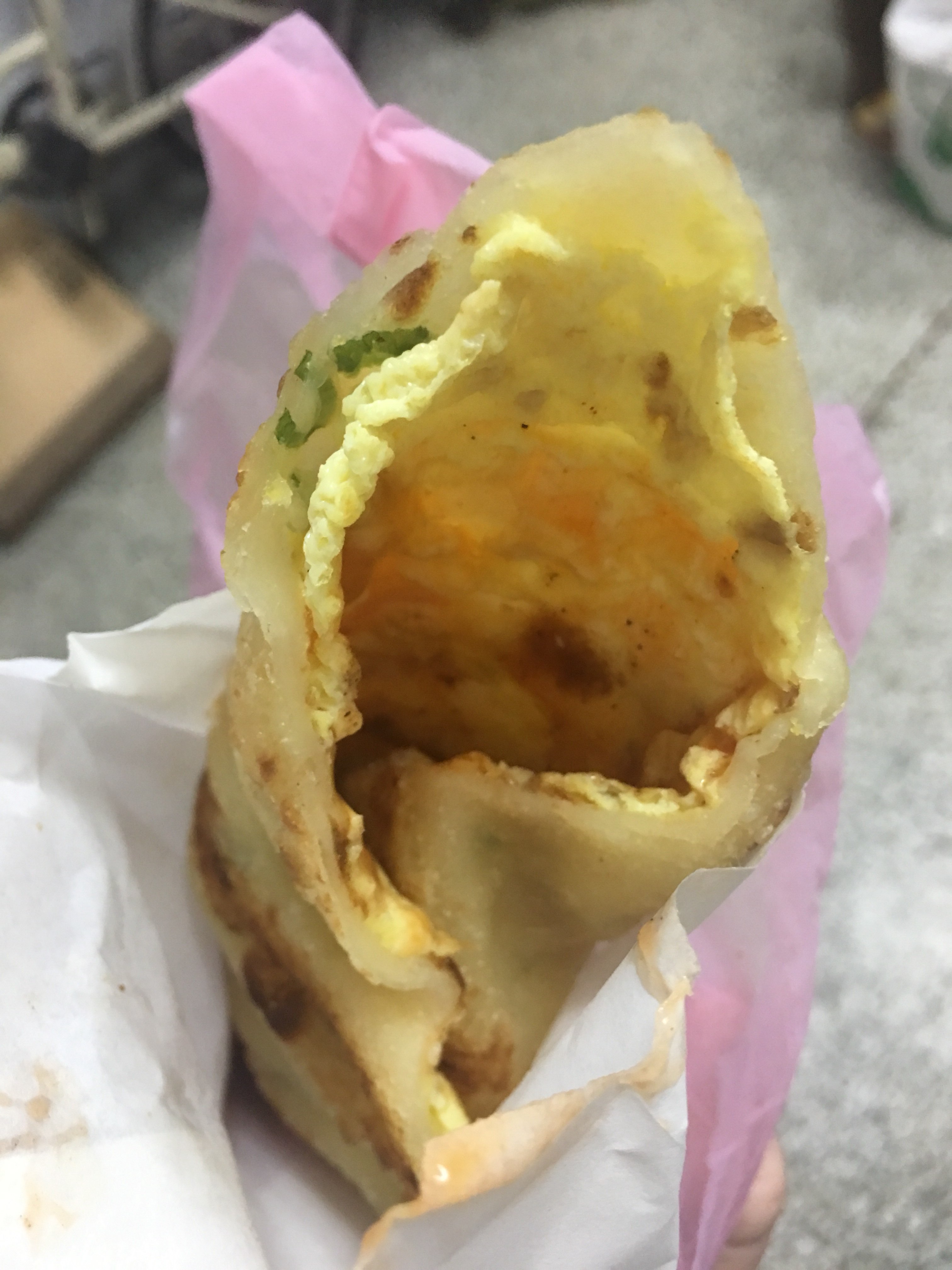
This scallion oil pancake is made of dough with minced scallions. Cong you bing is pan-fried, which gives it a crispy and chewy texture. The pancakes are coated with egg on one side. You can also see variations with garlic chives called 韭菜餅 (Jiǔcài bǐng).


4. Dàn bǐng (蛋餅)

Dan bing is made of water, flour, and cornstarch and pan-fried. It is served with a fried egg and other fillings like corn, tuna, cheese, etc., rolled and sliced.


5. Gua Bao (刈包)

Gua Bao (meat sandwich) originates from China, specifically Shaanxi Province, and dates back to the Qing Dynasty (about 200 years ago). The meat, usually pork, is stewed for hours in a soup containing over 20 spices and seasonings. The bread is made from dough with yeast, baked, or fried.


6. Pepper bun - Hújiāo bǐng (胡椒餅)

Hu jiao bing is a type of baked bun that originates from China. It is one of the popular Taiwanese street foods. The dough is made of flour, water, and yeast, and the filling usually consists of pork meat marinated with pepper, soy sauce, and sugar.
Outside the bun, it is crunchy, and the meat inside is really juicy with a little spicy feeling from the pepper.
Pepper buns are baked in traditional cylindrical, high-heat clay ovens. Charcoal is put on the bottom of the oven to heat it. The buns are stacked on the walls from bottom to top. After baking, the buns are scraped off and taken out using a colander.

pepper bun hu jiao bing preparation

pepper bun hu jiao bing preparation

hu jiao Bing pepper bun

baking pepper buns hu jiao bing

7. Xiàn bǐng (餡餅)

Xiàn bǐng (meat pies) are small fried breads made of dough with fillings like spring onion, leek, red beans, or pork meat.


8. Báobǐng (薄餅

Popiah (bao bing) is a soft, paper-like crepe or pancake made from wheat flour. Popiah can be used for both sweet or savory dishes. One popular dessert in Taiwan using this wrap is Ice cream and peanut roll. Other popular dishes are Beijing Duck or spring rolls, which can be fried or non-fried.


9. Tóu bǐng (頭餅)

Tóu bǐng is a kind of pancake with different fillings like peanut, chocolate, strawberry, or meat. It is fried on one side and folded.

10. Chinese meat pies (肉餅, Ròu bǐng) 

These cakes have a round shape and a sweet filling made from taro, sweet potatoes, and green tea mochi.

11. Sponge cake (古早味蛋糕, Gǔ zǎo wèi dàngāo)

You can find sponge cakes filled with cheese or meat floss, as well as various sweet flavors.