Showing posts with label city wall. Show all posts

May 4, 2024

Kaohsiung Travel - Day2! Zuoying Old Town


Travel Date: 2024/04/06
* It was pretty long post, thus I separated it into 2 parts - check out part 1 - LINK *
Check out also our first day travel, where we visited Tianliao Moon World, Stone Temple and Yangyu Mud Pond and Wushanding Mud Volcanoes

Afterwards, we went to find the ancient walls and gates of Zuoying, which at the time was called Fongshan Town. I like visiting places like this, I always enjoy the architecture. The wall is super big and you can take a walk above. The city walls were built during the Qing Dynasty, in the year 1722.

In the 17th century, Zuoying's strategic location on the Kaohsiung plain made it a crucial juncture, shielded by Turtle Mountain and Snake Mountain. When Taiwan was annexed by the Qing dynasty in 1684, they recognized its defensive potential, establishing Fengshan County seat there. But, rebellions erupted. Chu Yi-kuei's revolt in 1721 exposed Zuoying's vulnerability. Forced to fortify, Liu Kwang-shi built mud walls and moats. Years later, during Lin Shuang-wen's rebellion in 1787, the walls crumbled. Officials deemed the city cursed, relocating the county seat. Yet, invasions persisted. Tsai Chien breached Zuoying's defenses in 1805, prompting consideration to return the city. In 1824, Yang Liang-bin's revolt spurred action. Through public and official contributions, a robust stone wall arose by 1826, a testament to unity. Yet, misfortune seemed to shadow Zuoying. Rumors swirled of the governor's death, casting doubt on the city's fate. Fearful residents shunned the new city. It lay dormant until 1853 when the Qing government mandated its revival. Temples, administrative offices, and defense posts defined Zuoying's landscape. Under Japanese rule, Zuoying's military importance soared. It became a naval port, and the city served as a military district. Post-World War II, Zuoying retained its strategic significance. The gates endured, earning historic acclaim. In 1991, the remaining wall underwent restoration, preserving Zuoying's storied past.


East Gate:


The East Gate, also known as the Fongyi Gate (鳳儀門), is the best-preserved among the four gates of the walled city. A portion of the wall connected to the East Gate still remains. However, during its time as part of the military district, the gate lacked maintenance, allowing vines to grow on it. The gate underwent renovation after the military camp relocated. The North Gate, also called the Gongchen Gate (拱辰門), features two inscribed boards. One on the outside reads "Gongchen Gate," while the one on the inside reads "North Gate" (北門). The gate is adorned with sculptures of door gods named Shenshu (神荼) and Yulü (鬱壘). Nearby, the "Gongchen Well" (拱辰井), constructed approximately 200 years ago near the North Gate, was relied upon by local residents during Qing rule. However, it is no longer functional, and the post-war Republic of China government opted to demolish it. An iron lid now covers the remaining hole, which even bears zebra crossing marks due to the lack of careful preservation. The South Gate, known as the Ciwun Gate (啟文門), sits at the center of a traffic circle after the removal of its connecting walls. Like other gates, the South Gate was constructed with granite. In a 1961 renovation, reinforced concrete was added to the gate's four corners, and the stairways leading to the top were renewed. The West Gate, also referred to as the Dianhai Gate (奠海門), no longer exists, having been destroyed during the Japanese rule period. Evidence of its existence was scarce until a Japanese map of the region was discovered. In 2004, a monument was unveiled by then-mayor of Kaohsiung Frank Hsieh to commemorate the West Gate.

North Gate:


We also went to Lotus Pond, but unfortunately, the Dragon and Tiger Pagoda was under renovation, so we couldn't revisit this place. It was also getting late, and it was closing time for the temple, so that ended our trip. We drove back to the accommodation. That was the last part of our Kaohsiung trip, welcome to also see my previous post if you haven't where I introduce attractions of mountainous areas of Kaohsiung. 


Address:
1. East Gate: 813高雄市左營區城峰路
2. North Gate: 813高雄市左營區鳳山縣舊城

August 6, 2019

Historic places of Tainan City West Central District (part II)

Tainan is the oldest city in Taiwan and is commonly known as the "Capital City" due to its more than 200 years of history as the capital of Taiwan under the rule of Koxinga and later the Qing Dynasty. The city's complex history of resurgence, redefinition, and renewal has earned it the popular nickname "Phoenix City." As Taiwan's oldest urban area, Tainan was established by the Dutch East India Company as a ruling and trading base known as Fort Zeelandia during the Dutch colonial period. The city's previous name, Tayouan, is believed to be the origin of the name "Taiwan."

Tainan is also regarded as one of Taiwan's cultural capitals, renowned for its rich folk cultures, including its famous street food and traditional cuisine. It has diligently preserved Taoist rituals and a wide range of living local traditions that encompass various aspects of life, from childbirth to funerals. The city is home to Taiwan's first Confucian school-temple, constructed in 1665, as well as remnants of the Eastern and Southern gates of the old city and numerous other historical landmarks.

Great South Gate (大南門 (寧南門))

Great South Gate (大南門 or 寧南門) of Fucheng was constructed in 1725 and is one of the 14 gates that once surrounded the capital city of Taiwan during the Qing Dynasty. It is situated in the central and western district of Tainan City. The gate is a three-level monument and is the only remaining gate in Taiwan among the original five gates of Tainan. Dabeimen, Xiaobeimen, Xiaodongmen, and Xiaonanmen have all disappeared.

After World War II, the Great South Gate Tower remained standing, but the mid-ridge collapsed due to heavy rain in 1963. The gate was restored with a new roof in 1977. There are three characters inscribed on the inner door, and the outer door is labeled as the South Gate. Behind the gate is the Jianxing National Middle School.


great south gate, tainan city, taiwan

great south gate, tainan city, taiwan

great south gate, tainan city, taiwan

great south gate, tainan city, taiwan

great south gate, tainan city, taiwan

great south gate, tainan city, taiwan

Stone Monuments Forest (碑林)

Stone Monuments Forest (碑林), also known as "Dabeilin," is one of the ten scenic spots in Tainan's historical buildings and is considered a historic site in Taiwan. Notably, the stone monuments, including the "Reconstruction of the Monument of Taiwan's Fucheng," have been designated as cultural assets of antiquity.

The Nanmen Stone Monument Forest was created during the Japanese occupation of Taiwan. In 1935, 45 ancient monuments were collected for display at the Taiwan Expo. In 1977, 15 ancient monuments were moved from Chihkan Tower, and three additional ones were added. Today, the monument forest houses 63 ancient monuments. These monuments can be categorized into six groups: Jigong monument, construction monument, architectural monument, donation monument, tombstone monument, and display monument.


stone monuments forest, tainan city, taiwan

stone monuments forest, tainan city, taiwan

stone monuments forest, tainan city, taiwan

Film Center (南門電影書院 | 台南放送局)

Film Center (南門電影書院 | 台南放送局) is another notable attraction within the park. Originally completed in 1932 as the Nanmen Film Academy, it served as the Tainan Broadcasting Bureau. The building exhibits a Western-style architectural design, standing out in the quaint Nanmen Park.
During the Japanese occupation period, the center was responsible for broadcasting. People who wanted to listen to the radio had to register with the association and pay a monthly fee.

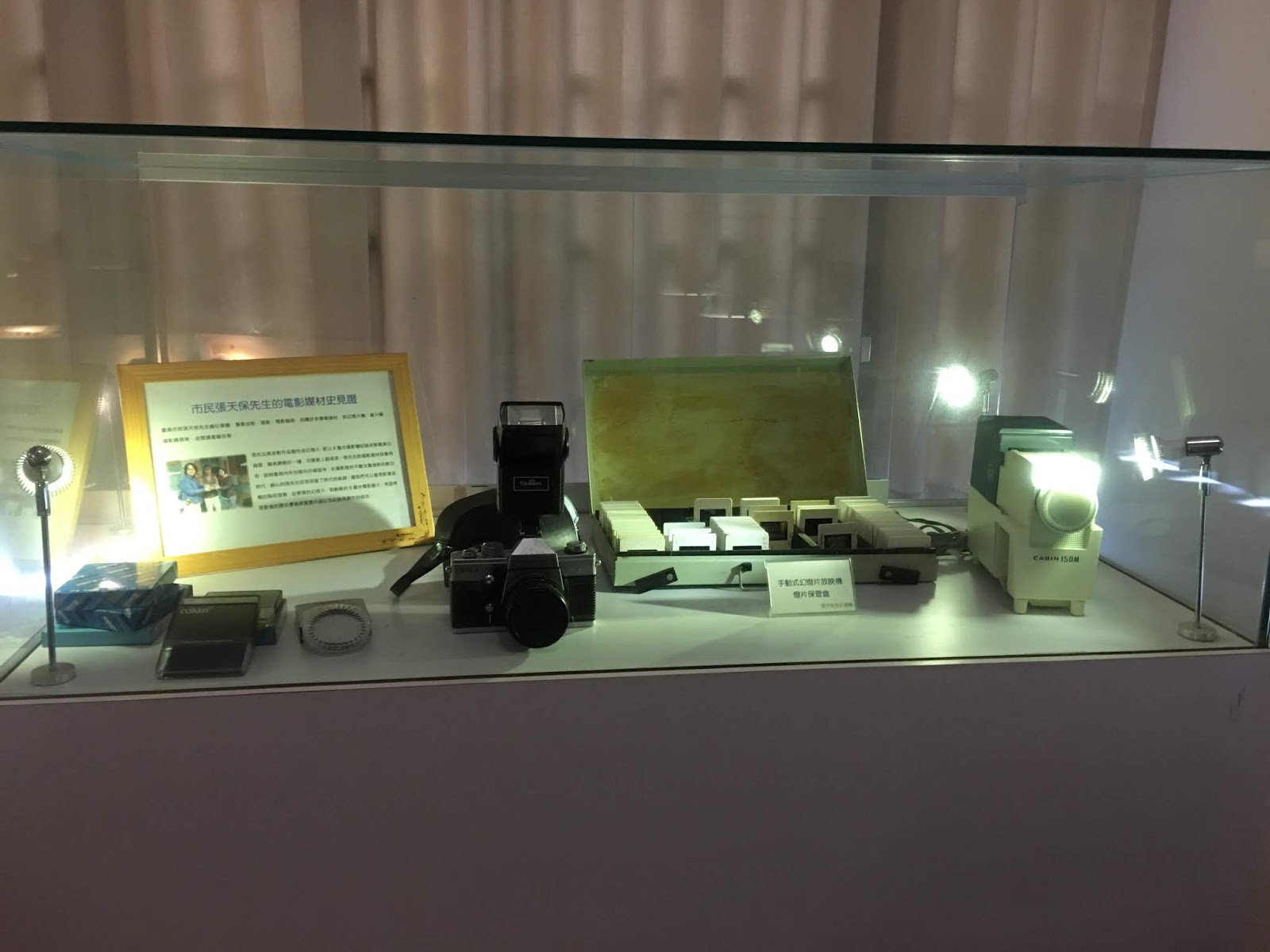
In recent years, Nanyi University has collaborated with the municipal government to establish the "Southern Taiwan Film Academy in Tainan City," focusing on film and television-related activities such as education, co-production, information inquiry, and film screenings. The museum showcases various artifacts related to the film industry, and classic movies are regularly screened in the 24-seat theater. It is a great place to immerse oneself in the nostalgia of the past film and television styles.


film center, tainan city, taiwan

film center, tainan city, taiwan

film center, tainan city, taiwan

film center, tainan city, taiwan

film center, tainan city, taiwan

film center, tainan city, taiwan

City Wall (台南府城城垣遺跡)

City Wall  remnants of Taiwan Fucheng City Wall can be found on Shulin Street, connecting to National Tainan Girl's Senior High School. The remains have been restored using ancient methods and resemble their original appearance. In one section, the internal structure of the wall has intentionally been left exposed for observation. The school section spans eighty meters in length and stands four meters tall, representing the best-preserved portion. The wall was constructed using concrete and traditional methods, and the scarcity of remaining traces of the old city wall in Tainan makes these remains highly valuable.


old city wall, tainan city, taiwan

old city wall, tainan city, taiwan

Fahua Temple (法華寺)

Fahua Temple (法華寺) has its origins in the former residence of Li Maochun, who arrived in Taiyi with Zheng Jing during the final years of the Ming Dynasty. Li Maochun unintentionally acquired the name Li Bodhisattva, and he planted a bamboo tree in the location of his residence, creating a garden for Buddhist practice. Li Maochun and Ming Zheng were friends with Chen Yonghua, who served in the army. After Li Maochun's passing, his best friend converted the former residence into a temple dedicated to the Bodhisattva.

Fahua Temple was constructed in 1684 through the fundraising efforts of Jiang Yuying. In 1698, Song Yongqing of Fengshan County led a donation campaign to build a three-in-one temple. The front hall is dedicated to Nanji Emperor, also known as the Temple of Fire. The nave is dedicated to Guanyin Bodhisattva, while the apse is dedicated to the Bodhisattva. Additionally, there is a Zen room in the backyard where bamboo and flowers are cultivated. In 1713, the temple's abbot installed a cast bell that was hung from the clock tower. Unfortunately, the Fahua Temple was destroyed in an earthquake in 1721. The restoration was completed between 1743 and 1764.

In 1942, the temple underwent refurbishment. The Japanese, who built the Tainan Airport, demolished the tomb of Li Maochun and relocated his remains to the temple tower. During World War II, most of the temple's buildings were burned. In the 1940s, the abbot Changchang Master initiated a reconstruction effort that lasted until 1959. Although most of the temple's buildings were reconstructed to resemble wood-like structures, they were built in accordance with traditional architectural styles due to their historical significance and overall regulations. In 1985, the temple was listed as a Three-Level Monument.

fahua temple, tainan city, taiwan

fahua temple, tainan city, taiwan

fahua temple, tainan city, taiwan

fahua temple, tainan city, taiwan

fahua temple, tainan city, taiwan

Kuilou Academy (奎樓書院)

Kuilou Academy (奎樓書院), also known as Kuilou College, was established in 1726. It originated from the "Kui Xingtang" and "Zhongshe Academy." Through donations from Qingbao, the "Zhongshe Academy" was formed, which included structures like Kuixingtang and Cangshengtang. It was recognized as one of the four major colleges in Fucheng, alongside Chongwen, Haidong, and Penghu. Although referred to as a college, Kuilou Academy served as a place for scholars to gather and discuss literature and poetry history, distinguishing it from other lecture-based colleges. The academy was originally located next to the patrol station. During the Japanese occupation period, the road was relocated to its current site, but the main building was destroyed during World War II. After reconstruction, the academy assumed its present appearance and was repurposed as a kindergarten classroom.


kuilou academy, tainan city, taiwan

Address:

1. Great South Gate: 700台南市中西區寧南門
2. Stone Monuments Forest: 700台南市中西區樹林街二段碑林
3. Film Center: 700台南市中西區南門路38號台南放送局
4. City Wall: 700台南市中西區台南府城城垣遺跡
5. Fahua Temple: 700台南市中西區法華街100號法華寺
6. Kuilou Academy: 700台南市中西區府前路一段90巷34弄25號奎樓書院