September 9, 2017

Tainan Travel: Exploring Lotus and Water Lily Farms


lotus water lilies , taiwan,  tainan,  beihe

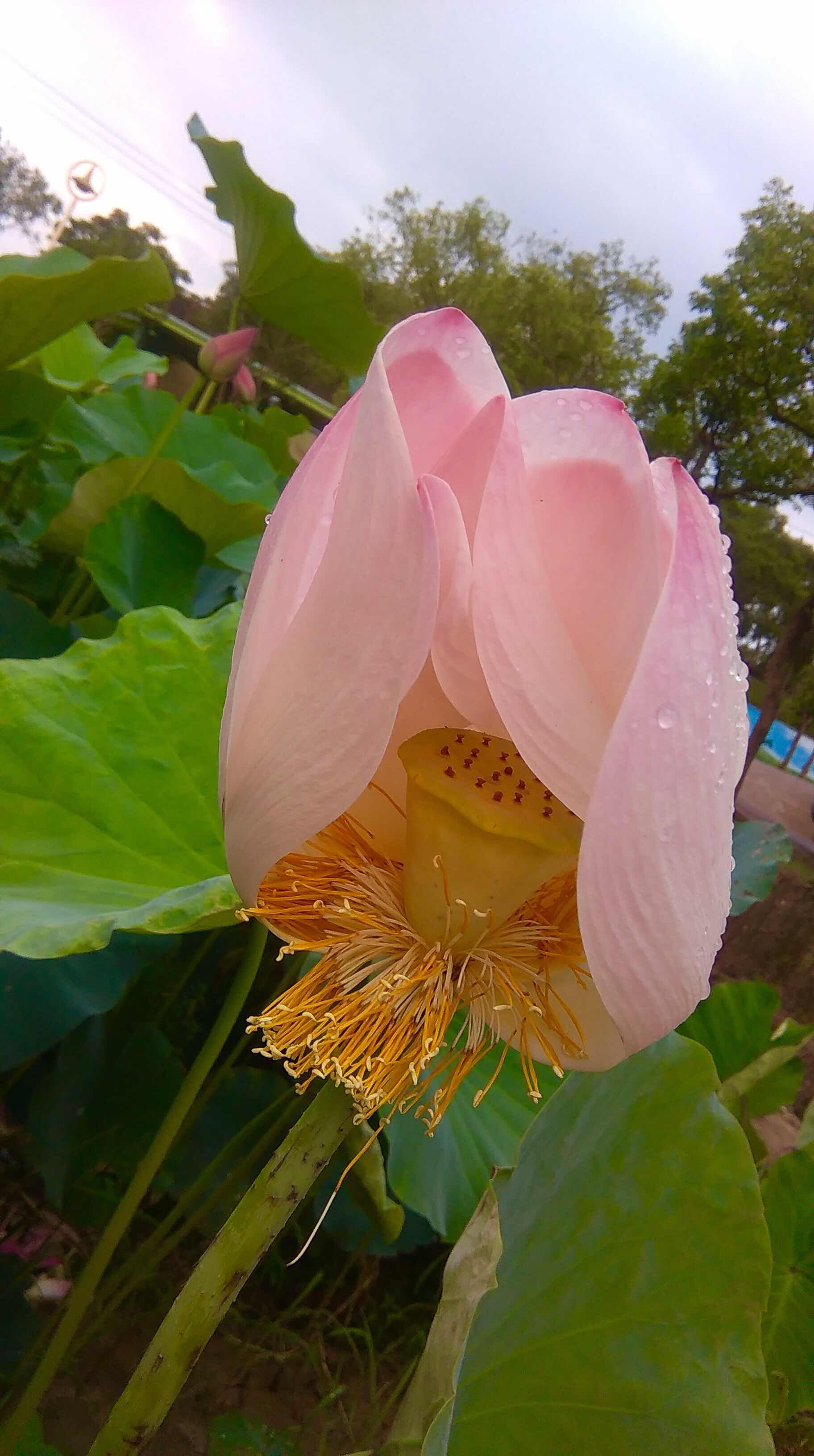
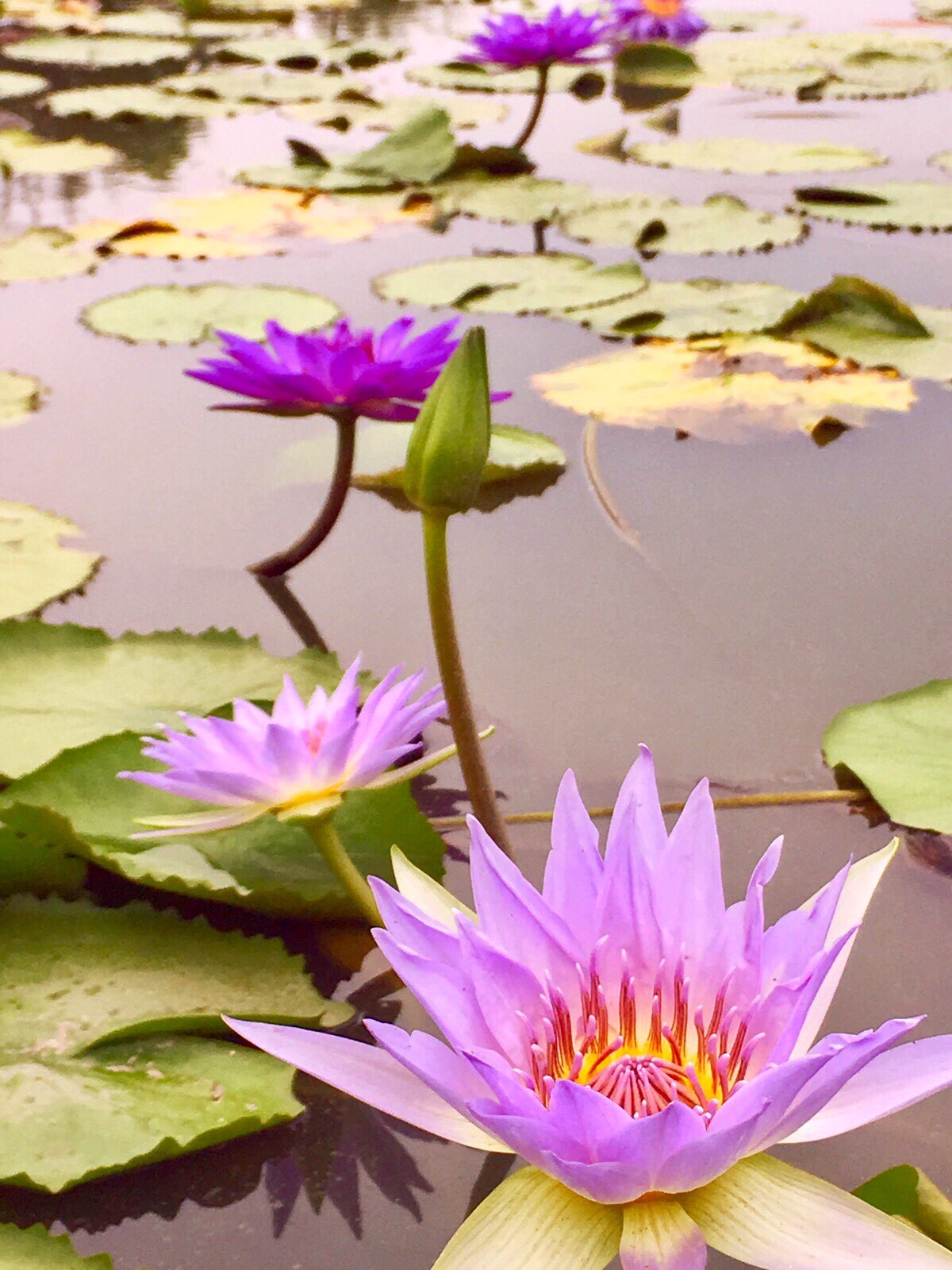
I love lotuses and water lilies, so my husband took me to Baihe, which is well known for planting lotus. Baihe produces two-thirds of all lotus seeds in Taiwan. Every summer, the Lotus Festival is held to promote the tourism industry. The other place that organizes this festival is Taoyuan, which is the second-largest producer of lotus in the country.

Lotus has a very long history of being cultivated for edible seeds, spanning about 3000 years. Their seeds can remain viable for many years. The oldest lotus plant was grown from a 1300-year-old seed found in China.
The distribution of this plant ranges from central and northern India through northern Indochina and East Asia. Due to human translocation, these species can now be seen worldwide.
Lotus roots are planted in the soil of rivers or ponds, while the leaves float on the water or grow well above it. The flowers are not difficult to spot as they rise several centimeters above the leaves. Lotus plants usually grow up to 150 cm in height and 3 meters in width. The leaves can be 60 cm wide, and the flowers are about 20 cm in size.
Lotus rhizomes are consumed as vegetables in Asian countries. They are usually cooked or fried, used in soups, soaked in syrup, or pickled in vinegar. They contain a high amount of starch without a characteristic taste or odor. Lotus seeds are processed into moon cakes, noodles, and various forms of food such as paste, fermented milk, rice wine, and ice cream. You can also find lotus seed tea.

In Buddhism, lotus flowers represent purity of the body, speech, and mind. According to legend, Gautama Buddha was born with the ability to make lotus flowers bloom wherever he stepped. In Christianity, the St. Thomas Cross features a lotus at the base of the cross. In literature, lotus represents beauty, elegance, perfection, and grace.


lotus water lilies , taiwan,  tainan,  beihe

lotus water lilies , taiwan,  tainan,  beihe

lotus water lilies , taiwan,  tainan,  beihe

lotus water lilies , taiwan,  tainan,  beihe

lotus water lilies , taiwan,  tainan,  beihe

lotus water lilies , taiwan,  tainan,  beihe


amwf couple, polish taiwanese couple, lotus water lilies , taiwan,  tainan,  beihe

lotus water lilies , taiwan,  tainan,  beihe


Address:

732台南市白河區蓮花公園

September 3, 2017

Tainan Travel: Guanziling's Fire and Water Sprin A Natural Wonder of Contrasting Elements

fire and water spring, guanziling, beihe, tainan ,taiwan

Fire and Water Spring (水火同源) 

And once again, we find ourselves exploring the mountains, this time in Tainan to visit the Fire and Water Spring (水火同源) in the Guanziling Scenic Area. Guanziling is nestled amidst hills and mountain ranges and is known for its unique hot springs, specifically the mud hot springs, which are the only ones of their kind in Taiwan. These springs have a temperature of 75 degrees Celsius and are believed to be effective in treating various ailments such as skin allergies, exhaustion, gastrointestinal problems, rheumatism, and arthritis.

The Fire and Water Spring gets its name from the natural gas that rises from the water, creating flames. This phenomenon is caused by underground gas ascending through rocks as the Liuchong River passes through the area. The discovery of the fire dates back to 1701 when a Fujianese monk from Daxian Temple first noticed it. The fire has been maintained ever since, although it became weaker after the Baihe earthquake in 1964, spreading out from several pores. During the Japanese era, villagers erected a statue of the deity Shuihuo for worship.

Legends surround the origins of the Fire and Water Spring. One tale speaks of a creature named Kirin that lived in the area, with the fire and water cave representing its head and its tail extending to the Hongye Tunnel. According to this legend, the hot spring water was Kirin's urine, and it delighted in entertaining people by creating fire. Another legend tells of a conflict between two dragons, a fire dragon and a water dragon, resulting in their defeat. The fire dragon transformed into fire, and the water dragon became water, giving rise to this unique landscape.

See also newer post: Fire and Water Spring

Daxian Temple (白河大仙寺)

On our way, we also made a stop at Daxian Temple (白河大仙寺). The temple features two spiritual pagodas for ancestral worship and a park. With over 300 years of history, Daxian Temple is considered one of the 100 Religious Scenes of Taiwan. It showcases an iconic blend of Sino-Japanese architecture that has inspired a new style of Buddhist temples.
There are two versions regarding the origin of Daxian Temple. According to the first account, the temple was established in 1701 by a Zen master from Fujian who worshipped Guanyin Bodhisattva. When he arrived in Baihe, he temporarily placed the statue of the Bodhisattva on a stone. Upon his return, he found that the Bodhisattva seemed to be stuck to the stone and couldn't be moved. Interpreting it as a sign that the Bodhisattva intended to draw people to the location, the Zen master decided to establish Daxian Temple.

The second account suggests that the temple was constructed in 1719. Legend has it that during the Ming Dynasty in 1666, a Zen master was invited by Chen Yonghua to Taiwan to share teachings on Dharma. The Zen master resided in the Chishan Longhuyan Temple and later settled in Guanziling in 1701. In 1719, a Guanyin Bodhisattva statue was brought from Longhuyan Temple. Due to the immense respect for the Zen master, the temple was built at its current site.
During the Japanese occupation in 1895, the temple was used as a military base and later fell into disrepair. Reconstruction efforts began in 1915 after funds were raised. Unfortunately, in 1930, an earthquake caused the temple to collapse. However, it was quickly rebuilt through further fundraising. In 1931, Biyun Temple, a part of Daxian Temple, gained independence. TDaxian Tempe also raised funds to build Guanyin Temple in 1948-1950, although during an earthquake in 1964, the temple together with Daxian Hall was destroyed. The reconstruction was completed in 1985.
daxian temple, baihe, tainan, taiwan

daxian temple, baihe, tainan, taiwan

daxian temple, baihe, tainan, taiwan

daxian temple, baihe, tainan, taiwan

Address:

1. Fire and Water Spring: 732台南市白河區水火同源
2. Daxian Temple: 732台南市白河區1號大仙寺

August 28, 2017

Chinese Valentine's Day: Unraveling the Tale of Endless Love

Today is Chinese Valentine's Day, also known as Qixi Festival, Double Seven Festival, the Night of Sevens, or the Magpie Festival. While it's not a tradition I personally celebrate, it holds great significance for couples in Chinese culture. Interestingly, even my husband forgot about it this year.
Chinese Valentine's Day is observed on the 7th day of the 7th month of the Lunar Calendar. This festival has been celebrated since the Han Dynasty and has roots in a love story between Zhinu and Niulang.

Zhinu, the Weaving Maid, was the seventh daughter of the Emperor of Heaven. She possessed incredible skills in weaving clouds and rainbows to beautify the world. Niulang, on the other hand, was a poor and good-looking orphaned boy who worked as a cowherd. He owned an old ox, which was actually an immortal being punished and transformed into an ox.
The ox informed the cowherd that if he wanted to get married, he should go to the brook where his wish would come true. Following the ox's advice, the cowherd went to the brook and saw Zhinu and her sisters bathing. Enchanted by Zhinu, he secretly took her clothing and demanded that she become his wife in exchange for its return. Zhinu agreed, and they got married, eventually having two children.

However, when the Emperor noticed the absence of his daughter, he wanted her to return to heaven. Zhinu's grandmother was tasked with finding her and bringing her back. As they were being taken back to heaven, the cowherd wore the ox hide, carried their children in bamboo baskets, and chased after them in the sky.
Their forbidden love was not tolerated by the Emperor, so Zhinu and the cowherd were separated. A Milky Way was created in the sky by Zhinu's grandmother to keep them apart. Zhinu was placed in the star Vega, while the cowherd and their children were placed in the star Altair.

Once a year, on the 7th day of the 7th month of the Lunar Calendar, a flock of magpies forms a bridge to allow the lovers to reunite for a single day. This is the only day the Emperor permits them to meet. It is said that the Chinese Valentine's Day is often accompanied by rain, symbolizing the tears shed by the two lovers.
The love story of Zhinu and Niulang has been passed down for thousands of years and is a beloved tale in Chinese culture, capturing the hearts of many during the Qixi Festival.


August 17, 2017

Taiwanese street food: All about Dim Sum

Dim sum (點心) refers to small bite-sized portions of food typically served in steam baskets or on small plates. It originated in Guangzhou, China and is closely associated with tea houses, especially along the Silk Road. Dim sum is traditionally eaten as a snack, enjoyed when slightly hungry, rather than as a full meal. However, it has now become popular to consume dim sum during dinner time. These dishes are often served with tea and come in a variety of sweet and savory flavors, including buns, rolls, wraps, dumplings, and spring rolls.
One of the most famous dim sum restaurants in Taiwan is Din Tai Fung. It was established in Taipei in 1972 by Yang Bingyi, who was originally from China but moved to Taiwan in 1948. Din Tai Fung has gained worldwide recognition, with its first international location opening in Japan in 1996.
Dim sum can be cooked through methods such as steaming and frying. The serving sizes are usually small, typically consisting of just a few pieces, around five. Dim sum is often enjoyed by a small group of people or families, allowing everyone to share and sample various dishes in one sitting.

Some popular dim sum dishes include:
Dumplings (with pork, chicken, shrimp, or vegetarian fillings)
Guotie (pan-fried dumplings with pork and cabbage filling)
Spring rolls (deep-fried rolls with vegetable and meat fillings)
Baozi (buns with savory fillings such as meat or vegetables, or sweet fillings like custard)
Xiao Long Bao (steamed buns filled with pork or seafood and a flavorful broth)
Luobo Gan (turnip cake made from shredded radish, often mixed with small shrimps, cabbage, and mushrooms, steamed and then pan-fried)
Sticky rice in lotus leaf (sticky rice with meat, mushrooms, and scallions wrapped in a lotus leaf)
Stuffed eggplant (eggplant stuffed with shrimp paste and fried)
Rice noodle rolls (commonly filled with shrimp)
Steamed radish or taro cake
Baked pork buns (buns filled with barbecue pork)
Steamed chicken feet and pork ribs
Glutinous rice ball (tangyuan)
Egg tarts (baked tarts with egg custard filling)
Dim sum offers a wide range of flavors and textures, providing a delightful culinary experience for those who appreciate this traditional cuisine.

dim sum dishes taiwan

din tai fung restaurant hsinchu taiwan

dumplings dim sum taiwan

August 10, 2017

Yunlin Travel: Visiting Cake Towel Cafe and Chan Chau Ku Ranch

I want to introduce you to two interesting cake shops I visited in Yunlin. The first one is Cake Towel Cafe, located in Huwei where I currently live. This unique café showcases the art of transforming a simple towel into an amazing cake or other creative designs. Towel cakes make for a nice and unique gift for someone special.

Despite Huwei being a countryside area with fewer tourists, Cake Towel Cafe is a creative and interesting place worth a visit. In addition to the towel art, you can also enjoy delicious cakes and drinks. Although I didn't try their food, I was fascinated by the craftsmanship displayed in their towel creations.

Cake Towel Cafe also offers DIY classes where you can learn to make your own towel decorations. They have a variety of towels, robes, and other products available for purchase as well. Although the café had been temporarily closed, it reopened at the beginning of 2019.

Cake Towel Cafe, huwei, yunlin, taiwan

Cake Towel Cafe, huwei, yunlin, taiwan

Cake Towel Cafe, huwei, yunlin, taiwan

Cake Towel Cafe, huwei, yunlin, taiwan

iicafe cake towel cafe huwei yunlin taiwan

Another bakery worth mentioning is Chan Chau Ku Ranch, located in Lunbei, Yunlin. This famous bakery specializes in desserts made from fresh milk. The desserts are incredibly tasty and the use of fresh milk adds a unique flavor.

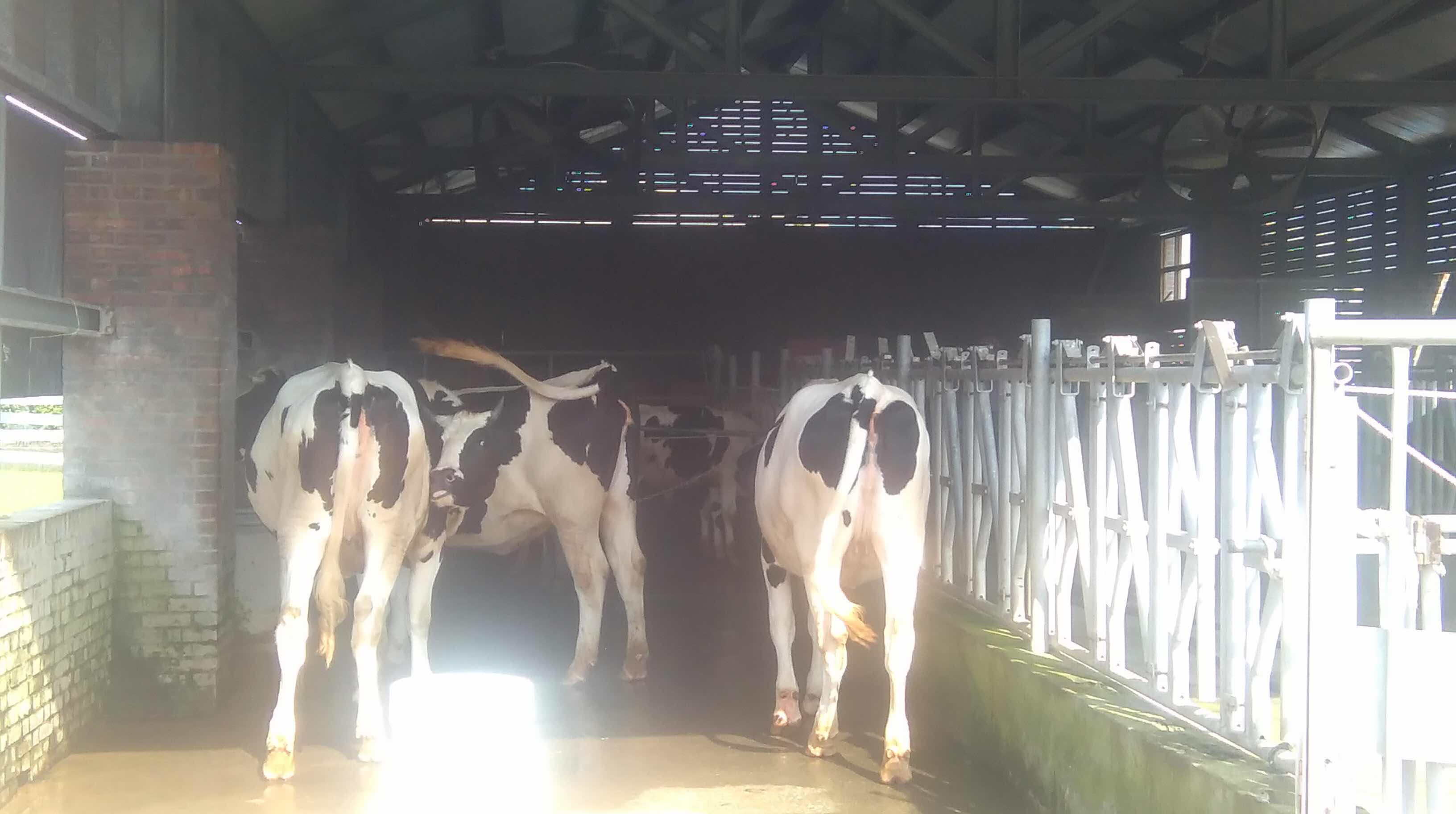
Chan Chau Ku Ranch is not just a bakery but also a great place to visit with kids. They can enjoy running around the ranch and take funny pictures with the many cow sculptures found throughout the premises. In addition to the sculptures, the ranch also houses a few cows. It's not common to see cows grazing on grasslands in Taiwan, so it's a unique sight to behold. The ranch also features fish ponds, adding to the overall experience.
The bakery at Chan Chau Ku Ranch offers a wide selection of desserts to satisfy your sweet tooth. One of my favorites is definitely the egg tart, which I highly recommend trying.
Visiting Chan Chau Ku Ranch provides an opportunity to teach children about cows and milk, allowing them to learn more about animals they may not encounter in their everyday lives. The lively atmosphere and delicious treats make it a popular destination for families.

chan chau ku ranch, lunbei, yunlin, taiwan

chan chau ku ranch, lunbei, yunlin, taiwan 

chan chau ku ranch, lunbei, yunlin, taiwan

chan chau ku ranch, lunbei, yunlin, taiwan

chan chau ku ranch, lunbei, yunlin, taiwan

chan chau ku ranch, lunbei, yunlin, taiwan

chan chau ku ranch, lunbei, yunlin, taiwan

August 3, 2017

Cats on the roof - Exploring the Painted Village in Yunlin

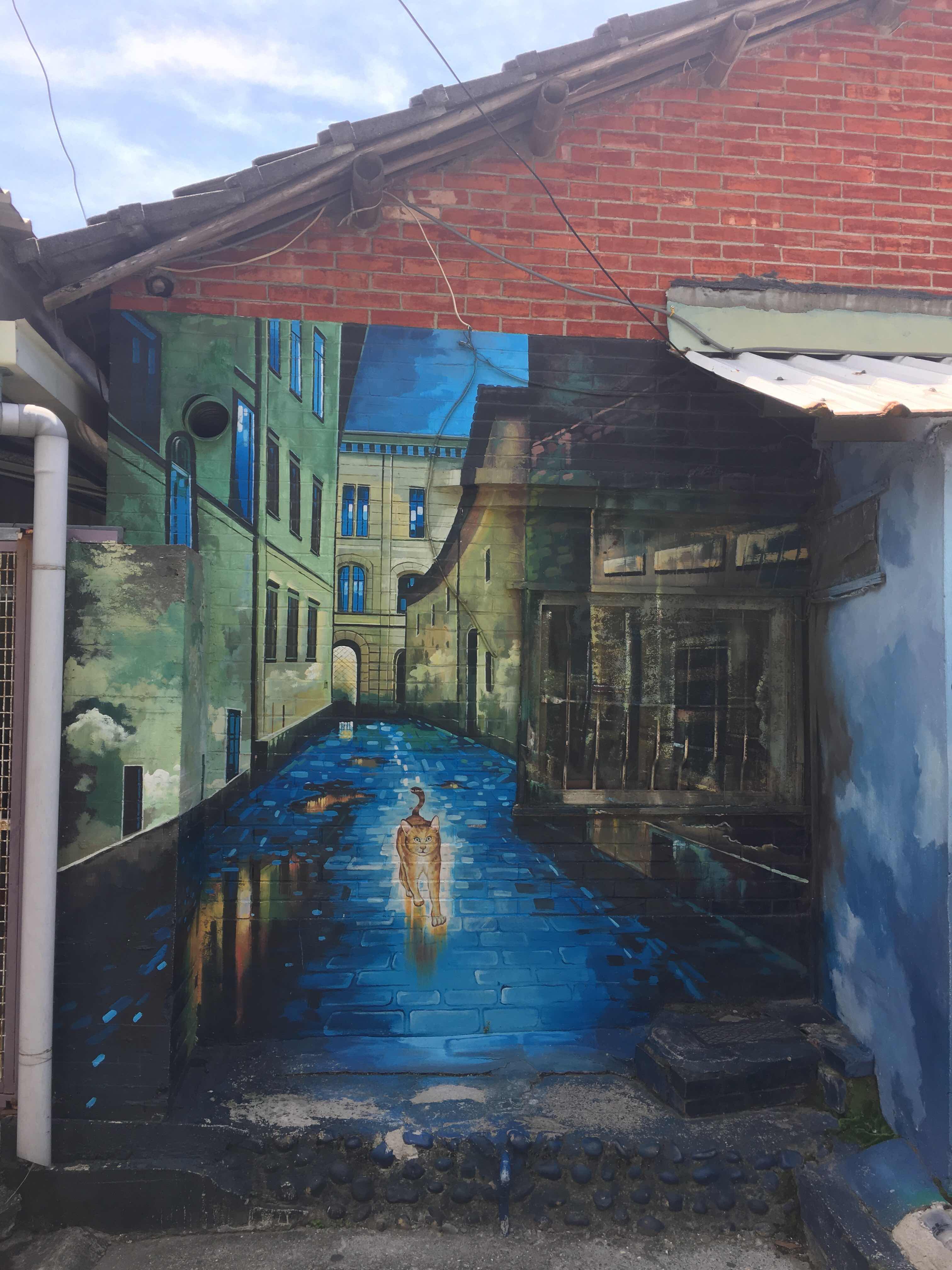
Today, I want to introduce you to one of the themed painted villages called "Cats on the Roof." Not many people seem to know about this place, perhaps except for the locals. Taiwan has plenty of painted villages, some more popular than others.

Cats on the Roof is a great place to take some funny pictures. However, I didn't notice any real cats there during my visit. Nonetheless, the vibrant and colorful artwork in the village creates a cheerful and lively atmosphere. It's a hidden gem worth exploring if you're looking for a unique and visually appealing experience.
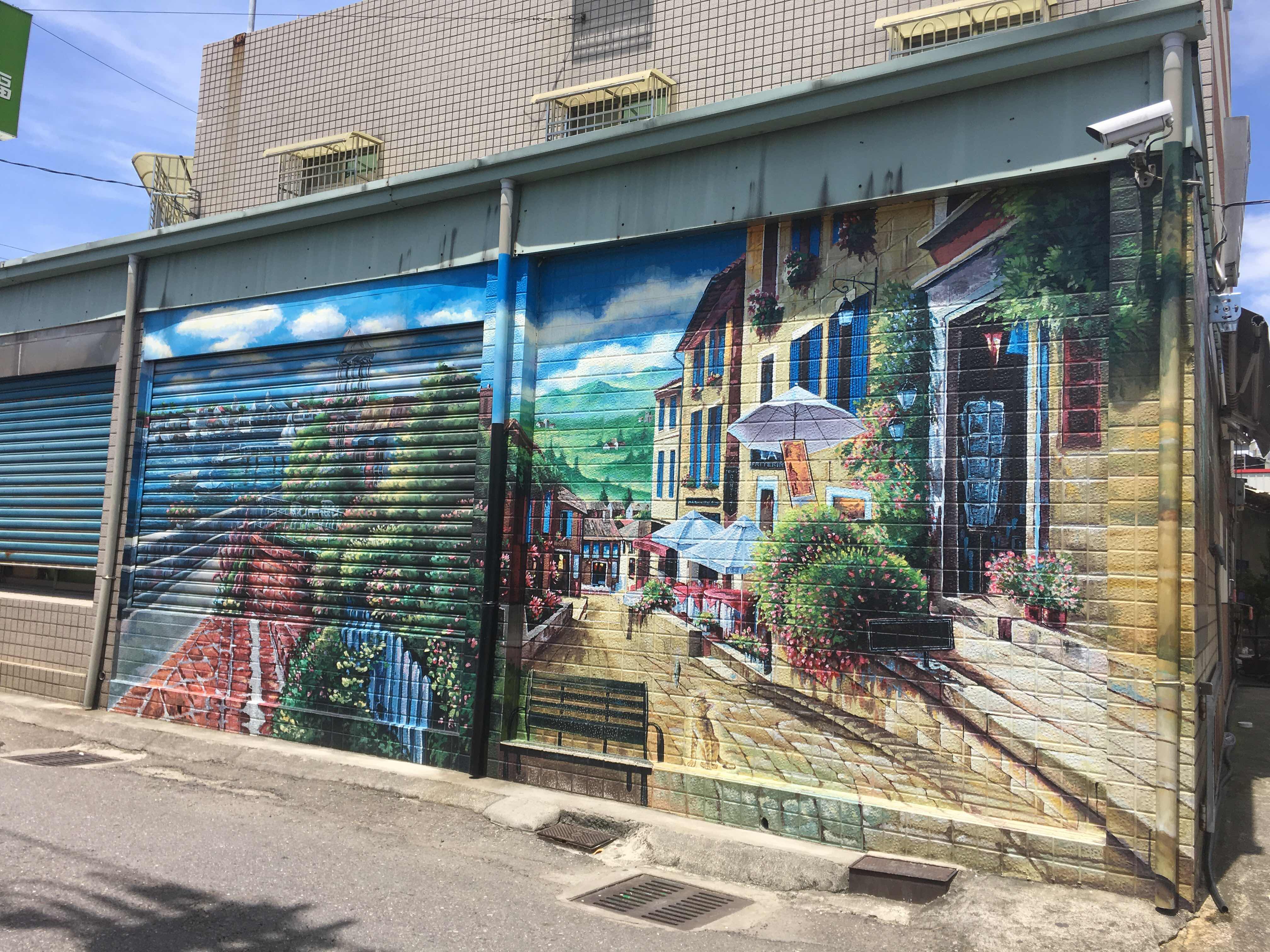
Cats on the roof, painted village, Yunlin, Taiwan

Cats on the roof, painted village, Yunlin, Taiwan

Cats on the roof, painted village, Yunlin, Taiwan

Cats on the roof, painted village, Yunlin, Taiwan

amwf couple, Polish-taiwane se couple, Cats on the roof, painted village, Yunlin, Taiwan

Cats on the roof, painted village, Yunlin, Taiwan

Cats on the roof, painted village, Yunlin, Taiwan

amwf couple, Polish-taiwane se couple, Cats on the roof, painted village, Yunlin, Taiwan

Cats on the roof, painted village, Yunlin, Taiwan

Cats on the roof, painted village, Yunlin, Taiwan

Cats on the roof, painted village, Yunlin, Taiwan

Cats on the roof, painted village, Yunlin, Taiwan

Cats on the roof, painted village, Yunlin, Taiwan

Cats on the roof, painted village, Yunlin, Taiwan

Cats on the roof, painted village, Yunlin, Taiwan

Cats on the roof, painted village, Yunlin, Taiwan

Cats on the roof, painted village, Yunlin, Taiwan

Cats on the roof, painted village, Yunlin, Taiwan


Address:

632雲林縣虎尾鎮過溪56-2號頂溪彩繪貓村