October 10, 2018

Changhua Travel: Glass Temple ~ A Unique Masterpiece in Taiwan

Glass Mazu Temple 玻璃媽祖廟, lukang, changhua, taiwan

Travel Date: 2018/10/18

See never post about Glass Temple: HERE

Today, we visited a special and unique place in Taiwan, and even in the world - a temple made entirely of glass. The temple is truly beautiful, and we arrived before sunset because I wanted to see it in daylight.
On our way, we also saw other famous old temples in Lukang, such as the Mazu Temple and Martial Temple. However, I will focus on the one-of-a-kind Glass Temple.

Glass Mazu Temple (玻璃媽祖廟)

The Glass Mazu Temple in Lukang, Changhua belongs to the glass museum and showcases the beauty of Taiwan's glass art. In front of the temple, you can see numerous colorful glass balls covering the ground. We also visited the glass gallery, which was filled with beautifully crafted sculptures. It is definitely worth a visit.
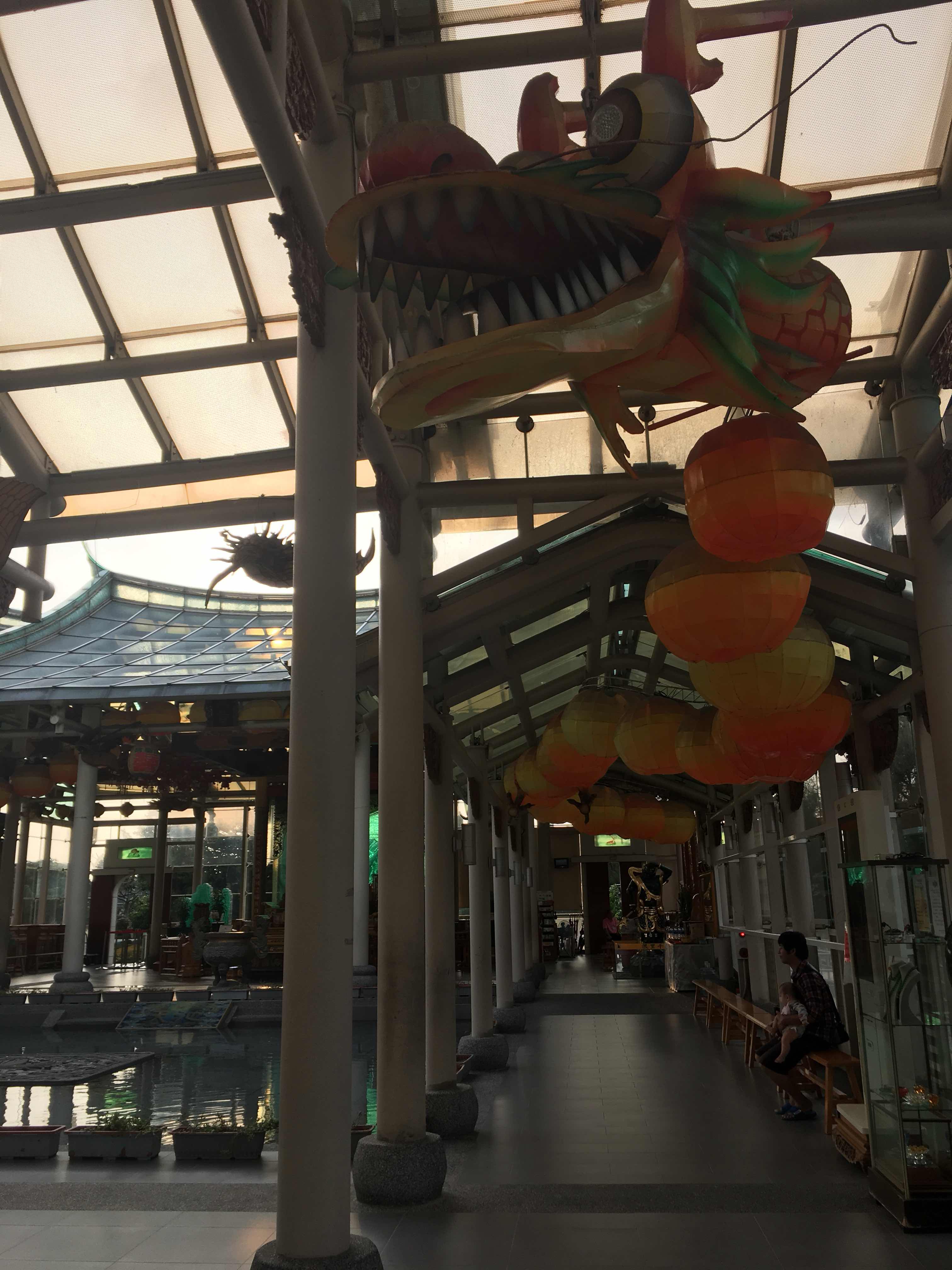
Inside the temple, there is a water pool where people throw coins for good luck. The sunlight streaming through the walls and roof creates a majestic ambiance. Around the glass roof of the building, you will find a dragon made of lanterns.

The temple was opened in 2012 and was inspired by traditional Mazu Temples, combining the glass industry with folk religion. It's not just a decorative temple; you can still use incense to pray, and there is a table for offerings. The volunteers in the temple are very kind and even try to explain the important decorations in English.
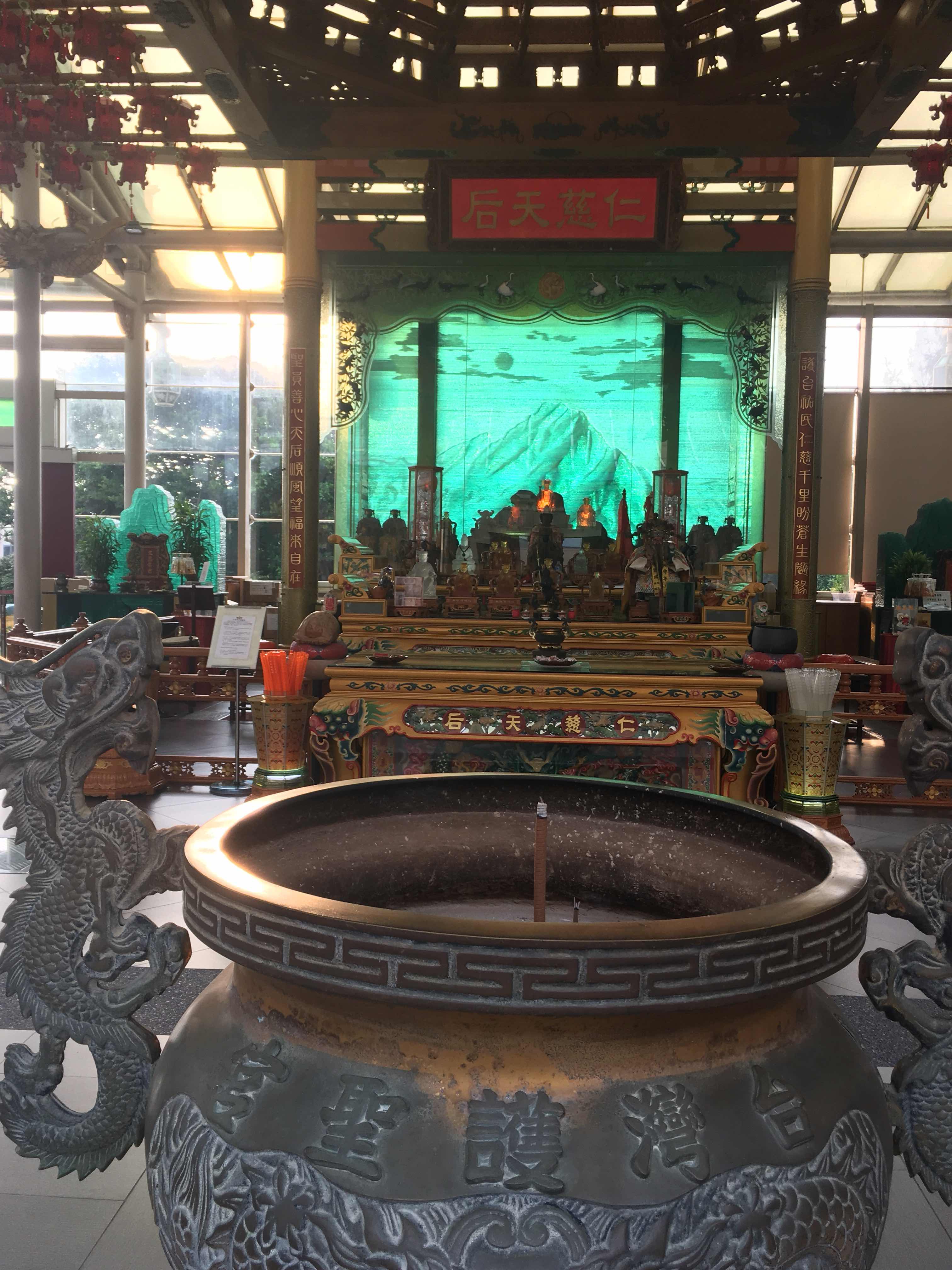
The glass behind the altar was handmade by local artists and took two years to complete. It is a replica of Taiwan's tallest mountain, Yushan. Another glass decoration from the same glass can be found on the right side of the altar.
The main structure of the temple is composed of 70,000 pieces of glass fixed with glass clamps. Inside, you can also find a glass statue of Mazu. There are 160 dragon heads on the ceiling, along with phoenixes on both sides. All of these decorations were handcrafted by artists from Lukang.

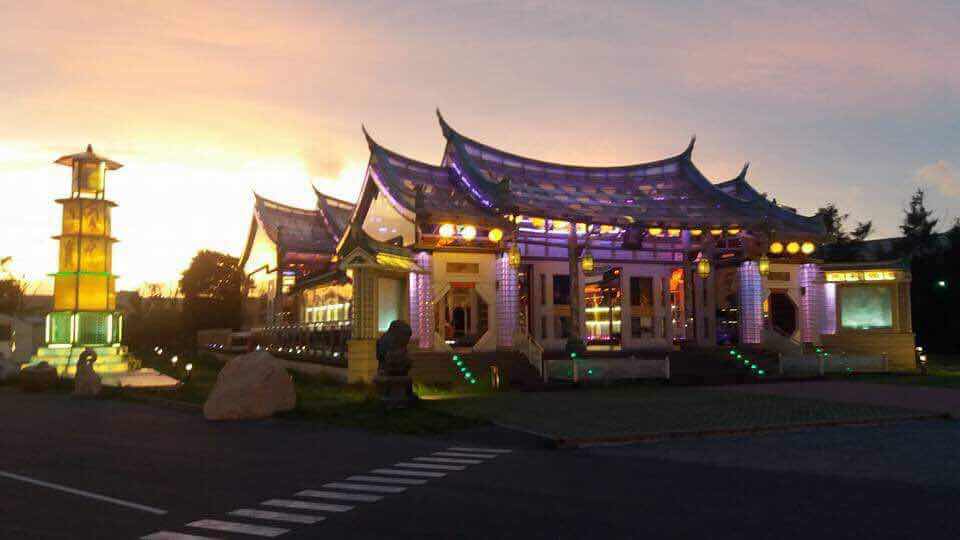
During the daytime, the temple looks beautiful, but its real beauty shines at night when it is illuminated with colorful lights. Although we didn't stay for long, a friendly temple guard shared some pictures with me. The temple is open until 10 PM, and both the temple and the glass gallery (which closes at 6 PM) have free entrance.

Glass Mazu Temple 玻璃媽祖廟, lukang, changhua, taiwan

Glass Mazu Temple 玻璃媽祖廟, lukang, changhua, taiwan

Inside of temple you can see a water pool where people would through coins for a good luck. The sunlight coming through walls and roof makes it look majestic.
Around the building's glass roof you will find a dragon made of lanterns.


Glass Mazu Temple 玻璃媽祖廟, lukang, changhua, taiwan

Glass Mazu Temple 玻璃媽祖廟, lukang, changhua, taiwan

Glass Mazu Temple 玻璃媽祖廟, lukang, changhua, taiwan

Glass Mazu Temple 玻璃媽祖廟, lukang, changhua, taiwan

Glass Mazu Temple 玻璃媽祖廟, lukang, changhua, taiwan

Glass Mazu Temple 玻璃媽祖廟, lukang, changhua, taiwan

Glass Mazu Temple 玻璃媽祖廟, lukang, changhua, taiwan

Glass Mazu Temple 玻璃媽祖廟, lukang, changhua, taiwan

Address:

505彰化縣鹿港鎮鹿工南四路30號臺灣玻璃館

October 3, 2018

Hsinchu Travel: Exploring the Tradition of Drying Persimmons in Taiwan

Weiweijia Persimmon Orchard 味衛佳柿餅工廠, xinpu, hsinchu, taiwan

Newer post from this place (11/2023: HERE

Travel Date: 2018/10/03

Today, the weather is really nice. I couldn't spot a single cloud in the sky, which is why we came to Xinpu to see the drying persimmons. The place is called Weiweijia Persimmon Orchard (味衛佳柿餅工廠). I'm not a fan of persimmons, but after seeing pictures, I wanted to visit this place. The view of the drying fruits is something really special and not easy to find outside of some Asian countries.
We went here about 2 weeks ago, but we could only see unripe fruits hanging on the trees. I really wanted to see those persimmons, so people advised us to come back at the end of September or early October. We've been here 2 times, and each time there were a lot of people. Several buses parked in front of the farm, and there were over 100 people trying to take pictures. It was also easy to spot foreigners here because this place is really famous.

Weiweijia Persimmon Orchard (味衛佳柿餅工廠)

The history of dried persimmons (柿餅) in Xinpu (新埔) dates back three centuries. It's a Hakka (客家) specialty, and they produce up to 80% of these fruits in Taiwan. The weather in Xinpu village is perfect for making dried persimmons. The hilly terrain and dry wind during the autumn season create the perfect conditions. From September to December, the persimmons are picked and dried.

The place is open for tourists all year round for free, although the persimmon season starts at the end of September and ends in January. The best time to visit is on sunny days with a blue sky to enjoy the orange colors of the fruits drying under the sky. I was lucky that both times the weather was really great! The only thing I would wish for is fewer people around...
During my second (or third) visit, I also saw an Asian woman dressed up and posing for pictures. I took a few pictures of her because she made the view even more special. The persimmons also create a beautiful pattern on the ground.

You can take a look from a platform to see the fruits from above the ground. Many people also climb onto the nearby roof. I tried to go there too, but with people coming and going, the roof seemed to shake... You can take pictures from various places, such as standing under the persimmons, using the platform to see them from the same level, or from a higher viewpoint. There is also another place with fewer fruits but an old building. You can even wear a farmer's hat and pose with baskets full of persimmons for pictures!

You can also pay 200NTD to paint a bag with your own design. The paints used are made from natural ingredients. However, not many people seem to be interested in this DIY activity.


Weiweijia Persimmon Orchard 味衛佳柿餅工廠, xinpu, hsinchu, taiwan      

Weiweijia Persimmon Orchard 味衛佳柿餅工廠, xinpu, hsinchu, taiwan

Weiweijia Persimmon Orchard 味衛佳柿餅工廠, xinpu, hsinchu, taiwan   

Weiweijia Persimmon Orchard 味衛佳柿餅工廠, xinpu, hsinchu, taiwan    

Weiweijia Persimmon Orchard 味衛佳柿餅工廠, xinpu, hsinchu, taiwan 

Weiweijia Persimmon Orchard 味衛佳柿餅工廠, xinpu, hsinchu, taiwan  

All the dried persimmons are handmade in the traditional way. The persimmons need to be picked from the trees when they are about 70% ripe; otherwise, they will be too weak to be peeled. In the nearby farm, you can also see fruits on trees waiting to be picked. After picking, all the fruits are washed and peeled by hand or machine. The work involves many workers. Interestingly, the workers peeling by hand are faster than the machine. They are used to people taking pictures of them, so they sometimes pause their work for a second and smile for your photos.

The peeled fruits need to be charcoal grilled for sterilization and to prevent them from turning blue due to oxidation. You can see their fireplace and the wood used for this process. After sterilization, the fruits are placed under the sunshine in windy and dry weather. The persimmons are dried for about 3-4 days and then pressed by workers to form their shape. After another 3-4 days, the fruits are put into a baking chamber for disinfection. The ready persimmons are then packed for sale.

I'm not a fan of raw persimmons, but the dried ones are definitely better! The white powder on the dried persimmons is not mold but the glucose being transformed. Persimmon powder has some therapeutic effects and boiling it in chicken soup is said to be good for asthma and coughing.

Additionally, persimmon skin can be used. The skin is extracted to create natural dyes for coloring fabric in traditional Hakka designs. Xinpu Persimmon Dye Workshop offers a platform for tourists to experience this unique culture.

While being in Weiweijia Persimmon Orchard in Xinpu, you can also take a walk to the persimmon farm. There are plenty of trees with both less ripe and more ripe persimmons. They plant three types of persimmons, so every month, the fruits' shape is a little different.

Weiweijia Persimmon Orchard 味衛佳柿餅工廠, xinpu, hsinchu, taiwan

Weiweijia Persimmon Orchard 味衛佳柿餅工廠, xinpu, hsinchu, taiwan

Weiweijia Persimmon Orchard 味衛佳柿餅工廠, xinpu, hsinchu, taiwan

Weiweijia Persimmon Orchard 味衛佳柿餅工廠, xinpu, hsinchu, taiwan

Weiweijia Persimmon Orchard 味衛佳柿餅工廠, xinpu, hsinchu, taiwan

Weiweijia Persimmon Orchard 味衛佳柿餅工廠, xinpu, hsinchu, taiwan

Weiweijia Persimmon Orchard 味衛佳柿餅工廠, xinpu, hsinchu, taiwan

Address:

305新竹縣新埔鎮旱坑路一段283巷53號味衛佳柿餅教育農園

September 26, 2018

Hsinchu Travel: Beipu Old Street ~ Hakka Style and Heritage

Travel Date: 2018/09/18

Bored at home, we decided to go somewhere. I had an idea of a place to visit, and my husband agreed. After a 30-minute drive, he asked, "Where exactly do you want to go in this town?" I checked Google Maps and realized we were in completely the wrong place! But never mind, since we had never been here before, we decided to take a walk around Beipu Old Street.

See never post about Beipu Old Street: HERE

Beipu Township is dominated by hills and mountains and is densely covered by rivers, with the longest river being Dapingxi. It was one of the earliest developed areas in Hsinchu. The development of Hsinchu began in the late Qing Dynasty by people from Fujian and Guangdong. Beipu was originally named Zhubei Yibao Nanxingzhuang (竹北一堡南興莊). The settlement buildings in Beipu focused on multi-layered protection, creating a settlement with good defensive function. Beipu's natural and pollution-free environment makes it a good place to watch fireflies from the end of April to the beginning of May. The viewing period is very short, lasting about two weeks.

Beipu, a small village in Hsinchu, is home to about 1,000 residents, most of whom are Hakka people. The unique culture and lifestyle of the Hakka people are the main attractions here. Many of the original buildings have been preserved or renovated. The Hakka people first moved to Beipu about 150 years ago, but they faced friction with the Saisiyat tribe, who inhabited the nearby mountains. As a result, the Beipu town suffered many attacks.
Beipu Township, along with the nearby Emei and Baoshan Townships, was formerly known as "Dayu." It was a community for the Pingpu ethnic group. In 1826, the first Han people entered the area. Under the leadership of Jiang Xiuzhen, people from Zhudong entered the area and built Jinguangfu Mansion.

During the Japanese occupation, Beipu was very prosperous. A tea factory was opened here due to the popularity of tea in Japan. However, in 1964, the tea factory collapsed, and the tea industry in Beipu declined. In addition to the tea industry, Beipu's prosperity was also influenced by coal mines. Unfortunately, this period of history was marked by the suffering of the people under Japanese oppression. In 1907, a group of Hakka people, supported by the Saisiyat tribe, killed 57 Japanese officers and their families. As a brutal retaliation, 100 people were killed by the Japanese.

After the coal mines were depleted, Beipu once again declined. At that time, this place had almost completely lost its commercial prosperity. However, due to the Hakka food and the old street, it has now become a tourist destination. The main tourist attraction is Beipu Old Street, which is crowded with many food stalls. Walking there, you can explore many narrow streets that resemble a maze for every tourist.

See also: Xinpu

beipu old street, hsinchu, taiwan

beipu old street, hsinchu, taiwan

beipu old street, hsinchu, taiwan

beipu old street, hsinchu, taiwan

beipu old street, hsinchu, taiwan

In Beipu, you can also visit Grade 1 historic sites such as Jinguangfu Residence, Chiang Family's Tianshui Hall, or Chiang-a-xin Residence. These buildings are over 160 years old and serve as witnesses to the development in the mountainous area during the Qing Dynasty. Jinguangfu Mansion was built in 1835. The word "Jin" means gold, "guang" refers to the Hakka people in Guangdong, and "fu" represents the people from Fujian. This building is built in the Hakka style, without many decorations.

Another notable site is Ci Tian Temple, which was initially a small shrine built in 1835 by farmers to pray for peace. In 1846, it was rebuilt into a wooden temple and completed in 1848, becoming the religious center of Beipu. In 1874, two side wings and a front building were added to the construction. The temple primarily worships Kwan-yin, along with other gods. Ci Tian Temple is a courtyard-style temple with two entries, two corridors, and two wing-rooms. The major wood used in the temple's construction comes from the camphor tree. The temple features a rare stone-carved dragon pillar, as well as colored drawings, clay sculptures, and Koji poetry.
Due to its historical and cultural value, the temple was designated as a third-grade relic in 1985.

Beipu is also known for its dried persimmons. A kind woman noticed me and invited me to try this fruit. It's quite yummy, and I think it's even better than the fresh ones.

Another place to visit is Chiang-A-Xin House. Chiang-A-Xin was born in 1901 and was the chairman of Zhudong Tea Company. After the end of Japanese rule, he founded Yung Kwang Co, which exported black tea. His house was built between 1946 and 1949 and served as accommodation for foreign guests and living quarters. The building is mainly decorated in a modern style. It was repaired and restored to its original appearance in 1995.

Lastly, you can explore Chiang's Family Ancestral Temple. This temple, completed in 1924, belonged to the largest family in Beipu at that time—the Chiang family. The temple's main hall is dedicated to worshiping the Chiang ancestors. It features colored drawings, sandstone carvings, and wood carvings. Due to its artistic value, this temple is recognized as one of the four largest ancestral temples in Taiwan.


beipu old street, hsinchu, taiwan

beipu old street, hsinchu, taiwan

beipu old street, hsinchu, taiwan

beipu old street, hsinchu, taiwan

beipu old street, hsinchu, taiwan


Address:

314新竹縣北埔鄉北埔街北埔老街

September 22, 2018

New Taipei Travel: From Ancient Origins to Skyward Wishes: The History of Pingxi and Sky Lanterns


Travel Date: 2018/09/18

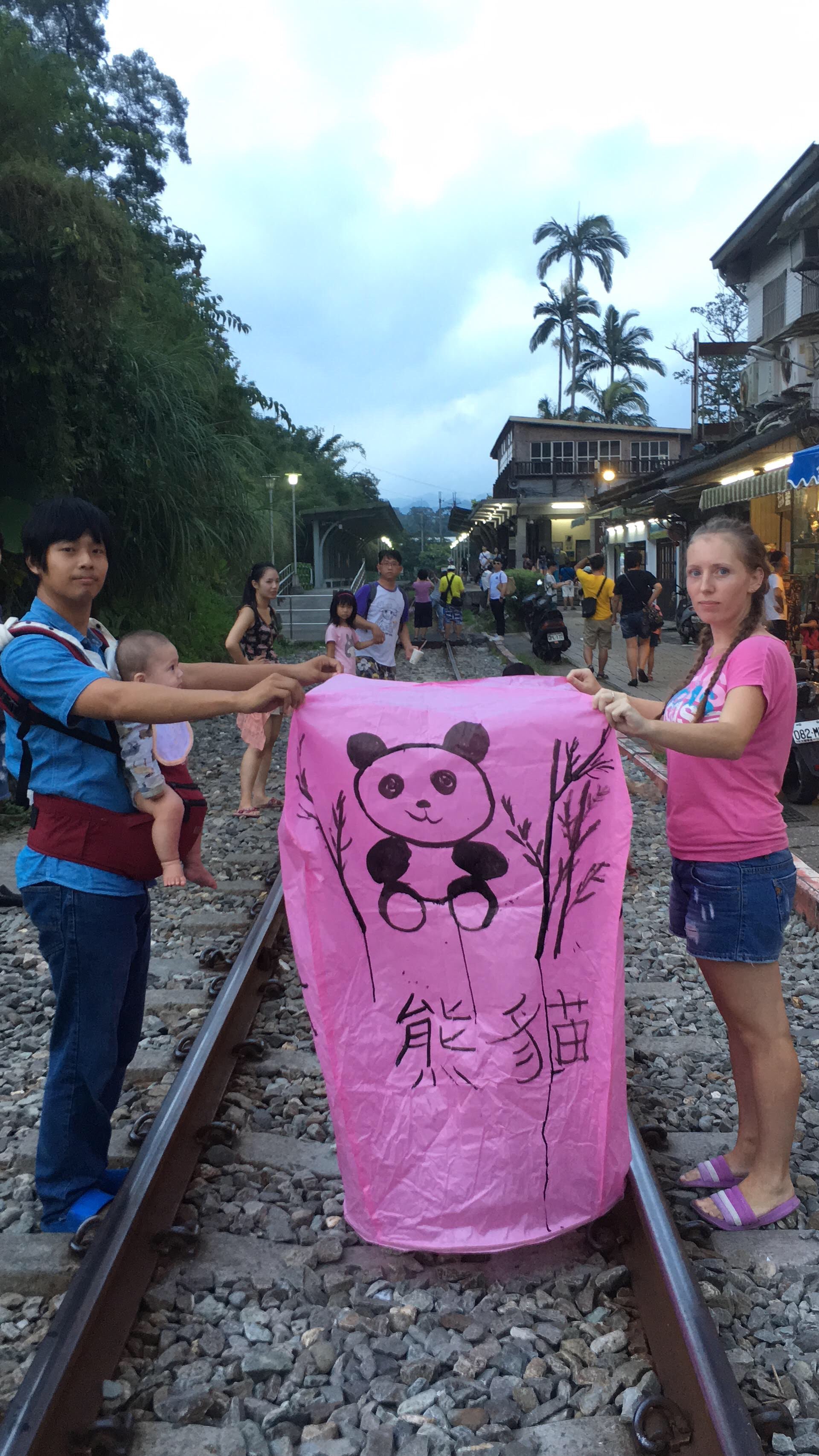
Today, we came to release sky lanterns in Pingxi. Unfortunately, it wasn't the best timing as the Middle-Autumn Festival would take place two days later, so I couldn't witness the sight of thousands of lanterns floating in the sky. This is my third time in this area—last year, we visited the incredible Shifen Waterfall. I hope to return here next year during the Lantern Festival to fulfill my dream.
This time we traveled with firends from Nantou, as they came to Hsinchu to visit us.

Pingxi is a small mountain town that is truly worth visiting. Besides the lanterns, the main attraction here is Pingxi Train Station. The streets around are filled with lantern-like decorations and street food.
Pingxi is known for its waterfalls, with 36 discovered in the area. One of the most popular waterfalls is Shifen Waterfall (十分瀑布). Over millions of years, geological forces have created numerous valleys and canyons. The average height of mountains in Pingxi is only 500 meters.
The area has played an important role in Taiwan's mining history. It is a sedimentary rock formation that contains valuable resources such as coal, oil, and gas. This geological structure was formed 3-4 million years ago.

In the 1870s, Pingxi had many indigo plantations and was a prosperous place, accounting for 80% of all indigo plantations. However, synthetic dyes quickly gained popularity, leading to the replacement of the plantations with tea gardens. Oolong tea is the most important tea variety grown here, and it was primarily exported to Europe and America during the Japanese period.
See also: Shifen Waterfall

pingxi, new taipei, taiwan

pingxi, new taipei, taiwan

pingxi, new taipei, taiwan

pingxi, new taipei, taiwan

pingxi, new taipei, taiwan

The development of the Pingxi coal mine began in 1908 when the Japanese obtained the rights to the coalfield and built the Pingxi Line railway. Pingxi has the longest operating history among Taiwan's coal mines. However, in the 1970s, due to the emergence of alternative energy sources, labor disputes, and significant losses from mining disasters, Taiwan's mining industry disappeared. Pingxi Train Station became a popular place, particularly for releasing sky lanterns.

Sky lanterns, also known as Kongming lanterns, were invented by Zhuge Liang during the Three Kingdoms period. In the past, these lanterns were used to convey military messages.
The Sky Lantern Festival in Pingxi is named the second biggest New Year's Eve festival in the world. The festival lasts about two weeks and is always held on the 15th day of the first lunar month as part of the Lantern Festival. Pingxi is the only place where the release of sky lanterns is allowed by the government.

Traditionally, lanterns have four or five sides on which wishes can be written. They are made of rice paper, bamboo, and wire, which allows for recycling. Making lanterns is relatively simple. Bamboo is split into strips and formed into a semicircular frame. A triangular wire piece is placed on the bottom to hold joss paper, which serves as the fuel. The frame is then covered with four or five layers of rice paper. Before being placed on the wire, the joss paper is coated with a mixture of peanut oil and kerosene. When the hot air rises into the lantern, it eventually floats into the sky.

There are a few speculations about how sky lanterns became popular in Pingxi. According to one belief, in 1821, Chinese people arrived in Pingxi and began building villages. During the Qing Dynasty, these villages were difficult to control and protect by the provincial government. When the final harvest was finished, villagers would sometimes pack up and hide in the mountains. Only a few men would stay behind to protect their village. Once the dangerous time had passed, these men would release lanterns as a signal for others to return.
Another belief suggests that the sky lantern festival originated from the practice of releasing prayer lanterns every spring. Women would often release these lanterns while praying for smooth childbirth and a bountiful harvest.

pingxi, new taipei, taiwan

pingxi, new taipei, taiwan

pingxi, new taipei, taiwan

pingxi sky lanterns meaning of colors taiwan

Address: 

226新北市平溪區平溪街226新北市平溪區平溪街

September 14, 2018

Taiwanese street food: soup and noodles

Noodles have a history of 4000 years in Asia and come in a wide variety of types. They are distinct from Italian pasta and can be made from ingredients such as rice, yam, mung beans, or wheat flour. Noodles have different textures and flavors and are used in numerous dishes.

1. Beef noodles (牛肉麵)

Beef noodle soup is a popular dish made with stewed or red-braised beef, beef broth, and vegetables. It originated from the Hui people during the Tang Dynasty and is considered a national dish of Taiwan. The beef broth is typically cooked with brisket or shank, and there are variations such as braised beef noodle soup and clear beef noodle soup.

Taiwan beef noodle soup

2. Duck noodles

Duck noodles feature duck meat cooked with various Chinese herbs such as jujube, goji berries, ginseng, angelica, and red dates. The soup also includes ginger and rice wine. The herbs are cooked first, then filtered, and the duck and organs are added and cooked with rice wine and ginger. This soup is often consumed in winter for its warming properties.

Chinese herb duck noodle soup taiwan

3. Oyster vermicelli  

Oyster vermicelli is a dish that includes oysters and other ingredients such as pork, intestines, or a mixture of various ingredients. It is served with Chinese vermicelli noodles (misua), which originated in Fujian, China. The noodles are made from wheat flour and salt and are steamed, giving them a unique texture and color.

Taiwan oyster vermicelli

4. Milkfish soup (虱目魚湯)

Milkfish soup is a traditional dish from Tainan that features a whole fish and sliced ginger cooked in a soup.


5. Sesame oil chicken soup

Sesame oil chicken soup is made with chicken broth, red dates, angelica, ginger, rice wine, and sesame oil.

6. Pork feet peanut soup (豬腳花生湯)

Pork feet peanut soup is a soup made with rice wine, jujube, ginger, and peanuts. The pork feet are cooked with seasonings for several hours.


7. Golden Needle Flowers Soup  


8. Squid soup 


9. Dry noodles 

Dry noodles refer to noodles served without soup, which is unique to Asian-style noodles. They are typically seasoned with soy sauce, sesame paste, and garlic chives.

dry noodles taiwan

10. Hakka fried noodles 

Hakka fried noodles are pan-fried noodles with sliced ginger, rice vinegar, soy sauce, and vegetables such as carrots and cabbage.

Hakka style fried noodles

11. Hakka flat rice noodle soup

Hakka flat rice noodle soup consists of rice noodles made from rice flour and water. The noodles are served in a light-flavored soup with fried chopped onions, minced meat, and sprouts.